



Thanks to a mechanical delay with a 737 that was supposed to take me from Dallas-Fort Worth to Cedar Rapids, Iowa, I once dropped $5 on a book getting a lot of buzz in business journals: Who Moved My Cheese? The short parable illustrated in a simple way the necessity and benefits of adaptation. One mouse kept returning to the spot where his cheese used to be, growing angrier at its absence and more stubborn that it would return. The other realized that a new strategy for acquiring cheese would be necessary.
The book has become a cliche in the 28 years since its original publication, but it met the moment in a business world coming to grips with digital conversions of everything – communications, marketplaces, and workspaces. Those changes obsolesced a lot of job skills and entire product lines, as well as reinvented the work place. Stalwart brands crumbled, new brands arose.
Two events have similarly transformed college sports. The introduction of the transfer portal in 2018 allowed players to change schools without forfeiting a season of eligibility. That change severely handicapped coaching models built on recruiting elite talent and developing it over a period of years. The next two seasons would be Roy Williams worst and last: 14-19 and then 18-11. In football, UNC dipped into its past, hiring Mack Brown.
Two months after UNC transitioned from Williams to Hubert Davis, the Supreme Court affirmed NCAA vs Alston, effectively eliminating boundaries on NIL compensation. College sports became non-stop free agency, with a player’s role and money suddenly mattering far more than jerseys in the rafters. For talents similar to the sort Williams won a title with in 2017, like Kennedy Meeks, Isaiah Hicks, and Joel Berry, college ball became their prime earning opportunity. Look at Elliot Cadeau. He’ll make far more per year playing in college than he will once his college eligibility expires. Programs that recognized this shift and aggressively pursued development of a front office and NIL resources have prospered. Reluctant, tardy participation has come with a cost.
No one would argue that Mack Brown in charge of UNC football and Hubert Davis in charge of UNC Basketball was a forward-looking approach at this moment of monumental change. As corny and cliche as Who Moved My Cheese has become, it’s a valid metaphor for UNC athletics the first half of this decade. UNC’s revenue sports wasted some seasons trying to return to where its success used to be. There’s been, at least to some degree, a sense that stepping into this new world of NIL and transactions and social media edginess would come at the cost of UNC’s essential values.
The need to move forward came into conflict with that sensibility, with that tension contributing to disastrous results. UNC’s first two efforts to find a new path did not go well. The Belichick hire and the arena roll-out were, again in retrospect, failed efforts. Both put into stark relief “future versus past,” with John Preyer a combative avatar for “future” and Hubert Davis as a tragic one for “past.”
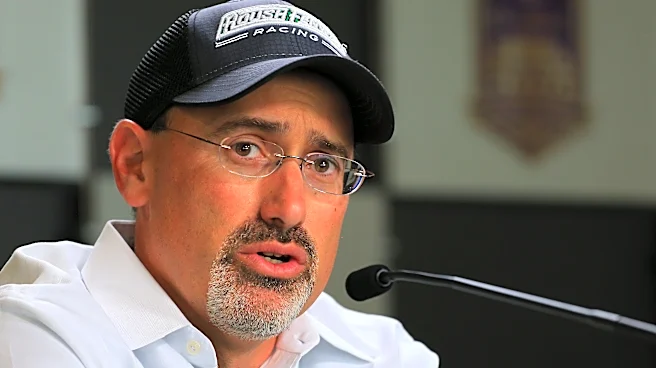
That brings us to Michael Malone. While the hire has aged only a week, with the roster still largely unknown as we await major portal decisions, the vibe around UNC basketball has been transformed. Malone’s introductory press conference articulated a vision of holding on to those things that make UNC special while getting in front of the changes redefining the sport. Rather than framing those two things in opposition to each other, Malone framed them as complementary. That detail won’t be as attention-grabbing as Malone landing an in-home visit with Juke Harris or as immediately consequential as Veesaar’s NBA decision. Still, it’s a monumental and welcome shift in perspective and tone.
UNC needs to figure out how to leverage its brand, still formidable, in this new college athletics landscape. It doesn’t open the same doors or grease the same wheels it did in 2016, but it’s still a powerful tool in the hands of people who know how to use it and aren’t afraid to experiment. Malone’s framing of being on the cutting edge while holding onto what’s special represents the core challenge for our athletic leadership.
For too long, it feels like we’ve been letting “UNC!” fill in the gaps of spaces we were uncomfortable operating. There was a time when the brand could be used that way. No longer. A new AD in Steve Newmark and a new basketball coach, outside the family for the first in most of our lifetimes, represents a huge opportunity for UNC basketball and UNC athletics writ large.
Newmark’s landing of Michael Malone has a chance to be a turning point for UNC athletics. That’s going to require a once-divided community that came together to embrace this change to remain united. That’s going to require winning. That’s going to take leadership that continues to honor and leverage UNC’s legacy as it moves forward, no easy balancing act.
But, for the first time in a long time, it feels like UNC both knows where it’s going and knows where it’s been.
Go Heels.