

Embarrassing confession time: I unabashedly love the Olympic Games. In my defense, it’s in my DNA: I was born during the Lake Placid Olympics, a week before the Miracle On Ice. Wait, let me make this even more embarrassing: I love the Olympics largely because I was a kid in Seattle for the 1990 Goodwill Games, a Ted Turner-spawned boondoggle with an underlying agenda to improve American-Soviet relations (???), but also the closest I’ve ever gotten to see an Olympics up close. It’s the same reason
I love the concept of World’s Fairs, the idea of bringing together the best and the brightest from across the globe. It’s a way to make a big world smaller but still meaningful. There’s something that feels so powerful about bringing together the titans of a specific sport all in one place, laid over the with glamorous pomp of ceremony and international intrigue. And I love that the Olympics insists on its own timeline: it is four years between the winter or summer Games, a small enough timeframe to breed recognition, but long enough for new stories to emerge.
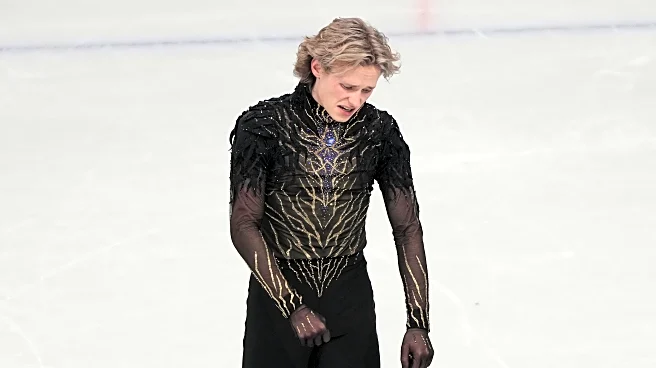
That timeframe can be punishing, however. Miss qualifying for one Games and suddenly you’re facing almost a decade out of Olympic competition. Make it to the Games, and a single ill-timed mistake can be a shadow that hangs over you for the next four years. This is a recurring theme at the Olympics, where professionalism meets pressure. Just days ago in Milan, American Ilia Malinin had a clear path to a gold medal, but turned in a disastrous performance in his free skate and fell out of medal contention entirely. “I blew it,” he said afterward: blunt, indisputable, heartbreaking.
And even if an athlete can defeat the mental side of the game, their bodies need to be willing participants, as well. Lindsey Vonn is one of the most decorated American female skiers of all time, and has done it despite battling a host of injuries, two of which had kept her out of previous Games. Her most recent bid for a final Olympics was cut devastatingly short in Milan, when 13 seconds into her first downhill run she crashed, sustaining a broken tibia after having already torn her ACL during a previous training run. “Even if you are the strongest person in the world, the mountain always holds the cards,” wrote Vonn in a post-injury Instagram post.
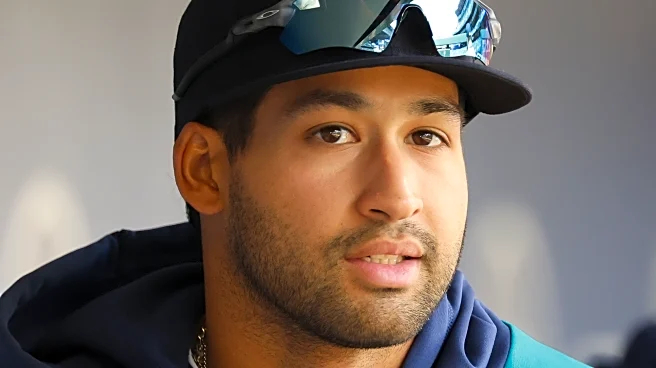
Ryan Bliss knows something about knee problems and bad timing. After working all of the 2025 season to rehab a torn bicep suffered in early April, Bliss was finally nearing a return in September when he tore his meniscus on an awkward slide into second base while playing with Tacoma. It was a frustrating end to a frustrating year for Bliss, who came into spring training last year in the mix for the starting role at second base.
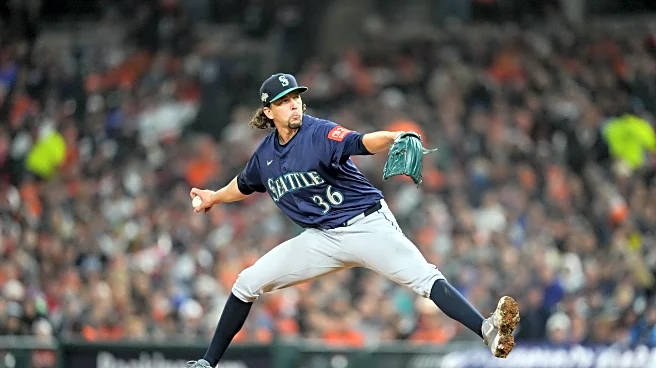
In last year’s truncated 4o in 40s (thanks winter of my discontent), Bliss drew a slot at the very end of the series – a full month later than this piece will publish. At the time, Bliss was electric in spring training, coming off a strong off-season. His exit velocities looked good. His plate discipline numbers were good. He was a solid defender at second. And most importantly, the Mariners didn’t have a compelling in-house option at the position. They didn’t sign any of the big free agents that winter, content to let Bliss fight for a spot as the regular second baseman against Jorge Polanco and his reconstructed knee, eminently platoonable Dylan Moore, Smurf-sized Leo Rivas, and the yet-to-debut Cole Young. Bliss was a buzzy choice to win the job at the end of spring training last season.
But the mountain always holds the cards.
I will never forget the way Bliss’s torn bicep was explained to me, someone who’s been lucky enough not to experience the force of the injury: the bicep muscle tearing and retreating, like a windowshade rolling up.
Bliss’s injury forced the Mariners to enact a different scenario, especially once it became clear that their off-season acquisition Donovan Solano was a TBINO – a third baseman in name only – and would have to be replaced by in-house option Ben Williamson, followed by trade deadline acquisition Eugenio Suárez. Cole Young’s timeline was accelerated, and once it became clear Polanco could handle second acceptably enough with spells from on-base machine Leo Rivas, the Mariners had a three-headed monster to attack their perpetual Second Base Problem with for the remainder of the season. Bliss was necessarily sidelined in those plans.
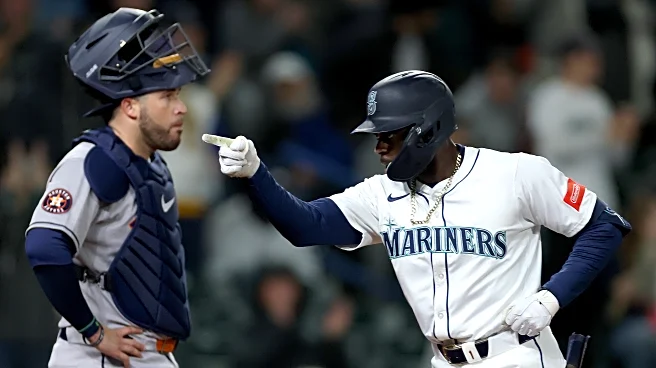
And although it shouldn’t have, it worked. Polanco’s rebuilt knee was sturdy enough to let him play the field regularly in the postseason, when the team needed his bat. Williamson made up for his noodle bat with Gold Glove-caliber defense. Young didn’t look entirely bowled over at the plate, even if it felt like the game sped up on him at times in the field. Tiny-but-mighty Rivas came through in the clutch more than he had any right to do. In the riot of excitement that was the Mariners progressing deeper into the post-season than they ever have, Bliss was an afterthought. Sometimes the mountain wins, and all you can do is wait.
This off-season, the Mariners did address their infield in a meaningful way, albeit with a trade for a player with positional flexibility as they brought in Brendan Donovan. It doesn’t choke off Bliss’s route to a starting infield position. It does make it more difficult, especially because now he must also compete against a new challenger in the form of Colt Emerson, the Mariners’ top prospect, now a year older and even closer to the big leagues. Timelines, whether Olympic or MLB, can be brutal.
No one signs up for a career in sports anticipating it to be safe. Even the Olympic athletes experiencing their gold-chasing glory moment often have day jobs that keep them financially afloat, maybe brand deals if they play a particularly popular sport or with a particularly popular face. There are no guarantees in this life, and certainly not in sports life, where the timeline is so punishing: miss your window, and you might miss everything.
And yet people chase this dream, because sometimes you feel like that’s what your body has been built to do: to fly across the ice with abandon; to catch a small object flying at you at triple-digit speed; to sail down a mountain and not worry that it holds all the cards.
Lindsey Vonn, released from the hospital after some gnarly surgery and headed home to the US, had one more Instagram post to share her perspective:
“We dream. We love. We jump. And sometimes we fall. Sometimes our hearts are broken. Sometimes we don’t achieve the dreams we know we could have. But that is the also the beauty of life; we can try.
I tried. I dreamt. I jumped.“
And that’s all we can do in life, right? Try. Dream. Jump.