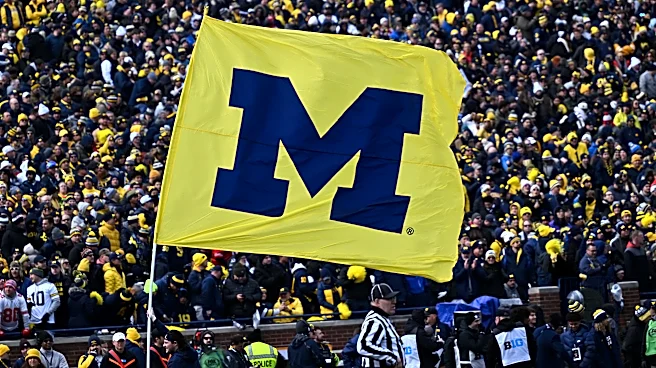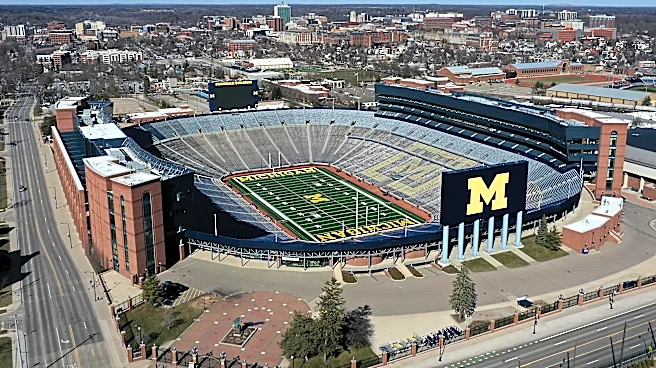







There are few places in sports more iconic than The Big House. On football Saturdays, more than 100,000 fans pack into Michigan Stadium, making it the largest stadium in the United States. It’s hosted national championship teams, Heisman Trophy winners and some of college football’s most unforgettable moments.
But nearly a century ago, none of it existed. In the early 1920s, Michigan played at Ferry Field, a venue that simply couldn’t keep up with the program’s growing popularity. Athletic director
and legendary coach Fielding Yost believed the Wolverines needed something much bigger. That vision became Michigan Stadium, which opened in 1927 and has continued to evolve ever since.
From hidden design features to famous traditions and historic moments, here are 15 things you may not know about The Big House.
1. It almost wasn’t built
In the early 1920s, many university leaders believed expanding Ferry Field was enough. Yost disagreed, pushing for a brand-new stadium that would serve Michigan for generations. The Board of Regents approved the project in 1926.
2. It was built into the ground
One reason Michigan Stadium doesn’t look nearly as massive from the outside is because much of it was built below street level. Engineers excavated the site rather than building straight up, helping reduce construction costs while also working around Ann Arbor’s high water table. It’s one of the reasons first-time visitors are often stunned when they walk through the tunnel and suddenly see the stadium open up in front of them.
3. It originally held “only” 72,000 fans
That number sounds small today, but it was enormous in 1927. Before the first season even ended, Yost added temporary bleachers, boosting capacity to more than 84,000.
4. The first game was against a team from Ohio, but not the one you’re thinking of
Michigan’s first game at The Big House came on Oct. 1, 1927, a 33-0 win over Ohio Wesleyan. The official dedication happened three weeks later with a 21-0 victory over Ohio State in front of more than 84,000 fans.
5. “The Big House” wasn’t always its nickname
Today, almost everyone calls it The Big House, but that wasn’t always the case. For years, it was simply known as Michigan Stadium. As the venue continued expanding and dwarfed nearly every other stadium in college football, the nickname naturally caught on. Now, it’s one of the most recognizable nicknames in all of sports.
6. It was once the most technologically advanced stadium in America
In 1930, Michigan became the first stadium in the country to use electronic scoreboards for official game timing. This was cutting-edge technology at the time.
7. Capacity crossed 100,000 nearly 70 years ago
The stadium topped 100,000 seats in 1956, becoming one of the first college football venues to reach that milestone.
8. Michigan resisted permanent lights for decades
For generations, Michigan proudly played every home game in the afternoon. While schools across the country installed permanent lights decades earlier, the Wolverines resisted the change, believing daytime football was part of the tradition. That finally changed after the stadium’s massive renovation, with permanent lights installed in 2010.
9. The first night game was unforgettable
The Wolverines hosted Notre Dame for their first game beginning under the lights at The Big House back in 2011. Michigan won, 35-31, on one of the wildest finishes in the history of the stadium.
10. The “extra” seat has its own story
Ever wonder why capacities often ended in “001?” That’s because one symbolic seat was dedicated to former athletic director Fritz Crisler after the stadium surpassed 100,000 seats. Its exact location remains one of The Big House’s enduring mysteries.
11. It isn’t just for football
Michigan Stadium has become much more than a football venue. It has hosted outdoor hockey, international soccer matches featuring some of the world’s biggest clubs, graduation ceremonies, and even concerts. Those events have helped introduce The Big House to fans who may never have attended a Michigan football game.
12. The biggest crowd topped 115,000
Michigan’s 2013 game against Notre Dame drew 115,109 fans, setting what was then an NCAA single-game attendance record.
13. It’s louder than people think…
One of the biggest misconceptions about Michigan Stadium is it isn’t loud. Because of the bowl’s design, some sound escapes upward rather than being trapped like it is in steeper stadiums. But ask anyone who attended the 2021 or 2023 Ohio State games and they’ll tell you the stadium can still be deafening when more than 110,000 fans are yelling.
14. The stadium has changed constantly
Luxury boxes, wider aisles, new scoreboards, better accessibility and modern amenities have transformed the venue while keeping its iconic bowl intact.
15. Yost’s vision turned out to be too small
Nearly 100 years after it first opened, Michigan Stadium remains exactly what Yost envisioned: a home worthy of one of college football’s biggest brands. The Big House has changed dramatically since 1927, as capacity has grown, scoreboards have been added, luxury suites have been built and lights now shine over night games. Despite all those changes, the feeling inside the stadium hasn’t changed.
Every fall, thousands of fans still make the same walk through the tunnels, step into the bowl and look out across one of the most iconic sights in sports. For Michigan fans, there’s simply nothing else like it.