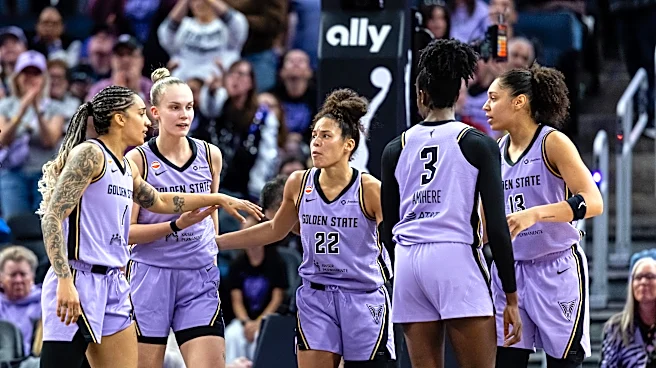








The Golden State Valkyries made WNBA history in 2025, becoming the league’s first expansion team to finish above .500 (23-21) and make the playoffs in their inaugural season.
In doing so, Golden State changed the blueprint for future expansion teams, proving that it was indeed possible to essentially build a team from scratch and be at least marginally competitive in the same year—a notion that the WNBA’s two newest franchises, the Portland Fire and Toronto Tempo, seem to agree with.
This feat also
raised the bar for the Valkyries themselves. Whereas they entered their inaugural season with close to zero expectations, they’re now under a microscope in 2026, with fans and analysts alike wondering if Golden State can repeat its success from last year.

The answer to that question appears to be yes.
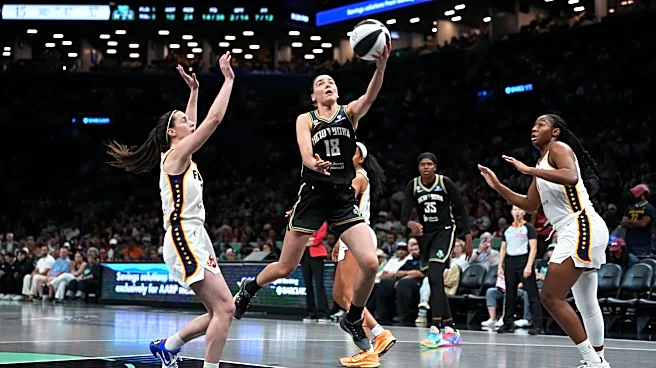
The Valkyries (6-5) currently sit at No. 6 in the WNBA standings, having earned key wins against teams like the New York Liberty and Indiana Fever—teams that, if they’re going to be regarded as true contenders, they’ll need to be able to beat consistently.
But such results are no longer pleasant surprises. There’s now an air of confidence surrounding the Valkyries, and they’re playing like a team that knows they’ve truly arrived.
Golden State’s 3-point shooting has been a difference maker
Last season, the Valkyries made a name for themselves as one of the hardest-working teams in the WNBA.
This manifested in their defense; while Golden State, on paper, lacked the shooting and overall offensive skill of the WNBA’s top teams, they were mostly able to make up for it on the other end of the court, out-hustling their opponents more often than not and taking pride in playing a brand of basketball that was a nuisance to match up against.
While the Valkyries have maintained much of that plucky, underdog mentality emphasized by head coach Natalie Nakase, they’ve had a much easier time scoring the ball than they did in 2025. Golden State currently boasts an offensive rating of 110.2, which ranks No. 3 in the WNBA, and they’ve accomplished that via two key avenues.
The first is simple: They’re making their jumpshots.
No WNBA team takes or makes more 3-pointers than the Valkyries, who are knocking down a league-best 38.1 percent of their long-range attempts, and nearly 43 percent of their scoring has come from beyond the arc. Nakase’s offense was similarly dependent on the 3-pointer last season, but not nearly as efficient; this year, the Valkyries have five players (Cecilia Zandalasini, Gabby Williams, Janelle Salaün, Kayla Thornton and Veronica Burton) who are making at least 1.5 threes per game.
It’s difficult for any defense to contend with that much shooting for a full 40 minutes, even if one or more of the Valkyries happen to be running cold.

The Valkyries are also getting more out of their offensive possessions in general.
Specifically, their ball security has improved greatly since last season. Whereas Golden State ranked near the bottom of the WNBA in turnover rate in 2025, they now lead the league in that department, committing a turnover on just 12.7 percent of their possessions.
None of this means that the Valkyries have become an offensive juggernaut overnight, mind you.
For as good of a 3-point shooting team as they’ve been, their efficiency inside the arc has been poor; the Valkyries rank last in the WNBA in 2-point shooting (42.5 percent) and are finishing just 54.9 percent of their shots inside the restricted area. Factor in their mediocre free throw rate (0.280) and near-total lack of a post presence and you get an offense that some might say is overly reliant on hitting open jumpers—a strategy that could backfire in a playoff series.
This could be seen as a weakness, and rightfully so. Having some form of efficient paint scoring is more or less a prerequisite for championship-caliber teams, and the Valkyries don’t yet have a way to consistently put pressure on the rim. That’s something that will probably get exposed on nights when their long jumpshots aren’t falling.
The Valkyries’ identity is still defense-first

The Valkyries will always have their defense, though.
The addition of Williams—one of the WNBA’s most feared ball hawks—to a group that led the WNBA in opponents’ effective field goal percentage last season has been the perfect marriage of talent and scheme. Golden State’s defense, which also features hard-nosed, physical perimeter defenders like Burton and Thornton and one of the league’s best rim protectors in Kiah Stokes, plays with both aggression and composure. They cause enough havoc on the perimeter to take opponents out of their comfort zone but rarely compromise themselves, allowing the fewest fast break points (7.1) and points in the paint (29.1) of any WNBA team.
This is, at the end of the day, what makes the Valkyries such a formidable foe.
Their offense has taken a step or two forward from their inaugural season, to be sure, but while we don’t yet know if what they’re doing on that end of the court is sustainable, there are no such doubts about the Valkyries’ defense. Golden State is a team that visibly enjoys dragging its opponents into the mud, and now with even more defensive talent at their disposal, the Valkyries will continue building upon their own unique formula for success.