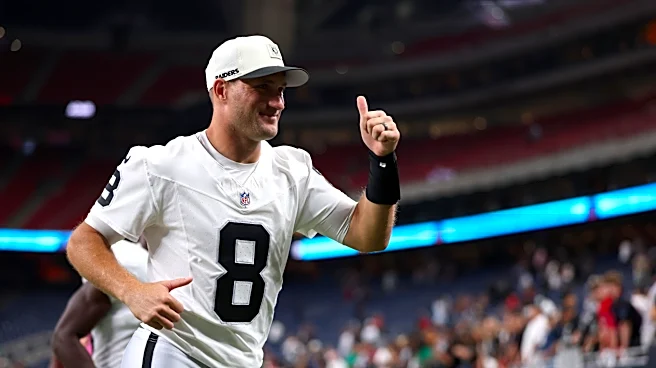


With a salary cap in place, all 32 NFL teams operate with limited funds in any given year. And it’s that maximum limit in spending which puts return on investment (ROI) — a term usually reserved for the business world — under a bright spotlight.
Such is the case for the Las Vegas Raiders.
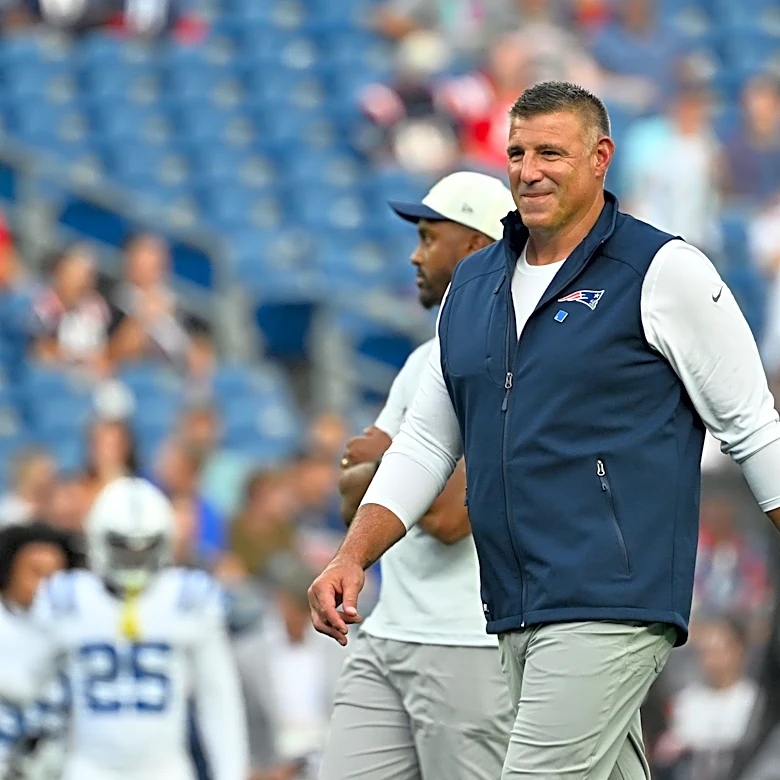
The team entered the 2026 offseason flush with cap space and general manager John Spytek certainly rolled up his sleeves, worked with his player personnel crew alongside head coach Klint Kubiak and his coaching staff,
and went to work.
Instead of bargain bin shopping on free agents like his initial season as the Silver & Black’s chief personnel man, Spytek and Co. spent the second-most coin in free agency this offseason at the tune of $308.157 million, according to Over The Cap. That sum finished just behind the Tennessee Titans who shelled out $317.962-plus million. That noted, the Raiders were also tops in total guarantees ($235-plus million) and full guarantees ($201-plus million). Hence, the focus on ROI.
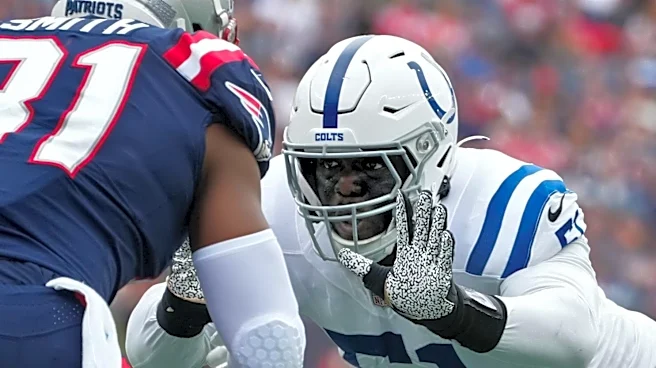
We’ll focus particularly one one specific free agent: Kwity Paye.
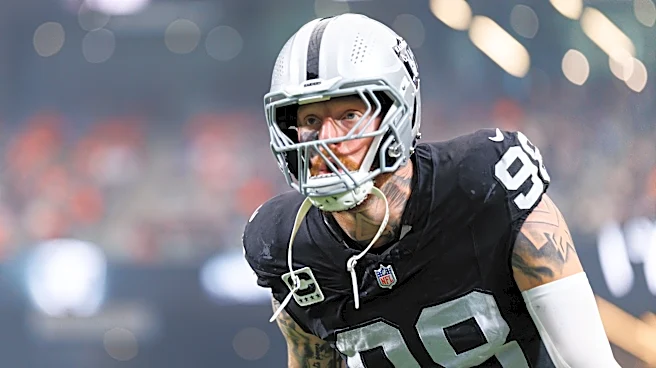
Las Vegas signed the former Indianapolis Colt to the second-most expensive free agent contract it doled out with a three-year, $48 million pact. Spending that kind of coin on a pass rusher requires confidence in high returns and Paye becoming the complementary presence opposite elite edge Maxx Crosby is integral to the Raiders’ desire to succeed in Year 1 under Kubiak and beyond.
Just as how fleeting the Raiders responsible resource allocation has been, so has the presence opposite of the team’s premiere edge rusher. The last time the Silver & Black deployed a complementary piece was in the 2021 and 2023 seasons, years where Yannick Ngakoue roared off the other side for 10 sacks in ’21and then Malcolm Koonce who had a breakout campaign with eight sacks in ’23.
Koonce very much remains as part of the team (inking a one-year, $11.04 million contract this offseason) and is trying to recapture his 2023 form after a torn ACL suffered in 2024.
Which brings us back to the Raiders’ newly-inked and rich edge rusher.
Paye Day
At a sturdy 6-foot-3 and 265 pounds, Paye was the the 21st overall prospect taken by the Colts in the 2021 NFL Draft out of Michigan and was expected to have explosive testing numbers at the NFL Combine that year. However, much of that occurred at the Wolverines’ Pro Day where Paye clocked in a 4.57-second 40-yard dash time (for comparison, Crosby hit 4.66 at the 2019 combine) to go along with a 35.5-inch vertical jump and 36 bench press reps.
After five years in Indianapolis, Las Vegas came calling and offered both a nifty pay day and a scheme that enticed Paye.
“The scheme is something that really drew me to come here. And just Robbie (Leonard) being the DC (defenisve coordinator) and wanting to come out here and play with these guys,” Paye noted in early August after one of the Raiders’ training camp practices.
“Yeah, I think for me, I just got to put everything on the line,” Paye added. “Going into my sixth year playing a lot of football. I feel like there’s still a lot more for me to give. I’m just excited for this defense, this scheme. It’s different from last year and I’m just excited. Robbie probably is going to dial it up.”
Dialing it up from Leonard’s play calling and player development and Paye is instrumental too how the Raiders defense sinks or swims this coming season. While Paye hasn’t eclipsed the 10-sack mark yet (his highest output was 8.5 in 2023), he does have the size, power, and athleticism to be a force against the run and pass. He’s totaled 37 tackles for loss alongside 30.5 sacks, 50 quarterback hits, four forced fumbles, and 123 solo tackles in his career, according to Pro Football Reference (PFR). PFR also charted Paye with 97 pressures and 44 hurries over his five years in the league so far.
Paye has the skillset and production to make teams rue double-teaming and focusing all the attention on Crosby. And that’s simply what a lot of opponents did against the Raiders. Occupy Crosby with as many offensive lineman and chip blocks from tight ends and running backs, and run the play to the opposite side. Sure, Crosby still blows up plays, but Paye becoming a force to be reckoned with on the opposite side is sorely needed by the Silver & Black.
Flexible Fit
Because of his size, speed, and strength combination, Paye provides Leonard a defender who can line up in a variety of spots to maximize output.
Leonard is expected to run a fluid defense that shifts between the traditional 3-4 and 4-3 alignments while mixing in tricks of the trade he learned from Seattle Seahawks head coach and defensive play caller Mike Macdonald, Minnesota Vikings defensive coordinator Brian Flores, and former Raiders defensive boss (and current Pittsburgh Steelers DC) Patrick Graham.
Paye has the physicality and athleticism to set the edge to stymie the run and rushing the passer from the edge or sliding inside to provide bite as an interior rusher.
“It’s been really fun. I can play everywhere really. Robbie knows that, so it’s been good to play some 3-technique, play some Big End, play some SAM linebacker,” Paye said. “And then versatility with other players too, like Quay (Walker), who”s playing the Dime, the WILL, and the SAM as well. It just gives Robbie more options in his play calling and he’ll feel comfortable calling the call.”
The deployment by Leonard and Paye’s production will go a long way into ROI and justifying the financial investment the Raiders made in the 27-year-old defender. Paye tied his career-low in terms of sacks with just four in his final season with the Colts (he also had four as a rookie) and is looking to bounce back with his new squad. But with Crosby rushing from the opposite side, the presence of linebackers Walker and Nakobe Dean (both adept at rushing the passer on blitzes), alongside the coverage on the back end, there’s a lot of moving parts there but once it clicks (it must), Leonard’s defense has the opportunity to right the wrongs from year’s past.
“Obviously, I love how fast our defense started and how great of a job they did on third down, in the red zone,” Kubiak said of what he saw from Leonard’s group in the preseason finale. “I thought our coaches have done an excellent job. I look forward to going and playing these games with our starters for a full four quarters and then playing a full game together. Offense, defense and special teams complementing each other. That’s the goal, to get all three phases playing at a high level.”
It’s been a long time since complementary football was synonymous with the Raiders.