

I may not be very good at it, but I love chess. Not to the level that I love basketball, the NBA, or the Lakers, but it’s not too far off!
The strategy, the tactical decisions, the way every player seems to have their own style and approach that forces you to play them as much as what the board is telling you to play, the way you can instantly switch from defending to attacking and back, the way a great move exhilarates and a blunder totally deflates you…there’s just not really another game quite
like it.
In fact, after reading the above graf again, maybe I enjoy the game as much as I do exactly because it does remind me of basketball in a bunch of ways.
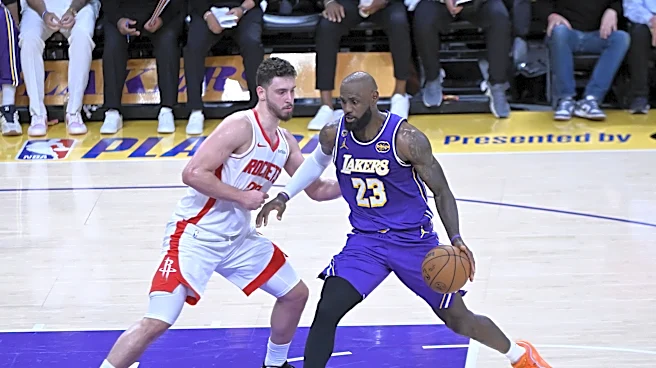
No, it’s not physically taxing in the same way as, say, defending Luka Dončić coming off a pick and roll or trying to fend off LeBron James in the post, but playing chess at the highest levels can put a massive toll on your body, and some believe that “a chess grandmaster’s stress reactions can mimic what elite athletes experience…based on breathing rates (which triple during competition), blood pressure (which elevates) and muscle contractions before, during and after major tournaments”.
What does any of this have to do with the Lakers right now, you might ask?
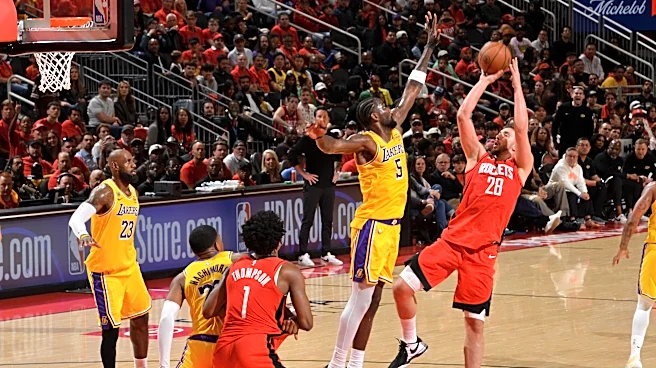
Well, first, in the aftermath of the Lakers’ upset win over the Rockets my mind reflexively goes to how much of the series mirrored a high-level chess match, with JJ Redick taking a lead in the opening with his superior game planning to help get his team an early lead, the Rockets getting their footing the middle game to try to come back, and then the Lakers leveraging their better position to execute a check mate and close things out.
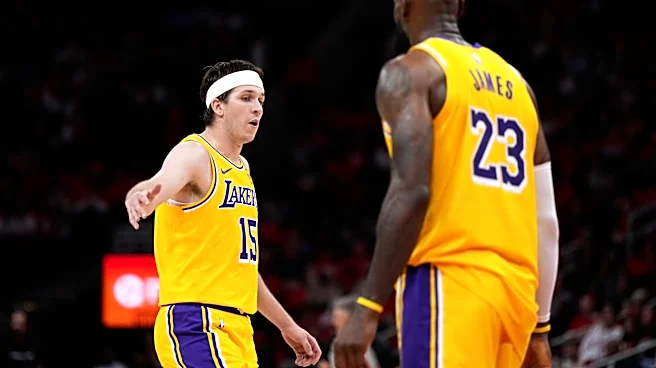
And then, second, in a recent episode of the Mind the Game podcast, Austin Reaves recalled a story about having to carry around a chessboard on road trips his entire rookie season, courtesy of Rajon Rondo. This then led me to the biggest chess connection to the Lakers, which is Luka Dončić’s love of the 64 squares.
Dončić is a well-known lover of the game and once even had an AI-driven chess bot created in his likeness by chess.com. The Luka-bot would improve the more games it played, learning the tendencies of players who tested it and ultimately becoming good enough to beat elite players. It’s now one of the best bots on the site and nearly impossible to beat.
In any event, this has all led me to think about this year’s team and how they relate to chess. And, what better way to do that than to compare the players themselves to actual chess pieces?
If you’re not familiar with the game or the pieces themselves, don’t worry too much. I’ll do my best to explain my reasoning below. You can also learn more about the pieces and how they move here. With that, here we go…
Luka Dončić
Clearly, Luka is the queen — the game’s most powerful piece. Like the queen, Dončić is the game’s most ferocious attacking piece and is equally a threat from long distance and in close quarters and everywhere in between.
The queen also has full reign of the entire board, moving in whatever direction it likes for as far as it wants to go, which aptly describes how Luka traverses the court, getting to whatever spot he pleases, whether through craft, skill, or brute force. There’s no more dangerous a piece than the queen and there’s no more dangerous player than Luka.
Just ask any opponent he faced during the blazing heater that earned him Western Conference Player of the Month for March.
I know Luka is still out with injury, but when healthy and at the top of his game, there are few players in the league who can match the diversity of his skill set and all the ways he deploys it to take down opponents.
LeBron James
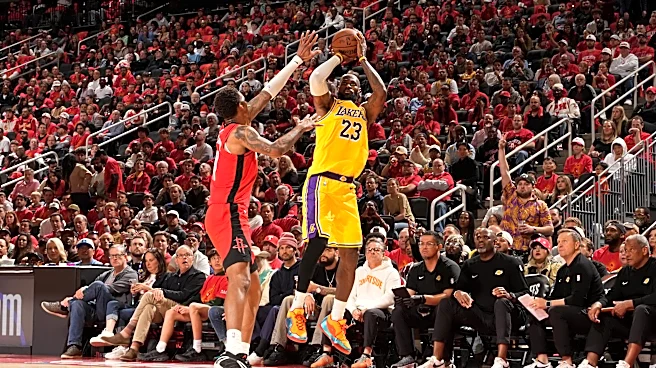
With Dončić out injured, LeBron put his crown back on and took on that same role to dominate the Rockets series and push the Lakers into the second round. That said, when everyone has been healthy this season, the man whose nickname is “The King” is more of a rook in the way he’s asked to play on these Lakers.
Rooks are an incredibly powerful piece whose forceful, straight-line, and limitless exploration of the board remind of LeBron streaking up court in transition for powerful dunks and (what remain) insane finishes at the rim.
Further, rooks are masterful end-game pieces who often take over games when both players’ queens come off the board and LeBron has long been a master in the clutch, making the right decision for the team to win the game instead of seeking out glory for himself. Again, ask the Rockets about how Game 3 ended.
Lastly, because they’re so powerful and important, Rooks can also greatly impact the game by giving themselves up in a sacrifice in order to open up space for another piece to attack and checkmate the opposition, which almost perfectly describes how LeBron, in the last part of the regular season, took on a lower usage role for this team so Dončić and Austin Reaves can cook.
Austin Reaves
Some might find this controversial, but I see Austin as a knight. Knights are tricky pieces that move in unorthodox ways and excel in tight spaces. They often deceive opponents, particularly in end-game situations, where their ability to hop around the board can lead to taking down queens and rooks just as easily as they would a pawn.
If this doesn’t perfectly describe how Austin manipulates defenses with quick changes of direction, playing in tight quarters and finishing in the paint under and around bigger defenders, I don’t know what does. Also, just like a knight, he is great in end-game situations, particularly when teaming up with a rook to control a bounty of space on the court — just as he has for so long with LeBron.
Rui Hachimura and Luke Kennard
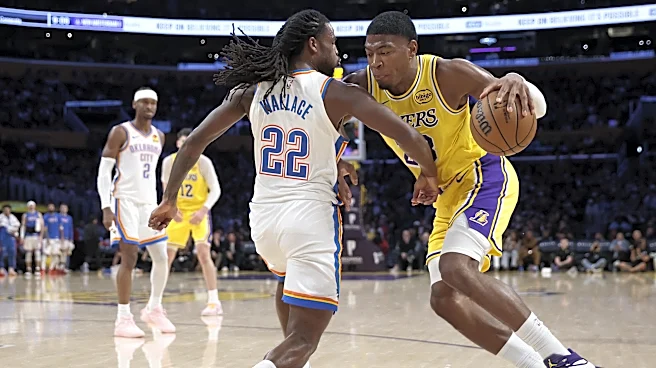
Okay, so this one is as obvious as it is easy — these guys are the Lakers Bishops. Bishops are long-range snipers who help control the game from long distances, but can also do damage in close quarters when protected by their mates. This is exactly the role that Rui and Kennard fill on the Lakers, spacing the floor and targeting opponents from behind the arc.
But if they get pressured, they are also adept at moving in closer while maintaining their deadly accuracy.
Kennard and Rui were both deadly in this exact way vs. the Rockets, with Luke’s outside shooting driving the team’s success early in the series, and then Rui’s hot-shooting Game 6 helping to clinch the series and send the Lakers to the 2nd round.
Marcus Smart and Jake LaRavia
It might sound pejorative, but these two rugged wings are like center pawns. The two pawns directly in front of the king and queen control critical space in the middle of the board, often serving vital roles on both offense and defense.
These pawns help deflect opponents and keep them at bay, preventing them from penetrating past a certain point to protect the back line. The nature of them being the middle of the action give them great responsibility as defenders, often absorbing much of the offensive pressure from the other team and, if doing their job well, forcing the opposition to attack from different parts of the board.
Offensively, they help anchor in your main pieces, serving as complementary forces who can bring value when they create an outpost for your Knights and Bishops or when they advance in tandem up the board to protect each other.
These are the types of roles Smart and Jake serve for the Lakers, helping protect their teammates with their hard-nosed defense while also showing enough offensive utility to help win games. This is especially true of Marcus, who, as he did against Houston, showed enough two-way ability to help win the team games both by knocking down shots and working out of the post and by thwarting the Rockets’ offense with steals and drawn charges.
Deandre Ayton and Jaxson Hayes
If Smart and Jake are manning the center of the board, I see Ayton and Hayes operating more as flank pawns, serving in complementary roles to the pieces who operate in the middle of the action but are also critical to the rest of the game.
Flank pawns work in tandem with their mates in the middle, protecting them when they advance up the board for defensive stability but also can sneak outside near the edge of the board to pose practical problems on offense. And then, when they do advance up the board, they can anchor themselves in near the edge of the board, ready to sacrifice themselves for the Queen or a Rook to deliver the death blow.
For these Lakers, this is how Ayton and Hayes operate.
Defensively, they back up their perimeter partners to deny driving lanes and protect the rim, but sometimes have to step up themselves and defend on an island while others assist them. Ayton is particularly adept at holding up in this exact way, defending post players one-on-one on the block while also venturing further out to check perimeter players on switches.
On offense, they are constantly trying to sneak behind the opposing defense to get closer to the rim, either to finish themselves or to screen a defender so Dončić, James or Reaves can score. There’s a thankless nature to the work they do, but without their efforts, the team would not be nearly as successful. In this way, they’re very similar to a flank pawn who, if the board shifts a certain way, can become the most dangerous passed pawn that pulls attention there way for a more critical piece to do damage on another part of the board.

There are many more analogies to make regarding the Lakers and the other game I love. But I think the most basic one is that, just as in chess, a key to the Lakers’ success is as much mental as anything they do physically. By locking in, playing with discipline, and leaning into the nuances of their own gameplan — while also being smart enough to know how to disrupt their opponents — the Lakers can position themselves to win any game in front of them.
You can follow Darius on BlueSky at @forumbluegold and find more of his Lakers coverage on the Laker Film Room Podcast.