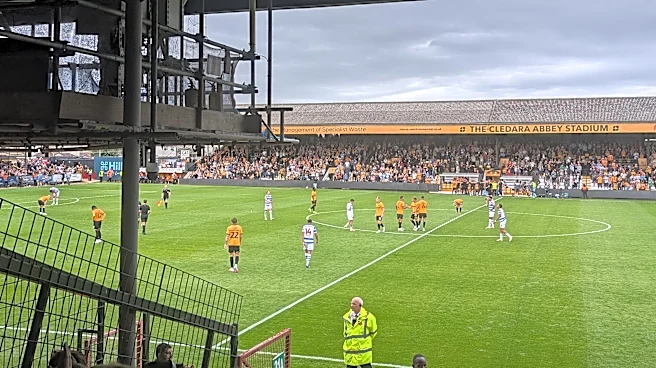


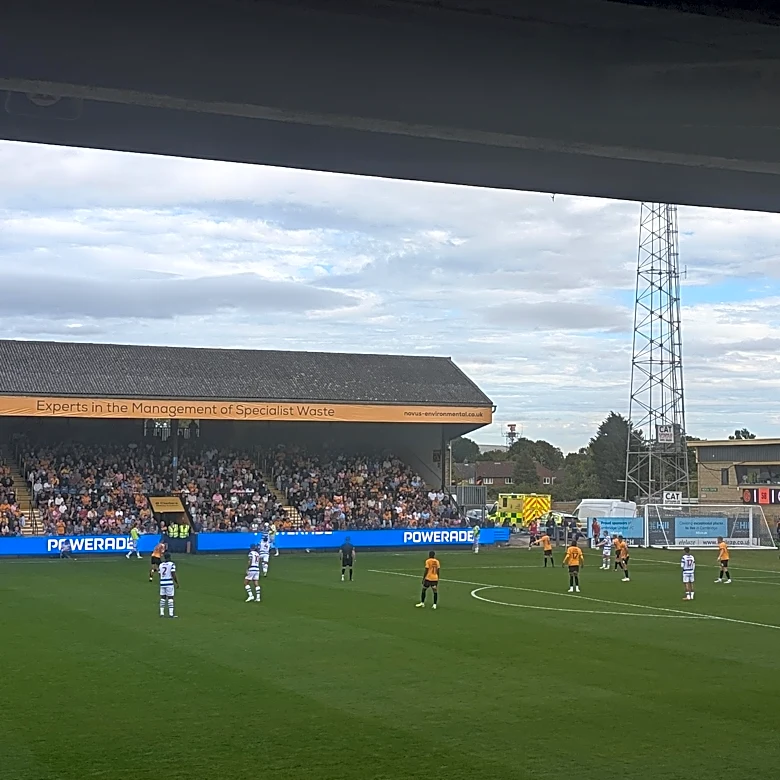
Reading came into the game today looking to build upon three straight competitive wins – the first time we have done that since the 2024/25 season. The last of those came in a 3-1 win way from home to Cambridge United in January 2025 – if ever there were an omen that we could make it four on the bounce, you felt this could be it.
However, this was the first time we would need to play away from home since collecting those three wins and we have had a tumultuous relationship with away games for some
time now.
Coming up against a Cambridge side that we had beaten in both fixtures during their last stint in League One, and with us in good momentum, we had every chance to get a result today, despite Cambridge being vastly improved since then and competing well at the top end of the table so far.
Leam Richardson named an unchanged line-up, which I don’t think anyone would have had any quibbles about, given the side had been given a week without a game and the aforementioned run of form.
Reading (4-2-3-1): Pereira; Godwin-Malife, O’Connor, Ward, Roberts; Wing, Rinomhota; Lisbie, Earthy, Lane; Marriott
Subs: Stevens, Masterson, Savage, Williams, Kyerewaa, Brown, Reid
First half
It showed immediately with a quick start, a passage of play from George Earthy’s kick-off to find Lewis Wing, who played it long to Kyreece Lisbie out wide, to set up a chance to attack, but was pulled up for a foul (a handball by Lisbie – I think).
Andy Rinomhota started strongly too, continuing his rich vein of defensive form by dropping in to cover in the third minute in the space between Wing and Udoka Godwin-Malife to win a challenge to prevent an attack, and Cambridge followed this phase of play up with another, which Paudie O’Connor did well to win a header from.
It is worth noting that O’Connor’s aerial prowess today was excellent and he was the best defender for us.
However, despite that exchange from the kick-off, Cambridge started the brighter of the two sides and looking to press home their erm… home advantage, but Reading continued to soak up the pressure and look to probe.
Cambridge set out their stall early on by identifying Lisbie as the main threat and making sure he was double-marked. However, a Paddy Lane cross found Lisbie in the box for a header in the 16th minute, but the effort was blocked by the Cambridge header.
There was some incredible work from Lane after a Cambridge corner in the 26th minute where Jack Marriott was back defending and headed it away, and the Cambridge pass back to the defender on the halfway line went astray.
With Marriott back defending, Reading had no-one up top, so Lane sprinted to close down the space and put the defender under pressure and dived in to block the long ball back to put it out for a throw. It really was phenomenal stuff from Lane.
Reading had another opportunity in the 31st minute from a whipped effort from Wing, who drifted over to the left a bit, to find Dokes at the back post, whose effort was blocked on the line by the Cambridge ‘keeper.
Reading gradually grew into the game more after this point, taking control of the contest back from Cambridge and this was rewarded in the 38th minute when Wing received the ball around the halfway line and pinged a long ball forward to find Marriott (who else?) lurking in the penalty area.
Marriott won the header but wasn’t able to direct it on target. However, showcasing his fox-in-the-box skills, he was able to pivot onto his left foot to win the loose ball and convert the effort with his left foot. 0-1 Reading.
The confidence from the goal saw Reading go on the attack immediately. Marriott received a ball on the edge of the area and flicked a backheel behind him to Earthy, whose shot was blocked and found its way to Lane on the left, whose fiercely hit effort was well saved by the Cambridge ‘keeper.
The first half ended with Reading looking the stronger of the two teams.
Half time: 0-1
Reading started the second half with no changes made but seeking to continue their ascendancy. A great moment arrived in the 51st minute when Marriott’s shot was parried by the Cambridge ‘keeper and Lane was first to react to attempt to get the shot away but couldn’t control an awkwardly bouncing ball.
Immediately after, Cambridge sprung to life when a cross came in from the left which was unchallenged, finding the shortest player on the pitch at the back post and leading to a looping header to make it 1-1.
It was particularly poor from Haydon Roberts there, who should have done better to get goal-side of the goalscorer to win the header and clear the ball, but didn’t.
The Reading of last season would have allowed their heads to go down. Indeed, the Reading of the first game of the season allowed their heads to go down. But instead, Reading stepped up their intensity like they had gone from first gear to second gear and created a number of chances in the minutes after conceding the equaliser, with Roberts, Lisbie and Earthy threatening in particular.
This period of around eight or nine minutes of pressure then subsided and Cambridge began to come at Reading, with Joel Pereira on hand to make a save in the 61st minute to concede a corner.
Reading didn’t really clear the corner; Cambridge kept the momentum and eventually brought the ball forward and put a cross in from the right, where the Cambridge attacker was allowed a free header, with Benn Ward seemingly having switched off, to complete the turnaround. 2-1 Cambridge.
Credit to Reading, they continued to attack and try to get themselves back into the game and very nearly found the equaliser in the 64th minute, when Lisbie was set free down the right and he cut inside on his left and hit the post.
However, this was almost like a boxing match. Reading would attack for five minutes then the momentum would shift to Cambridge and they’d attack Reading.
One nervy moment in particular was when the Cambridge forward applied pressure to Ward through a high press to cause Ward to concede a corner, instead of being able to find Pereira with a back pass, which lead to an attacking phase of play where Pereira needed to be alert to make the save.
Then Reading would go on the attack again, but not able to create any clear chances.
In the 72nd minute, Richardson rolled the dice and kept the same system, subbing off Marriott for Jacob Brown and Lisbie for Randell Williams in two straight swaps.
Brown received a Wing pass on the edge of the box in the 74th minute looking to make an instant impact but instead mis-kicked the ball and dragged his effort wide.
As was becoming the nature of the game, Cambridge then went on the attack again and Pereira had to be alert to make a save to keep Reading in the game. Shortly after, in the 76th minute, Dokes was able to break down the right and skip past the challenge from the Cambridge defender, getting a low cross into the box which found Williams, whose flick was not on target.
In he 78th minute, Richardson made two more changes to bring on Jamie Reid for Roberts and Charlie Savage for Rinomhota, which suggested a change of shape to go to 3-4-1-2 with Lane and Williams playing as wing-backs, Dokes dropping into the right of a back three with Reid and Brown leading the line and Earthy playing behind them. Would this change the dynamic of the game?
Not so much, but there were moments. Williams delivered a fantastic right-footed cross in the 86th minute which found Brown, but Brown was unable to control it and went down claiming to have been felled by the Cambridge defender.
To be honest, I think it would have been harsh on Cambridge, and Brown did poorly with the excellent service provided.
Ward also appeared to have picked up an injury at some point in the second half and visibly seemed to be struggling – it was strange that he continued to play on, but perhaps this decision was made on the basis that, for the final 10 minutes of the game, Cambridge were content to camp out in the box and defend for their lives.
Reading continued to have chances – Savage and Lane both had efforts blocked – but still didn’t seem to have any answers to how to break down the low block of Cambridge or how to convert this dominance into a goal.
Four extra minutes were added on, and Reading continued to make chances. Brown drifted to the right and put a fantastic low cross into the box in the 94th minute, but nobody was there to convert.
Savage picked up the scraps but was unable to do anything, and Cambridge set off on a counter-attack to eat up the remaining moments of the game, which they successfully did.
Full time: 2-1
A loss then, and a difficult one to swallow.
Reading played well throughout the game and it certainly felt like we’d done enough to have at least earned a draw – we completed more shots and passes and had more possession. Indeed, we’ve played worse before and won.
However, some old problems resurfaced for us. It’s one thing to play well at home, but another to do so away and we need to improve upon this with two away league games so far, but having only picked up one point from them.
Playing against teams with a low block and having to find a way to break down the defensive lines remains a problem and Richardson seemingly didn’t have a plan B – his initial subs to turn the tide in the 72nd minute both came too late and were also like-for-like, not converting to a different shape until the 78th minute, when all and sundry could see that something different was needed for at least 15 minutes before that point.
There were newer problems too. Cambridge did well to pinpoint Lisbie as a threat and always looked to double up on him, isolating him, and while he had his moments, he struggled to make much of an impact on the game today. Likewise, Dokes struggled to get forward until the later stages too.
The hope is that we can learn from this. We had chances, but we need to be more ruthless. Similarly, both goals showed clear defensive lapses and it’s very easy to pinpoint the exact errors made by both Ward and Roberts that allowed Cambridge to take advantage and convert our one-goal lead into a one-goal deficit.
Lastly, while we didn’t concede any late goals, we were noticeably better in the first half than we were in the second, and this has been the story of the season for us.
The possible exception to this could be the 3-1 win against Blackpool, but even then, that second half of that game was more about moments than dominance.
Perhaps I shouldn’t be too negative. On another day, this could have been a different result.
However, the onus is now on Richardson and the coaching team to show that they can work on these issues and solidify the back line, coach players to be more ruthless on a consistent basis and to keep up the energy levels in the second half of games, before we become too predictable to play against.