


A decent NBA trade has to meet the NBA 2K standard.
What is the NBA 2K standard? It’s simple. The first question about any transaction is this: Would this be a good deal in NBA 2K?
If the answer is yes, that doesn’t mean it’s a good deal in real life. There is more to consider. That said, if the answer is no, you’ve got yourself an unequivocally bad trade.
Meaning, there’s a purely transactional perspective, and a real-world perspective. There’s what happens in theory, and what happens in practice.
There are logical avenues that will not be explored for illogical, messy, real-life reasons.
Let’s apply the 2K standard (it’s been shortened) to two consequential deals the Rockets have made during the Stone era. The Kevin Durant deal, and the Nets-for-Suns picks deal. A lot of fans would agree that the Rockets are in a problematic place:
Did those deals put them there?
Durant deal made sense in theory
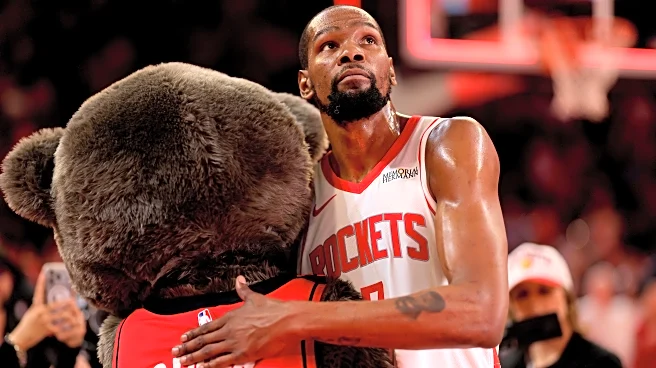
The Durant deal meets the 2K standard.
The Rockets were coming off a 52-win season. Jalen Green was still essentially bad. They flipped him, Dillon Brooks, and the 10th pick for one of the best scorers in NBA history. The theory made sense.
You could argue over the value of that pick. It turned out to be Khaman Maluach, but it didn’t have to. Yet, scouring through the subsequent selections, it’s really only the very next pick (Cedric Coward) who Rockets fans should pine for. If we take the aggregate value of everyone available (rather than assuming Rafael Stone would have made the very best choice out of 40 options), this deal still works in theory.
In practice, it has had problematic elements. The pressure is on. The Rockets are heavily linked to Giannis Antetokounmpo. That would mean emptying the warchest. It probably would not be the case if they hadn’t made the Durant deal.
In theory, it could be most sensible to “undo” the Durant deal this summer. If you could move him for something approximating what you gave up, it would put the Rockets in arguably a better situation. They’d be less inclined to rush and less worried about short-term wins.
In practice…it’s not that simple. Selling ownership on a temporary step backwards to take two steps forward is likely to be difficult. Now that Durant is here, from an ownership perspective, Antetokounmpo should follow.
So, was this trade a mistake? The jury is still out. It meets the 2K threshold, but unless management and ownership are aligned enough to do the sensible thing, it could prove destructive in a short time. Houston can “run it back” with a healthy Fred VanVleet and Steven Adams in 2026-27, but if they still prove short of real title contention, it will be time to either consolidate or retool. If acquiring Durant strong-arms management into choosing the former route, the trade is likely to look bad in hindsight.
At least it meets the 2K threshold.
Rockets gave up potentially their best asset
The June 2024 Nets’ picks for Suns’ picks swap decidedly does not.
Three arguments primarily justified this trade. Firstly, it was argued that trading (potentially) quality picks for a larger quantity of picks would make it easier to facilitate future deals. Secondly, it was speculated that making this deal would allow the Rockets to leverage the Suns should they want Kevin Durant or Devin Booker. Lastly, it was rumoured that the Nets would not have traded Mikal Bridges if they did not get control of their own draft back.
Well, it sure looks like a quality pick would be useful right now, doesn’t it? If the Rockets were in the running for one of AJ Dybansta, Darryn Peterson, or Cameron Boozer, this season would feel a lot cosier, wouldn’t it?
And just how badly did the Rockets need leverage over the Suns? They traded just one pick, which had already been conveyed, to get Durant. The Suns weren’t motivated by future draft control – they didn’t gain it. In theory, the 2025 Nets pick that Houston already owned could have landed 10th or higher, and they could have made the same trade.
Is Devin Booker good enough to restructure your assets to target? Here’s an answer: No.
Finally, let the Nets keep Bridges. They are 17-56 this year. They’re what, 22-53 with Bridges and no other changes?
Sure, there’s the butterfly effect. If they’d kept Bridges, perhaps they’d have made additional win-now moves. Who has changed teams since 2024 that would have made a material difference? Unless Brooklyn had been the benefactor of whatever on earth happened with Luka Doncic, there’s a world where they don’t see a move worth making and opt to maintain future flexibility at the expense of present losses.
Alternatively, yes, there’s a world where they acquire Trae Young and Anthony Davis and get on pace for 40 big Ws. It would have been better to roll the dice. Being in a position to add a top-three pick in a historically good three-man draft would have been better than – well, just about anything.
Hindsight is 20/20. If you’re feeling slueth-y, you can probably find an article where I justify this deal. Well, in this case, trust what you’re seeing with your 20/20 vision. This trade was a potentially catastrophic decision (foresight being 0/0).
It does not pass the 2K test.