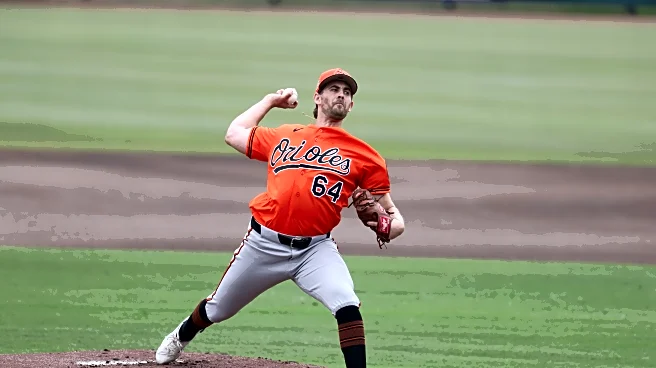

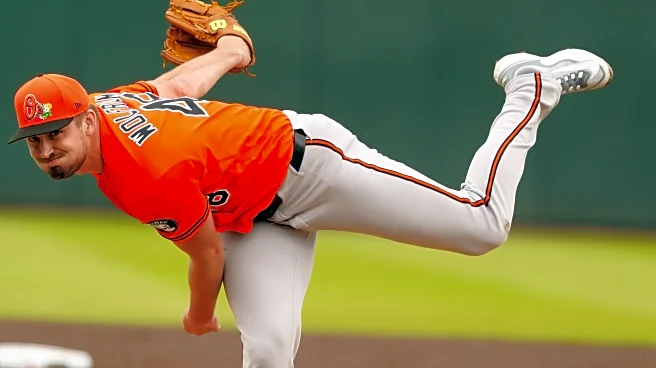
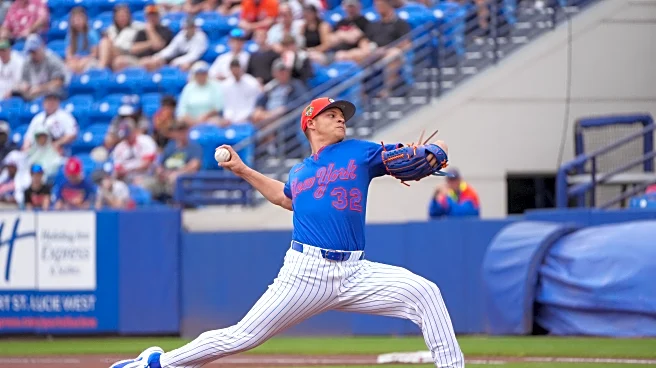
When the Mets signed Jorge Polanco to a two-year, $40 million contract to be their first baseman just days after Pete Alonso got five years from the Baltimore Orioles, it was, to put it lightly, a surprise. Polanco has been a good offensive player for a number of years, with a standout 2025 for the Seattle Mariners. However, he had never played more than an inning of first base professionally and, entering his age 33 season, isn’t exactly at the stage of his career where a positional change this
extreme is likely.
Now, let’s get both extremes out of the way. Polanco was a not-great middle infielder for most of his career, but based on all available data, playing second base or shortstop is much higher on the defensive difficulty spectrum than playing first is. He is downshifting positional difficulty, which is the better approach for someone learning the position during spring training. So this isn’t like asking Juan Soto to learn shortstop.
But playing first isn’t, as Brad Pitt as Billy Beane once said, “not that hard.” First base is a very different position than any of the other infield positions because of the footwork, the stretching, and the picking, all of which don’t really resemble play at the other positions. While, yes, the worst defenders on the field usually play first, they usually know how to play first base. So this isn’t as simple as just giving Polanco a new glove and suddenly getting Lou Gherig out there. Plus, he’s going to be catching throws from a brand new third baseman in Bo Bichette, which adds to the difficulty.
The truth likely lies somewhere in the middle of that spectrum, and while Polanco has played a few games at first this spring, it isn’t as if his performance has sparked gobsmacked reactions on either extreme. This is likely going to be an open question until Polanco shows one way or the other what his first base defense looks like.
That is only half of Polanco’s game and, frankly, the half that could change at the drop of a hat. If the first twenty games are an unmitigated disaster, Polanco could wind up the (close to) full-time designated hitter and put this question of first base behind us. So let’s look at who Polanco the hitter is.
Actually, that is harder to do than you may think.
Polanco battled a lot of leg injuries, has an 80-game suspension for performance enhancing drugs on his record, and has had a lot of ups and downs in his MLB career. Using Baseball Reference’s 162 game average, Polanco has been a .263/.330/.442 hitter with 23 home runs, good for a 112 OPS+. While those aren’t exactly Pete Alonso numbers, given the mix of players the Mets brought in this season, that’s probably a passable performance.
But those career numbers are not really who 2026 Polanco is. After a disastrous 2024 season, Polanco remade his swing and came out a very different hitter. Our Lukas Vlahos discussed this while grading his signing:
Under the hood, there are clear changes supporting the offensive jump. Polanco increased his bat speed by more than a full mile per hour and nearly doubled his fast swing rate without lengthening his swing at all. He also flattened his attack angle, a change that did result in more ground balls but which also improved the quality of his pulled air contact. All of this drove significant improvements to Polanco’s Z-contact and exit velocity metrics without harming his approach significantly or batted ball distribution in a meaningful way…Polanco had a 92nd percentile ISO and a 13th percentile strikeout rate…Among players with 100 PA last year, Ketel Marte is the only batter better than Polanco in both of these metrics. Jose Ramirez is the only other player somewhat close. That’s impressive company no matter how you slice it.
If the Mets believe that the changes he made are real and sustainable, then let’s use his 2025 as a more accurate comparison for this season: .265/.326/.495 with 26 home runs. That’s a 134 OPS+, which is much more palatable for a first baseman. For context, Alonso’s OPS+ was 144 in 2025.
I use Alonso purposely, as that is who Polanco is going to be compared to for his entire Mets tenure. I don’t think anyone, from David Stearns to Polanco, expects Polanco to put up Alonso’s power numbers in 2026. Alonso is, at this moment, one of the elite power hitters in the game, and over the course of Polanco’s two-year deal, he will likely always be the inferior power hitter to Alonso.
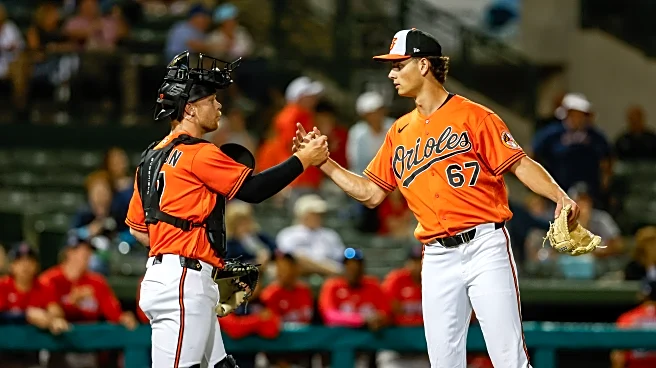
But signing to Polanco for two years is very different than signing Alonso for five. Polanco at first is a roll of the dice, but Alonso at first is a known quantity. And what’s known more than many of
us want to believe is that Alonso is declining defensively, and doing so at a fairly steep rate. It is understandable to want Alonso, who you know what to expect from, versus Polanco, a total unknown at first base. But even if Polanco is a disaster at first base and at the plate, he’s a more affordable and short term disaster than Alonso may wind up being.
But if Polanco can be a passable first baseman – a big if – and he can keep his changes from 2025 going – another big if – the overall performance between the two may be closer than we think.
Of course, that doesn’t erase the many fantastic memories we have of Alonso as a Met, nor does it lessen the sting of his departure for those that wanted to root for him in blue and orange for the rest of his career. But what it may do is help the team win baseball games. And that is why we are all here, isn’t it?