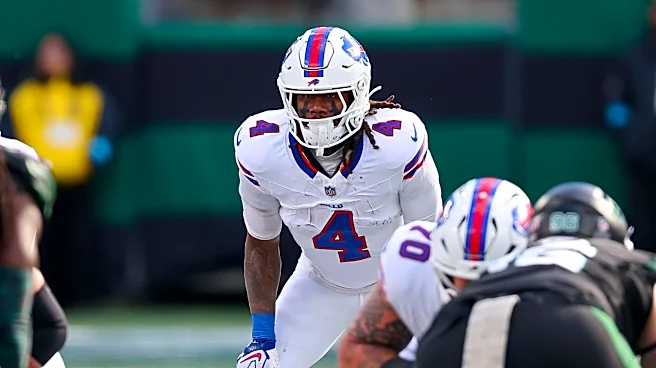



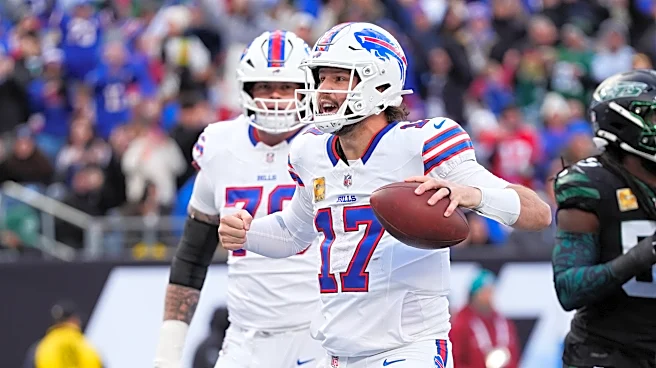
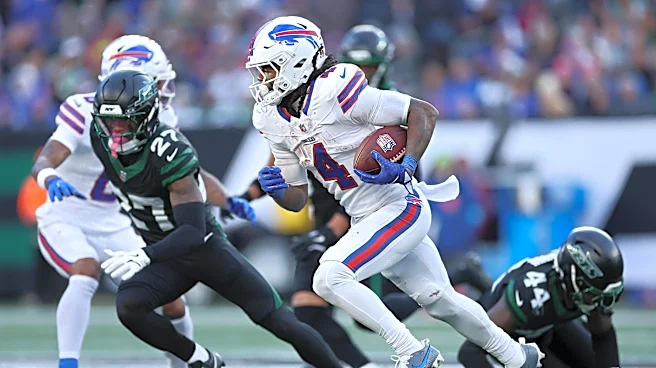
The Buffalo Bills have loved running the football thus far in the 2026 season.
James Cook has the second-most carries in the NFL right now at 187. As a team, the Bills are the current owners of the second-highest first-down designed run rate in the NFL at 61.3%.
Now, sure, the Bills have recently played in a collection of games that featured plenty of garbage time, when Buffalo has attempted to burn clock by tapping into the run game.
Even when garbage-time is considered, the Bills have the NFL’s second-highest
run rate on all downs at 45.7%. The rest of the league averages a designed run play on 39.3%. Quarterback scrambles — that occur on dropbacks — and spikes and kneels are excluded in that calculation.
Analytics have proven that passing the football is more efficient than running the football. And this article isn’t going to show that the Bills have actually become more efficient on the ground than through the air.
Right now, in non-garbage time situations, Buffalo’s designed-run game has provided the team +0.023 EPA per play, the eighth-highest figure in the NFL. The team’s pass game has provided the team +0.239 EPA per dropback, the fourth-best in football. Unsurprisingly, the difference in value added for each method of moving the football has been seismic.
Up until now, the Bills have genuinely attempted to “establish” the run in their first nine games of the 2026 campaign.
Accepting that fact raises two questions: what type of play call have the Bills chosen on second down and how effective have their second downs been?
Before I begin with the results, despite an overall negative EPA in first-down run scenarios (-0.059, the 15th-highest in football), the Bills have had 16.4% of those runs gain 10+ yards. That’s the fourth-best in the NFL and much higher than the league average of 10.3%.
This is where things get fascinating for Buffalo’s elite offense. And where it has leaned on its pass game.
On second down after a first-down run — in non-garbage time scenarios, of course — the Bills have dropped back to pass 73.8% of the time, which is the fourth-highest rate in the NFL and noticeably higher than the league average of 64.5%.
On all second downs, regardless of whether a run or pass was called on first down, the Bills’ dropback rate is 66.9%, the ninth-highest in the NFL.
While the Bills are actually below league average in conventional passing statistics within both second-down parameters, they are 12th in EPA per dropback in second downs after a first down run and on all non-garbage time second downs.
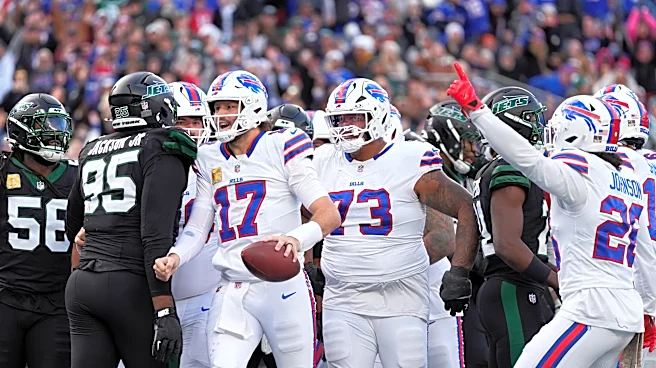
An enormous element of said impressive EPA per dropback on second down for the Bills despite below-average passing statistics in those situations is of course Josh Allen scrambles, the ultimately luxury built into Buffalo’s dropback game. The possibility of an Allen scramble occurring on a dropback must be considered.
Allen has eight scrambles on second-down runs that have totaled 87 yards. That’s 10.9 yards per scramble, the second-highest average among all quarterbacks in those scenarios. His +1.162 EPA on those plays, is far and away, tops in the NFL.
You have survived this massive number dump, and I appreciate you making it this far.
Essentially, yes — the Bills have been very run heavy. But they’ve smartly morphed into being one of the league’s more pass-happy clubs on second down, and Allen’s running on second-down dropbacks have been incredibly effective.