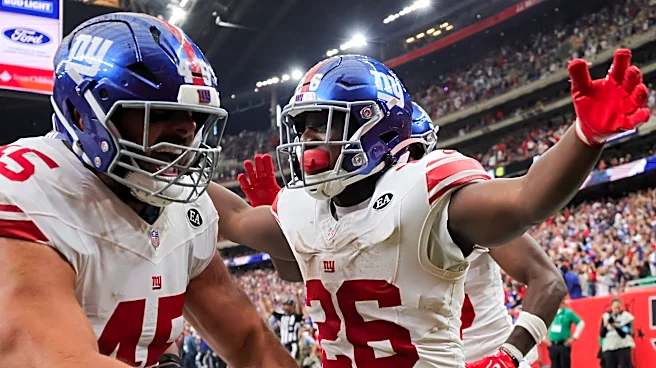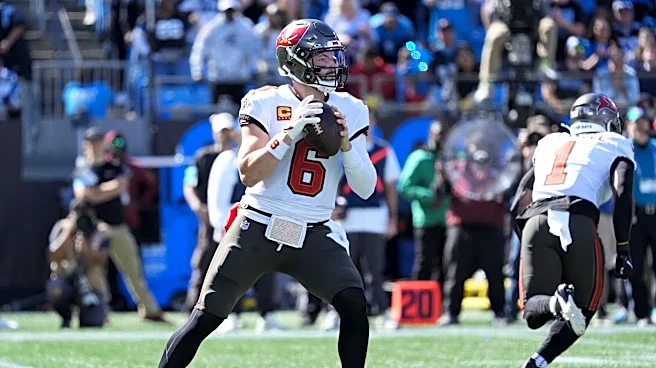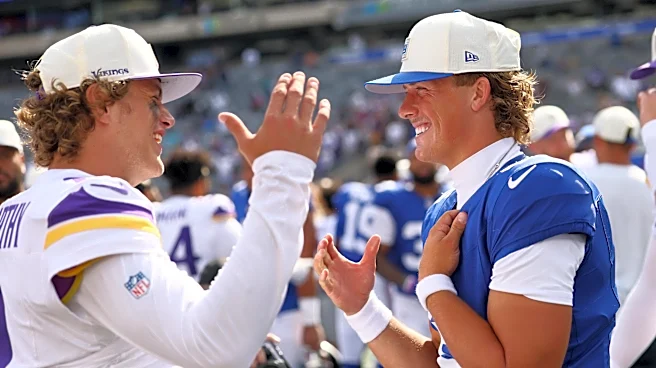

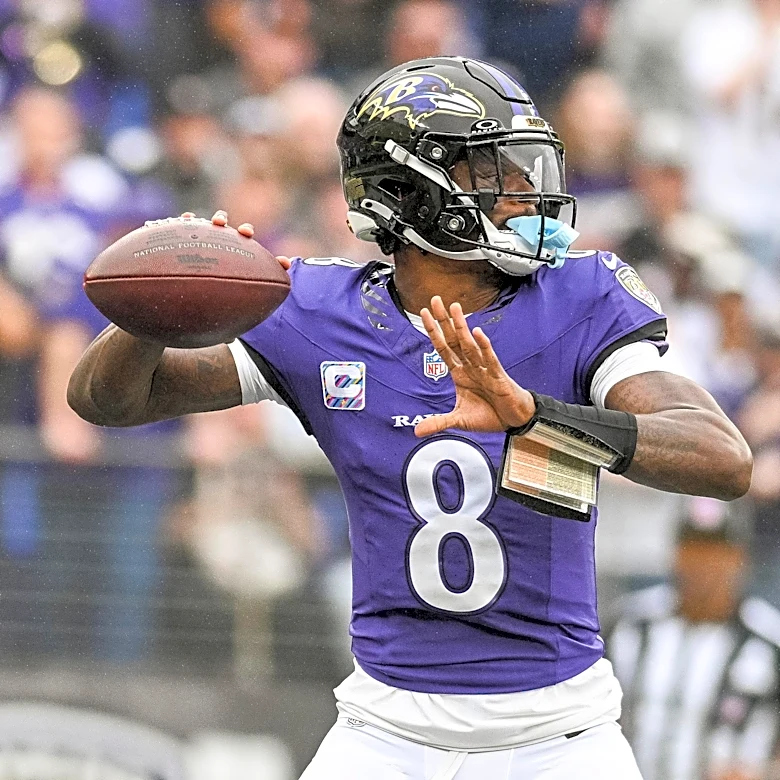

The New York Giants may very well find themselves in an awkward (or enviable, or dangerous, depending on your point of view) situation by the end of this season. They entered the 2024 NFL Draft having rolled snake eyes on their expensive bet on Daniel Jones in 2023 after his career-best 2022 season. (The Indianapolis Colts said, hold my beer, and did exactly the same thing with Jones earlier this year, and now they’re the ones who have rolled snake eyes.)
Giants general manager Joe Schoen, having
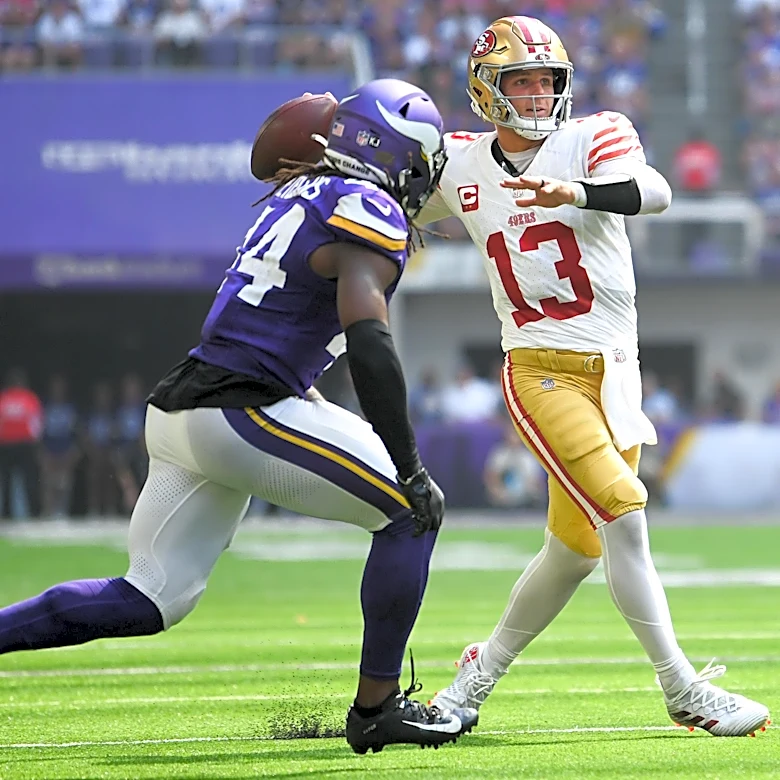
lost out on Caleb Williams, Jayden Daniels, and Drake Maye in the 2024 Draft, decided to pass on the other three “big” quarterbacks in that draft, including Michigan’s J.J. McCarthy, and took Malik Nabers at No. 6 instead. The Minnesota Vikings subsequently gave up a fourth and a fifth round pick to the Jets to move up from No. 11 to No. 10 and draft McCarthy (they also got a seventh rounder). By the time the bye week arrived, Jones had been released and wound up a Viking along with McCarthy. Neither one ever played a down for the Vikings in 2024, McCarthy because of an injury.
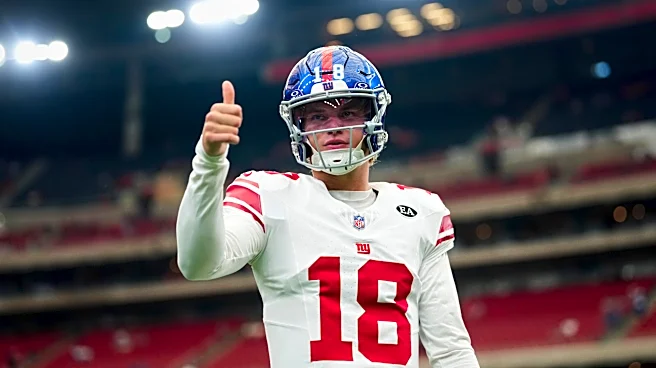
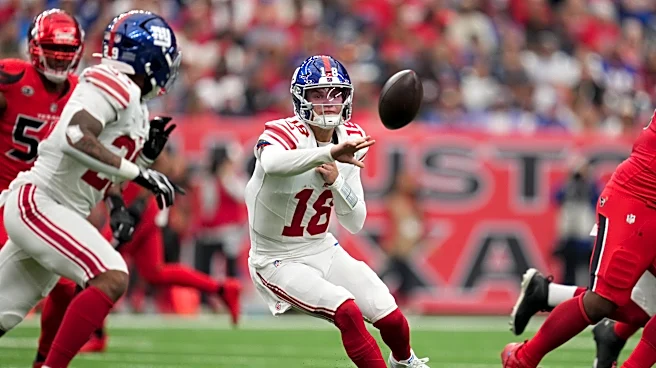
Fast forward to the 2025 Draft and Schoen moved up into the bottom of the first round to draft Jaxson Dart. McCarthy became the Vikings starter (over Sam Darnold, whom Minnesota let walk to Seattle where he led them to a Super Bowl title). Meanwhile, multiple injuries limited McCarthy to 10 starts, and by this spring he had lost his job to Kyler Murray. Dart, whose pro prospects were promising or met with skepticism depending on which “expert” you asked, had a scintillating rookie season (in the eyes of Giants fans, at least) but one that was interrupted by a concussion that caused him to miss a month in mid-season. Then Dart tore his meniscus, MCL, and PCL in Game 2 this year after looking great in Week 1, and Schoen was able to trade for McCarthy, the 2024 No. 10 pick, for the small price of a Round 5 pick.
I realize you know all this, but I just wanted to remind you of it because the story of all these quarterbacks’ intertwined fortunes is not over. The Giants now have both Dart and McCarthy under contract for 2027. What they will do about that is anyone’s guess. Dart thrilled Giants fans with his masterful opening week game leading the Giants to a win over Dallas, but that’s all we got to see of him in year two. Questions linger in the minds of some about both his passing and defense-reading skills, and his shelf life as well given his penchant for running and not avoiding contact. McCarthy had already been tossed onto the scrap heap of public opinion by the time of his trade to the Giants for minimal draft compensation. Yet two weeks ago he relieved Jameis Winston in the fourth quarter after the Giants’ defense had been embarrassed by the Saints and rolled up 243 yards of offense and almost an amazing comeback win. Last Sunday, in his first start, he threw for 252 yards in leading the Giants to an upset road win in Houston. Now Giants fans are salivating about their team’s prospects for an NFC East title. If you saw that coming when they traded for McCarthy, you’re better than me.
The question is: Which quarterback is better, and what should the Giants do with the one who is not the answer to that question? Originally I thought there was a chance the Giants might flip McCarthy to a contending team in the other conference before the trade deadline (which is two days after the Giants’ next game, in Philadelphia). Now I can’t imagine that happening unless McCarthy and the Giants lay such a big egg in Philly that it changes the team’s view of him.
So you play the GM: Assume the Giants decide to trade the lesser of the two quarterbacks next winter. But which one is the lesser quarterback? The charts below show two commonly cited metrics of a quarterback’s play: The ESPN Quarterback Rating (QBR) and the Pro Football Focus passing grade. Both are on a scale of 0 to 100. QBR is purely data-driven, based on the increasingly popular EPA (expected points added, itself calculated from historical data on how much a given play affects a team’s chances of scoring), but with corrections for quality of defense faced and whether a play was in garbage time. PFF passing grade, as most of you know, is a subjective take on the quality of each pass a QB throws, based on film study. Here are plots of the two metrics against each other for both QBs for every pro game they’ve started:

The two metrics are not identical. That’s not surprising since one measures results (QBR) while the other measures process (PFF grade). Also, QBR does include EPA generated by QB runs while the PFF grade that I show is only for passing. Nonetheless, Dart’s PFF grade is correlated with his QBR with a coefficient of 0.67 while McCarthy’s correlation is 0.76.
I’ve labeled a few of Dart’s games to give you a feel for what the data consider his best/worst games to be. Unsurprisingly, the win over the Eagles at MetLife last year, which was really the start of the Dart phenomenon, is ranked highest by both metrics. Both metrics also really like the Las Vegas game that helped drop the Giants to No, 5 in the draft (that seems to have worked out OK), and of course the 2026 opener vs. Dallas. Unsurprisingly, the Vikings game in which Brian Daboll was afraid to even let Dart pass against that Brian Flores defense was his worst of the season.
I’ve only labeled a small subset of McCarthy’s games that Giants fans will be familiar with. Speaking of the Giants-Vikings game, McCarthy’s debut against the Giants at MetLife was nothing to write home about. However his two games for the Giants both rank very highly. QBR prefers the New Orleans game, even though it was only one quarter of work, while PFF likes last Sunday’s game in Houston better. (FYI, the point in the upper right hand corner, McCarthy’s apparently best game by both metrics, was a win in Dallas where he went only 15 of 24 but for 250 yards and 2 TDs in only 27 snaps. McCarthy had an interception in that game but PFF did not charge him with a turnover-worthy play, implying that the ball may have bounced off a receiver’s hands and was then intercepted.) Overall, McCarthy has had about as many stinkers as Dart has had in PFF’s eyes, but unlike Dart, McCarthy’s bad games have had very low QBR, i.e., he did little to put the team in position to score, while Dart’s worst games in PFF’s view mostly have higher QBR, most likely because of what Dart adds with his running game. For example, his debut as a starter vs. the Chargers was notable largely for his 54 rushing yards and rushing TD. McCarthy is a good scrambler but up to now he has not been as much a candidate for designed runs.
So, Giants fans: Let’s assume that Dart will be as good as new by next spring. How should John Harbaugh and Joe Schoen handle the Dart-McCarthy situation?
- Trade McCarthy before the trade deadline; let’s assume they could get a second round pick for him.
- Trade McCarthy over the winter for a first round pick and more, assuming he leads the Giants to a playoff berth.
- Trade Dart over the winter for a first round pick and more
- Let Dart and McCarthy compete for the starter role in 2027 camp and trade the loser for a first round pick
- Let Dart and McCarthy compete for the starter role in 2027 camp and keep the other as backup
- Trade both and draft Arch Manning (only kidding)
Obviously it’s too early to really be discussing this, although an offer the Giants couldn’t refuse at the trade deadline makes it of at least some near-term relevance. But during the bye week it’s fun to speculate; what else is there to do? Quenton Nelson’s already traded, DeForest Buckner’s already traded.
Bonus question: If McCarthy balls out as a Giant, who is the Vikings head coach in 2027?