
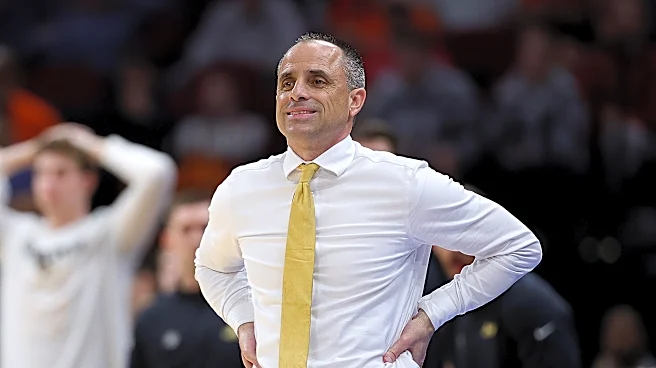
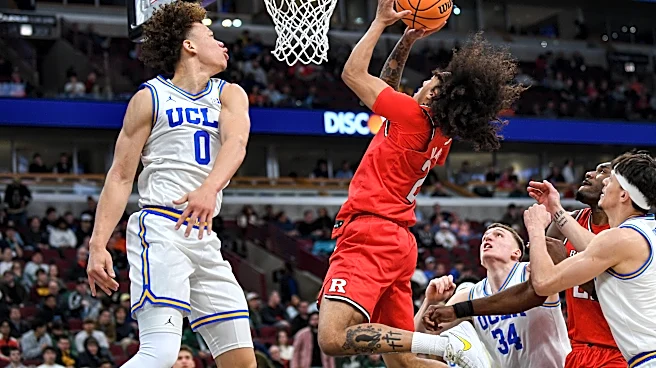
As we move forward with more men’s basketball player reviews, it’s now time to analyze the season of Jordan Clayton, the 6-foot-2 junior guard from Medford, Massachusetts.
The Good
Clayton entered his third-year in Evanston as a Wildcat with one of the most consistent game-to-game identities. His sophomore year, Clayton asserted himself as one of head coach Chris Collins’ most trustworthy defenders. Though Clayton didn’t appear in a game until February, he started in each of his 10 appearances in the latter
part of the season, oftentimes tasked with guarding its opponents’ premier scoring guard. However, on the offensive side, Clayton averaged just 4.7 points per game on 34.6% shooting from the field and 28.0% shooting from behind the arc, finishing the season with a -0.43 offensive Bayesian player rating on EvanMiya.com, which ranked dead last of 11 qualifying Northwestern players.
In his junior campaign, Clayton upheld his reputation as a strong defender. But the most exciting part about this year was his emergence as a sharpshooter from beyond the three-point line.
In an interview following the season’s conclusion, Clayton was asked about his development as a shooter late in the season.
“I know that I can shoot the ball really well,” Clayton said. “My shooting percentage didn’t reflect that my first couple of years, but I just kept putting the work in.”
Clayton did shoot the ball well come conference play. The junior guard shot 44.26% against Big Ten opponents, finishing the season as Northwestern’s second best three-point shooter finishing at 41.0%. In fact, in the back half of the season Clayton became one of Northwestern’s strongest offensive players, in large part because of his massive impact shooting the basketball. From the UCLA game onward, his 2.5 PORPAGATU! (a BartTorvik.com metric to measure a player’s offensive efficiency) was second on the team, marking a full 180-change from last year.
In a few games, Clayton really heated up. The Medford native’s best game came during the ‘Cats’ three-game win streak in late February. Clayton shot 6-for-7 from deep, totaling 20 points alongside four rebounds and three steal, leading Northwestern to a 78-74 victory.
Though, even the Maryland game is probably outshined by the three-pointer Clayton made late in the shot clock in crunch time against Purdue, to put the ‘Cats up 66-65 with just over a minute left to play. Though the Boilermakers would come back to win in the game’s final moments, Clayton’s three will forever be remembered as what would have been a historic moment in Northwestern sports history had the ‘Cats hung on to win.
The Bad
Though Jordan Clayton was hot as a shooter down the stretch of the season, he still struggled to be impactful in other ways offensively. Clayton made just 40 field goals in 31 games, with 32 of those baskets coming from outside the arc. This built upon a trend for Clayton, who in 69 total games wearing a Northwestern uniform has scored a total of just 22 inside-the-arc baskets.
Now that Clayton has had more consistent output as a three-point shooter, he will need to look for more ways to expand his game on the offensive end. Collins loves the energy Clayton brings to the floor on the defensive end, but will likely wait to fully insert him into the starting lineup until he shows he can impact any given game offensively, even if he is having a bad shooting night.
A lot the Massachusetts’ guard’s struggles root from him being undersized. Clayton has always struggled to finish around the rim because he often gets pushed around in the paint. Additionally, on the defensive end, when Clayton brings a lot of energy to the court, he can be exposed by the bigger guards of the conference.
In games like Northwestern’s 76-70 loss to Iowa, where Bennett Stirtz dropped 36 points, Clayton played just seven minutes, his playing time minimized because he started cold from three and couldn’t hang with a more physical Big Ten team.
The Bottom Line
This was a really good year for Jordan Clayton.
The junior began to turn a corner on the offensive end. After entering the year defined almost exclusively by his defensive reliability, he exited it having added a legitimate perimeter scoring dimension to his game. When Clayton is knocking down shots like he did in Big Ten play, his value increases dramatically, allowing his defensive energy to complement real offensive production.
Still, Clayton’s path to becoming a complete, every-night contributor remains clear. Expanding his offensive versatility — finishing inside the arc and maintaining defensive prowess against more physical guards — will be key to earning a permanent, high-minutes role during his senior campaign. However, if Clayton can build on his shooting breakthrough while rounding out the rest of his offensive game, he has the tools to evolve from a situational piece into one of Northwestern’s most dependable two-way guards next season.