

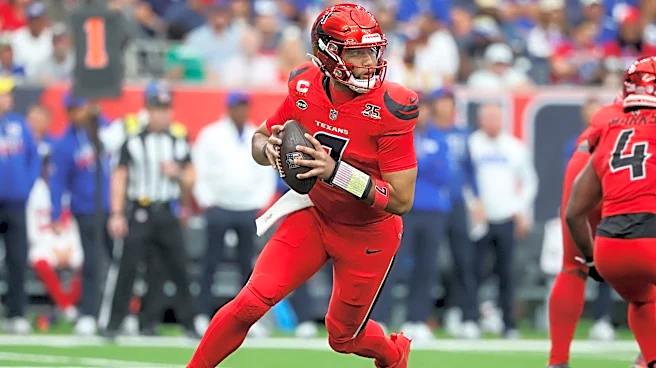

Few seasons in the 25-year history of the franchise opened with as much anticipation and expectation as this season did for the Houston Texans. Coming off a season that tied the franchise record for wins (12) and its third straight season with a trip to the divisional round, Houston seemingly built a foundation for bigger and better things. That the squad practically returned all its key defensive starters only added to the expectations. Free agency and the draft addressed the biggest weaknesses
of the squad, mainly the offensive line and the running game. The team added reinforcements to the defense with the free agent signing of Reed Blankenship and drafting of All-American DL MacDonald. All reasons for optimism.
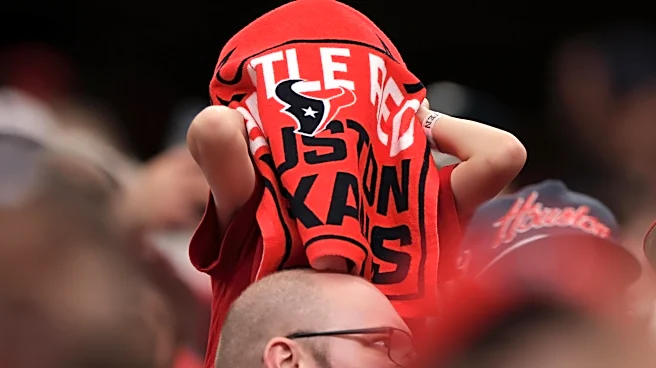
Once the regular season started…the optimism, uh, didn’t last. Houston sits at 2-5, 2-3 in the conference and 2-1 in the division. They are an alarming 0-4 at home. Penalties are still a major concern fours years into the Ryans regime, and he faces the most negative press of his career. Nick Caley is still on many fans “fire into the sun” list, but perhaps the worst coach award has been between DC Matt Burke and DB coach Dino Vasso. The team is getting picked apart through the air, and too often you see defenders confused about coverage schemes/assignments.

OFFENSE: C
Coming into the season, if Houston struggled, you figured it because of the continued struggles of CJ Stroud. His 2025-26 playoff performance stunned most. While his draft-mate Will Anderson Jr. got the big second contract, Stroud just got the 5th year option pick-up. As of now, Stroud is putting much of the negative press behind him. The Texans are 8th in total passing yards, with Stroud 5th in passing, with only three turnovers against him (2 of those came in the first game against Buffalo). WR Nico Collins is still Stroud’s primary offensive weapon. When he missed two games due to injury, the offense could only generate 2 total TDs. 2nd-year receiver Jaylin Noel was having a breakout season but suffered a season-ending injury against the Giants. Dalton Schultz is still a solid receiving TE, but the rest of the receiving corps, to include newly acquired Marvin Harrison Jr are mostly just…there.
As for the previously maligned running game…it is not better. Aside from the opener against a porous Bills defense and the London game against Jacksonville, the team struggled to rush for more than 80 total yards/game. David Montgomery, outside of his 3 total touchdown effort in Week 1, has offered nothing of significance and missed two games due to injury. Woody Marks resumed the RB1 role, but he, nor any other back on the roster, has rushed for more than 66 yards in a game, and the squad’s longest single run on the season is 25 yards. The offense line has not been particularly effective in run-blocking, with the pass-blocking only slightly better. Play-calling consistency and philosophy are also up for debate. Remember the talk about 12 formations? Houston is using them, but they can’t quit the heavy formations with the extra O-lineman, with less-than-ideal results.

Offensive MVP: QB CJ Stroud.
He is the one constant on the offense. While not perfect, he has put Houston in position to win almost all of its games, leading the team to take a late 4th quarter lead or tie in 6 of the 7 games played.
Also considered: WR Nico Collins, WR Jaylin Noel

Offensive LVP: G Wyatt Teller.
Signed to offer competition for the starting line, he slated into the RG slot when Ed Ingram went out with injury. His performance has not been…quality. Especially in run-blocking, which is a critical evaluation point for that position, Teller hasn’t lived up to his (relatively) modest contract. Not that Ingram has lit up the running game when he’s been in, but if Ingram is out and Teller has to play, don’t expect a lot of goodness to come from that side of the line. Really, the entire run-blocking scheme is up for debate.
Also considered: RB David Montgomery

DEFENSE: D-
Usually, strengths quickly devolving into weaknesses only happen in comics and politics. Consider the Texans’ defense. They were #1 in yards allowed, #2 in points allowed and generally atop almost all defensive metrics in 2025. In 2026, not so much. In particular, the pass defense, which was #6 in pass yards allowed in 2025, now ranks 27th. In explosive plays allowed, the team is second-worst. Secondary players have only 2 INTs (3 total for the team), far off the pace for 17 INTs (19 team total) they set last season. At least until the Giants game, the run defense was solid. The defensive line is a mixed bag, for while Anderson and Hunter still bring the pressure (11.5 combined sacks/15.5 TFLs), the rest of the line has been so-so. The LB unit is fighting injuries and inconsistency. However, the secondary is most hurting the squad. Between regression, injuries and poor communication, this secondary reminds fans more of the 2010 defense vs. the lockdown-unit of 2025.

Defensive MVP: Will Anderson, Jr.
33 Total Tackles (17 Solo)/7.5 sacks/11.5 TFLs/1 FF/1 FR. If there were worries about falling off after securing his $50M/year contract, those are no longer a concern.

Defensive LVP: CB Kamari Lassiter.
Last season, you could’ve called Lassiter the best CB2 in the league. This season, he is more a coverage liability. In addition to hurting the team defense, this performance is likely costing him a lot of money, as he approaches eligibility for a contract extension.
Also considered: S Reed Blankenship, who is continuing the trend of ex-Philly safeties playing poorly once in Houston.

SPECIAL TEAMS: C+/B-
Frank Ross’ units generally rank in the top tier of special teams categories. However, this season, that has been inconsistent. The kick return coverage does not always reward the squad for forcing kickoffs, as seen with Indy, Dallas and Jacksonville. Ka’imi Fairbairn is playing to his usually solid level for FGs, save a meh game against Cincinnati. His kickoff capabilities have been a little more mercurial. The punting unit is solid, but not spectacular. Brinkman had a bad snap against the Bengals when Houston missed that early FG. The return units haven’t been all that special, although Noel before his injury did have his moments. Perhaps Tank Dell can step back into being a dangerous returner, especially on punts.

Special Teams MVP: PK Ka’imi Fairbairn.
Improving on kick-offs and his placekicking is consistent.
Also considered: Jaylin Noel.
Special Teams LVP: No obvious candidate here.

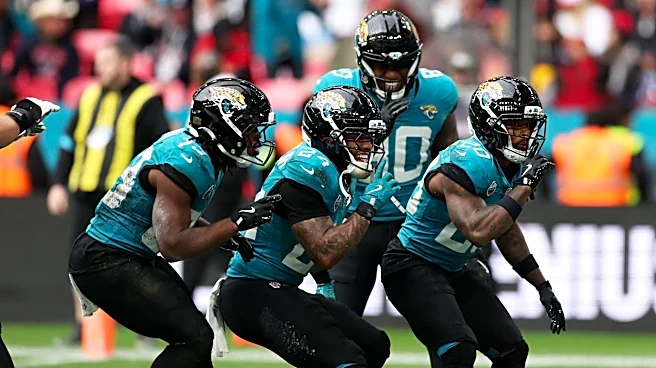
BEST WIN: 34-31 over Jacksonville in London.
Only had two to choose from, so may as well go with the one over an opponent with a pulse.
WORSE LOSS: 19-17 at Indianapolis.
No shortage of options. Given the fire-sale of players going on with the Colts, losing to them like they did may really come back to hurt the Texans on so many levels.
Also considered: 34-30 loss to the Cowboys, ’cause…Dallas.

KEY PLAY (SO FAR): Week 1, 2:10, 2nd Qtr, BUF Ball @ BUF 4, Josh Allen 38-yard pass to TE Dalton Kincaid to BUF 42.
Not a play highlighted in the TDATDA archives. However, when Josh Allen, long victimized at NRG/Reliant, somehow landed a [KITTEN]-It ball deep to TE Kincaid with All-Pro Derek Stingley Jr. on the coverage, it set the tone for the team’s not just for that game, but for the first part of the season for the Texans. Last season, that is a play that Houston would pick off or at least force as an incompletion.
Also considered: Week 4, 6:59, 3rd Qtr, DAL ball at the HOU 4, 4th and Goal: Prescott pass incomplete. Penalty on Lassiter (Defensive Holding)

OVERALL MID-SEASON MVP: QB CJ Stroud.
So far, when Houston succeeds, it is due to the offense, thus, the best player wins here.
Also considered: DE Will Anderson, Jr.

OVERALL MID-SEASON LVP: Secondary Coach Dino Vasso.
So much inconsistency and poor play in the secondary that spans multiple players. While Vasso is not solely responsible, he does shoulder blame for the apparent lack of adjustments.
Also considered: Texans run blocking, DBs Lassiter/Blankenship.
OVERALL MID-TERM ASSESSMENT: D-
There is no other way to call the start of the season but disappointing. This squad had visions of a high playoff seed and a deep playoff run. The former is pretty much off the table, given that Houston is down in many of the conference tiebreakers. The latter, well, they are still alive for the playoffs, but the margin of error is nil. Stroud’s rebounding from this horrid postseason is arguably the only thing keeping this team’s slim chances alive. In theory, the first few games post-bye should offer the team a chance to rebound. Then again, until this squad can showcase consistency commiserate with its talent, it is hard to get too hopeful of another big run.