
Welcome to BCB After Dark: the grooviest get-together for night owls, early risers, new parents and Cubs fans abroad. We’re so glad you decided to stop in tonight. It’s been a busy day, so it’s a good
time to settle in and relax. Come out of the cold. We can check your coat. There’s no cover charge. Bring your own beverage.
BCB After Dark is the place for you to talk baseball, music, movies, or anything else you need to get off your chest, as long as it is within the rules of the site. The late-nighters are encouraged to get the party started, but everyone else is invited to join in as you wake up the next morning and into the afternoon.
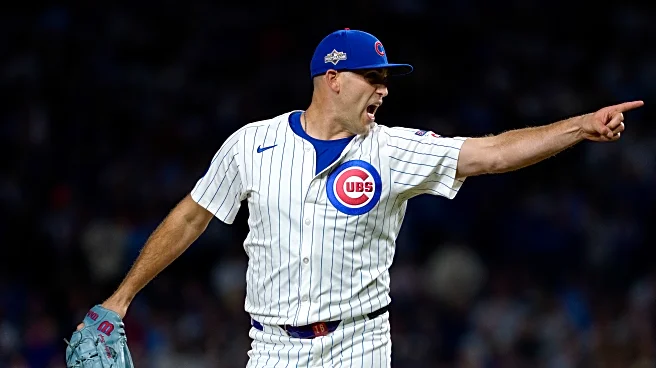
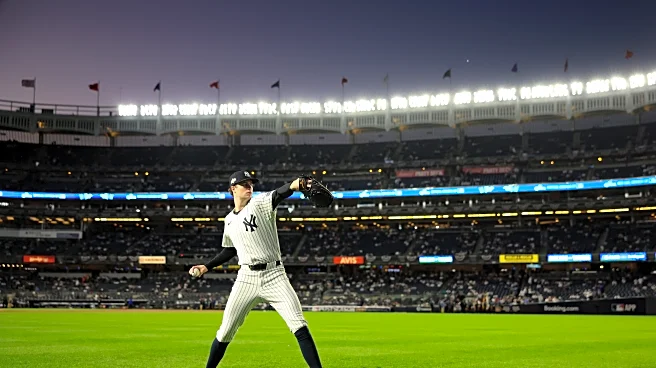
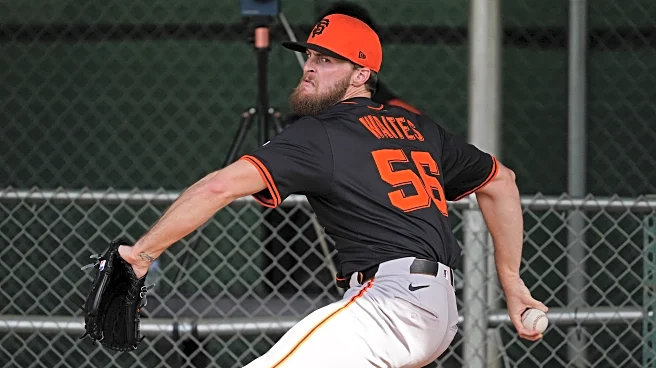
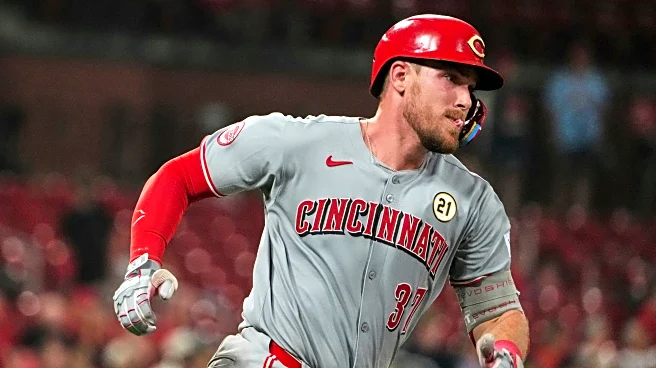
Last night I got tired of asking you which player not on the Cubs should be on the Cubs, so I asked you who should be next in line for saves after Daniel Palencia? The vote was close between Hunter Harvey and Porter Hodge, but in the end Harvey edged out Hodge by 40 percent to 38 percent.
Tonight I’m going to ask you about a player who wasn’t on the Cubs yesterday.
So here’s the part where we talk movies and listen to music. The BCB Winter Science Fiction Classic is still ongoing and it’s never too late to hop on board. But you’re free to skip the next two sections if you want.
Tonight we’re featuring some jazz/blues fusion from The Late Show with Stephen Colbert this past August.
This is guitarist John Scofield on guitar, Marcus Miller on bass and Late Show bandleader Louis Cato on drums and singing. This is “Black Man Blues.”
You voted in the BCB Winter Science Fiction Classic between The Day the Earth Stood Still and Fantastic Planet and you sent The Day the Earth Stood Still into the third round. It will take on Godzilla (Gojiro) in the “Classic” bracket finale.
Tonight we move on to the “New Hollywood” bracket and two films that I love very much. I have a very good idea which one is going to advance, but I’m glad that you’re getting some exposure to both of them.
The first film is our second-seed in the bracket, Planet of the Apes (1968) directed by Franklin J. Schaffner, and La Jetéei (1962), directed by Chris Marker.
Here’s what I wrote last time about Planet of the Apes.
As I wrote then, I assume that everyone who cares enough to read this has seen Planet of the Apes. It’s a terrific action film that combines satire with some Cold War commentary. And as I wrote last time, the film’s great achievement is not looking silly.
Here’s the scene where Taylor (Charlton Heston) tries to escape and ends up speaking for the first time.
Re-watching that, I should have mentioned something about the musical score by the great Jerry Goldsmith. It’s loud and bombastic, but it fits the film. I love it.
Here’s what I wrote last time about La Jetée.
Here’s A.O. Scott of The New York Times on why you should watch La Jetée.
I made the same point that Scott did. Film is nothing but an illusion—a series of still photographs that our mind turns into movement. La Jetée is brilliant for a lot of reasons, but one is the way that the film strips that illusion of movement bare.
Plus, it’s only 28 minutes long.
Now it’s time to vote.
You have until Monday to vote. Up next, 2001: A Space Odyssey (1968) faces off against Seconds (1966).
Welcome back to everyone who skips the music and movies.
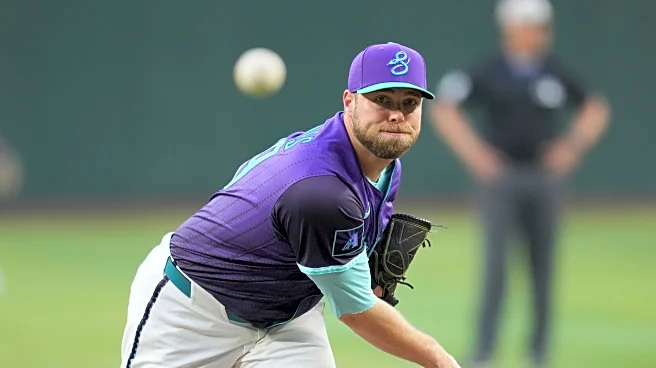
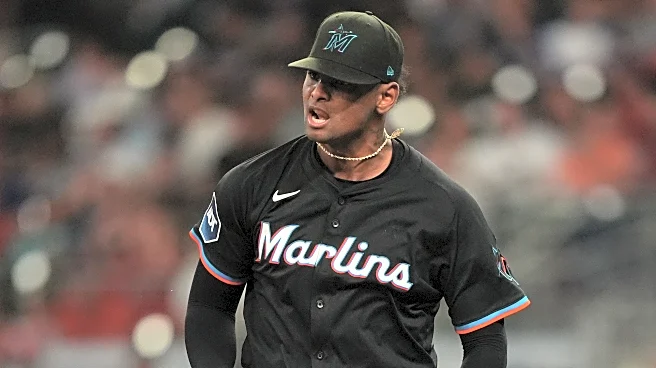
The Cubs made a big trade today, picking up right-hander Edward Cabrera for three prospects: outfielder Owen Caissie, infielder Cristian Hernandez and corner infielder Edgardo De Leon.
It’s a funny trade because the two main pieces, Cabrera and Caissie, are players that there are some pretty divergent opinions on. Most of you are pretty familiar with Caissie, who made his major league debut this past August. He’s a right fielder with 70 power (on the 20-to-80 scale) and elite exit velocities off the bat. He also strikes out a lot and struggles to hit left-handed pitching. He’s got a cannon for an arm in right field, but there are some accuracy issues and his range out there is fringy. That his defense is even that good is a testament to what a hard worker Caissie is. When he arrived in the Cubs organization, he was unplayable in the outfield, except that the Cubs were playing him in the outfield so he’d learn. And learn he did. But he is someone who, if he has a successful major league career, is going to have to move to first base eventually.
If you believe that Caissie can still improve, he could be an All-Star right fielder who hits 35 HRs a year and get on base at a .340 clip, even if the batting average is low. If you’re a skeptic, he’s a left-handed platoon power bat that doesn’t make enough contact to overcome his defensive deficiencies. As I often am, I’m in the middle of these two poles. But I will be pulling for Caissie’s success in Miami because from all accounts, he’s a great guy.
Hernandez signed with the Cubs as an international free agent in 2021 and got a massive $3 million bonus. Many observers thought he was the best IFA that year. But since then, he’s been underwhelming. Not terrible, but Hernandez hasn’t put up numbers that would make anyone think he’s a top prospect. He hasn’t filled out like the Cubs had hoped and he makes too much weak contact. Hernandez’s defense at shortstop is erratic. But he is a great base runner with 52 steals last year and if the Marlins can find the promise that the Cubs saw back in 2021, he might be something. But most likely, he’s a utility/bench player if he makes the majors at all, which is far from certain.
De Leon is a Statcast darling with some elite exit speeds and strong power potential. However, despite the Cubs efforts to play him at third, he’s almost certainly a first baseman long term and he’s put up some horrifyingly-low contact rates in the Arizona Complex League.
But tonight’s discussion is about Cabrera, who has top-of-the-rotation potential. But although he has the potential to be a top arm, he definitely isn’t right now. It’s weird talking about someone with over 400 innings in the major leagues as a prospect, but in a sense, that’s what he is. The Cubs are gambling that he’s not done learning how to pitch. Certainly the way he improved last season is a sign that he may have more growth to come.
In reading all of the analysis of the trade, most note that Cabrera as a below-average fastball despite the fact that it sits at 97 miles per hour and can touch 99. The problem is that it’s flat and stays up and major league hitters can hit a flat fastball that’s up even if it is 97 mph. The sinker/two-seamer has almost the same velocity and many of the same problems. The Cubs have to think they can fix that fastball and give it a little more movement. Maybe they can, but for all the bad things you can say about the Miami organization, an inability to develop pitching isn’t one of them.
But take a look at this changeup.
The first three strikeouts in this video are all changeups. They come in at 94 to 96 miles per hour. That is one of the nastiest pitches in the game.
To put things in perspective, Cabrera’s changeup is faster than the four-seam fastball of every other pitcher in the Cubs rotation other than Cade Horton. In fact, we only call it a changeup because of the grip and because we don’t have another word for it, but he doesn’t really use it the way that other pitchers use their change. Normally you wouldn’t often throw a change to a same-sided hitter, but as you can see, there’s no reason for Cabrera to not throw that change to right-handers.
After those first three strikeouts in that video, you can see Cabrera getting swings and misses on his slider and his curve. Both of those pitches are also above-average offerings with the slider grading out as plus, coming it at around 89 mph with a sharp break.
The other downside with Cabrera has been his health. To be clear, he’s never had any major injuries like Tommy John, but he has missed time in each of the past four seasons. The Marlins altered his release point last year which improved his control and there is some hope that it will also keep him healthier. Cabrera made a career-high 26 starts despite two trips to the injured list last year. One was a blister in April where he missed the 15-day minimum to start the season. The other was an elbow strain in September that cost three weeks. Neither injury is good, but both are kind of the costs of starting pitching these days. He’s also entering his age-28 season, and that’s getting past the “danger zone” where young arms tend to break. Not that any pitching is out of the “danger zone” these days, but the risk decreases as they approach 3o.
The other positive factor to Cabrera is that the Cubs have him under team control for three years of arbitration control. The Cubs should use the money saved on Cabrera to sign a big bat like Alex Bregman or Bo Bichette. I know many of you think they won’t and maybe they won’t. But there should be money in the budget to do so.
So now it’s time for you to weigh in. Tell us what you think of the Cubs newest pitcher and the trade that brought him here.
Thank you so very much for stopping by. We’ve enjoyed having you around. Stay warm out there. Get home safely. Recycle any cans and bottles. Tip your waitstaff. And join us again next week for more BCB After Dark.