



Special thanks to Andrew Rice of On the Banks for joining me to discuss Rutgers’ roster on this week’s podcast:
Offense

Rutgers’ offense was very unusual in several ways in 2025. For one thing, it turned head coach Schiano’s reputation for defense-oriented teams on its head, as explosive passing and an efficient run game led the team while the defense completely collapsed and ended the year with firing nearly the entire defensive staff. For another, the veteran QB and OC each turned in the best statistical
performances of their careers, after quite a few observers — including this film reviewer — had expressed some earlier skepticism that they’d ever put some touch on the ball, so to speak.
But by far the strangest thing was how radically different the offense was in the redzone and between the 20-yardlines, and that it was flipped for the passing and rushing attacks. In the middle of the field, the Scarlet Knights were an absolutely lethal passing team: 54% efficiency, 9.3 adjusted YPT, and 19% explosiveness. But in the redzone, their passing collapsed more than -13 percentage points in effeciency, a staggering -15 percentage points in explosiveness, and their YPT was cut in half.
However, their rushing attack grew significantly more efficient in the redzone, especially in the second part of the season. The YPC and explosiveness dipped compared to between the 20s a bit (that’s expected for rushing, and a bit for passing as well as the defense compresses, though not nearly as much as Rutgers’ passing did), but unlike most teams Rutgers went from a merely above-average rushing success rate between the 20s, 54.5%, to championship caliber, 61.6% in the redzone. This back-half growth in redzone rushing efficiency stabilized their redzone TD conversion rate and got them to a happy medium between their midseason overinflated 17th F+ ranking and where my algorithm had them at the time Oregon and Rutgers met, in the mid-30s, and they finished the year at 24th.
The job in 2026 for OC Ciarrocca is a complex one. He has to hold on — if possible — to that excellent redzone rushing efficiency with some high quality returning backs but challenges rebuilding the offensive line. He also has to try and retain those explosive midfield passing gains with a new QB and one, but not the other two, from of a trio of great WRs last year. And while he’s keeping those plates spinning, he has to solve the puzzle of what the team was doing wrong with their redzone passing.
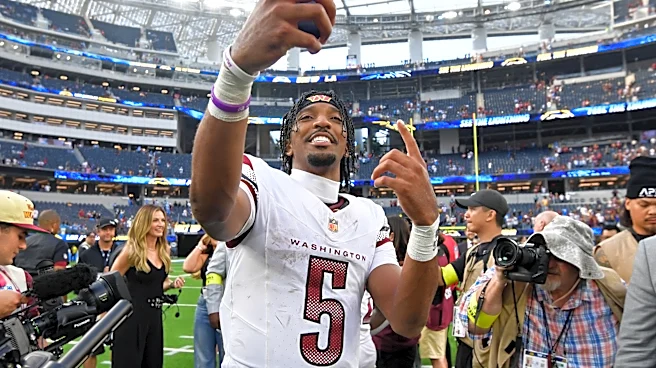
Athan Kaliakmanis has been the starting quarterback and taken virtually every snap in meaningful play and garbage time since he arrived from Minnesota in 2024 to his finish in 2025, when he was drafted in the 7th round by the Commanders (Rutgers’ only draft pick this year). I don’t know who the backup was his first year in Piscataway since he never took a snap off; last year they gave two garbage time reps to redshirt freshman low 4-star #10 QB Surace late in the blowout loss to Oregon and a single drive in the blowout win over Norfolk St, but otherwise Kaliakmanis again played to the final whistle each week.
On the podcast, Andrew told me that he’s been hearing leaks from Spring training that Surace is leading the QB competition, though unfortunately they canceled the Spring game this year so we weren’t able to check in ourselves (a couple of Spring game injuries last year may have influenced Schiano’s thinking). Andrew also noted that Surace was Ciarrocca’s pick out of high school and has been in the same offense learning from Kaliakmanis for the last two seasons, and that gives him a leg up.
This cycle Rutgers took the transfer of #12 QB Lonergan, a former mid 4-star who originally signed with Alabama in 2023 and was a deep backup for two years, then transferred to Boston College for the 2025 season. With the Eagles last year his competition was Greyson James, a 2021 mid 3-star who’d earlier transferred in with some starting experience at FIU and played half of the 2024 season as BC’s starter. Lonergan won the job out of camp and played a great game against Michigan State in week 2 although they lost in double overtime, but then immediately cratered in ACC play against Stanford and Cal and wound up getting benched for James.
The BC staff kept flipping back and forth between the two QBs as each committed groan-inducing turnovers, until the end of the year when Lonergan finally turned in a nice performance against Georgia Tech in a close loss, then immedately suffered a thumb injury in the finale against Syracuse (which James went on to win against a reeling Orange to snap a 10-game losing streak). Lonergan finished with a 121.0 NCAA passer rating in conference play, about -1.3 standard deviations below the ACC’s median in 2025.
It’s difficult to predict exactly how Lonergan’s 2026 season would go if he wins the competition over Surace, because it seemed obvious that BC’s indecision in 2025 messed with his development (the old saw comes to mind about how many you really have if you have two quarterbacks), and there’s the injury at the end of the season to consider. Either way, both QBs have at least two years of eligibility remaining, and Andrew and I agreed on the podcast that was probably the point – putting a QB in place with a two-year starting plan.
While the extremes are remote possibilities — one of the QBs immediately taking off like a shot, or both being a complete catastrophes — I think the middle of the curve scenarios are either that one of them takes the job in Fall and gets some stability but only a modestly productive season, shows progress over the year, and sets himself up for a strong senior campaign in 2027 (as Kaliakmanis did at Rutgers in 2024 then 2025), or that he stagnates without progress, showing play just as poor as in 2025 in the case of Lonergan or just very slow development in the case of Surace, and the Knights revisit the portal in the 2027 cycle. It’s simply hard to tell which will happen in 2026 because of the inconclusive and incomplete data from 2025; we’ll have to wait and see.
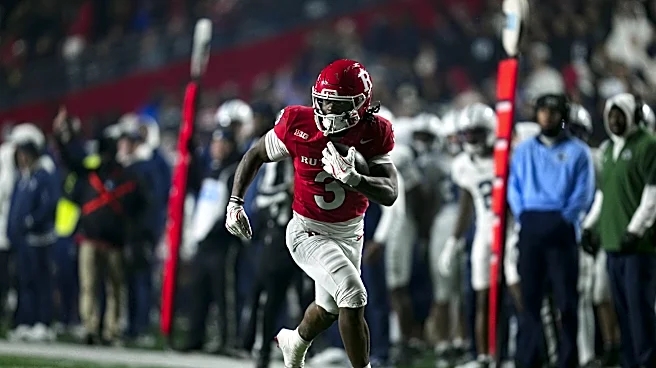
Rutgers returns #3 RB Raymond, the back through whom virtually the entire run game went in 2025 after FAU transfer CJ Campbell went down with injury early in the FCS game. Considering he got about three-quarters of carries, Raymond’s per-carry numbers were excellent for the workload (and I suspect would have been a bit higher if he’d had some more effective relief) – he posted a 54.1% per-carry success rate and 5.2 adjusted YPC. Raymond was also the only back who caught passes out of the backfield, and produced a very nice 8.4 YPT on 23 meaningful targets – in fact I’d argued in my preview that Rutgers was making a mistake not using him more often in the passing game.
The two backups were Samuel Brown and #20 RB Benjamin. Benjamin’s per-carry numbers were quite poor midseason but seemed to rebound by the end of the year, but this is illusory – he got all the backup carries against Purdue’s awful rush defense while Brown got none, meanwhile Brown got all the meaningful backup carries against Ohio State’s top rated defense while Benjamin didn’t go in until the final garbage time drive against the Buckeye reserves when it was 42-9.
Campbell and Brown transferred out at the end of the season, while Raymond and Benjamin return. Younger backs #23 RB Guerrier and #26 RB Mitchell also return, though they were barely used last year. Despite the staff’s praise for Benjamin I think the numbers make clear Raymond needs a more effective alternate backup, and the staff may have delivered with Louisiana Tech transfer #98 RB Thevenin – a senior who toted the ball 131 times for 4.8 YPC in raw stats last year and whose receiving numbers are comparable to Raymond’s.
Andrew thinks there’ll be a genuine competition between Thevenin and Benjamin given how much the staff has constantly — and well beyond his actual accomplishments — the staff has talked Benjamin up. I think Benjamin will be given a shot but I agree with Andrew that Thevenin will probably win the second RB job.
On the podcast last Fall, Andrew drew a line between the poor redzone TD conversion rate and my observation that the two tight ends, converted defensive lineman Kenny Fletcher and Charlotte transfer Colin Weber, had terrible per-target success rates on constant dropped passes – a connection I hadn’t made. I was just focused on Ciarrocca constantly calling the same no-read corner lob — which rarely worked because it didn’t leverage the WRs’ speed advantage, and mistook the kind of vertical threat they were — but Andrew rightly pointed out that the Knights were missing an alternative in the middle of the endzone which is usually where a good TE can snag tosses on deception plays.
If Andrew’s theory is true, perhaps the strongest opportunity for growth in 2026 comes as Fletcher and Weber have graduated and some new tight ends will take their place. But it’s tough to predict whether that potential will be realized because of how little prior production there is in this unit. Three of the returners are upperclassmen who have rarely seen the field and have fewer targets between them (seven) than combined years at Rutgers (nine). Three more are freshman who’ve never seen the field in college, one who redshirted last year and two prep recruits this cycle.
Ball State transfer #85 TE Anthony is the most promising and experienced, as he had seven catches in 12 games last year as a redshirt freshman – not a ton but one was a 40 yard gain and two were TDs from inside the 30. Andrew told me about an achilles injury Anthony suffered last November I hadn’t seen reported before – he’s evidently had to sit out physical Spring workouts with the team but has been going through other kinds of practice, and the timeline should have him back by the opener and perhaps Fall camp.
Andrew and I also agreed on the podcast that the best bet for a second tight end is the redshirt freshman #24 TE Rothaar, simply by process of elimination – he’s not a true freshman and he hasn’t been sitting on the bench for years not playing (we needed to use this process for a couple different units). With a redshirt sophomore coming off injury and a redshirt freshman — combining for seven total receptions in their careers — as the unit which might be the structurally most important key to unlocking Rutgers’ scoring potential, Knights fans are just going to have to cross their fingers this will work out.
Rutgers’ top trio of wideouts almost never left the field in 2025 – outside receivers Ian Strong and #8 WR Duff, and inside receiver DT Sheffield. The two tight ends would swap back and forth with each other in what was typically an 11-personnel offense, and the variation was a 10-personnel set in which #2 WR Black lined up outside and Duff moved to Y-receiver, though Black was a decoy and only had a handful of meaningful targets during the year. There were eight other receivers in the unit, of whom seven return in 2026, but none saw the field in meaningful play and not much garbage time either.
Duff returns and is the passing offense’s biggest asset – a former 4-star from the 2024 cycle at 6’6” who posted over 1,000 yards, at a 64.5% per-target success rate and a staggering 12.0 adjusted YPT. Duff led the team with 7 receiving TDs while Strong and Sheffield had 5 apiece (though that’s still a significant redzone issue; for comparison 1st round draft pick Carnell Tate from Ohio State had 9 TDs, and was second place on his own team to Jeremiah Smith’s 12). Sheffield signed a UDFA with the Jets while Strong transferred to Cal.
Interestingly, Rutgers took no transfers at the position. I would think that Black is in line for a promotion in targets, though at 6’0” he’s not quite a replacement in height for the 6’3” Strong. Combining the 2024 and 2025 data gives just enough for a blurry snapshot on Black — his per-target numbers are decent, 50% success and 8.43 YPT, better than the TEs and probably should have been getting more work — but it’s hard to predict if he can replicate Strong’s output right away.
Andrew told me that 6’3” senior #1 WR F. Toure, who looked good last Spring but missed the Fall season with an injury is back to full health, so he’s the natural to pencil in for Strong’s role on the outside.
Other options as possible competition for Toure — or backups to the outside receivers — who Andrew mentioned as getting some buzz from Spring training are: 6’2” sophomore #5 WR V. Allen who got a bit of garbage time play last year as a freshman, 6’1” redshirt freshman #4 WR Houston, and the 6’3” high 3-star prep recruit #13 WR Coke.
For the slot receiver to replace Sheffield, I think they’ll go with one of the young and highly rated freshmen, although we haven’t seen either with meaningful play yet so it’s hard to make a guess which. Prep recruit #0 WR D. Carter was the highest rated prospect this cycle at a low 4-star and looks almost identically proportioned to Sheffield; while redshirt freshman #80 WR M. Thomas has a little more muscle to his build, was nearly as highly rated in the previous cycle, and got some garbage time play in 2025.
Andrew said he thinks it’ll go to Thomas because of Schiano’s reluctance to play true freshmen outside of extraordinary circumstances; it’s just a hunch but I have a feeling Carter will be an exception because of how uncannily he reminds me of Sheffield.
In four of the five offensive line spots, Rutgers got some stability that they’d sorely been lacking in recent years, and a group of upperclassmen who’d started playing together in 2023 (when it was kind of a nightmare for complicated reasons) had by 2025 largely gelled and grown up. While the play wasn’t exactly stellar last year — I think one player was out of position, no one in the room was rated higher than a .86, and no offensive lineman has been drafted from Rutgers since Anthony Davis 16 years ago — the fact that at most spots they weren’t subbing linemen in and out on a weekly basis had a notable improvement in their blocking grades.
The notable exception was at left tackle, where the total opposite obtained, though there’s a silver lining for 2026. Last Summer Andrew told me that an FCS transfer, #68 OL Langsdale, had won the job in camp, but was hurt and lost for the season before the Fall opener. It next went to #76 OL Chin, a surprise since he had been the backup left guard, but he was hurt early on as well. #56 OL Needham, who’d been bouncing around at multiple positions since 2021 and settled in at RT, filled in next, but midway through the year Needham got hurt as well.
That led to the incredible situation of a second FCS transfer and the fourth choice for the position, #74 OL Giwa, playing for the majority of the year, and Andrew telling me in the middle of the Fall season — while I suppressed my reaction — that “he’s shown improvement, he went from really bad to not great.” However, over the back half of the season Giwa steadily got better each outing, and Andrew had become a fan by the time we talked this week.
The upside to that injury mess at LT is that all four linemen who played the position return, so there’s no shortage of depth options. The part-time guard who took over for Needham at RT, Taj White, has transferred out, while they’ve taken the transfer in of #54 OL Small – the starting LT at Eastern Michigan last year. But Rutgers could avoid playing the transfer at either tackle spot and reserve him for an able backup if they still trust Needham at RT and their first choice, Langsdale, at LT … assuming they’ve gotten healthy.
The two guard spots showed the most growth on my tally sheet over time last season. Super-senior Bryan Felter had struggled with injuries, and then-redshirt junior #69 RG Asamoah had been thrown in the fire early and at one point was benched for ineffectiveness, but in 2025 I thought rounded into the best form of their careers. Felter has graduated but Asamoah returns and should have a job for his final year. There are several options to replace Felter at the other guard spot, from Chin, the former backup LG, plus three upperclassmen who haven’t played but have guard dimensions all at 6’4” and 310 lbs – #79 OL Cesaire, #55 OL Oliveira, and #77 OL K. Jones.
Longtime center Gus Zilinskas has graduated after delivering every snap for the last several seasons. As Andrew and I talked about last Summer when his younger brother transferred in from Colorado, the job has almost certainly been designated for #53 OL H. Zilinskas. Andrew told me this week about #57 OL Cook, the FCS transfer who was specifically brought in to be his backup
I think that clear succession plan is why there’s been no drama here. Instead they’ve really been building up organic development for the future, with ten prep recruits between the 2025 and 2026 cycles, and with significantly higher talent ratings: a .8713 average in the 24/7 composite, compared to .8504 for their predecessors.
Defense

At the end of the 2023 season, Rutgers was looking like they were going to keep climbing the defensive ladder – they’d improved each year since Schiano’s return to Piscataway and finished at 31st in F+ defensive rankings, with a strong developmental pipeline consistent NFL placements. But the program has been hit with waves of key coaching departures and injuries: in 2024 they lost the LB coach and blitz architect Corey Hetherman to Minnesota (who’d go on to lead Miami to the national championship game the next year as DC) and half the original starters would be out at any given time in an injury-plagued season.
In 2025, the defensive coordinator Joe Harysimiak left to take a head coaching job, and after a protracted search to replace him Schiano settled on a re-tread, Robb Smith. This turned out to be a disaster – Smith has been fired (or “resigned”) at a series of jobs and Andrew had the right of it when he coaching misstep coming, though I had difficulty believing my eyes with how often players were completely out of position or arguing with each other pre-snap about where to be. Defenders I’d watched with much higher grades and statistical output in 2024 under Harysimiak — or at their previous school in the case of transfers — all had worse production in 2025, and Andrew was right to point out that the staff’s excuse of poor execution didn’t hold water – they couldn’t have all forgotten how to play football.
Immediately at the end of the 2025 season, Schiano fired nearly the entirety of the defensive coaching staff (the one survivor is DT coach Noonan, who Andrew told me is the team’s best overall recruiter … though oddly neither Andrew nor I think the DTs themselves are a very well recruited unit). Schiano took his time assembling the new staff, stretching into February and past the typical signing and portal windows, but seems to have gotten his first choices this time — we theorized on the podcast that he may have done something like this when replacing Harysimiak last year but struck out and went with Smith as a backup — by melding two quality Midwestern FCS staffs.
From South Dakota he got DC Johansen, LB coach Hodge, and CB coach Finney, and from Drake (in Iowa) he got DE coach Woodley and DB coach Cox. The DL coach Dottin-Carter was most recently at Minnesota and is a Harysimiak connection. (I’m not really sure how it works that there is a DL, DT, and DE coach, and also Andrew told me that Noonan works with the STUDs, but rather than stand-up ends that this may be the name for their hybrid LB/safety position that everyone else calls a STAR … perhaps Rutgers’ website needs an update.)
The tackles brought in a lot of transfer help last year – early on they got #0 DT Blue-Eli, who had been pretty productive for two seasons at USF, and Darold DeNgohe from JMU, but both got hurt early, and just before the season started they added Oliver Billotte from Kent State to this position. Billotte had played defensive end for the Golden Flashes, and as Andrew correctly pointed out on the podcast, one of the young homegrown Rutgers linemen they pressed into the tackle rotation here, #90 DL Gnago, was also a converted end.
This was all to supplement what both of us felt has been an underwhelming group of longtime tackles who wound up getting almost all of the reps in 2025 anyway (despite Rutgers, arguably, trying to avoid it) – #55 DT Angoy and #96 DT Griffin, plus backup #95 DT Hughes, all from the 2021 cycle.
Billotte has graduated and DeNgohe transferred out, but the rest return and Blue-Eli is back to full health – he should be starting, according to Andrew. He told me he also likes one of the redshirt freshman, borderline 4-star #98 DT Kyle, and a slightly undersized but in his words “belligerent” former Appalachian State and South Carolina transfer #99 DT Porter, but he doesn’t think they’ll be able to take over for Griffin as the other starter right away.
That would make it a five-man rotation with Blue-Eli and Griffin on top, then Angoy, Kyle, and Porter as the rotational guys, and Gnago retuning to the DE unit. That looks like a better setup than last year’s injury-plagued group which forced underperformers and out-of-position players to get all the reps, and there’s a potential scenario of more dynamic players earning themselves more playing time as the year goes on and maybe finally displacing Griffin.
Gnago’s out-of-position experience excepted, the defensive end unit lost all of its production from 2025 – Eric O’Neill signed a UDFA with the Lions, Jordan Thompson and Bradley Weaver graduated, and Jordan Walker and Djibril Abdou Rahman transferred out (the first four of those were the primary rotation with the last coming in for spot relief).
The new defensive staff brought in a pair of transfers with comparable builds, experience, and production to the guys they lost, seniors #94 DE Burnett from Tulsa and #11 DE M. Davis from Toledo. Those two are locks for the top of the rotation and there shouldn’t be a falloff there, if anything the top of the order should see a bump assuming the coaching staff is generally more competent with a new DC.
It’s very difficult figuring out what the rest of the order is, however, and how they’ll deal with rotations and the possibility of a fatigue problem if the undercard is a big dropoff. We made a guess on the podcast that Gnago is really an end, that he’ll go back to this room in 2026, and his experience will count for something which would easily vault him into the rotation … but all of that is speculation until we see it. There are two true freshmen, both borderline 4-stars, who Andrew figures will get their feet wet but not be serious parts of the rotation.
I crossed off #42 DE Allen, since he’s been on campus and apparently healthy for four years with ideal dimensions but has seen the field very sparingly. Andrew used the same logic to cross off #30 DE King and #87 DE Keener, 2024 recruits who’ve never seen the field and he’s heard no buzz about (Andrew might have an itchier trigger finger than me, but I can’t fault his aim).
That leaves the four 2025 recruits who preserved their redshirts. The highest rated was #8 DE Collier-Johnson, a low 4-star and top recruit of the previous cycle, although at 6’7” and still listed at 225 lbs we both remarked that he really needs to add weight to be a standard down player, so we’ve got him as a rotational guy and maybe speed package rusher. The other three are #48 DE Bruens, #47 DE Edwards, and #14 DE RJ Johnson, all mid 3-stars. Andrew went with Johnson because he got some garbage time run last year although he recorded no stats.
I think this unit could go in a lot of different ways and will probably get settled in Fall camp with someone stepping forward, which could be one of the 2024 or 2026 guys even though Andrew’s logic for why that’s less likely is sound. Another possibility is that the staff runs the competition out the long way, with a big rotatation beyond the two portal starters of maybe a half-dozen guys each getting a little bit of play through the early weeks, winnowing it down by November. There isn’t much in the handbook for losing the entire productive group from last year and starting a new season with the entire backup unit of nine guys as blank slates.
There’s been a long-running drama at the linebacker position for several years, involving gruesome injuries, court battles, last-minute betrayal, a mentor’s prodigal return, an unlikely hero’s journey from sleeping in a car to two-year starter … it’d make a good movie if linebackers were more photogenic.
I think as a possible result of the constant uncertainty, Rutgers has recently stuffed the room with a ton of bodies so that they always have options. They needed it last year, as one of the top guys in the three-man rotation for the two spots in the 4-2-5 defense was hurt, and it’s in evidence again this year as there are four departures yet still eleven backers in the room … and as we discussed at length on the podcast, quite a logjam of potential candidates for playing time.
The starters last year were Dariel Djabome and #2 LB M. Walker, and #6 LB Wright rotated with them. Walker, a mid 4-star from the 2022 cycle, got hurt four games into the year, and the mid 3-star Wright became the new starter in his place, but they didn’t find a single replacement for the rotational spot. Instead, three freshmen shared the rotational play, borderline 4-stars #36 LB Archie and #13 LB McClary from the 2025 cycle and Sam Robinson from 2024, while four other freshmen plus Austin Dean, the senior they’d brought back from Georgia Tech, sat out.
For 2026, Djabome and Dean have graduated, while a couple of the freshmen transferred out. Walker is back to full health, while Wright, Archie, and McClary return. They’ve also taken two portal additions who have been enormously productive: #10 LB Morris from Rice with 88 tackles and 9.5 TFLs last year, and Sean Allison from Drake (coming over with two coaches) who was a three-year starter and posted 126 tackles and 8 TFLs last year.
Andrew couldn’t stop raving about Archie and McClary’s physical upside, and thinks they’ve already displaced the lower-ceiling Wright despite his seniority. I think he’s also correct that Walker has a starting spot now that he’s healthy because of his top talent rating and Big Ten experience (though I did throw an elbow at Andrew’s “Big Ten supremacism”). Andrew seemed to begrudgingly have Morris as a starter, and Allison as a spot-duty backup but mostly a mentor to coach the system as just a somewhat more involved version of Dean, but thinks the decks are going to be cleared for Archie and McClary as soon as feasible.
I’m not so sure, I tend to think Allison is going to see substantially more playing time as a longtime productive veteran who’s a known quantity to the new staff. It’s going to be interesting to see if and when Archie or McClary differentiate themselves.
We get the other side of the natural experiment for the secondary in 2026 that I mentioned earlier – these guys were better in 2024 under Harysimiak than they were in 2025 under Smith, and we could test if they bounce back in 2026 under Johansen and really close the book on Smith. But since four of the five starters in the secondary (in addition to the three most frequently used backups) have departed, practically speaking this applies to just one defensive back: junior starting field safety #1 DB Sanders.
The new staff seems to have expressed confidence in the safety room, as Andrew told me that all four of the DB transfers coming in are going to be corners and they’re going back to the nickels drawing from the safety rather than the corner unit as they did under Smith (it was a man coverage system with an inside corner and the boundary safety as a box hitter … not a great match for the personnel). Even with last year’s starter Jett Elad and one of the primary backups Timmy Ward graduating, and two guys pulled out to practice at the restored nickel safety position, #9 DB Gilley and #16 DB Ofurie, they have eight returners and three prep recruits to choose from for the new starter.
Andrew’s top two picks for boundary safety were #19 WR Fuse, a mid 3-star senior who originally came in as a wideout based on some buzz he’s hearing, and low 4-star redshirt freshman #44 DB Hayer as the highest rated talent in the room. But the room is so big, including three more guys who got some backup play last year, a couple more who redshirted, and one of the incoming preps who was also a low 4-star, that this is looking like the staff is going to let it play out in Fall camp.
All three of the starting corners have left, Bo Mascoe and Jacobie Henderson on the outside to graduation and the Penn State transfer Cam Miller who played inside and signed a UDFA with the Panthers. Backups Al-Shadee Salaam and Michael Robinson have also graduated. Both Andrew and I immediately penciled in the South Dakota transfer and FCS All-American Mikey Munn in as a starter for obvious reasons, though he’s not on campus yet due to some weird transfer rules.
There are plenty of options for the other cornerback spot, though actually nailing it down is tough without a Spring game to get some more eyes on these players. They’ve taken three preps here who are pretty well rated, high 3-stars or borderline 4-stars, though with the amount of older players and transfers brought into the room I’d be surprised if they went with one of the true freshmen.
From watching his tape, Andrew and I both felt Maryland transfer #4 CB Humes is on the bottom of the list. Although it was limited, I liked even the backup tape on returner #7 CB Levy much more as less of a liability. I think the ship has sailed, however, on seniors #27 CB Clawges and #15 CB Z. Williams – they would have played more than minimally by now, and the new staff would have taken fewer transfers, if either were a serious option. I don’t know much about the last returner, high 3-star redshirt freshman #22 CB Clayton; Andrew said he’d heard nothing good or bad either way.
Andrew’s report on the two remaining transfers is that they are serious contenders from the FCS ranks – #5 CB B. Jones from the Citadel who he says is a real speed demon and #12 CB Dawud from Villanova who’s been a consistent producer through his senior season. I’d guess both of them are the on the top of the list going into camp, followed by Levy, and I suspect even Clayton is ahead of Humes. I think this too is going to go to a Fall camp battle, the staff has set themselves up with plenty of options but like the safeties they’ll all be stepping up in either volume or level of play.