


Each week we dive into each team’s rookie class and compare how they stack up against each other. (Grades for each player are the overall offensive or defensive grade handed out by PFF.com)
Dallas Cowboys
Tyler Booker (OG)
First Round
Booker’s rookie year is still tracking as a big win for Dallas and looking like they struck gold yet again with a first-round offensive lineman. Across 948 snaps and 694 pass-blocking reps, he’s been charged with only 23 pressures, six QB hits and one sack, that’s very clean for a first-year right guard.
His overall PFF grade sits at 72.0 with a 62.4 pass-block grade and strong run-block numbers at 77.4, which ranks seventh among all guards this year. He’s already a plus people-mover in the run game and a solid, low-mistake protector and ESPN’s tracking loves him as a run blocker too, he’s at a 75% individual run block win rate, 10th among all interior linemen. The Cowboys’ line as a whole sits at 64% pass block win rate and 72% run block win rate (12th in the league in both categories). Even with a rougher Christmas outing versus Washington where he was tagged with a sack, his season has been solid with a very low pressure rate and consistently good movement at the point of attack.
This week the challenge is about the quality of rushers from the Giants. New York’s front is loaded with Brian Burns (who leads the team with 16.5 sacks) and rookie Abdul Carter off the edge, with Dexter Lawrence inside, plus a string of linemen in rotation that includes Chauncey Golston. ESPN’s pass-rush win-rate board has Carter at an 18% PRWR (8th among edges) and Burns at 16% (11th), so if the Giants slide or twist those guys inside on games, Booker is going to have to sort some real juice on stunts. Lawrence is still the star in the middle. As a unit, the Giants are dangerous when they rush, they’ve piled up 39 sacks (11th most) and sit ninth in team pass-rush win rate at 40%, even on a 3-13 team. The flip side is the run game and they’re 29th in run-stop win rate (28%) and have allowed 2,327 rushing yards (third most).
So for Booker, this is a prove-it matchup in pass pro against top-end rushers but also a chance to bully a soft run defense. His elite run-blocking stacks up really well against a front that’s been leaky on the ground, and Dallas should be able to lean on their run game again. In protection, the big key is handling exotic looks, passing off stunts, and anchoring against Lawrence without grabbing.
Grade: 72.0
Donovan Ezeiraku (DE)
Second Round
Ezeiruaku’s rookie year has been more about steady disruption than crazy sack numbers. Through Week 17 he has 39 total tackles with two sacks and nine tackles for loss. PFF grades him as a clear starter already with a 76.4 overall grade, which ranks 23rd among all defensive ends. On a snap-by-snap basis he’s been more productive than the sack total suggests with a 12.7% pass-rush win rate, which is solid for a rookie rotational end. Team context is interesting as Dallas sits 11th in ESPN’s pass-rush win rate (40%) and fourth in run-stop win rate (32%), with Ezeiruaku as one of the edges helping drive those numbers. His defensive stat line shows a promising first season with low mistakes, steady pressures and hits, and competent edge setting in the run game.
For Ezeiruaku, the Giants are a classic mixed bag matchup. Until injuries piled up, they were a quietly efficient pass-pro unit at the tackle position wrapped around a more attackable interior, with a quarterback and run game that punish undisciplined rushers. Andrew Thomas was having another borderline Pro Bowl year, but he’s now on injured reserve, putting rookie Marcus Mbow at left tackle with mixed results. On the right side, Jermaine Eluemunor has been a very steady pass protector, carrying a 74.2 pass-blocking grade with 19 pressures allowed and four sacks. Inside, the picture is softer where Jon Runyan’s overall PFF grade sits at 53.3 with below-average marks in both pass and run blocking allowing a team high of 31 pressures, while Greg Van Roten has allowed the second-most with 26.
Grade: 76.4
Shavon Revel Jr. (CB)
Revel is currently in concussion protocol after taking a shot to the head in the Christmas Day win over Washington, and he already came into the year off a torn ACL that he only just finished rehabbing. Given that there’s only one game left, the team is out of the playoff race, and his rookie season has already turned into a grind of inconsistent play, missed tackles and now a brain injury on top of the knee, it would make a lot of sense for Brian Schottenheimer and the Cowboys to shut him down and end his year.
Letting him fully clear the concussion, take pressure off the surgically repaired ACL, and reset mentally would protect both his long-term health and his development, so he can hit the 2026 offseason program fresh instead of compounding wear and tear in a meaningless Week 18.
Grade: 35.2
Shemar James (LB)
Fifth Round
James has actually flashed ever so slightly the last two weeks, even if the box score doesn’t show it. Over his most recent two games he’s logged around 86 defensive snaps total, with eight tackles, no sacks, no QB hits and no takeaways. That fits his season line as a rotational rookie with mainly single-digit tackles most weeks, no splash plays yet and a PFF grade at 42.9, where he’s not a liability but also not pushing for starting snaps beyond injury. His tape has looked a little more decisive recently, triggering faster downhill and cleaning up in space. But you can still see the rookie hesitation at times when offenses dress things up with motion and play-action.
The bigger issue is that the Cowboys’ linebacker corps as a whole has been a soft spot. The second level has struggled with three big things, fitting the run consistently, matching routes in zone, and tackling. Dallas sits in the bottom half of the league in yards after contact allowed and explosive runs allowed, and too many of those are coming when backs get through a crease and linebackers miss or arrive late. Add in the coverage side with slow recognition on crossers and you get a unit that needs plenty of help. James has been part of that as he’s usually in the right zip code, but his angles and finishing haven’t been clean enough to stand out from a group that’s underperforming.
Trikweze Bridges (CB)
Seventh Round
With Revel out in concussion protocol, Bridges is the logical guy to see his role jump from rotational corner and special teamer to a much bigger chunk of perimeter snaps this week. So far he’s been a low-volume contributor with 15 solo tackles, one interception and three passes defensed on the year, mostly in sub-packages and spot duty.
The challenge is that his promotion comes against a Giants passing game that isn’t explosive on volume but absolutely has guys who can win. Jaxson Dart has thrown for 2,042 yards with 13 touchdowns and only five interceptions, plus adding 455 rushing yards and nine rushing scores. He extends plays and will test Bridges’ discipline when routes turn into scramble drills. Wan’Dale Robinson just cleared 1,000 yards and moves all over the formation, while Darius Slayton and Isaiah Hodgins give New York vertical and boundary threats, with tight end Theo Johnson stressing seams, although Johnson could miss the final game.
The Giants are only 21st in passing yards per game at 203.4, but Dart often has enough time for double moves and layered concepts, or runs the ball to add an extra layer to defend.
Grade: 48.1
Alijah Clark (DB)
UDFA
Clark’s job stays pretty straightforward this week as a core special-teams guy, and that’s exactly how the staff will keep using him. You’ll see him on most kick and punt units, sprinting down in coverage, holding his lane, forcing returns back inside and cleaning up with the odd assisted tackle rather than doing anything headline-grabbing on defense. As long as he avoids penalties, stays sound in his assignments and makes his tackles in space, he’s doing exactly what they need.
Grade: 73.6 (ST Grade)
Jaydon Blue (RB)
Fifth Round
Inactive
Grade: 50.0
Grade: 42.9
Ajani Cornelius (OT)
Sixth Round
Inactive
Grade: N/A
Jay Toia (DT)
Seventh Round
Inactive
Grade: 29.9
Phil Mafah (RB)
Seventh Round
Inactive
Grade: N/A
New York Giants
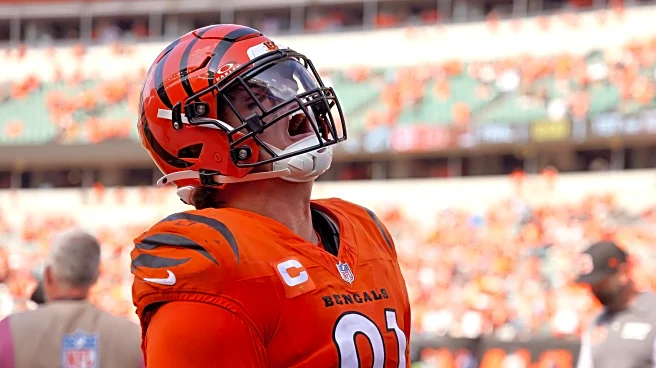
Abdul Carter (OLB)
First Round
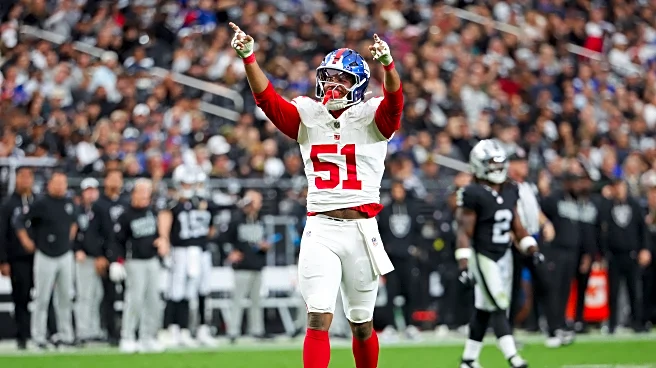
Carter’s first season with the Giants has been better on tape than in the box score. He has 43 total tackles, four sacks and two forced fumbles, and seven tackles for loss, which is solid but not eye-popping numbers for a top-3 pick. Where he really shines is in the pressure data where he’s credited with 54 pressures, which ranks 14th out of all the leagues edge rushers. His Pass Rush win-rate tracking has him around a 18%, that’s eighth best in the league and one of the best figures among rookies, while he’s more middle-of-the-pack in run-stop win rate, which matches the film. He’s explosive and efficient when getting to the quarterback, less consistent shedding against the run.
His strengths are exactly what the Giants drafted him for with a quick first step, the ability to bend and flatten at the top of the rush, and a motor that produces a lot of high-quality pressures even when he doesn’t finish. He’s also shown real versatility, lining up on both edges and even walked up inside at times, which makes it harder for offenses to game-plan him. The weaknesses are pretty typical for a first-year edge as he can get too far upfield and open run lanes, his run-fit discipline isn’t always there, and there have been quiet stretches where the pressures don’t turn into sacks and he fades a bit in the box score.
Against the Cowboys, Carter is the kind of edge who can wreck drives if Dallas isn’t sharp in protection. Expect New York to move him around to find matchups on either offensive tackle, use wide alignments and stunts to stress their communication, and force Dak Prescott off his spot. His quick-pressure profile specifically is a problem for an offense that likes longer-developing intermediate concepts as he often wins in under three seconds. If Dallas doesn’t account for his speed and bend on every passing down, Carter has the tools and production to disrupt the Cowboys’ game plan.
Grade: 73.6
Jaxson Dart (QB)
First Round
Dart’s rookie season has ended up in a pretty interesting place. The raw passing numbers are only average, but the total package is clearly dangerous. He’s over 2,000 yards passing with 13 passing touchdowns and an 89.8 passer rating, but as mentioned he’s added over 450 rushing yards and nine rushing TDs on 81 carries. You can see the arc where in early games he leaned heavily on his legs and had some midseason bumps including his lowest PFF grade in a heavily pressured loss to Washington. Recently, though, he’s had clean, efficient outings like the Week 17 win over the Raiders where he went 22-of-30 for 207 yards.
His strengths line up perfectly with that profile. He’s a legit dual-threat quarterback, physical runner with good long speed, comfortable hanging in and then bailing late, and he’s already shown he can punish soft zone looks and off coverage with patient underneath throws, especially to Wan’Dale Robinson. When he’s on time, the ball comes out accurately in the short and intermediate areas and he’s willing to rip over the middle. The weaknesses are he still has stretches where he holds the ball too long. Under heavy pressure his play can get choppy and he’s also still learning situational ball; his two-minute drill has been flagged as a growth area going back to his college days.
Against the Cowboys, his particular skill set is exactly the kind they’ve struggled with. Dallas are dead last in the league in opponent passing yards per game, passing touchdowns at 33 TDs, and passer rating at 109.7. They’ve also given up 23 rushing touchdowns which ranks second most and rushing quarterbacks have been a real cheat code against this defense. That’s a favorable matchup for Dart this week.
Grade: 66.6
Darius Alexander (DT)
Third Round
Alexander’s rookie year has been very rotational while learning the league. He’s sitting on only 317 snaps this year with 12 total tackles and three sacks. The story over the season has been slow start, followed by flashes. He’s a big interior body who can play 3-tech and 4i, hold up against double teams, and collapse the pocket in a straight line when his pad level and hand placement are right. He’s strong at the point of attack, can get occasional pocket push, and enough versatility to move along the front in their three-man looks.
Expect his final game to range near 30 snaps and try to slow the run game while adding some interior pass rush when given the opportunity.
Grade: 40.4
Marcus Mbow (OT)
Fifth Round
Mbow has gone from developmental fifth-rounder to starter really quickly. He’s starting now with Andrew Thomas on IR. On the season he’s played 186 offensive snaps and has allowed 15 total pressures and two sacks. His overall PFF grade sits at 56.1 with a 77.4 run-blocking grade and just a 42.8 pass-blocking grade. He’s much further along as a people-mover in the run game than as a polished NFL pass protector right now.
The strengths are easy to see. He’s a good athlete for his size, can work in space and on the move, and when his hands land on time in the run game he creates real movement. He’s also shown he can mentally handle being the emergency guy as he’s come in cold on the left side and still only given up two sacks on 127 passing sets, which is not normal rookie composure. The weaknesses are just as clear, though. His timing and anchor are still a work in progress, and he had an ugly game against Kansas City where he gave up a sack, five hits and seven pressures in a frantic two-minute drill. Film breakdown shows when he gets too tall or narrow, power rushers can walk him back into the pocket.
Grade: 56.1