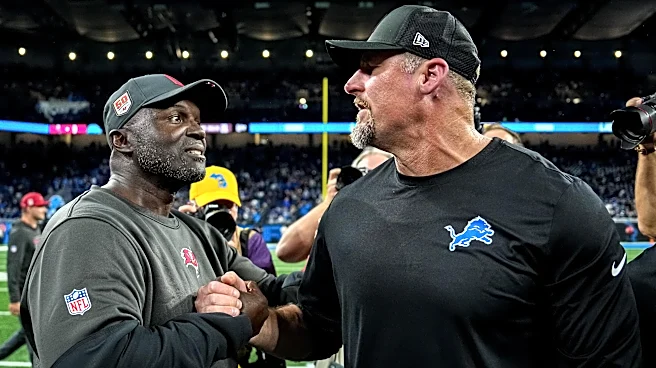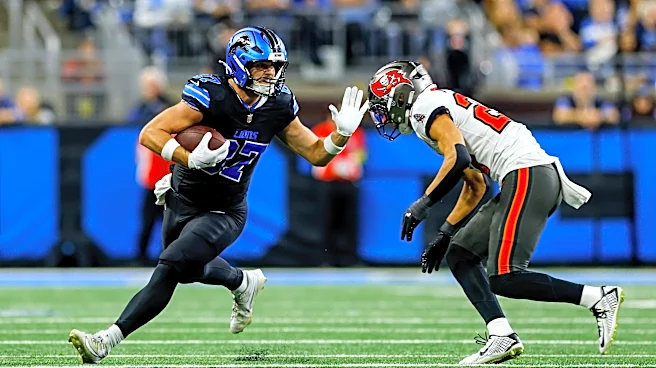


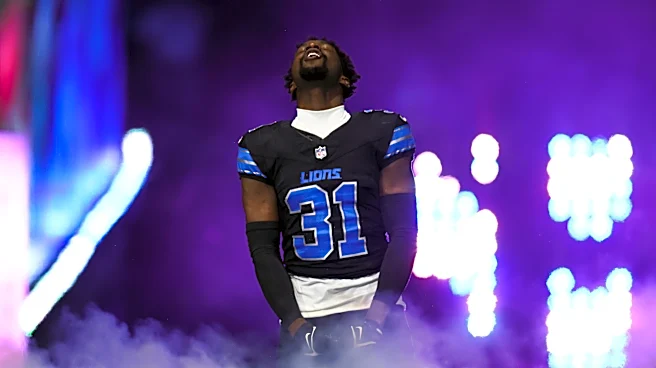
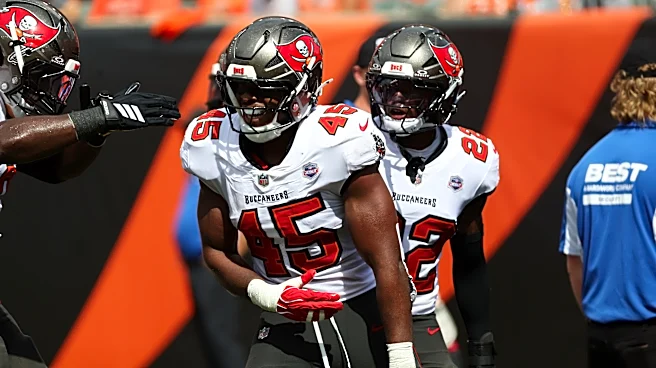
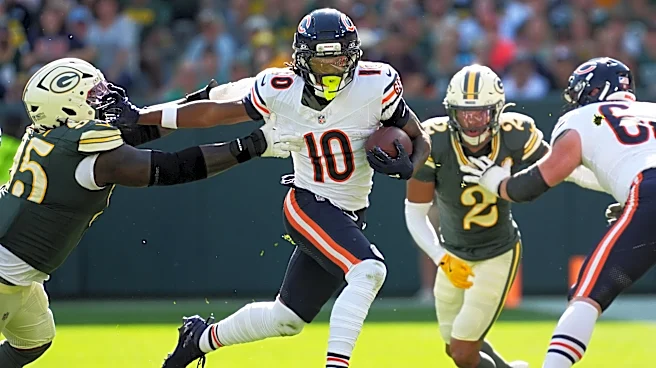
The Detroit Lions (7-2) enter Week 11 riding a five-game winning streak, their longest since early 2024. They’ll need to keep stacking wins to stay competitive with the NFC’s top teams, as several continue to add victories. This Sunday, the Lions will host the 3-6 Tampa Bay Buccaneers, who continue to fight for the top seed in the NFC South, a division in which every team has a losing record.
The two teams have met four times in the last three seasons, including in the 2023 Playoffs, with Detroit
winning three of those games. In fact, Detroit’s only blemish came early in 2024, the game before the Lions’ previously mentioned extended winning streak.
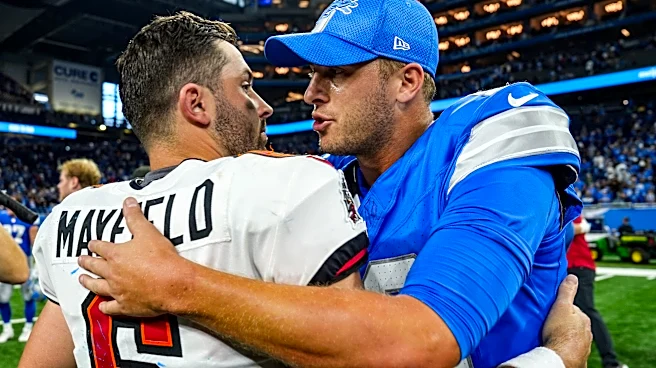
The Buccaneers enter this matchup with Baker Mayfield trending toward starting after his availability was initially in serious doubt. Mayfield, who already missed Weeks 4-6 with a thumb injury, has also dealt with a plantar fascia injury that required time in a walking boot. Mayfield won’t be the only familiar face returning to Ford Field as a slew of former Lions now play on the Buccaneers’ defense, including Alex Anzalone, Al-Quadin Muhammad, Ifeatu Melifonwu, A’Shawn Robinson, and Miles Killebrew.
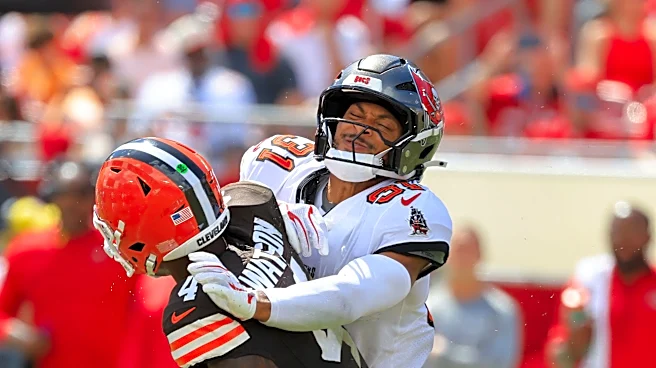
While Mayfield appears poised to suit up, his mounting injuries and inconsistent play this season leave plenty of questions surrounding the Buccaneers’ offense. Instead, this Week 11 preview will focus on the heavyweight bout between the Lions’ offense and a Buccaneers defense playing like a dominant top-10 unit for the first time since 2023. Tampa Bay enters the matchup well-rested after its bye week, while Detroit heads straight back into action after its international trip to Germany. With several familiar faces on the other side of the ball, it should be a physical, hard-hitting battle in the trenches between two units looking to impose their will.
Note: Unless otherwise indicated, all statistics are sourced from NFL Pro, FTN Fantasy, Pro Football Reference, SumerSports, or Pro Football Focus.
The Vikings’ Pirate Cousins
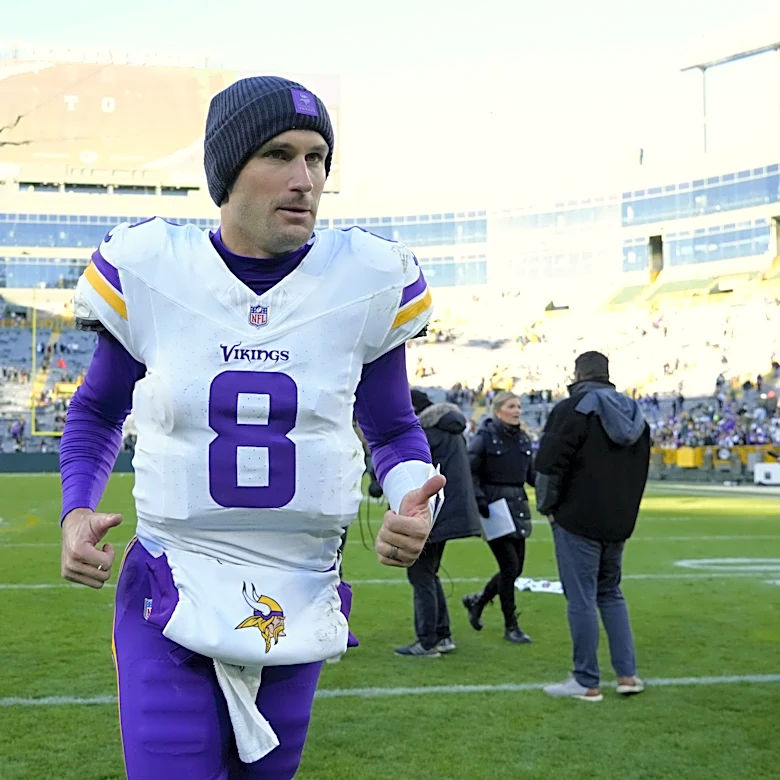
Having already faced the Minnesota Vikings’ defense, the Detroit Lions’ offense should feel somewhat prepared for the high-seas approach Bucs coach Todd Bowles’ defense employs: heavy blitzing and plenty of zone coverage.
With a league-leading -0.21 EPA/play and the second-best 24.9% stuff rate, the Bucs blitz on 42.0% of snaps, behind only the Vikings. That’s the third-highest blitz rate of any team over the last three seasons, behind only the 2025 and 2026 Vikings. Tampa Bay also plays zone coverage at an 81.4% rate (7th).
The Buccaneers’ defense is terrific against the run and will make it challenging for the Lions to grind it out on the ground. As much of this preview will emphasize, Detroit may need to put the game on Jared Goff’s shoulders. Staying ahead of the sticks won’t come easily, and the Lions will likely face numerous crucial third downs.
Nobody deploys more third-down zone blitzes than Todd Bowles; the Buccaneers lead the league, facing 26 third-down dropbacks while running them. Opponents are just 8-of-22 passing for 74 yards (3.36 YPA), with three sacks and one interception against Tampa Bay’s third-down zone blitzes. They excel at getting off the field. It’s even worse on third-and-long (7-plus yards), where opponents have faced 11 dropbacks and completed just 1-of-8 passes for one yard, with two sacks, 10 pressures, and zero first downs.
Overall, when running zone blitzes on third down, the Buccaneers lead the league in pressure rate (61.5%), while allowing a league-low first-down rate (15.4%) and EPA/dropback (-1.183). They’re particularly problematic at ending opponents’ drives with this tactic.
Luckily, the Lions have a slew of options to find solutions against zone blitzes this season:
- Amon-Ra St. Brown: 20 targets, 17 catches, 178 receiving yards, 10 first downs
- Sam LaPorta: 14 targets, 12 catches, 157 receiving yards, 6 first downs
- Jameson Williams: 12 targets, 9 receptions, 112 receiving yards, 7 first downs
- Jahmyr Gibbs: 10 targets, 9 receptions, 113 receiving yards, 4 first downs
That’s a good crew of problem-solving playmakers. Much of the Lions’ success on Sunday will depend on Goff’s ability to process the chaos and find his dudes, along with Juice Scruggs helping Goff sort out the protection schemes and keep the Buccaneers’ pressure packages from wreaking havoc.
An Extra Tight End to Sink the Ship
Brock Wright is one of the few remaining sixth-year players under Dan Campbell, and he had the third-longest catch of his career (29 yards) against the Buccaneers in the 2023 Divisional Round playoffs. His usage, alongside Sam LaPorta, could be a key factor in this matchup.
The Lions’ offense utilizes 12-personnel on 34.2% of plays, the third-most in the league. They rank outside the top 12 in every EPA metric (per play, dropback, and rush), as well as passing success rate, but have managed a 46.0% rushing success rate (8th) and 3.24 yards after contact per rush (3rd). With 13-personnel being all the rage this season, the Lions have leaned into it more, but they still rely heavily on 12-personnel despite its relative inefficiency. Finding solutions with LaPorta and Wright on the field might be one of the best ways to attack the Buccaneers’ defense.
The Buccaneers have the league’s best defense against 11-personnel (-0.296 EPA/play) and the second-best against 13-personnel (-0.178 EPA/play). However, when facing 12-personnel, they rank 20th in EPA/play (+0.017) and 26th in success rate (48.6%). Despite being an aggressive and physical defense, with two behemoths in the middle in defensive tackles Vita Vea and A’Shawn Robinson, along with rookie thumper Josiah Trotter at linebacker, the Buccaneers struggle when an offense goes bigger and brings that second tight end onto the field.
The Buccaneers respond to 12-personnel with their base defense on 77.5% of snaps (4th), and they’re most susceptible when matching with base personnel, which keeps rookie Keionte Scott, a favorite draft prospect among Lions fans, on the sideline. In those situations, Tampa Bay’s defense is allowing +0.116 EPA/play (28th) and a 51.4% success rate (28th). All of a sudden, they go from a top-five defense to a bottom-five defense. It’s one way to cut the fuse on the Buccaneers’ cannonball defense.
Defending the run from base against 12 personnel, the Buccaneers have faced 46 rushes. Among 28 teams that have faced at least 15 rushing plays in that scenario, they rank 19th in EPA/rush (-0.056) and 18th in rushing success rate allowed (41.3%).
The drop-off is even more dramatic against the pass. On 61 such dropbacks, among 26 teams that have faced at least 15 dropbacks in that situation, Tampa Bay is allowing +0.245 EPA/dropback (20th) and a 59.0% passing success rate (24th). Opposing offenses are also completing 69.0% of their passes (20th) and averaging 9.21 yards per pass attempt (21st). In those situations, the Buccaneers are still bringing the heat, blitzing on 55.7% of dropbacks (8th), but generating pressure on only 32.8% of dropbacks (18th) and producing a lowly 3.3% sack rate (22nd).
Add in the fact that the Buccaneers must overcome the absence of safety Antoine Winfield Jr., with Melifonwu filling in alongside Tykee Smith, leaving Tampa Bay’s defense ripe for Goff and offensive coordinator Drew Petzing to pepper through the passing game.
Baiting the Buccaneers
One way to take command of the seas and commandeer the Buccaneers’ defensive vessel is by using those extra tight ends in accordance with maritime play-action law. Against offenses utilizing 12-personnel and 13-personnel, the Buccaneers’ defense has shown some vulnerabilities, and opponents have taken notice. Tampa Bay has faced 52 play-action dropbacks with those extra tight ends on the field, the most in the NFL.
In those matchups, the Buccaneers’ defense has allowed 29-of-50 passing for a league-high 487 passing yards, 9.74 yards per pass attempt (28th), three passing touchdowns, +0.315 EPA/dropback (31st), a 51.9% passing success rate (23rd), and a 16.0% explosive passing rate (25th). They’re also struggling to force negative plays, with only a 1.9% sack rate (31st) and a 1.9% turnover rate (17th), a stark drop-off from their league-leading 5.4% turnover rate overall.
The Lions’ offensive game plan should incorporate play-action passes from those heavier personnel groupings to get the aggressive Buccaneers’ defense out of position, particularly with the overly eager Trotter, and put Anzalone in a bind while looking to find LaPorta, Amon-Ra St. Brown, Jameson Williams, and company. It could also help neutralize Tampa Bay’s destructive turnover tendencies and mitigate some of its pass rush, including second-year breakout edge rusher David Walker (20.7% pass-rush win rate, second in the NFL behind only Aidan Hutchinson and just ahead of Myles Garrett, Chop Robinson, and Chase Young). That would give Detroit’s offensive line some relief while potentially catching the Buccaneers out of position on their blitzes.
Trips Ahoy!
One titanic strength-on-strength matchup that is particularly granular, but one I’m highly intrigued by, is when the Lions’ offense trots out 3×1 formations against the Buccaneers’ defense. A 3×1 formation features three eligible receivers lined up on one side of the offensive formation and one on the opposite side, creating opportunities to stretch and stress defensive coverage.
The Lions’ passing offense leads the league with +0.40 EPA/dropback from 3×1 formations. The Buccaneers’ pass defense also leads the league, allowing just -0.58 EPA/dropback against 3×1 formations.
On 57 dropbacks from 3×1 formations (17.1% usage rate, 21st), the Lions’ offense has unleashed an aerial assault for 904 passing yards (8.6 YPA), nine passing touchdowns, and just one interception, with a 52.4% passing success rate (2nd).
Meanwhile, the Buccaneers’ pass defense also ranks in the top five against 3×1 formations in yards per attempt, touchdown rate, success rate, and explosive play rate allowed.
However, when teams get creative with their 3×1 approaches, the Buccaneers’ pass defense becomes a shell of itself. While it’s a small sample size, Tampa Bay has faced 20 dropbacks from 3×1 formations that don’t feature the typical 11-personnel grouping, instead utilizing an extra tight end or running back (12-, 13-, 21-, or 22-personnel).
Buccaneers Pass Defense vs. 3×1 Formations With an Extra TE and/or RB:
- 14-of-20 passing (70.0% completion percentage, 25th)
- 218 passing yards (10.9 YPA, 32nd)
- 60.0% passing success rate (28th)
- +0.068 EPA/dropback (22nd)
- 10.0% explosive play rate (22nd)
- 0.0% sack rate
I have a sneaking suspicion that come Sunday afternoon, Lions fans will see a handful of plays where Petzing uses that massive cranium of his to get creative with Gibbs, Vaki, LaPorta, and Wright on the field, splitting them out to toy with the Buccaneers’ defensive personnel and coverage principles from 3×1 looks.