




One of David Armstrong’s foremost memories of Labaron Philon Jr. dates back to the summer of 2020. The COVID summer.
In that socially distant time, high school basketball coaches like Armstrong, the head man at Baker High in Mobile, Ala., had to literally keep players like Philon, then entering his freshman year, at arm’s length.
If Armstrong was to get a read on the newcomer, it would be at a remove. Which is why he found himself sitting one day at one end of the court in the school’s gym, watching
Philon at the far basket.
What Armstrong saw intrigued him. Whereas most players would shoot around or maybe work on a move or two, Philon was doing something more, something different.
“He was pointing out defenses,” Armstrong, now nine years into his stint as the Baker boss, said in a phone interview Wednesday, “and you could see that he was visualizing something happening on the floor, and he was working on what he would do in reaction to what he was visualizing.”
Hey, some guys see things as they are and ask why, while others dream of things that never were and ask, why not? (With apologies to George Bernard Shaw, the 19th Century Irish playwright who was also something of an influencer in his day.)
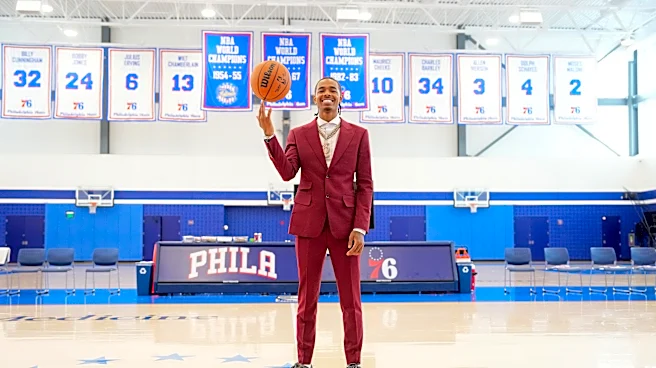
Philon, the newest 76er, clearly falls into the latter category.
“He just has this ability,” Armstrong said, “to see the game in a way that others can’t.”
And that’s not all. Philon said at his introductory presser Thursday that he began imagining himself here, in the NBA, as early as middle school. And now he can see himself as a contributor – a worthy complement to backcourt allies Tyrese Maxey and VJ Edgecombe, and a guy who can provide whatever might be needed.
And while there has been a great hue and cry about the Sixers drafting another guard, there is a sizable argument to be made for taking this particular one. Most mocks had him going well ahead of Philadelphia’s spot, No. 22 overall, in Tuesday’s selection process. Analysts fairly salivated over the varied offensive skill set he showed last season at Alabama, his second in Tuscaloosa, and were likewise impressed by his feistiness (“That competitive juice is everything to me,” he said Thursday) and adaptability.
Not to mention his feel for the game, nurtured in moments like the one Armstrong witnessed six years ago.
“I would say you have to use a lot of imagination with those workouts – just, like, imagine putting yourself in a position that you will be in a game,” Philon said.
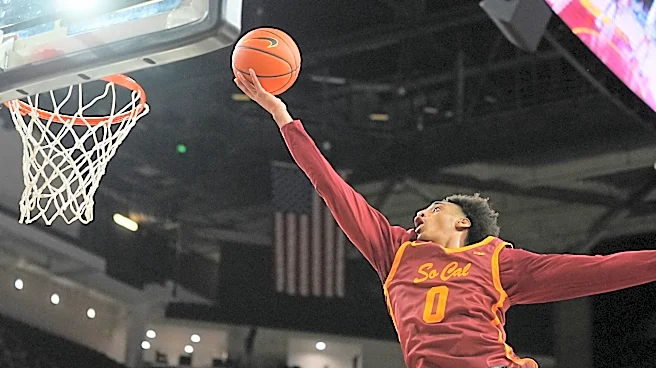
So he always goes hard, always goes at game speed. And that has translated to nights when the pep band is playing. In 2025-26 he averaged 22 points, 3.5 rebounds and five assists for the Crimson Tide, while compiling .501/.399/.798 shooting splits.
The Athletic, citing data from sports-reference.com, noted that he was the first high-major-college player since 1980 to compile numbers like those, and Synergy Sports metrics ranked him among the very best players in the nation at operating in the pick-and-roll and breaking his defender down in halfcourt man-to-man situations.
While it’s a stretch to envision him sharing the court with Maxey and Edgecombe, it doesn’t take too much imagination to see him coming off the bench and running the offense, while Maxey or Edgecombe come clattering off screens. Rotating the three of them works mathematically: There are 96 backcourt minutes a night to be doled out, and if the starters get 35 or 36 apiece, there are 20-some left for the rookie.
It also should work stylistically. Over the course of his career, Philon has worked on and off the ball, and as both a star and complementary piece. So it appears he will be happy to ride shotgun for his counterparts, at least for the time being.
“I describe it as just making the game easy for everybody around you,” he said.
Armstrong saw every facet of Philon’s game in the three years he played for him at Baker. The first two of those seasons, Philon shared the marquee with others. His junior year, he was the unquestioned focal point. There was a night that season, for instance, when he scored 36 of his 46 points in the second half against a school called LeFlore, including 30 straight on the part of his team in one incendiary stretch.
Armstrong remembers that game well. He remembers in particular how disgusted he was with Philon at the end of the first half.
“And,” he said, “I went up in the locker room, and I gave him the what-for.”
Then Armstrong left. He learned later that in his absence Philon delivered a simple message to his teammates: “If y’all get stops, I’ll score.”
And that’s exactly what happened.
“That,” Armstrong said, “was pretty impressive.”
After amassing over 2,000 points at Baker, he spent his senior year at Link Academy in Branson, Missouri, where he ran the point while Tre Johnson, now a Washington Wizard, put up big numbers.
The recruiters were already on Philon, and he initially committed to Auburn. Then he changed his mind, and was set to go to Kansas. Then he changed his mind again, and opted for Alabama.
Hey, fine with Armstrong.
“I’m a lifelong Alabama fan, so for him to go to Alabama was really fun,” he said. “I would have been an Auburn fan if he had gone there, too. But going to Alabama made it easier on me. I already had the wardrobe ready.”
Philon again served in a complementary role his freshman year, on a ‘Bama team starring Mark Sears and Grant Nelson, both of whom played in the G League last season. Even played some defense, something he hadn’t been asked to do much in high school.
And last year Philon was again the main man.
There are questions about his build – he stands a little over 6-foot-2 and carries about 180 pounds – especially in a league featuring “grown-ass men,” as Armstrong observed. But there’s much to like beyond that.
“I think he can do whatever’s necessary,” Armstrong said.
On draft night Armstrong gathered his current team in the gym to watch the proceedings. Mobile is a football town, a place that has produced Hall of Famers like Kenny Stabler and Robert Brazile. But now a basketball player was commanding center stage. Pretty cool night, for all concerned.
“We hung on every pick,” Armstrong said, “and we were really excited and clapped it up whenever he got picked.”
It doesn’t take too much imagination to believe some skinny 14-year-old in that group took inspiration from the moment, not hard to believe he was left asking himself one very big question: Why not? Because goodness knows, there are times when you get a surprising answer.