

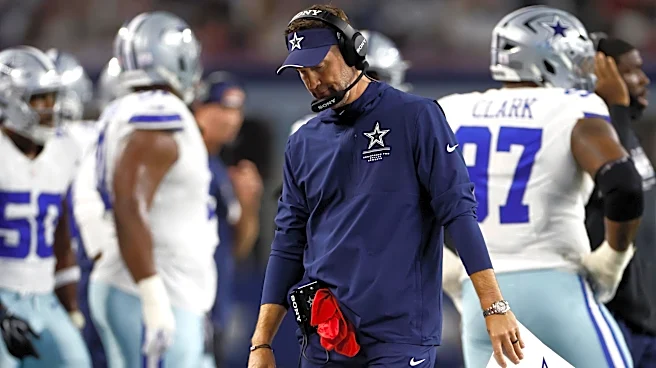

The 3-2 Steelers will travel to Tampa Bay in Week 6 to take on the Buccaneers, who sit at a disappointing 1-4 but are coming off their lone win of the season thus far — a 24-16 showing against the Cowboys in Week 5.
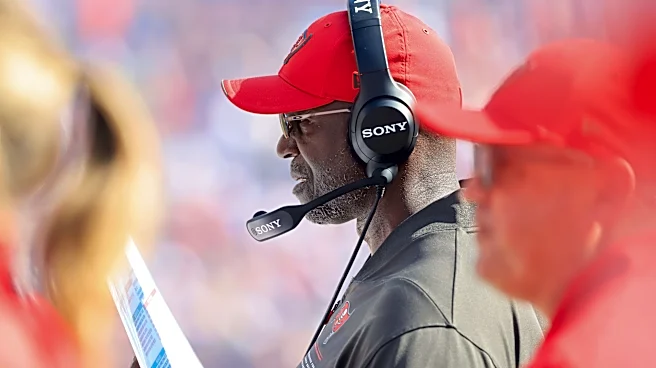
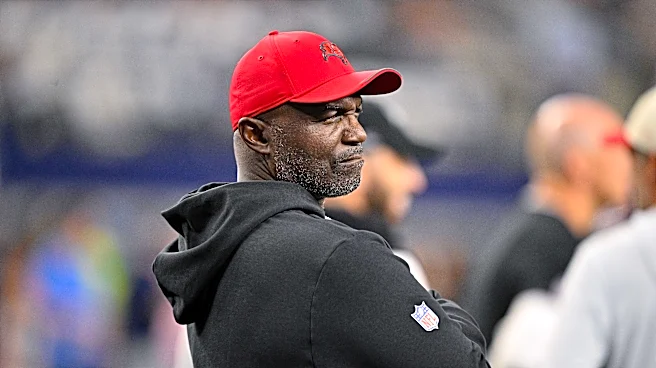
It’s been a rough season for Buccaneers head coach Todd Bowles and co., and the team’s recent three-year, $165 million extension for quarterback Baker Mayfield already isn’t aging that well: The veteran passer struggled in a winless start to the year before missing games with a dislocated
thumb on this throwing hand.
But coming off a Thursday Night Football win in Dallas, the Buccaneers have some momentum and extra prep time to prepare for the Steelers. What should Pittsburgh expect on Sunday?
What to expect from the Bucs’ offense

Rushing YPG: 133 (7th)
Passing YPG: 173.4 (27th)
PPG: 20 (25th)
RB: The Buccaneers offense will be without starting quarterback Baker Mayfield for yet another game, meaning undrafted rookie Jalon Daniels will once again start under center for Tampa Bay against Pittsburgh.
The good news is that Daniels is a rookie with just two starts under his belt. That can show in his play and the Steelers should be able to take advantage of some mistakes on Sunday. That said, Mayfield was having a rough start to 2026, and it was Daniels who helped lead the Buccaneers to their first win of the season last week. Like everything in the NFL, beating the Buccaneers won’t be slam dunk in Week 6.
Daniels looked impressively poised and accurate against the Cowboys defense last week, passing for 189 yards, one touchdown and no interceptions with 76% completion. Of course, offensive coordinator Zac Robinson put together a game plan to help the young passer succeed, with an emphasis on the quick game and play action.
Daniels is on the shorter side for an NFL passer (6’0), and his arm strength doesn’t leap off the screen, but he drives the ball well on short and intermediate passes and only had a few rough misses against the Cowboys (note this was against a struggling Dallas defense). His escapability is an upgrade over Mayfield’s, with Daniels already having 87 yards and four first downs on the ground this season.
While the Buccaneers are largely a short-game passing attack, Daniels still has moments where his processing slows down and he attempts to play hero ball. Tampa Bay has a strong offensive line but currently has the third-worst sack rate in the NFL (10.1%), with 17 sacks allowed this season. A number of those plays have been quarterback error — Tampa Bay has the NFL’s seventh-longest time to throw at 2.98 seconds — even if Daniels has been an improvement in that area over Mayfield.
If the Steelers can keep up with Daniels in the backfield, they should be able to log some sacks or at least a handful of pressures on Sunday. But Tampa Bay’s offensive line won’t make that task easy.
Led by one of the league’s best tackles in Tristian Wirfs and a slew of other good players such as Graham Barton and Luke Goedeke, the Buccaneers can both pass protect well and maul in the run game.
On the ground, the Tampa holds defenses to the sixth-lowest run stuff rate (12.5%) in the NFL. The Buccaneers are also second-best in yards before contact per attempt (2.16), per NFL Pro.
The Buccaneers use a lot of motion to try to confuse defenses pre-snap, and it melds well with a rushing offense that favors gap concepts. At running back, the room has two solid names in starter Bucky Irving and former Steeler Kenny Gainwell. Both are slimmer running backs who can be a weapon in the passing game, with Irving showing off his phone-booth quickness with a long run against Dallas last week.
If healthy, Sean Tucker is another name to keep an eye on in Tampa Bay’s backfield as a more hard-nosed, downhill runner.
At pass catcher, the Buccaneers have a number of recognizable names, but still lack an established WR1. Emeka Egbuka leads the team in receiving yards with 192 through five games, averaging just 9.1 yards per reception as a primarily underneath target. Tight end Cade Otton, with 182 yards, has also been a steady contributor.
Chris Godwin Jr. hasn’t had his pre-injury production, but has been another solid name in the short game with 129 of his 179 yards this season coming after the catch. On more downfield passes, 5’10 speed threat Tez Johnson averages 27.6 yards per catch on five receptions this season, while rookie Ted Hurst III, one of my favorite mid-round prospects this spring, has made some plays with eight grabs for 128 yards and a touchdown this season.
Tampa Bay is one of the most 11 personnel-heavy offenses in the league, getting a wide range of receivers involved. Still, its running game ranks top 10 thanks to a competent offensive line.
On paper, the Steelers’ defense certainly has the talent to shut down the Buccaneers’ offense, but Daniels is a bit of an X factor. Will an experienced pass rush with more film on the rookie dominate, or will Daniels continue to improve and clean up Tampa Bay’s sack rate with his mobility? Also complicating things is the tendency for offensive coordinators to mix up their tendencies more when playing with a reserve quarterback.
However, if the Steelers can disrupt the Buccaneers’ quick passing game and run game and force Daniels to play out of rhythm and with more downfield shots, this game could bode well for the Pittsburgh defense.
What to expect from the Bucs’ defense

Rushing YPG Allowed: 72.8 (2nd)
Passing YPG Allowed: 226.6 (20th)
PPG Allowed: 22.4 (T-14th)
RP: The Buccaneers’ defense makes a fascinating matchup for the Steelers’ offense. This contest will pit strength against strength: Pittsburgh’s running game versus Tampa Bay’s run defense. But it will also feature weakness against weakness: the Steelers have struggled against man coverage, yet the Buccaneers run man concepts at a bottom-third rate in the league.
In most metrics, the Buccaneers’ run defense is near the top of the league, and their overall strategy is pretty apparent. Tampa Bay has light boxes — six or fewer defenders — at the second-lowest rate (20.7%) in the NFL. They have stacked boxes — eight or more defenders — at the second-highest rate (41.4%) in the league. Put another way, 79.3% of the time, the Bucs have seven defenders or more in the box against the run, giving them a numbers advantage if the offense doesn’t answer with some combination of two tight ends, a fullback, or a condensed formation that hugs the receivers tight to their linemen.
The results have followed. Not only are the Buccaneers allowing the second-fewest rushing yards per game, but they’re also top-seven or better in:
- Average yards after contact (1.72, 1st)
- Yards per carry (3.3, T-2nd)
- EPA/Rush (-0.18, 4th)
- Runs of 10+ yards allowed (9, T-4th)
- Run stuff rate (18.9%, 7th)
While he doesn’t fill up the stat sheet, plenty of credit for the Buccaneers’ success against the run should be paid to nose tackle Vita Vea.
The Bucs also find creative ways to get their linebackers and defensive backs in good position to make stops.
Safety Tykee Smith and rookie linebacker Josiah Trotter currently lead the team in run stuffs with four apiece.
Tampa Bay’s commitment to stopping the run bleeds into what coverages they run. They live in single-high safety looks, running Cover-1 (12.9%) and Cover-3 (51.7%) a combined 64.6% of the time.
Against the pass, Tampa is a mostly middling group. As a pass rush unit, they actually track well at creating pressure, but they struggle to pay it off. The Bucs have the second-quickest average time to create pressure (2.45 seconds), and opposing quarterbacks’ average time to throw (2.59 seconds) is the quickest mark in the NFL. While that sounds like it should be paired with a lethal pass rush, in practice it just means opposing teams know they should attack the blitz-happy Todd Bowles defense with a quick passing attack. The Bucs blitz 41.3% of the time, the third most in the league. Despite this, they have just six sacks (28th), 55 pressures (T-26th), and a 30.7% pressure rate (29th) this season. Pair this info together, and that tells me the Steelers and quarterback Aaron Rodgers shouldn’t feel like they have the freedom to hold onto the ball forever, but they should be able to exploit the defense if they’re smart and playing on time.
With Tampa Bay running a lot of Cover-3, the areas the Steelers should attack match well with the personnel they have available to them. Cover-3 features three deep defenders, typically a safety in the deep middle of the field, and two cornerbacks on the outside. That leaves four defenders underneath to play the flats, middle of the field, and intermediate boundary. Ways to attack this coverage include:
- Attacking the seam (great for TEs or slot receivers)
- Concepts like Flood, Sail, and Levels, which stress the underneath defenders by sending multiple pass catchers at them at different depths, forcing them to commit to one and creating an opening for the other
- Slants and other quick game passing concepts that can get behind the underneath defenders quickly
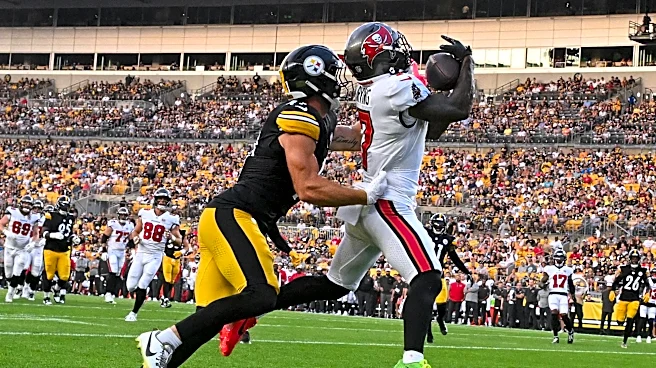
While the Bucs have a decent mark in EPA/pass at -0.08 (12th), they are far worse in other metrics. They allow 6.6 yards per pass play (23rd) and struggle to stop pass catchers from creating after the catch. They’ve allowed 647 yards after the catch (29th), and +103 YAC over expectation.
Zyon McCollum, Jacob Parrish, and rookie nickel Keionte Scott are taking most of their snaps at cornerback, with Benjamin Morrison missing each of the last two games with injury. Parrish is the only CB on the team with an interception (1). McCollum is having a solid season so far, with decent marks in coverage EPA (-5.3), passer rating allowed (68.8), but he has just three career interceptions, and nearly half of his career PBUs came two seasons ago. He’s also got an absurdly high missed tackle rate (25%) this season, due largely to a poor game against Green Bay where he missed four tackles. Parrish is their most targeted defensive back (30) and has allowed 18 receptions for 236 yards, but he’s added 5 PBUs and has just one missed tackle this season. Scott, the rookie, has struggled in coverage, allowing 14 receptions on 18 targets. His missed-tackle rate is 18.5%, with one missed tackle in each game.
At safety, the Bucs will likely be without Antoine Winfield Jr. for a second straight game as he has yet to participate in practice this week while recovering from a rib injury. Ifeatu Melifonwu will be the next man up. He was only targeted twice last week, allowing one catch for 15 yards, and also adding a missed tackle. Smith, for as good as he is against the run, has been a liability against the pass, surrendering three touchdowns and an opposing passer rating of 135.3 when targeted.
Linebackers Trotter and Alex Anzalone are also gettable, as they’ve combined to allow 28 of 36 targets to be completed for 316 yards and a score. Both do have an interception, however.
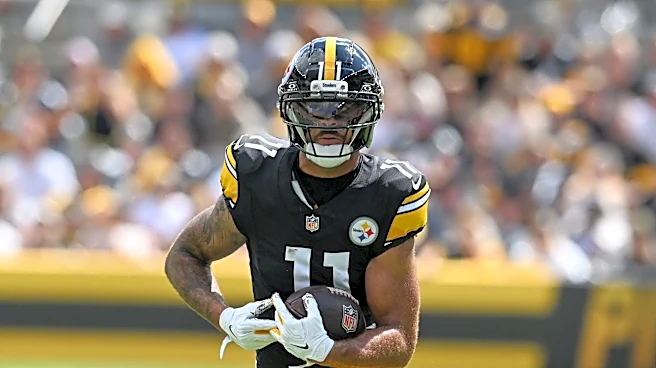
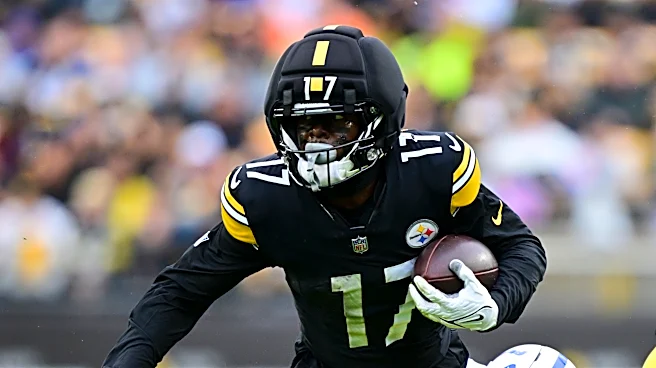
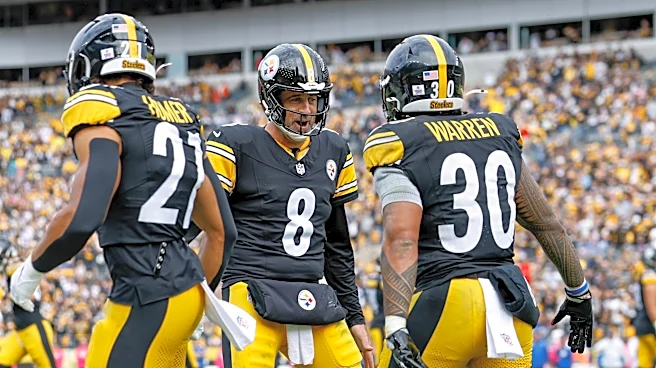
Overall, this should be a winnable game for the Steelers offense. They may not find the same success on the ground as in recent weeks, but they should still feature Jaylen Warren as a pass-catching weapon out of the backfield. I’d expect a heavy dose of Pat Freiermuth, Darnell Washington, and Germie Bernard, too.