




A wild season at the club, for both the first team and Castilla. This is a dissection of all of the madness at Real Madrid Castilla and the class of 2025/26.
I thought that 2024/25 was a whirlwind. Little did I know that 2025/26 would bring about a new level of chaos for Real Madrid Castilla. Things were looking promising as Álvaro Arbeloa came in and completed a great pre-season with a new look team, almost immediately implementing an exciting playing style. After attempting (and failing) to sign
some start players, as Zakaria and Abdellah Ouazane were sent back to Ajax after a failed medical – Arbloa was even granted a marquee signing, bringing in Rachad Fattal from Almería, a striker with experience in both La Liga and the second division. Relegation would not be a worry this time round. For the first time in 25 years, the team would also be entering a cup competition – joining the International Premier League cup alongside a whole host of ‘B’ teams and academy sides. Amongst of all the excitement, the question became: how far could this team go? Fast forward to May 2026, and Castilla are under their second manager of the year, and despite having their already skinny squad ransacked by a UEFA Youth League winning Juvenil A, the C team and the first team – made it all the way to the Premier League Cup final and qualified for the division three play-offs. The story gets far wilder than that. Let’s have a look at the 2025/26 campaign in its entirety – ranking the coaches and players, and dissecting the madness…
Manager Reviews
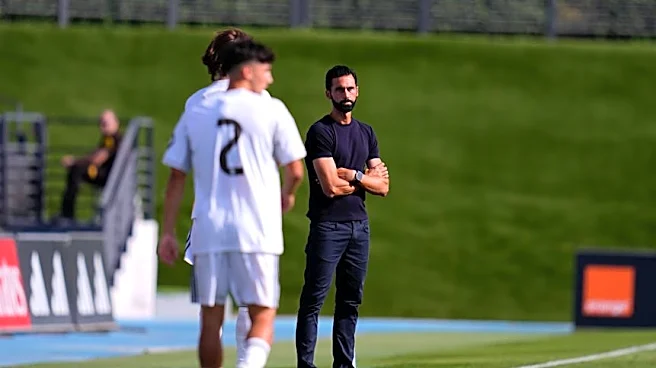
Álvaro Arbeloa
Replacing Raúl González after six long years was never going to be easy. Arbeloa inherited a reserve side that had stagnated somewhat stylistically, but unlike his predecessor during the final stages of his tenure, he arrived with trust and most importantly: resources behind him. Real Madrid finally invested in Castilla again, signing Rachad Fettal from Almería for a fee, whilst simultaneously promoting some of the strongest academy intakes in years. More importantly, many of these players already knew Arbeloa inside out. He had coached them through the academy and now stepped up alongside them. With his friend Xabi Alonso at the helm with the first team, it was the perfect transition on paper. And initially, it looked exactly that. Pre-season was excellent. Arbeloa implemented his ideas almost immediately, introducing a style heavily inspired by his friend Xabi: aggressive pressing, quick circulation of the ball, positional rotations and a clear emphasis on chance creation. He had not put together a great squad (with the team lacking in some key positions) – but with the players he did have Castilla looked very energetic and tactically ambitious. Rachad Fettal exploded into life, Thiago Pitarch became the revelation of the summer, and several academy promotions instantly looked comfortable at senior level. Then competitive football began…
The opening weeks of the season were dreadful. Castilla lost four of their first five matches and failed to produce a genuinely convincing performance across the first ten games. The excitement generated during pre-season quickly evaporated. Rachad suffered an injury almost immediately, and that poorly constructed roster was starting to show already. Arbeloa’s football was aesthetically pleasing, but at times alarmingly naïve. To his credit, he steadied the ship. As the season progressed, Castilla slowly began to resemble a functioning football side again. Joan Martínez, Víctor Valdepeñas and the rest of the defensive unit settled nicely, Fran González grew increasingly reliable in goal, and Jorge Cestero enjoyed a Chema Andres-like early season rise in midfield. But the biggest breakthrough came through César Palacios. After years disrupted by injury, Palacios became Castilla’s golden boy – the attacking leader capable of carrying the side through difficult moments. Around him, Arbeloa’s tactical ideas finally started to click. Castilla climbed the table, flirted with the play-off positions, and for the first time in years genuinely looked connected to the tactical identity of the first team. But it would be the first team that would disrupt everything overnight.
With the Real Madrid first team collapsing into chaos amid dressing room tensions, poor performances and growing pressure surrounding Xabi Alonso, Arbeloa was suddenly dropped into one of the most difficult jobs in world football. It was a move that never sat quite right. Xabi Alonso himself, one of the best coaches in the world, had struggled to impose his philosophy onto a dressing room full of superstars unwilling to sacrifice attacking freedom for structure and discipline. Arbeloa was effectively a less experienced reflection of the same tactical ideology. If the players were already resisting Xabi, there was little reason to believe they would suddenly buy into anything Arbeloa presented. And ultimately, they didn’t. Whilst there were occasional highs (Manchester City), alongside the incredible pathway he opened between the academy and the first team, the overall spell quickly descended into further chaos. Castilla players suddenly flooded first-team squads and major matches, with Thiago Pitarch becoming a regular name on the team sheet – something many supporters had been desperate to see for years. But beyond that, the project spiralled. Defeats to Albacete in the Copa del Rey, humiliations in Europe, a Clásicos loss and constant dressing room unrest created an environment beyond toxic. Reports of training-ground fights, public player frustrations and Florentino Pérez himself entering damage control mode only deepened the sense of institutional collapse.
Perhaps the most disappointing aspect was not that Arbeloa failed, but how he failed. The coach who arrived at Castilla with such clear principles slowly appeared to abandon them in an attempt to survive the political reality of the first team. Rather than doubling down on his philosophy, he became an agreeable figure attempting to maintain peace between players and the hierarchy. It was understandable, but it was still disappointing to see. In the end, Arbeloa leaves behind mixed emotions. His time at Castilla contained real promise. He improved players, modernised aspects of the side, strengthened the bridge between academy and first team and helped oversee one of the most entertaining Castilla teams in years. But tactically, the flaws never fully disappeared. There was never a convincing Plan B, and when his teams were figured out, they collapsed spectacularly. His premature promotion may also have permanently altered the trajectory of his coaching development. Had he remained at Castilla longer, he may well have grown into one of the better young coaches the club has seen in some time. Instead, he leaves as a talented young coach whose stock has undeniably fallen, but who will almost certainly resurface elsewhere at a high level. There is still a very good manager in there somewhere, just not one ready for Real Madrid.
Manager rating: 8/10
Julian López
When Álvaro Arbeloa abruptly departed for the Real Madrid first team, Castilla once again found themselves thrown into uncertainty. The timing could hardly have been worse. The season was entering its decisive phase whilst being sat in play-off place, the squad remained painfully thin in several areas and the dressing room suddenly lost the coach who had built the project around many of its players. When Álvaro Arbeloa abruptly departed for the Real Madrid first team, Castilla once again found themselves thrown into uncertainty. The timing could hardly have been worse. The season was entering its decisive phase, the squad remained painfully thin in several areas, and the dressing room suddenly lost the coach who had built the project around many of its players. Enter Julián López. Unlike many of the coaching names to come through at Real Madrid in recent years, López arrived without fanfare or celebrity status. He was not the latest former Galáctico stepping into the role, but rather a quieter figure who had earned his reputation properly through years of coaching work behind the scenes. After more than a decade of high-profile ex-players taking the Castilla bench, that change alone felt refreshing. It worked, too. Whilst Arbeloa’s Castilla often looked aesthetically stronger, López’s side quickly became more pragmatic and adaptable in difficult moments. The football perhaps lost a little of its stylistic sharpness, but in return Castilla suddenly looked like a team capable of navigating adversity rather than collapsing under it. Most importantly, López showed something his predecessor rarely demonstrated consistently: a genuine Plan B. Julián had an impossible job himself, as players continued being dragged in every direction imaginable – up to the first team, down to Juvenil A, across to the C team and into international duty. Few reserve sides in Europe deal with this level of instability, particularly during decisive stretches of the season. Yet despite all of that disruption, López successfully guided Castilla into the promotion play-offs and all the way to the Premier League International Cup final. That cup run deserves real credit. Castilla navigated the knockout rounds impressively and arguably should have lifted the trophy after a strong performance against Borussia Dortmund II in the final. Even in defeat, the side looked very bright.
His Juvenil A went on to win the UEFA Youth League for only the second time in Real Madrid’s history. Whilst Álvaro López (another exciting young coach) ultimately completed that achievement after Julián’s promotion, many of the foundations and key developmental structures were already in place. Crucially, many of those same players will now graduate into Castilla next season under a manager who already understands them completely, next season one to look forward to. Perhaps the biggest compliment that can be paid to Julián López is that he already looks less like a developmental coach learning on the job, and more like a genuine senior manager. Calm, adaptable, tactically flexible and emotionally intelligent, he handled an almost impossible mid-season situation with impressive authority. His football may not be as pretty, but it also avoids many of the catastrophic lows. In a remarkably short period of time, López has comfortably coached his way into the top tier of Castilla managers I’ve seen. More importantly, he has earned genuine excitement for what comes next. For the first time in a while, Castilla may finally have a coach capable not only of developing talent, but of building a project around it.
Manager rating: 9/10

Squad Overview
After two consecutive summers of effectively surviving on fumes, there was finally a sense that Real Madrid were beginning to take Castilla slightly more seriously again. The arrival of Rachad Fettal from Almería represented genuine investment, almost a foreign concept after years of neglect, whilst the latest wave of Juvenil A promotions looked stronger than those of previous seasons. Joan Martínez, Víctor Valdepeñas, Diego Aguado, Jesús Fortea, Jorge Cestero, Lamini Fati and Daniel Yáñez arrived with varying levels of hype, but unlike many recent generations, several looked genuinely capable of immediately navigating senior football. Add Arbeloa’s prior relationship with many of those players, and on paper there was finally reason for optimism again. Come the end of the summer, and the main problem was that the squad was still built incompletely. For all the talent introduced, Castilla somehow entered the season with just one natural winger and one natural left-back, and neither situation looked convincing. Manu Serrano never truly appeared at the level required, whilst the complete lack of wide options immediately restricted tactical flexibility and squad rotation. The imbalance was obvious before a ball had even been kicked. My prediction before the season began was 6th place and a near-miss on the play-offs for the team, largely for this reason. Over 38 games, any flaws in squad construction almost always catch up with reserve sides eventually. The season repeatedly felt like a balancing act between quality and availability. Injuries ripped through key areas almost immediately. Rachad Fettal, the marquee signing expected to lead the line suffered an early setback just as excitement around him exploded after pre-season. Thiago Pitarch disappeared for stretches after becoming the first team’s new gem, and so on… Meanwhile, the usual Castilla chaos continued uninterrupted: players disappearing to the first team, dropping back into Juvenil A, drifting into the C team or leaving for international duty whenever consistency threatened to emerge. Somehow, the squad did endure, though. What ultimately carried Castilla into the play-offs was not depth, because they had very little of it. It was individual emergence. César Palacios became the talisman and a lifeline. But this was never a complete squad. What perhaps makes the season impressive is that Castilla reached the play-offs despite all of this, and a managerial change. They even started borrowing C team and youth players at times, who looked more than comfortable to make the step up, helping to further strengthen that bridge from the academy all the way through to the first team. A good sign of things to come. Let’s have a look at how each individual player fared:
Fran González (Goalkeeper)
Appearances: 28 – Clean Sheets: 6
Have they improved?: Yes – Season Rating: 7/10
Fran González continued his steady rise this season and at times practically kept Castilla going with his saves. Whilst the defence in front of him often fluctuated between organised and chaotic, Fran consistently produced decent performances capable of rescuing points and preserving momentum during key stretches of the campaign. His performances were rewarded with continued involvement around the first team, where he effectively occupied the now familiar “shadow third goalkeeper” role. He also was one of the only players to remain consistent whenever he played, including during the play-offs. However, for more than a decade the Real Madrid academy has struggled to produce a top-level goalkeeper, despite several highly rated prospects passing through. Many looked La Liga calibre at youth level (better than Fran), only to plateau into second division journeymen or disappear down the pyramid entirely. Despite his talent, Fran is unlikely to break this curse. He will leave this summer, but it will be interesting to see where he goes.
Sergio Mestre (Goalkeeper)
Appearances: 9 (6) – Clean Sheets: 3 (2)
Have they improved?: Yes – Season Rating: 6.5/10
Sergio Mestre probably expected to spend most of this season quietly operating in the background, but circumstances and squad rotation ended up giving him more opportunities than initially anticipated. To his credit, he handled them well. Whilst Fran González remained the clear number one overall, Mestre stepped in reliably when called upon and quietly put together an impressive clean sheet record – matching Fran’s tally across all competitions despite playing half the matches. He was also called up to a couple of first team squads. With Fran moving on this summer, there is a possibility that Mestre could begin next season as Castilla’s first-choice goalkeeper.
Guille Súnico (Goalkeeper)
Appearances: (1) – Clean Sheets: 0
Have they improved?: No – Season Rating: N/A
Guille Súnico’s season can unfortunately be summarised very quickly. The official third-choice goalkeeper only made a single appearance all year in the Premier League International Cup quarter-final against Manchester United at Old Trafford – and it was a disaster. Poor distribution, shaky handling, questionable positioning and panicked decision-making made for an evening to forget, particularly considering the level of opportunity presented to him. The most telling detail may be that Castilla often trusted the Juvenil A goalkeeper ahead of him instead. Now 22 years old, Súnico feels unlikely to progress any further within the system. He may remain around as emergency depth, but equally, there would be little surprise if this summer marked the end of his time at the club. No rating.
Javi Navarro (Goalkeeper)
Appearances: 3 – Clean Sheets: 0
Have they improved?: N/A – Season Rating: N/A
The UEFA Youth League hero for the club, and a goalkeeper that for once, I am genuinely excited to see promoted full time this summer. His three appearances for Castilla this term didn’t amount to much, but he has already leapfrogged the actual Castilla third keeper. The new number one?

David Jiménez (Right-back)
Appearances: 30 – Goals: 1 – Assists: 8
Have they improved?: Yes – Season Rating: 7.5/10
I was silly to think that Jesús Fortea might take David Jiménez’s place in the side this season. David made sure that never became even a conversation with his performances. Throughout the year, he continued his remarkable rise from a player who initially looked miles below Castilla level into a top professional footballer. His delivery from wide areas became one of Castilla’s most dangerous weapons, finishing the campaign as the team’s top assister, whilst defensively he looked calmer and more mature than ever before. He may not possess the hype or technical ceiling of Fortea, but across the course of the season he was comfortably the better right-back. The biggest reward came with the first team. Four appearances, two in La Liga and two in the Copa del Rey, marked the completion of a journey that once looked impossible. I wouldn’t have believed I’d be saying this when he first came in, but I will miss him when he leaves this summer. Hopefully he gets a great move.
Jesús Fortea (Right-back)
Appearances: 15 (5) – Goals: 0 – Assists: 2
Have they improved?: No – Season Rating: 6/10
The latest hype-man to come out of the academy, Jesus Fortea was expected to come in and immediately make his mark, with many even pushing him for a first team future. In the first half of the season, he was dreadful. Not physically ready, and technically passive – the Spanish youth international offered nothing, and quickly fell behind David Jimenez in the pecking order (for both Castilla and the first team). His rating would have been truly terrible, if not for a commendable revival late on in the season. The last two months saw Jesus finally look physically capable at senior level, and take advantage of his impressive technical ability. Next year, he needs to secure his place in the starting line-up. Failure to do so will lead to the end of his time at Real Madrid.
Joan Martínez (Centre-back)
Appearances: 32 (1) – Goals: 3 – Assists: 0
Have they improved?: Yes – Season Rating: 7/10
With four highly rated young centre-backs arriving simultaneously alongside the already established Mario Rivas, comparisons between Castilla’s defensive talents is inevitable. Depending on the category, opinions will naturally vary. But in terms of the best all-round player, Joan Martínez takes the title. After the hysteria surrounding his first-team pre-season involvement in 2024, the ACL injury that followed threatened to completely derail his momentum. Instead, Joan responded impressively. Once fully fit again, he adapted to senior football like a fish adapts to water, quickly becoming Castilla’s defensive leader despite his age. Calm on the ball, physically imposing and surprisingly mature in difficult moments, he consistently handled the aggression and intimidation of older foes without looking fazed. It was his goal (third of the season) that sent Castilla to the play-offs. Considering he looked like the strongest centre-half in the squad, he never made a first-team appearance this season. Still, that opportunity feels inevitable sooner rather than later. Joan has fully re-established himself as one of the crown jewels of the academy, and perhaps a future Castilla captain.
Víctor Valdepeñas (Centre-back)
Appearances: 30 (2) – Goals: 2 – Assists: 1
Have they improved?: Yes – Season Rating: 7/10
Perhaps the most improved of Castilla’s young centre-backs this season, Víctor Valdepeñas has developed into one of the most reliable defenders in the squad. He is the strongest in possession out of the group, and that quality became increasingly important within both Arbeloa and Julián López’s systems. Castilla’s lack of depth at left-back often forced him out wide due to Manu Serrano struggling to meet the required level. To his credit, the versatile Valdepeñas performed admirably wherever he was asked to play, showing maturity and composure well beyond his age. This versatility was even rewarded with a Real Madrid first-team debut in La Liga against Alavés, notably at left-back. In reality though, Valdepeñas has earned his starting place centrally. If Castilla can keep them, he could form the foundations of a very strong and experienced Castilla defence next season alongside Joan Martínez.
Mario Rivas (Centre-back)
Appearances: 15 (5) – Goals: 1 Assists: 0
Have they improved?: Slightly – Season Rating: 6.5/10
After his breakthrough campaign last year, Mario Rivas entered this season as Castilla’s most experienced centre-back. Surprisingly, he was never fully trusted starter under Arbeloa, often finding himself rotated despite generally performing well whenever called upon. When he did play, he looked even better than last season. Calm defensively, physically reliable while being increasingly mature in possession, Mario rarely lets the team down and often looks more secure than some of the names around him. Another player who could easily start every week at this level now, Rivas finds himself in an interesting position heading into the summer. Personally, I’d love to see him stay for one final year at Castilla. In fact, keeping all five centre-backs together for another season could give the squad the perfect base moving forward.
Diego Aguado (Centre-back)
Appearances: 30 (5) – Goals: 0 (1) – Assists: 5
Have they improved?: Slightly – Season Rating: 6.5/10
Another member of Castilla’s overloaded centre-back department, Diego Aguado spent large parts of the season sacrificing himself for the good of the team, frequently filling in at left-back when required. Technically excellent and very comfortable progressing the ball, Aguado actually finished with the highest assist tally out of the five central defenders by far, highlighting the quality he offers in possession. His season was also rewarded with a first-team debut in La Liga against Elche, where he looked composed and entirely comfortable at top level. Physically, he remains less imposing than some of the other centre-backs competing around him, and by the end of the campaign he had arguably fallen towards fifth in the pecking order overall. Still, there is obvious talent there. If Aguado can add more authority defensively and establish himself consistently in his natural position, next season could become a very important one for his long-term future.
Lamini Fati (Centre-back)
Appearances: 30 (5) – Goals: 0 (1) – Assists: 4
Have they improved?: Yes – Season Rating: 6.5/10
After initially being overlooked by Arbeloa and left out of the Castilla squad entirely, Lamini Fati responded in exactly the right way. Everybody watching the academy knew he should have been promoted from the start, and through strong performances during pre-season and the opening weeks, he forced his way into the plans of both Castilla managers. Technically, he is the weakest on the ball out of the five young centre-backs, but physically he is in the best condition. Athletic and already built for the demands of the third division, Lamini never looked overwhelmed during the main season in the way some others occasionally did. That reliability quickly earned the trust of the coaching staff, and by the end of the season he looked like a perfectly valid starting option whenever called upon. In the play-offs however, it has to be mentioned that Lamini was a disaster, and questions surrounding his technical ability found some ugly answers. He remains another defender who could easily have a larger role next year, Lamini’s first-team debut may still lie ahead if his development continues at a good pace.
Manu Serrano (Left-back)
Appearances: 24 – Assists: 1
Have they improved?: Yes – Season Rating: 5/10
Manu Serrano is not a player I particularly rate, but to his credit, he did improve across the season and at the very least proved himself to be a better option than some of Castilla’s recent alternatives in the position (this admittedly doesn’t say much after last year’s disasterclass from David Ruiz). The biggest concern is that Castilla often looked more comfortable using centre-backs out of position ahead of him. Still, Serrano does possess some redeeming qualities. He works hard, gets up and down the flank willingly, and generally looks positive when attacking, particularly when delivering crosses into the box. In one of the stranger moments of the season, he even made his Real Madrid first-team debut during the final league match – although by this point all hope was gone and supporters simply wanted the year to end. Ultimately, Serrano looks like a professional-level player, but one who may struggle to establish himself consistently even across the third tier. He may remain next season as useful backup depth, but if stronger academy options emerge or the club finally decides to recruit properly at left-back, few would object to him moving on.
Jorge Cestero (Centre-Midfield)
Appearances: 33 (2) – Goals: 2 – Assists: 2
Have they improved?: Yes – Season Rating: 7.5/10
Jorge Cestero followed a similar path to Chema Andrés last year – A strong midfielder who instantly became an indispensable figure, only to drift away slightly in the second half of the season. His composure and intelligence complimented his strength perfectly, and he was rewarded with five first team call-ups, including a Champions League start against Benfica. Thiago Pitarch eventually took his place in the first team queue, but Jorge remained an important figure throughout the campaign and produced an excellent display in Castilla’s play-off first-leg victory over Sabadell. Looking ahead, Cestero feels like exactly the type of player Castilla should be building around next season – but if he truly wants to follow Chema, perhaps he’ll be looking outward this summer.
Cristian Perea (Centre-Midfield)
Appearances: 27 (5) – Goals: 0 – Assists: 0
Have they improved?: No – Season Rating: 5/10
After spending last season knocking on the door of the Castilla squad, this was supposed to be the year Cristian Perea established himself at senior level. Instead, it largely passed him by. Despite making enough appearances to have a meaningful impact, Perea never managed to influence games or force his way into either manager’s team-sheet. The technical ability is clearly there, but as others such as Jorge Cestero took their opportunities and accelerated beyond expectations, Perea struggled to produce much of anything at all. Another player that likely will be here next season, but I doubt many Castilla followers would mind either way.
Manuel Ángel (Centre-Midfield)
Appearances: 27 (5) – Goals: 0 – Assists: 0
Have they improved?: Yes – Season Rating: 7.5/10
After two seasons of frustration and injury setbacks, this finally felt like the Manuel Ángel campaign many had been waiting for. Whilst he may not have grabbed the headlines in the same way that César Palacios, Jorge Cestero or Thiago Pitarch did, he quietly enjoyed his strongest season in a Castilla shirt and became one of the most important figures in the squad. On the ball, he remains one of the most gifted players in the team. The elegance and intelligence that has made him such a fan favourite never disappeared with time away – and this year he was simply able to stay on the pitch long enough to showcase it consistently. His influence was reflected not only in his performances, but now also in his leadership, captaining Castilla to both the Premier League International Cup Final and the promotion play-offs (where he was a big miss after being unavailable). The first team also took notice. Seven Real Madrid appearances may not have brought meaningful minutes, but they reinforced his growing standing within the club. Many felt that it was Manuel who could have benefited the first team more, in place of Thiago Pitarch for many games. The captain will leave Castilla this summer. The second division is the bare minimum for this player during 2026/27.
Thiago Pitarch (Centre-Midfield)
Appearances: 16 (3) – Goals: 0 (1) – Assists: 2 (1)
Have they improved?: Yes – Season Rating: 7.5/10
No player experienced a bigger rise during a Castilla season than Thiago Pitarch in recent times. The revelation of pre-season quickly became one of the most talked-about academy players in Spain, progressing from promising Juvenil A midfielder to regular involvement with the Real Madrid first team in a matter of months. Very few players make that leap. Even fewer make it look remotely normal. His Castilla season itself was somewhat mixed, hence the score here. There were excellent performances, average ones, and a handful where the physical demands of senior football clearly limited his influence. That is hardly surprising when you consider he spent the year bouncing between four different teams: Juvenil A, Real Madrid C, Castilla and the first team. Establishing consistency under those circumstances is almost impossible. The biggest story of course, was his first-team emergence. Whilst some of the opportunities occasionally felt slightly forced due to surrounding circumstances, Pitarch largely justified the faith shown in him. His display against Athletic Bilbao in the final league game was particularly impressive and served as a reminder of why the club rates him so highly. Perhaps controversially, I would actually keep him at Castilla next season. The ingredients are all there for him to become the team’s next leader and perhaps even its next golden boy. Equally, his stock has risen so dramatically the sheer hype is enough to carry him to some very high places – and a loan move (or buy-back sale) wouldn’t come as a surprise. Maybe even a direct first team promotion is on the cards? Whatever happens this summer, Pitarch is a name worth watching very closely.

Daniel Mesonero (Centre-Midfield)
Appearances: 16 (5) – Goals: 1 (1) – Assists: 0
Have they improved?: Yes – Season Rating: 6.5/10
Daniel Mesonero offered more in than some actual Castilla players, despite the fact he is yet to be officially promoted. He looked immediately comfortable when called upon, displaying the composure, technical quality and attacking instincts that have made him one of the academy’s more exciting midfield prospects. He scored an important knock-out goal against Manchster United at Old Trafford in the Premier League International Cup, and his progress was rewarded in remarkable fashion with a first-team debut in the Champions League. Comfortable on the ball and possessing an impressive eye for goal for a midfielder, Mesonero already looks surprisingly well-adjusted to senior football. With a full promotion expected this summer, he’ll be one of the more interesting players to watch next season.
Roberto Martín (Centre-Midfield)
Appearances: 14 (1) – Goals: 2 – Assists: 4
Have they improved?: Yes – Season Rating: 6.5/10
Another highly-rated academy midfielder who stepped up and immediately looked capable of contributing at Castilla’s level. In fact, there were periods where Roberto Martín looked more influential than some of the established midfielders already in the squad. His return of two goals and four assists from a small sample size was excellent and highlighted the attacking quality he brings from deeper areas. Technically, Roberto is superior in possession to most players around him. He receives the ball confidently, plays progressively and looks very capable of creating something. He appears to be quite hot-headed at times, making rash challenge and questionable decisions, but this often reflects a player adjusting to senior football, and is exactly what Castilla exists for. With a full promotion expected this summer, Roberto looks well-positioned to become an important part of next season’s squad.
César Palacios (Attacking-Midfield)
Appearances: 32 (5) – Goals: 15 (1) – Assists: 4 (1)
Have they improved?: Yes – Season Rating: 9.5/10
The player of the season, and what a season. Every great Castilla side eventually finds its golden boy. That player who rises above the level around him and drags the team forward when things look bleak. This year, that player was César Palacios. Top scorer. Second-highest assister. Best performer. There is no debate. After injuries robbed him of almost the entirety of last season after a promising first year, Palacios exploded into life. Fifteen goals from midfield is outstanding, placing him above some genuinely elite Castilla names in the modern era, including the likes of Nico Paz. More importantly, the statistics only tell part of the story. Whenever Castilla needed inspiration, Palacios provided it. Goals, assists, set-pieces, long-shots, consistent quality, moments of magic… He became the team’s entire attacking identity at times. What makes him special is the variety. He can score from distance, create effortlessly, operate between the lines, arrive into the box at the right moments, and punish opponents from almost anywhere in the final third. Defenders can’t handle him in the lower tiers. Whilst others fluctuated throughout the season, Palacios remained Castilla’s one constant source of danger. Seven first-team appearances capped off a remarkable campaign. Palacios will play in a top league next season, and could bring in some serious cash as a result.
Pol Fortuny (Attacking-Midfield)
Appearances: 37 (3) – Goals: 9 (2) – Assists: 3
Have they improved?: Yes – Season Rating: 8/10
It has always amazed me how Pol Fortuny could return such strong numbers even in poor spells of actual form. This was the season that his gameplay would catch up. After a quiet start to the season (in which he continued to frequently register goals and assists), by the end of the campaign and going into the play-offs, he was arguably the teams most important player. For such a small player, Fortuny deserves enormous credit for how he’s adapted to one of the most physical leagues in Spanish football. Rather than being overwhelmed, he has learnt how to use his agility and intelligence, combined with his already supreme movement to influence matches. Three goals in the last four games of the season, including the play-off first leg made Pol one of Castilla’s most reliable attacking outlets. Despite the play-off defeat, it is a perfect send off for someone who has worked tremendously hard and developed into a special player. Clubs higher up the pyramid will undoubtedly have taken notice.
Bruno Igelsias (Attacking-Midfield)
Appearances: 35 (3) – Goals: 9 (2) – Assists: 3
Have they improved?: Yes – Season Rating: 6/10
After a very poor first stint with Castilla four years ago (!), Álvaro Arbeloa finally handed this forgotten talent a second chance. And it made for better viewing. It didn’t quite translate into a standout league campaign, but in the Premier League International Cup Bruno was one of Castilla’s best players throughout the competition. He may never become the star once expected, but this was still a respectable redemption arc and a far more positive chapter than his first Castilla adventure. Whether he stays or leaves amidst the graduation remains unclear, but he would make a dependable backup to the incoming Gabri Valero.
Daniel Yáñez (Winger)
Appearances: 35 (3) – Goals: 4 – Assists: 3
Have they improved?: Yes – Season Rating: 7/10
Considering the circumstances, Daniel Yáñez had an excellent first season in senior football. Castilla entered the campaign with the silly situation of having just one winger in the squad, placing a huge burden on the youngster from day one. Rather than being overwhelmed, Yáñez responded admirably. His seven goal involvements were strong, becoming eight if you include the superb assist he registered during one of his two first-team appearances. More importantly, he spent the season being shuffled between different teams whilst still managing to maintain a respectable level. Like several academy players this year, establishing rhythm was very difficult indeed. Yáñez’s low centre of gravity allows him to glide past defenders in one-versus-one situations, whilst his delivery into the box is dangerous. There are still aspects of his game that need refinement, but the foundations remain very encouraging. Personally, I’d love to see him remain at Castilla next season and build upon this great debut campaign. However, his profile will have risen significantly, so his future may no longer be entirely in Castilla’s hands.
Hugo De Llanos (Winger)
Appearances: 0 – Goals: 0 – Assists: 0
Have they improved?: Regressed – Season Rating: -/10
Where did this guy go? The positionally confused talent did not play once all season long for any team (after looking good last year), and he did not seem injured. This never happens, not even to the naughty kids. A big question mark remains over his future.
Alexis Ciria (Winger)
Appearances: 11 – Goals: 3 – Assists: 2
Have they improved?: Yes – Season Rating: 8/10
When Adrián Arnu, a player with La Liga experience was signed in January, everyone was expected big things from a rare external signing. Arnu never really made his mark at Real Madrid. All that time, there was a second signing that went completely under the radar, and this man would have a huge effect on the team. Alexis Ciria was signed from Sevilla, and ended up being one of Castilla’s most exciting players – needing no time at all to adapt. He will be a star next season for Castilla.
Loren Zúñiga (Striker)
Appearances: 28 (5) – Goals: 6 – Assists: 1
Have they improved?: Yes – Season Rating: 6.5/10
Let’s be honest: Loren Zúñiga never truly lived up to the hype that followed him from Málaga. Once regarded as one of Spain’s brightest young forwards, and a player many expected to reach La Liga comfortably, his development has been slower and more complicated than anticipated. That said, this was still a good season. Six goals represent the best return of his professional career to date, and whilst he never became the dominant focal point Castilla hoped for, he remained a useful and reliable contributor throughout the campaign. His technical quality continues to stand out, often looking more comfortable linking play and drifting into areas than operating as a traditional penalty-box striker. When at his best, he can be a genuinely elegant footballer. The frustration is that there always feels like there should be more. There were long stretches where Castilla needed a striker to take games by the scruff of the neck, and Loren never quite became that player. César Palacios ultimately carried the attacking burden instead. Still, his time at Real Madrid is up, and he now looks comfortably capable of holding his own at professional/third-tier level, something that was not always guaranteed when he arrived. Whether he can push himself towards second-division football remains the big question. The once seemingly inevitable La Liga future feels distant now, but there is still can be a solid professional career ahead of him.
Rachad Fettal (Striker)
Appearances: 12 (2) – Goals: 3 – Assists: 1
Have they improved?: No – Season Rating: 6/10
Few players suffered more from bad luck this season than Rachad Fettal. Castilla’s rare investment in the transfer market immediately looked justified during pre-season, where the former Almería forward was outstanding. Goals flowed freely, and there was a growing feeling that Castilla had finally found the striker capable of leading the line and firing them towards the play-offs. Just as the season was getting underway, Fettal suffered a huge setback that effectively destroyed the momentum he had spent the entire summer building. Whilst Castilla eventually found solutions elsewhere, particularly through César Palacios, there is little doubt that his absence hurt the team. To his credit, he returned for the final run-in and still managed three goals despite never fully regaining rhythm, leading to a decent rating here. The flashes of quality remained visible, but it was impossible to shake the feeling that this season was only a glimpse of what might have been. More than any other player in the squad, Fettal feels unfinished. Hopefully he remains at Castilla next season because the story still feels unwritten. After everything that happened this year, he deserves the opportunity to finally deliver the campaign many expected when he first arrived at the club.
Álvaro Leiva (Forward)
Appearances: 16 (3) – Goals: 0 – Assists: 0
Have they improved?: No – Season Rating: 5/10
A disappointing season for Álvaro Leiva. There is talent there, but we saw none of it this year. Across 17 appearances in all competitions, he failed to register a single goal or assist for Castilla, making it difficult to argue that he made any meaningful impact. As a result, he frequently found himself drifting back towards the C team, where he looked slightly more comfortable. The strange part came later. Despite never really earning Arbeloa’s trust at Castilla, Leiva somehow found himself making a first-team appearance under the very same manager towards the end of the season. Quite how or why that happened remains a mystery. At 21, it is time to move on.
Jacobo Ortega (Striker)
Appearances: 16 (1) – Goals: 6 – Assists: 2
Have they improved?: Yes – Season Rating: 8.5/10
Saying Castilla never found their goalscoring striker this season is perhaps disingenuous when Jacobo Ortega exists. Yet to be promoted to the squad full-time, the youngster repeatedly stepped up from the C team and became a key figure in the second half of the season. His return of six goals and two assists in just fourteen appearances gained him a lot of credit, particularly when compared to some of the more established forwards around him. More importantly, he brought energy, directness and a genuine goalscoring instinct at a time when Castilla desperately needed all three. Amid managerial upheaval, first-team chaos and constant squad disruption, Ortega became a welcome success story. Jacobo should be one of the most exciting additions to Castilla’s squad this summer, and based on what we’ve seen so far, he’ll be welcomed with open arms.
Cherif Fofana, Gabri Castrelo, Álvaro Ginés and Adrián Arnu also featured for Castilla this season, but none played enough to merit individual analysis or a season score. Fofana and Castrelo remain particularly exciting prospects, whilst Arnu will be hoping that Real Madrid buy him after arriving midway through the campaign on loan from Valladolid. We will see some of these talents play for Castilla full-time next season.

Statistical Round-up
Real Madrid Castilla finished 5th in Primera Federación Group One, with a final record of:
W: 16
D: 10
L: 12
Goals Scored: 61
Goals Conceded: 52
Goal Difference: +9
Points: 58
They also reached the Premier League International Cup Final, before narrowly losing to Borussia Dortmund II, and qualified for the promotion play-offs where they were eliminated by Sabadell in the semi-finals.
On paper, this was a massive improvement on last season. Castilla collected four more points, scored three more goals, finished one place higher in the table, and crucially never flirted with relegation, reaching the play-offs to cap off a successful campaign. Given the squad’s obvious shortcomings mixed with the managerial upheaval midway through the campaign as a result of the chaos engulfing the first team for much of the year, that should not be overlooked. Last season’s side was built around Gonzalo García and Víctor Muñoz, who combined for 36 league goals between them. Replacing that output looked impossible. Castilla somehow scored even more goals this season. César Palacios emerged as the latest golden boy from Valdebebas, Pol Fortuny enjoyed a great year, and contributions arrived from all over the pitch. Unlike last season, where Gonzalo often carried the attack on his own, this team spread the responsibility around. But at the other end the numbers are ugly. Whilst Raúl’s well-structured Castilla side conceded just 36 goals and finished with the best goal difference in the division (+22), this year’s team shipped 52 and finished with a goal difference of only +9. Only a handful of teams conceded more. Despite some good individual performers, the lack of senior experience often left them exposed, ultimately proving fatal in their play-off exit against Sabadell.
The season itself mirrored those statistics. There were prolonged periods where Castilla looked brilliant, dangerous and capable of beating anyone in the division. There were equally long stretches where they looked fragile and incomplete. The first ten games were largely dreadful. The final weeks were chaotic. In between, however, this team found enough quality to establish itself as a genuine promotion contender. The most fitting ending came on the final day. Castilla did not clinch their play-off place through dominance or control. They qualified through one of the most bizarre administrative and mathematical scenarios I have seen. Yet over 38 games, they had done enough to deserve being there. Promotion ultimately proved one step too far, but at least progress did not.

Final Thoughts Ahead of 2026/27
From before a ball was even kicked, things have been turbulent beyond belief, right until the very end. From a failed medical, to Arbeloa’s mostly positive stint – ending up with a cup final and a place in the play-offs in the most absurd fashion. Amid all of this, some great development took place. Jorge Cestero exploded from obscurity into one of the most important players in the squad. David Jiménez continued his bizarre rise from emergency option to genuine contributor. Joan Martínez and Víctor Valdepeñas stabilised the defence. Fran González rescued points single-handedly at times, and César Palacios cemented himself as one of the best from the academy conveyor belt to play in his position. Around them, players contributed to drag the team through difficult moments. This summer, a whole host of players will flock to pastures new in higher divisions. Players such as Jacobo Ortega, Roberto Martín, Daniel Mesonero, Gabri Castrelo and others have already shown they belong at this level – and several current Castilla players should remain at the club for another season, providing a stronger foundation than the squad inherited twelve months ago. Castilla were one of the few positive sparks created by the entire club this season, and for once, continuity may actually exist. The biggest question remains whether Real Madrid are finally willing to fully support the project. The squad’s weaknesses were obvious all season. The lack of natural width, depth in certain positions and huge reliance on a small core of players nearly cost Castilla repeatedly, and ultimately did towards the end. Julián López has created a lot of excitement, and with some miraculous investment, and if key players are retained rather than rushed out of the door, this team could realistically challenge for promotion next season.
I will leave you with some key statistics below:
Top Scorer: César Palacios (15 +1)
Top Assister: David Jiménez (8 +2)
Most Clean Sheets: Fran González (6)
Most Appearances: Pol Fortuny (37 +3)
Most Minutes: David Jiménez (2,810 +119)
Player of the Season: César Palacios
Castilla Season Verdict: Success!