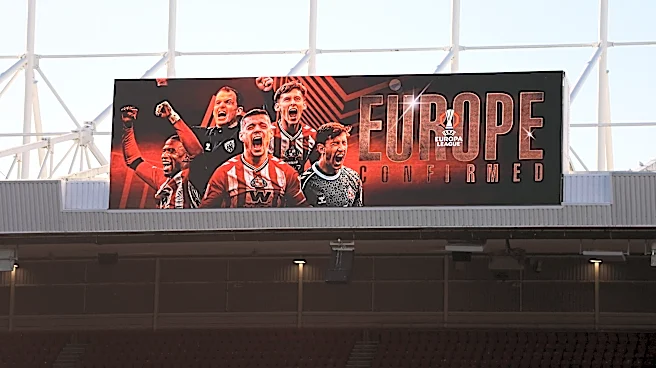





Tonight, Sunderland will take on AZ Alkmaar at the Stadium of Light as the Black Cats embark on their first European campaign in more than five decades.
As we welcome De Kaasboeren to Wearside for our opening UEFA Europa League fixture, it’s worth taking a look at the stats, history and tactical details that build the match on paper before the twenty-two lads take to the grass.
Whatever the result, Wednesday 16 September 2026 will go down in Sunderland folklore. European football is back on Wearside.
Head-to-head record
Despite the huge significance of tonight’s fixture, this will not be the first meeting between Sunderland and AZ Alkmaar.
The two sides last met in a pre-season friendly on 6 August 2005, when Sunderland travelled to the Netherlands and came away with a 1-0 victory. The winning goal was scored by Tommy Miller – his first goal for Sunderland.
Twenty-one years later, the two clubs meet again, but this time with considerably more at stake.

AZ Alkmaar in profile
AZ are no strangers to European football – the Dutch club have regularly competed in continental competition and have a particularly strong European history, most famously reaching the UEFA Cup final in 1981 before losing to Ipswich Town.
Their consistency in qualifying for European football makes them a very different proposition to a league opponent, and they arrive on Wearside with confidence.
AZ won the 2026 Johan Cruyff Shield with an emphatic 4-0 victory over PSV Eindhoven, getting their domestic season off to a spectacular start. They also lifted the KNVB Cup last season after defeating NEC Nijmegen 5-1 in the final, securing their place in this season’s Europa League league phase.
Their recent league form has been impressive too, with AZ sitting near the top of the Eredivisie after taking sixteen points from their opening six matches. Therefore, Sunderland are certainly not being handed an easy introduction to the Europa League.

The tactical approach under Leeroy Echteld
AZ have continued to develop a modern Dutch style based around possession, movement and aggressive transitions, and there are several key characteristics to their approach.
They prefer to construct attacks from deep rather than simply playing over the opposition’s press, and their midfielders are comfortable dropping towards the centre-backs to provide passing options while another midfielder positions himself higher to offer a route through the first line of pressure.
The objective is simple: draw opponents forward before finding the spare man further up the pitch, and one of the most noticeable features of AZ’s attacking game is their use of the half-spaces.
Their attacking midfielders and wide players are willing to move inside, creating triangles around the opposition midfield and forcing defenders to make difficult decisions. Therefore, if a Sunderland player follows them inside, space can open elsewhere. If they don’t, AZ have players receiving between the lines. It’s a constant battle for the defenders to maintain their shape.
At the back, AZ’s full-backs don’t simply stay in traditional wide positions.
Depending on where the ball is, one can push high and wide while the opposite full-back moves inside to help create an additional central passing option. That movement can create overloads in midfield and give AZ opportunities to switch the ball quickly from one side to the other.
Despite their possession-based philosophy, AZ aren’t interested in keeping the ball simply for the sake of it.
When possession is won, they can be extremely direct, and their first thought is often to attack the space behind the opposition defence, with early forward passes releasing runners into dangerous areas. That means Sunderland will need to be particularly careful when committing numbers forward.
The striker can also play an important role in creating space for the players around him. Rather than constantly remaining on the shoulder of the last defender, the central forward can drop towards midfield and bring a centre-back with him.
That movement can then create room for wide players to attack diagonally into the space that’s been vacated – exactly the kind of movement that can punish a defence that loses concentration for even a moment.

Off the ball: organisation and awareness
When Sunderland attempt to build from the back, AZ can transition into a 4-4-2 pressing shape.
The attacking midfielder joins the striker at the front, giving them two players capable of pressing Sunderland’s centre-backs, and the aim is to force Sunderland into rushed decisions and, ideally, long balls that AZ can compete for further up the pitch.
AZ’s midfield doesn’t simply charge forward as a unit.
One player can step out to press while the other remains deeper to protect the space in front of the defence. That balance is important because it prevents opponents from simply playing through the first wave of pressure.
Their nearest players immediately converge on the ball carrier, attempting to stop the opposition launching a counter-attack before it’s properly begun. For Sunderland, that means the first few seconds after winning possession could be crucial. There may be opportunities to break quickly, but only if the Black Cats can beat that initial counter-press.
When AZ are forced into a deeper defensive shape, their back four can become extremely narrow.
The priority is protecting the central areas around the penalty box, with the full-backs moving inside to help crowd out forwards and block shooting lanes. That can leave space out wide, meaning Sunderland’s ability to switch play quickly and attack the flanks could become important.
AZ’s wide players are also expected to contribute defensively.
When Sunderland attempt to overload a flank, the ball-near winger can drop back alongside the full-back, giving AZ additional numbers behind the ball. That makes it difficult to isolate their defenders in one-on-one situations.

A landmark evening awaits!
A night Sunderland will never forget – there’s no getting away from the significance of this fixture.
Sunderland have waited more than five decades for European football to return to Wearside – the last time the club played European football at home was during the 1973/1974 Cup Winners’ Cup campaign.
Therefore, tonight represents the beginning of a completely new chapter for a generation of Sunderland supporters who have never experienced a European night at the Stadium of Light – yet AZ Alkmaar will provide a serious test.
They have European experience and have tasted domestic success, as well as confidence and a distinctive tactical identity. They’ll arrive believing they can take something, but we are Sunderland and this is the Stadium of Light. Whatever happens over the ninety minutes, 16 September 2026 is a date that’ll etch itself into Wearside folklore.
So let’s enjoy it.
Enjoy the atmosphere. Enjoy the opposition. Enjoy seeing a different footballing culture come to our city. Enjoy hearing that Europa League anthem inside the Stadium of Light. After everything Sunderland supporters have been through over the years, we’ve earned this. Now, let’s make the most of it.
Haway the lads!