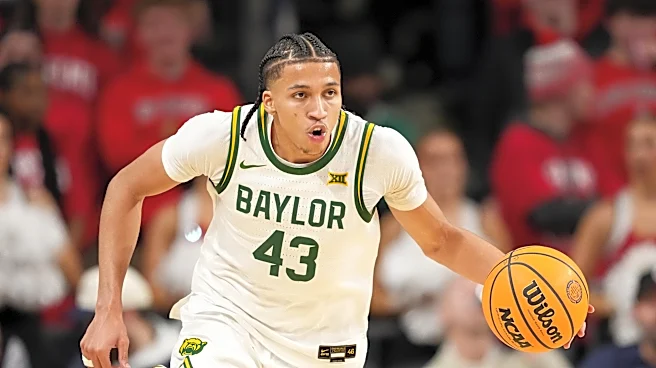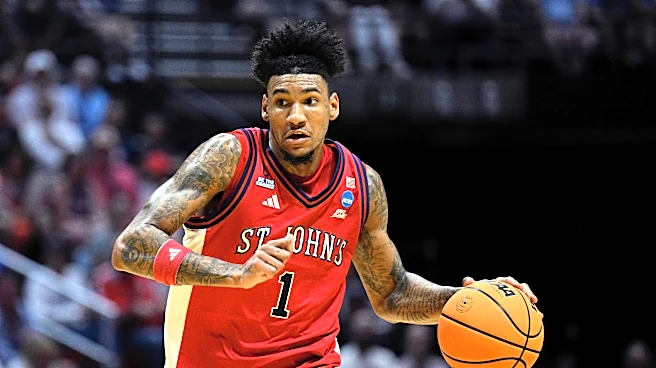



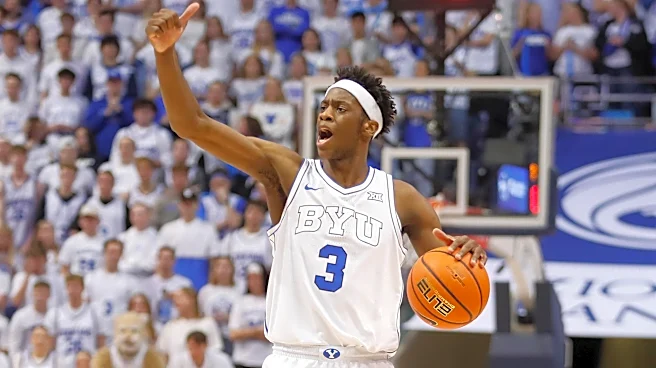



Depending on how the board falls, St. John’s forward Dillon Mitchell could be available when New York is on the clock on draft night next week. Should the Knicks consider him with their 24th, 31st, or 55th selection?
The Basics
- School: St. John’s (transferred from Texas, then Cincinnati)
- Position: Forward
- Height: 6’6.75” (barefoot) | 6’8” (listed)
- Weight: 202 lbs
- Age: 22 (October 3, 2023)
- 2025-26 Stats: 8.3 PPG, 7.0 RPG, 3.0 APG, 1.6 STL, 55.9% FG, 49.4% FT
- Projected Draft Range: Mid-second round to undrafted
The Numbers
Mitchell’s production does not jump off the page like that of teammate Zuby Ejiofor’s did at St. John’s, but his profile is built more around his tools and energy than his raw scoring numbers and a plug-and-play profile transitioning from college to the NBA.
He averaged 8.3 points, seven
rebounds and three assists per game for the Red Storm, giving Rick Pitino a high-motor forward who could defend, rebound, cut, run and finish without needing plays called for him. In St. John’s Sweet 16 loss to Duke, Mitchell scored 13 points on 86% shooting, showing the type of efficient, low-usage role that gives him an NBA pathway, although that will only happen after he spends some considerable developmental time in the chamber.
The passing is probably Mitchell’s calling card on offense, as he finished his senior campaign with 111 assists to only 37 turnovers, a great 3:1 ratio for an athletic forward whose offensive reputation has mostly centered on rim running, cutting and transition finishing.
SNY’s Ian Begley reported on Wednesday that the Knicks brought Mitchell in for a pre-draft workout, alongside UConn forward Alex Karaban. That matters because New York owns a second-round pick (No. 55), which fits the range Mitchell is expected to hear his name, unless he goes all the way and ends up signing a two-way, UDFA contract after the draft is over.
Skills That Pay the Bills
- Elite Athleticism: Mitchell is a rare vertical athlete. He runs the floor hard, jumps quickly off the ground, and can finish above the rim in transition, off cuts and on putbacks.
- Cutting and Play Finishing: His best offensive role is simple, as he’s adept at moving without the ball, finding dunker-spot openings, attacking backdoors and finishing plays created by guards. He does not need high usage to create value, as he’s a high-activity player.
- Defensive Versatility: Mitchell has the feet, mobility and athletic profile to defend multiple spots. He can navigate screens, switch in certain matchups and use his quickness to stay involved away from the ball.
- Rebounding Motor: He averaged seven rebounds per game and has posted more than two offensive rebounds per game in back-to-back seasons. His second jump and activity help him create extra possessions.
- Passing Growth: Mitchell’s senior season showed legitimate progress as an offensive connector, removing any concerns about him turning into a pro offense-stopper. He can make quick passes from the interior, hit cutters and move the ball without forcing plays.
Concerns
- No Reliable Jumper: This is the biggest issue, and not precisely a small one. Mitchell does not space the floor and his perimeter game remains underdeveloped, with the forward attempting 57 three-pointers in 144 college games across four seasons for an average of 0.4 3PA per game, hitting them at a horrid 19.3% clip. That limits lineup flexibility and makes his offensive role narrow in the current NBA economy.
- Free-Throw Shooting: His career free-throw percentage sits below 50%, which raises real questions about his touch and late-game playability alongside his non-existent long-range shooting.
- Limited Self-Creation: Mitchell is not a player who manufactures offense, mostly because of his shooting issues. He needs to play under a heavy structured offense, take advantage of spacing, and have elite playmakers around him to maximize his athletic tools and find him open.
- Tweener Role: He is 6’6.75” without elite length for a forward and does not shoot well enough to play a clean wing role. His NBA value depends on defending, rebounding, cutting and finishing at a high level.
The Knicks Fit
I don’t need to tell you how Mitchell fits the Knicks if you just read where the kid is coming from. New York just won their first championship since 1973, and Mitchell spent his final college season at St. John’s, playing home games at Madison Square Garden, and making this the ultimate good-story draft pick if NYK uses the late second-round selection on him or simply adds him to one of their two-way slots if he’s still available after the second day is over.
There is also real St. John’s history with the Knicks. New York drafted Mark Jackson out of St. John’s in 1987, and Jackson became NBA Rookie of the Year with the franchise, although the comparisons here are virtually non-existent. The other famous connection, and one still due for fix, is that with former Red Storm forward and Queens-born-and-raised Ron Artest, whom the Knicks passed on in 1999 when they selected Dunk-of-Death casualty Frederic Weis one pick before Artest went to the Chicago Bulls.
Mitchell would not arrive with Jackson’s or Artest’s profile or expectations—and he should definitely not be treated like that kind of prospect—but the local connection is there.
From a basketball standpoint, Mitchell fits only if the Knicks are comfortable taking a developmental bet, even late in the draft. New York already has physical wings and forwards in OG Anunoby, Mikal Bridges and Josh Hart, while Karl-Anthony Towns gives the team offensive firepower up front. Mitchell would need to earn minutes through defense, rebounding, pace and energy, and he won’t do anything to improve the offense, not being even close to Hart’s already-subpar shooting.
NBA Comparison
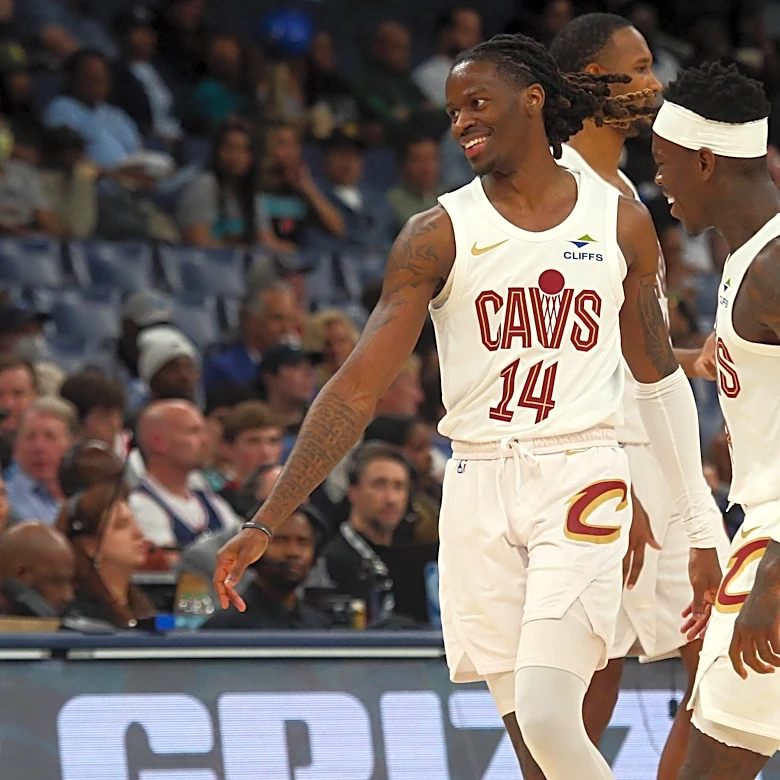
- Best-Case Comparison: Derrick Jones Jr. (Explosive cutter, finisher and defensive athlete without a lot to offer on offense)
- Median Outcome: KJ Martin (Vertical athlete who runs, cuts and finishes near the rim but not far from it)
- Low-End Outcome: Keita Bates-Diop without the jumper (Forward body, defensive chops, can’t hit a shot)
The Verdict
Pass at 24th and 31st. Consider him at 55th: Mitchell is not worth a first-round pick, whether that’s No. 24 or No. 31, unless the board completely collapses and the Knicks are convinced his jumper will develop, which is far from guaranteed. The athletic tools are obvious—Mitchell can run, jump, defend, cut and finish—but the shooting concerns are too big to ignore. A forward who does not space the floor and shoots below 50% from the free-throw line needs to be excellent in the margins to stay on the floor. Mitchell has some of those margins covered, especially with his cutting, rebounding and defensive versatility, but he still projects as a developmental player. Let him go past 55th, and with just five more picks remaining, there’s a good chance he goes undrafted, and the Knicks can ink him after he becomes a UDFA.
Read all our draft profiles here.
Go Knicks!