

Close your eyes and think about the kid you always matched up against growing up. Little League, Pee Wee hoops, doesn’t matter. Just picture that little stinker and that matchup.
Physical. Annoying. A little chippy. Probably would give you wet willies when you weren’t looking.
And no matter how many times you played them, it never really got less personal.
That’s Celtics vs. Sixers.
Not in the “classic rivalry” sense — in Joel Embiid’s words, “this is not a rivalry, they always kick our ass.” But in the sense that
these two teams just keep running into each other. Over and over again. More than any other matchup in playoff history, in fact.
For the 23rd time in NBA history, it’ll be Boston vs. Philadelphia in the playoffs. It’s familiar. It’s layered. And even when one team is clearly better, the games don’t always cooperate with that reality.
Which brings us to the question that might actually decide this series: what happens if these games are still tight late?
The Sixers need to keep things close
The Philadelphia 76ers had the #1 clutch-time defense in the NBA this season. Not top five. The best. They held teams to a 98.6 defensive rating in 174 total minutes of clutch situations. In the NBA, a clutch situation is officially defined as any time during the final five minutes of the fourth quarter or overtime, where the score differential between the two teams is five points or less.

They’ve already shown what that clutch-time defense looks like against Boston.
Both of their wins over the Celtics this season came down to the final possessions. If you rule out the Celtics 114-98 blowout win versus Philly on March 1st, the other three games were decided by a total of four points. Four! Two of those resulted in losses for Boston, falling in the regular-season opener 117-116, and losing again in Philadelphia on November 11, 102-100. Those two losses were the exact kind of games where everything slows down and every decision gets magnified.
That’s where this series can drift into something it probably shouldn’t be.
The Celtics don’t need to be perfect.
Here’s the thing with this Celtics team. When they look like themselves, the game usually ends before it ever becomes a “clutch” game.
Ball moves. Shots fall. Defense travels. You look up midway through the fourth and it’s a 15-point game that never really felt in doubt.
That’s the version of Boston that wins this series in five and we all get to start thinking about Round 2.
But for Boston, every now and then, the game tilts a little. And if it tilts long enough in this series, it could be closer than we’re hoping for.
We’ve seen the version of Boston that gets a little too comfortable with isolation play, whether it’s Brown or Tatum holding on to the ball until the shot clock hits nine before they decide to start the action. This shows up most in games where Boston builds a big early lead. Complacency and standing still are the demons of this team. When they get away from playing their game, the threes stop falling. The offense gets a little sticky. Possessions start ending in tougher shots than they probably should. Nothing catastrophic — just enough to keep the other team hanging around.

You look at the scoreboard, now it’s eight. Then six. Then four.
And suddenly you’re playing the Sixers’ game.
For a team that was pretty average for most of the season, the math changes for Philly when games get tight late. And for whoever they’re playing, the focus shifts from who generated better shots over 40 minutes to who executes over the next eight.
A big part of this series will be determined by whether the Celtics can still get clean looks when everything tightens.
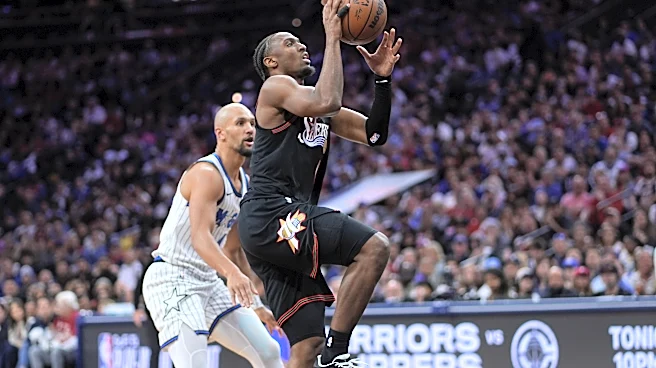
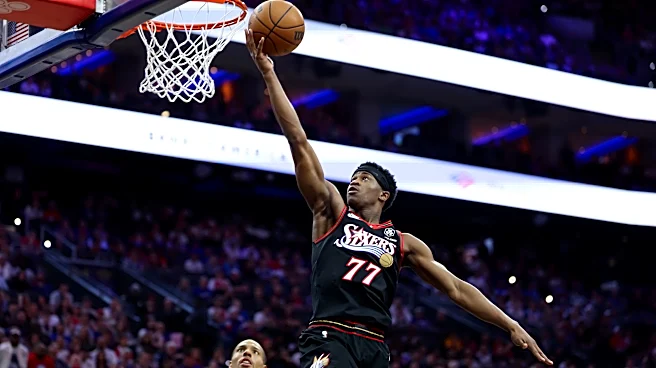
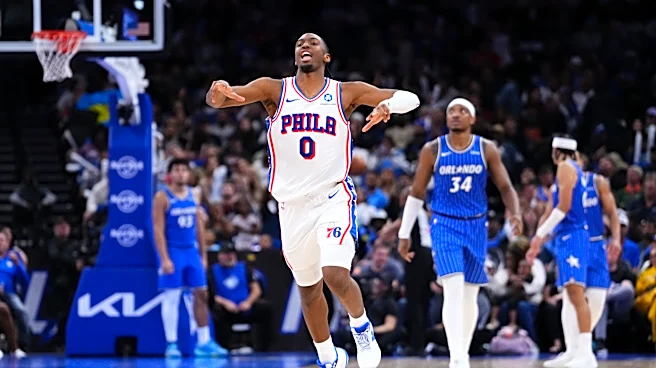
For the Sixers, it’ll be determined by whether they can turn the game into a half-court grind, where their guards can pressure the ball, switch across actions, and force Boston into late-clock decisions. And if guys like Tyrese Maxey and VJ Edgecombe can create just enough offense while the defense does its elite thing, look out.
Lastly, if Joel Embiid somehow appears at any point in this series — even in a limited role — that dynamic gets even more pronounced. Slower pace, more physicality, more chances to drag things into the mud.
That’s not where Boston wants to live.
The stat just tells the story
Yes, the clutch defensive rating matters. It tells you Philly is elite in those moments. But the real takeaway is simpler than that.
The Sixers need these games to stay close. The Celtics don’t.
If Boston does what it’s done all season — moves the ball, avoids self-inflicted mistakes, and builds real separation — this matchup probably ends without much drama. If they don’t, and they keep letting Philly hang around late, then all of a sudden you’re playing a different kind of series.
The kind where one bounce, one possession, one weird stretch decides things.
The kind of game you remember from growing up.
The one against that kid.
Let’s not get it twisted, the Celtics are the better team in this series. But being the better team doesn’t always equate to advancing to the next round. Don’t tell me you’ve already forgotten the ‘06-’07 We Believe Warriors, or the ‘10-’11 Mavericks taking down the first version of the Heatles? I can still hear The Jet flying overhead.
Again, playoff series don’t always reward the better team in a straight line. They reward the team that controls what the game (and the series) becomes.
Right now, there are two versions of this series sitting right in front of us. One where Boston plays its game and moves on, and one where things get just uncomfortable enough, just often enough, that Philly gets exactly what it wants.
That’s the margin. And it might come down to whether the Celtics can stay far enough away from the exact kind of game the Sixers have already proven they’re built to win.
If you never got the best of that rival twerp of yours growing up, you should feel pretty good about this matchup. The Sixers aren’t bringing their usual firepower to the table, and if Boston handles its business, they should be the ones handing out the wet willies all series long.