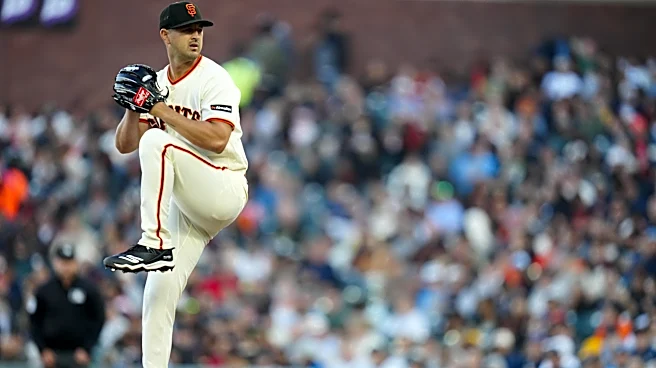



Andrew Baggarly just described today’s activity as “frenetic,” and he’s right. The past two trade deadlines have been practically Zaidian for Buster Posey, Zack Minasian, and the San Francisco Giants. For as much as the franchise has oversteered from the 2019-2024 days, the new regime is a lot like the old one in that no matter what they’ve done to improve the team, it’s been stuck in the zone of mediocre-to-bad. But Zaidi was (seemingly) constrained by ownership in how he could rebuild on the fly.
Posey doesn’t seem to have any constraints. Does that automatically make today’s deadline deals great? In a moment, I’ll grade them.
First, though, let’s contextualize this analysis. It helps that these 2026ers will go down as one of the worst teams in franchise history, something Zaidi’s squads never came close to even suggesting. Trading away a chunk of the roster, then, would seem like a mercy killing. But also, with free agency and the regular season being such busts, the only real excitement these days seems to come from acquiring hope in the form of prospects. The Giants have done that in their past two drafts, at last year’s deadline, and now, possibly, this year’s deadline, too.
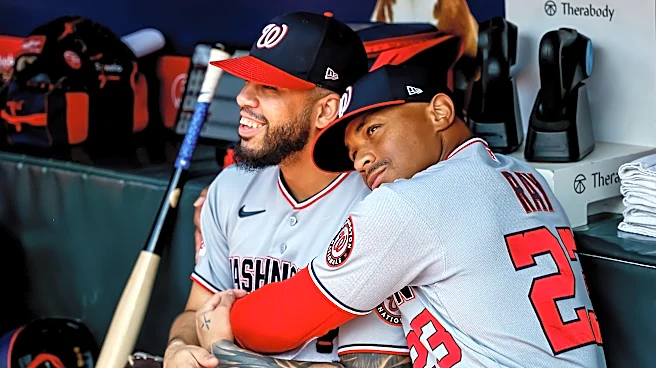
Take a look at this graph of Farm System Values (via FanGraphs) that was compiled by Sky Kalkman:
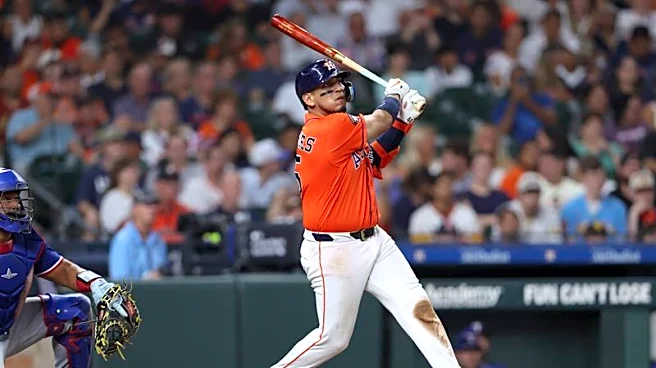
I admit that my eyes darted far to the right by sheer instinct. I’ve seen farm system rankings for decades now and have become accustomed to the Giants being down, down on the list. And yes, I’d forgotten that I’d written up FanGraphs’ farm rankings back in June. The Giants have been on the rise for some time now. But heading into the trade deadline ranked #9? Cool! And that was before the majority of the trades.
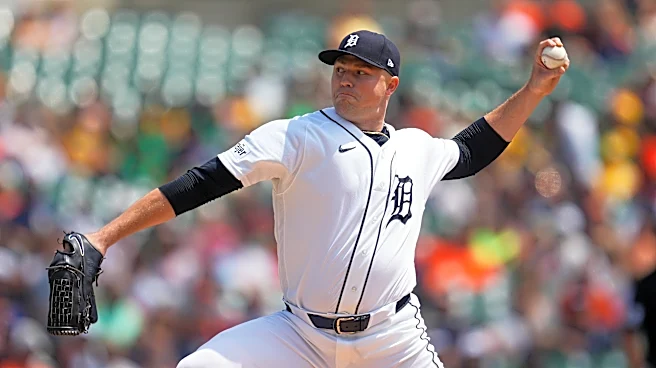
Second, I hope people have internalized that trade deadline deals are usually not great deals. Yes, headliners are moved, but rarely does the team getting prospects in return get equal (future) value. But, like, in the case of say, the Detroit Tigers, it was going to be hard to get back fair value for Tarik Skubal whether they traded him before the season or at the deadline, and the fact that they decided to try to go for it this season with Skubal is a very reasonable one on their part that just didn’t work out in the way they’d hoped.
And yet, unlike the Giants, their odds of making it to the postseason are solid. But that’s not my point. The point is that the Giants clearly helped teams more than helped themselves. They acquired a heap of lottery tickets in exchange for proven track records, and that’s the way the trade deadline usually goes. But that doesn’t mean the Giants’ process was flawed. Maybe “lottery tickets” is the wrong description. They added players with strong physical tools historically associated with prospects that are easier to project.
The Giants did the best they could under the circumstances (being a really bad team that doesn’t seem able to improve no matter what it does — oh, and is lousy with bigots). To what extent do I think that should weigh on these grades? None of us are front office execs, meaning we don’t need to put a premium on team control. It’s enough to know that the Giants traded away three guys who were bound for free agency in a lockout year and moved a player about to enter salary arbitration for the first time and in exchange they got back a lot of pitching — which they badly needed in the farm system. So “team control” isn’t part of my grading here. Let’s just take it as a given that getting players who will be here next year and 2028 is better than losing players after 2026. I also don’t think “freeing up money” is all that compelling, but I’ll merely discount it rather than ignore it.
1. Tyler Mahle for RHP Anthony Molina
Mahle was a Giant because they needed rotation help and Bruce Bochy recommended him. He signed just a 1-year $10 million deal in the offseason because of his injury history (he hadn’t started at least 20 games since 2022) and after the first couple of months of the 2026 season, it looked like the deal would be a total bust (6.04 ERA in 56.2 IP). But the strikeout stuff was there and the health was not catastrophic, and so there was reason for hope of a turnaround just in time for the trade deadline. His final outing was rough (5 ER in 5.2 IP), but in 7 starts off the IL he had a 3.79 ERA (3.62 FIP) in 38 IP; so, a better floor was demonstrated. Plus, teams always need pitching.
Back in June, I ranked the Giants’ trade chips and put Mahle at #10 for this very reason:
I’ll add that Aaron Civale, he of the 4.91 ERA and 5.59 FIP in just 22 MLB innings last season, wound up being traded around this time last season by the Milwaukee Brewers — who had acquired him the previous season from the Tampa Bay Rays — to the Chicago White Sox for… Andrew Vaughn, one of the key figures in Milwaukee’s lineup these days.
No, the Giants didn’t get Andrew Vaughn or any player in the vicinity. They basically got somebody to take the remainder of Mahle’s salary — ~$2.1 million. The Giants are still on the hook for a $3 million signing bonus due to be paid in January 2027, however. The actual “prospect” simply adds velocity to an upper minors system lacking velocity. As Brady wrote in his trade analysis:
Atlanta claimed Molina off of waivers this last offseason, then designated him for assignment and outrighted him to AAA, before adding him back to the roster on May 1. He’s only pitched five innings across three games for the Braves Major League team, but has pitched extensively for their AAA squad this year. Atlanta has experimented with using Molina as a starter in the Minors, and in 17 games this year (and nine starts), the Venezuelan has a 3.78 ERA and a 4.14 FIP, with 53 strikeouts and 20 walks in 52.1 innings.
Giants lose: The second-highest K/9 (8.5) in their starting rotation
Giants gain: 24-year old RHP (35+ FV) who throws 95-97, salary relief ($2.1 million)
Grade: B
Yes, the Giants were able to get something for a guy who wasn’t going to be around next season under pretty much any circumstances, but saving money and getting a DFA-bound reliever for a major league starter isn’t a return that should earn an “A.” Mahle wasn’t some drag on the rotation or in the clubhouse and they’re likely to feel his absence over these final 50 games more than the sweet salary relief.
2. Luis Arraez & Caleb Kilian for RHP Ramon Marquez & RHP Marty Gair
Luis Arraez is one of the top position players this season who should’ve generated a great return for the Giants. Is that what happened here? A month ago (to the day!), I looked at possible trade returns for Luis Arraez and Robbie Ray in response to an SB Nation Reacts poll indicating that fans thought Ray would bring back the better return at the deadline.
Part of my analysis involved all the times Arraez had been traded previously:
Arraez has been traded twice in his career (in 2023 from the Twins to the Marlins, in 2024 from the Marlins to the Padres) for 7 total players.
[…]
OF Byron Chourio (18 at the time, now 21, has not appeared in MLB)
INF Jose Salas (20 at the time, now 23, has not appeared in MLB)
SP Pablo Lopez (27 then, now 29, an All-Star for the Twins who has amassed 9.6 fWAR in 2+ seasons and 455 IP)
RP Woo-Suk Go (25 then, now 27, has not appeared in MLB, has not appeared in MLB)
OF Dillon Head (19 then, now 21, has not appeared in MLB) — #25 in Miami’s system
OF Jakob Marsee (23 then, now 25; 96 RC+, 2.1 fWAR in 585 PA across 2 seasons for Marlins)
OF Nathan Martorella (23 then, now 25, just released, has not appeared in MLB)In both instances, the trading team wound up getting back a major leaguer. It worked out best for the Twins, of course, because Pablo Lopez has been great for their rotation and the Giants sorely need starting pitching, but the truth is that the Giants might be able to get a couple of arms for him, or at least some intriguing volume that has more on-paper promise than what happened in the Tyler Rogers and Camilo Doval deals last season.
The Giants did, indeed, go for quality over quantity. Marquez was the Phillies’ #3 prospect and #67 overall according to the MLB Pipeline Top 100. He has a 50 Future Value (FV), according to FanGraphs, becoming the sixth Giants prospect with that rating. He joins:
5. SP – Keyner Martinez (50 FV — Average Everyday Player)
4. SS – Luis Hernandez (50 FV)
3. 2B – Jhonny Level (50 FV)
2. SS – Josuar Gonzalez (50 FV)
1. 1B – Bryce Eldridge (55 FV)
Brady’s summation:
He has a high quality fastball and slider, but his money pitch is a changeup that grades out as one of the best pitches in Minor League Baseball. He should immediately slot right behind the team’s No. 4 pick in last month’s draft, Jackson Flora, as the second-best pitching prospect in the system.
Marty Gair is a 23-year old relieving in A-ball this season but has 66 strikeouts in 36 innings. FanGraphs tags him with a 35+ FV.
Giants lose: One of the top position players in the entire sport whose story of reinvention to become a quality second baseman and his quest for the batting title were wonderful distractions from an awful season; one of their only good relievers (who must never pitch in the 9th inning)
Giants gain: A top 100 prospect, a lottery ticket reliever, salary relief ($3.7 million)
Grade: A
To answer the question from the opening graff: yes, Arraez generated a great return. The Giants putting Kilian in the deal to finally compel the Phillies to part with Marquez works as a move but less so in the final analysis from a grading standpoint. In the ideal circumstance, Kilian is dealt in a separate deal. But it’s true that the list of suitors for Arraez was perhaps less than you’d expect. Not because of the player or how he improved himself this year, but just because most of the contenders were already solid at second base.
Casey Schmitt’s season-ending injury really hurts them from a “let’s see what the team could be in 2027 here in these final two months of 2026” POV and so losing both Arraez and Kilian really hurts the team over these final 50 games, but the Giants were desperate to get arms like this into their system. Mission accomplished.
3. Robbie Ray for RHP Miguel Mendez and SS Joniel Hernandez, and 50% salary
An intra-division trade with one of the most frenetic front offices of the 21st century. The Padres’ rotation was dire before their additions today of Ray and Casey Mize and the Giants made them pay for the privilege of lipsticking up that particular pig.
Mendez (45 FV) was San Diego’s #4 prospect. He has “a mid-high 90s fastball that can reach triple digits, with an excellent slider.” He was on course to be Rule 5 eligible this winter. Hernandez (40 FV) was an international signing out of Cubs this past January and was the #9 prospect for San Diego.
The Giants are also paying for half of Ray’s salary the rest of the season along with the $1 million assignment bonus built into his deal (recall that this was also part of his deal when the Giants acquired him from Seattle). So, they save about $4.36 million in the transaction, ultimately.
But getting back two of your division rival’s top 10 prospects for Robbie Ray’s expiring contract? Humm Baby! Sure, the Padres’ farm system is heavily depleted after years of big swings, but the pressure for San Diego to develop more prospects for more big moves in the future has only increased while the Giants have gotten one step closer to having a surplus of prospects.
Giants lose: Their #2 starter
Giants gain: Two 40+ FV prospects, including a high-velocity arm, salary relief ($4.36 million)
Grade: A
Not really much to quibble with here. With domestic reserve caps being what they are, quantity over quality doesn’t make that much sense, especially with the quality of the Giants’ farm system already in the top third of the sport. Would’ve been a perfect deal if San Diego had taken on the full contract. This obviously obliterates the Giants’ rotation the rest of the way, but it’s hard to argue against a deal that wound up being a better return than one might’ve expected. Ray’s FIP for the season is nearly half a run greater than his actual ERA (and his xERA is approaching 2 runs more) and he’s projected to end the season as just about a 1.5-WAR pitcher.
4. Heliot Ramos for LHP Henry Lalane and INF Kaeden Kent
Heliot Ramos’s value to the Giants had probably peaked, and so all that was left was what they could get in trade. And on that front, they appear to have done very well, nabbing the Yankees’ #5 prospect in Lalane (45+ FV) — a 6’7” left-hander who throws 95+ — along with their #13 prospect, who happens to be the son of Hall of Famer Jeff Kent (40 FV).
Now, with Ramos still having three years of team control left, the typical industry argument is that the Giants might’ve come up a little short on their end. On the other hand, in exchange for a league average bat with questionable-to-bad defensive skills and an obvious injury history, the Giants got a pitcher just outside of MLB Pipeline’s top 100 and a nepo baby with some intriguing upside.
Giants lose: A Good Giant with consistent hard contact
Giants gain: Two 40+ FV prospects
Grade: B+
Ramos has hit 42 points worse than the league average for about a month now, so, leveraging another team’s desperation to get some interesting prospects back is just good baseball.
5. Erik Miller for SS Marcelo Mayer and OF Carlos Gutierrez
Well, well, well, if it isn’t the Giants doing their own version of the Dustin May for James Tibbs III deal.
In exchange for a 28-year old hard-throwing lefty who has struck out Shohei Ohtani 5 times in 7 at bats, who hasn’t had a massive handedness split this season (.600 OPS vs LHH, .642 OPS vs. RHH), and is set to be a first-time arbitration player, the Giants get MLB Pipeline’s #1 overall draft prospect of 2021, a 23-year old 55 FV prospect (graduated in 2025) drafted with the #4 pick overall in the 2021 draft by the Red Sox.
The profiling suggests a Corey Seager-type shortstop in development, but the injury history (shoulder impingement, back troubles) suggests he’s corner infield-bound if not an outright DH at some point.
Still, for Erik Miller, a strikeout guy with a high walk rate and an injury history himself, this is nothing but a great haul. Yes, Mayer is probably out for most of the next two months from a hand injury and losing Miller hurts the already bad bullpen even more, but the upside is hard to ignore.
Despite having Josuar Gonzalez, Luis Hernandez, Jhonny Level, Gavin Kilen, Kaeden Kent, and Joniel Hernandez already in the fold, the Giants really wanted Mayer, evidenced by the addition of Gutierrez in the deal. He is a 35+ FV prospect who was an international free agent signing back in 2023. He’s tearing it up in High-A this season.
Mayer looks to have high contact potential with gap power and good defense. Not a lot of speed, but the profile is in line with what the Giants seem to want these days.
Giants lose: A great left-handed reliever with command issues, an interesting outfielder possibly years away from contributing.
Giants gain: A high upside former top prospect
Grade: A+
I think I dig what the Giants are doing, adding middle infielders like they’re stem cells that could go on to be any other position. Mayer could be bound for third. One of Josuar, Jhonny, or Joniel could wind up replacing Gutierrez as that upside outfielder. Who knows? Getting former top prospects just past their highest value is good baseball strategy for crappy teams like the Giants, and even as talented as Erik Miller is, given the team’s state, he’s the exact kind of player to experiment with. Here, the Giants got a prospect who, just three years ago, had “a promising bat and one of the highest ceilings in the minors.” Yes, three years ago is a long time in baseball years, but he’s only 23 (he turns 24 in December). Hard to argue this is anything other than a win and as a capper to a long day, about as great as could’ve been expected.
Final Grade: A-
Giants lose: Tyler Mahle, Caleb Kilian, Robbie Ray, Luis Arraez, Heliot Ramos, Erik Miller, $4.36 million
Giants gain: INF Marcelo Mayer, RHP Ramon Marquez, LHP Henry Lalane, RHP Miguel Mendez, INF Kaeden Kent, SS Joniel Hernandez, RHP Marty Gair, RHP Anthony Molina, $10.16 million in salary relief
That’s 6 players valued at 6.8 fWAR and $4.36 million for $10.16 million plus 8 players: ~55 FV prospect, a 50 FV, two 45 FVs, two 40 FVs, and two 35+ FVs.
That’s a good days work for a bad team. Only time will tell if building up all this high ceiling talent will amount to a winner.