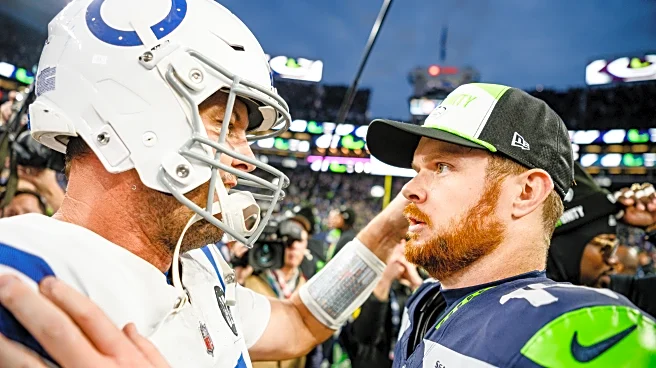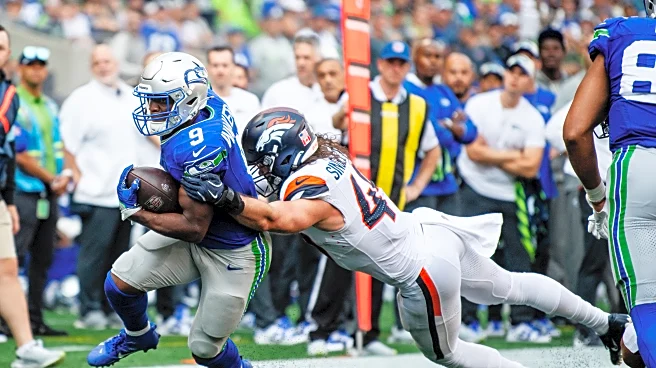

There is a narrow margin for error when a head coach enters year three coming off a 5–12 season. While there are many underlying factors as to how they got here, the fact simply can’t be ignored.
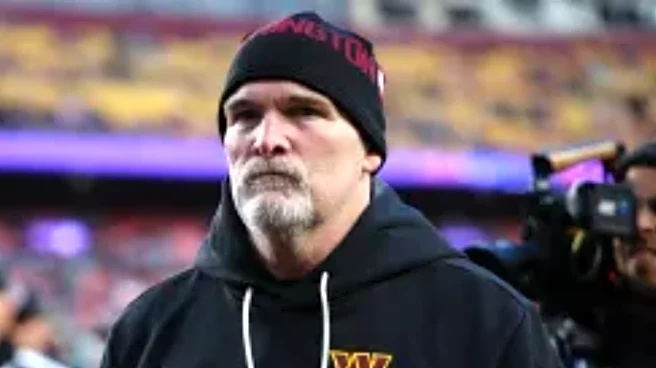
For Dan
Quinn, the search for Washington’s next offensive coordinator is not simply about improving the unit or maximizing the skill set of a young quarterback. It is about professional survival.
And now, it’s a paradox Quinn now faces. If he gets the hire wrong, Washington risks another stagnant offensive season in 2026, and Quinn could be on the outside looking in by the time 2027 arrives. But if he gets it right—really right—and lands a coordinator with head-coaching cachet or upward momentum, success may create its own complications.
A playoff return and a revitalized offense would instantly make that coordinator a priority retention piece for general manager Adam Peters and owner Josh Harris. In that scenario, Quinn’s authority and longevity could quietly come under scrutiny, especially if the offense continues to serve as the defining identity of the roster.
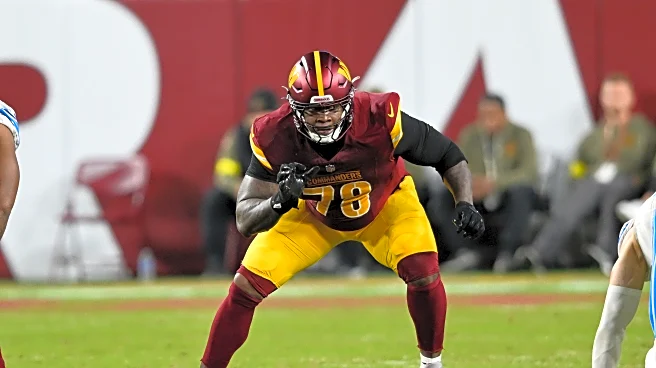
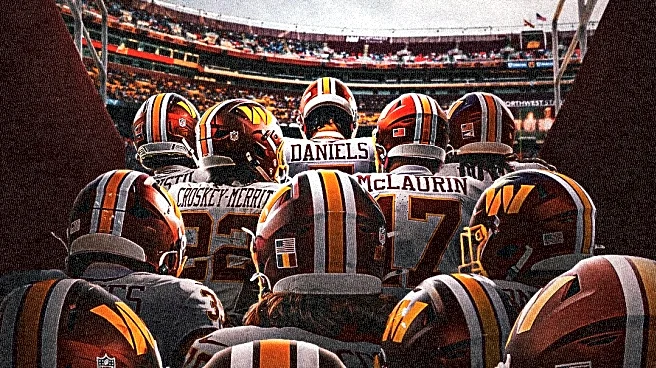
With Kliff Kingsbury now gone, Washington is again searching for offensive direction. What makes this cycle different is that the roster is no longer theoretical. Jayden Daniels is entrenched under center. Terry McLaurin remains the offensive centerpiece. And Laremy Tunsil remains the anchor at left tackle. There are also young pieces developing at the skill spots, so the next coordinator will not be inheriting a blank slate. He will be stepping into a pressure cooker.
Here are four names to know as Washington begins their evaluation process.
Nate Scheelhaase, Pass Game Specialist, Los Angeles Rams
If Washington prioritizes innovation, adaptability, and a coach who understands how modern offenses evolve without abandoning structure, Scheelhaase deserves consideration.
For the 35-year old Scheelhaase, his path has never been linear, and that may be his greatest asset. His coaching career began at Illinois in 2015, when the university hired him as Assistant Director of Football Operations after he declined the same role the year prior due to a commitment to youth ministry in Louisville, Kentucky. When Illinois head coach Tim Beckman was fired later that summer and Bill Cubit was promoted to interim head coach, Scheelhaase transitioned onto the field as the running backs coach, a steady climb that would define the next decade of his career.
His time at Iowa State under Matt Campbell, now the head coach at Penn State, solidified his reputation. Hired as running backs coach in 2018, Scheelhaase moved to wide receivers in 2019, then added running game coordinator duties in 2021. By 2023, he was promoted to offensive coordinator, replacing Tom Manning and overseeing a unit that balanced physicality with spacing and multiplicity.
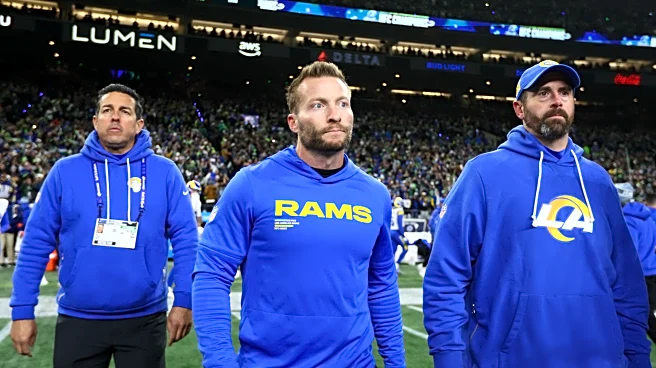
That trajectory caught the attention of Sean McVay, and in February of 2024, Scheelhaase joined the Rams as pass game specialist, a role that places him directly inside one of the league’s most demanding and detail-oriented offensive ecosystems.
For Washington, Scheelhaase represents a coordinator who understands how to build an offense around quarterback strengths rather than forcing a rigid system. His background coaching both running backs and receivers matters for a team still shaping its offensive identity, and with Jayden Daniels, that versatility and willingness to blend concepts could be invaluable.
Spencer Whipple, QB Coach, Jacksonville Jaguars
Washington’s offensive growth in 2026 will be tethered to Daniels’ health, surely, but also continued development as a complete quarterback, not just a dynamic athlete.
That reality places quarterback-centric coaches at the forefront of the conversation, and Whipple fits that profile cleanly.
Whipple has spent recent seasons in Jacksonville working closely with Trevor Lawrence, helping expand the Jaguars’ offensive menu and layering in more intermediate and downfield concepts. While Lawrence and Daniels are different stylistically, both benefit from structured freedom, defined reads paired with the ability to attack defenses both vertically and horizontally.
What makes Whipple intriguing for Washington is his exposure to an offense that demands timing, spacing, and discipline across all three levels of the field. Jacksonville’s skill-position usage has evolved, leaning into matchup creation and route combinations that stress coverage rules rather than simply winning with isolation talent.
For Daniels, whose game thrives on decisiveness and controlled aggression, a coordinator with Whipple’s background could accelerate growth as a processor and passer. The hire would be less about reinvention, and more about refinement, building layers onto what already works.
Davis Webb, Pass Game Coordinator, Denver Broncos
At just 30 years old, Webb represents the younger edge of the coordinator spectrum, but his résumé already carries weight well beyond his age.
Webb has been instrumental in Denver’s work with Bo Nix, helping guide a young quarterback through the transition to an NFL offense while emphasizing footwork, timing, and situational awareness. His presence in the interview cycle — including an upcoming head coaching interview with the Raiders — signals how quickly his reputation is rising within league circles.
For Washington, Webb would be a bet on developmental upside and long-term vision. Moving from the AFC to the NFC, from Nix to Daniels, the appeal lies in Webb’s quarterback-specific focus. Daniels does not need to be protected schematically; he needs to be expanded as a passer. Challenged, if you will, and Webb’s background suggests he understands how to do that without sacrificing efficiency.
This would be a forward-looking hire, one that aligns with Daniels’ timeline and positions Washington as a team investing in continuity rather than short-term fixes.
Dave Ragone, QB Coach, Los Angeles Rams
If Washington wants immediate credibility tied to a proven offensive infrastructure, Ragone is a name that naturally rises to the top.
Another member of the McVay coaching tree, Ragone currently serves as the Rams’ quarterbacks coach and has been deeply involved in game planning and offensive sequencing.
The appeal here is simplicity married to sophistication. Ragone understands how to structure an offense around its best players, and Washington has pieces worth building around. Daniels’ athleticism and arm talent. McLaurin’s dominance on the perimeter. Additionally, a backfield tandem that saw young depth emerge in 2025 with Chris Rodriguez and Bill Croskey-Merritt, similar to the youth-infused presence of Kyren Williams and Blake Corum in Los Angeles.
This would not be a rebuild hire, it would be an optimization hire, aimed at maximizing what already exists while tightening execution.
Brian Daboll, Former Giants HC and Bills OC
Then there is the name that changes the temperature of the room.
Daboll is not simply a coordinator candidate, he is a potential statement hire. He’s a former head coach with playoff experience, a former offensive coordinator who helped mold Josh Allen into one of the games elite, and a coach who interviewed Daniels during the pre-draft process before New York ultimately passed on selecting a quarterback that spring.
If Daboll joins Washington, he does so as a figure with gravitational pull. His presence alongside Dan Quinn would instantly reshape the power dynamic, potentially positioning Daboll as a head-coach-in-waiting whether anyone says it aloud or not.
For Washington, the upside is obvious despite the roller coaster that was his time in New York. Daboll’s track record with quarterbacks, his ability to adapt systems to talent, and his comfort commanding an offense could unlock another level for Daniels and re-align the team’s competitive window.
But this is also where Quinn’s dilemma sharpens. If Daboll gets it right and Washington’s offense reaches levels similar to 2024, the long-term question becomes unavoidable in that who is the individual to steer the future of the franchise?
For Peters and Quinn, the offensive coordinator search is not just about play design or weekly game plans. It is about alignment, authority, and trajectory. It’s a calculated search for the right fit, absolutely, but the reality remains in that Quinn could be hiring someone who could either stabilize his tenure, or quietly shorten it. That’s the nature of the beast in the NFL.
For the burgundy and gold, the priority is clear: find the coach who best positions Washington to win. Whether that path leads to continuity or eventual change may be secondary.
What is certain is that Washington can’t afford another miss. Not with Jayden Daniels in place. Not after 5–12. And not with the clock already ticking.