

The Detroit Tigers have already made two moves to address the bullpen this offseason. They inked veteran right-hander Jacob Waguespack to a one-year deal worth $1.3 million after a solid showing in middle relief for the Tigers in 2026. They quickly proceeded to bigger fish, signing veteran setup man and closer RHP Emilio Pagán to a one-year, $11.5 million deal. Now it looks like they may pivot to starting pitching. Jon Morosi of MLB Network reports from the GM Meetings in Las Vegas that the Tigers have shown
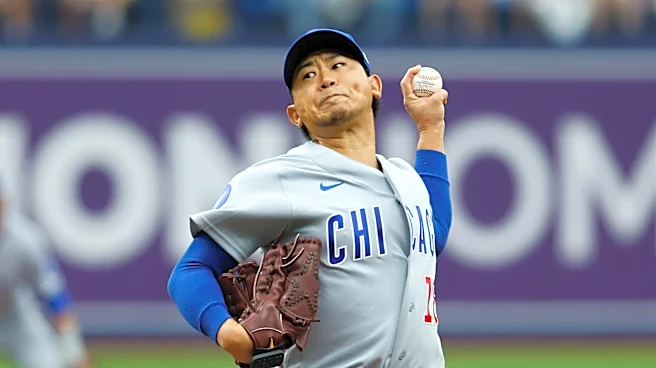
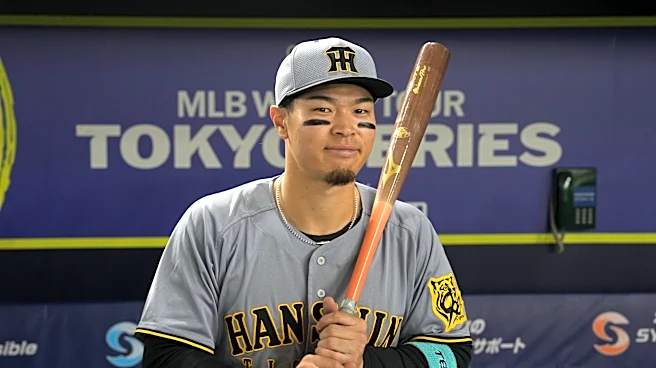
interest in free agent southpaw, Shota Imanaga. The Tigers have rarely landed talent from Japan, but they’ve been making a more concerted effort in recent years, and are even scouting top prep Japanese pitcher Shoki Oda. The Tigers may not be the favorite to land him, but Imanága is an interesting idea to explore.
The 33-year-old left-hander was a two-time All-Star in the NPB for the Yokohama DeNE BayStars from 2016-2023. He was posted during the 2023-2024 offseason and signed a three-year deal with the Chicago Cubs. He went on to be an MLB All-Star for the Cubs in 2024 before putting up a pair of mediocre seasons for them in 2025-2026. Still, he holds a 3.45 ERA/4.32 FIP combination over 492.1 innings of work and has been very durable in his early 30’s.
The Tigers big focus this offseason is pitching according to POBO Scott Harris, and while the emphasis needs to be on rebuilding a bullpen that was a hot mess in high leverage situations in 2026, there are only a handful of really good, trustworthy relievers available in free agency. Pagán was a solid enough acquisition in that context. There is a whole league’s worth of teams in varying degrees of need in their bullpens, and so competition for top names like RHP David Bednar and LHP Adrian Morejon will be fierce and expensive.
The Tigers need to take a broader approach and just collect the best arms they can. A trade would be nice, but trading for young major league caliber pitching is always hard, and will be particularly so in this very uncertain offseason. If that means adding a starting pitcher and flexing one of their current rotation options to the bullpen, so be it. Apart from just needing some better arms in the pen, the Tigers also have a real flexibility problem. Most of their optionable young pitchers are already working as starters. Not a single one of their current right-handed relief options, Will Vest, Pagán, Drew Anderson, Kyle Finnegan, Waguespack, nor Beau Brieske, can be optioned to the minor leagues. They also don’t have much in the way of big arms in the upper levels of the farm system on which to hope for relief help next season.
So the theory goes that by signing a starting pitcher instead, and possibly using Drew Anderson in the rotation as well, the Tigers can move one or two pitchers like Keider Montero, Troy Melton, Reese Olson, or River Ryan into the pen. They all have options remaining as well, and of course each has their own case for holding down a rotation spot instead. Adding Imanaga or another solid starter would open up some flexibility throughout the whole major league pitching staff.
Imanága really is the direct opposite to Framber Valdez, presenting a completely different look as an extreme fly ball pitcher, just like Pagán. Fly ball pitchers used to make a ton of sense in Comerica Park. Nowadays, with the fences moved in significantly in all directions since the early days of the park, the soon-to-be renamed Fifth Third Ballpark is far more neutral. Even so, with the right pitchers, the theory of mixing extreme ground ball and fly ball pitchers together to give opponents different looks in a series makes some sense.
Imanága has several traits that fit the Harris and AJ Hinch philosophy of controlling the strike zone. He pounds the zone relentlessly with a very north-south approach and runs one of the lowest walk rates in the game. He also generally strikes out an above average share of hitters. He gets plenty of routine outs. The flaw is that he allows a ton of homers.
The same is true with Pagán, and the theory here is interesting. In the wake of the Milwaukee Brewers and Tampa Bay Rays emphasis on contact and speed from their hitters, more teams are likely to copycat that approach, and fly ball pitchers who strike out good amounts of hitters, don’t give out free passes, and rack up tons of weak outs in the air may be the ideal countermove. Of course, there aren’t many teams like the Brewers and Rays around, so we’ll see how this holds up against teams built more to take their hacks.
Imanága fits this bill because most high fly balls and pop-ups are relatively easy outs. Balls in the air negate hitters’ speed, taking pressure off the infield and forcing teams to play station-to-station baseball. Like Pagán, the result is low WHIP marks and minimal traffic on the basepaths. You just have to hope fortune is on your side when the home runs come and the bases are clear, because home runs are inevitable with this approach.
Imanága has posted a WHIP of 1.02, 0.99, and 1.10 in his three seasons with the Cubs. Those are excellent marks. The lefty backs that up with good strikeout rates as well, and saw a nice resurgence in strikeout rate in 2026 after a down year in that regard in 2025.
League average K% last year for starters was 21.9 percent, while the BB% was 8.3 percent, for reference.
Imanága theoretically has a six-pitch mix he can deploy, but he generally leans on his riding fourseam fastball and his splitter, with a sweeper as his main breaking ball. That fourseamers up and splitters down approach is what I mean by a north-south approach. He doesn’t move the ball horizontally much, though he’ll occasionally mix in a sinker to try and jam a lefty in certain situations.
He doesn’t throw hard, averaging just 91.9 mph last year, but the fourseamer typically has around 18 inches of induced vertical break from a lower than average release point. That gives it a solid angle with ride at the top of the zone, but what really makes this work is Imanága’s ability to spot it to both sides along the top rail of the strike zone. His command really ties the whole profile together. The fastball gets a pretty pedestrian whiff rate, but he does generate quite a lot of easy fly ball outs. He also gives up plenty of barrels, and you just have to hope it works out that the big hits come with the bases empty. Through three years with the Cubs, that’s usually but not always been the case.
His best pitch is the splitter, which generated a whopping 41.4 percent whiff rate in 2026. Hitters batted just .195 against it, and while the occasional hanger gets whacked—Imanága gave up 9 of his 35 homers allowed on it last year—hitters only slugged .335 against it. Again, this is the embodiment of the approach. The homers are going to arrive, but most of the time hitters are making a lot of easy outs.
The sweeper gets plenty of whiffs as well, and interestingly he doesn’t just use it against lefties. It has good depth and gives hitters another look though he only used it 14.6 percent of the time last year.
Imanága is an interesting if imperfect fit for the Tigers
Most contract estimates for Shota Imanága come in at two years and something like $30-40M. That should be comfortably within the Tigers budget, even if they go on to target a position player and another reliever elsewhere.
The theory of adding a lefty who gives up a lot of homers but is good in all other respects is an interesting one. He’s not such an extreme fly ball pitcher as Pagán, but again he keeps traffic off the bases. Forcing teams to play station-to-station baseball is an interesting antidote to the growing emphasis on contact and speed from teams like the Brewers and Rays. Particularly in the cooler parts of the season in March through early May, he would probably thrive, assuming the season starts on time. The summer months would be a little more dicey and require a shorter leash. Still, a team having to deal with one of the tougher sinkerballers in the game in Valdez, then the velocity and overall nastiness of Jackson Jobe, followed up by a pitcher that keeps traffic off the basepaths, would be an interesting group leading off the starting rotation.
Of course, we do have to keep in mind that Imanága had a really good defensive team around him in Chicago, and the Tigers are not that right now. In that sense they aren’t such a good fit, but with Max Clark in center field and potentially mixing Ben Malgeri and Zach McKinstry into the outfield, the Tigers can at least put a really good defensive group in the outfield should they choose to play it that way. And with good strikeout numbers, Imanága is generally doing his part to limit contact.
Signing Imanága to go along with Valdez and Jobe gives the Tigers depth, and leaves an open competition in the spring, and probably throughout the year between Montero, Melton, Olson, Anderson, and Ryan, and makes the Tigers bullpen a lot better at the same time. It’s a solid enough idea. Now we’ll see if the Tigers follow through and actually land the veteran left-hander or perhaps pivot to another starter or reliever instead.