



There are plenty of things in this world that you love 85% of the time and can’t stand the other 15%. Group texts immediately come to mind. You love being part of the conversation, whether it’s with family members, lifelong friends, or your sports buddies discussing the latest developments surrounding the Phoenix Suns. But sometimes those conversations go completely off the rails, your phone starts vibrating like it’s sitting on a washing machine during the spin cycle, and you find yourself eternally
grateful for whoever developed the technology to mute group text notifications.
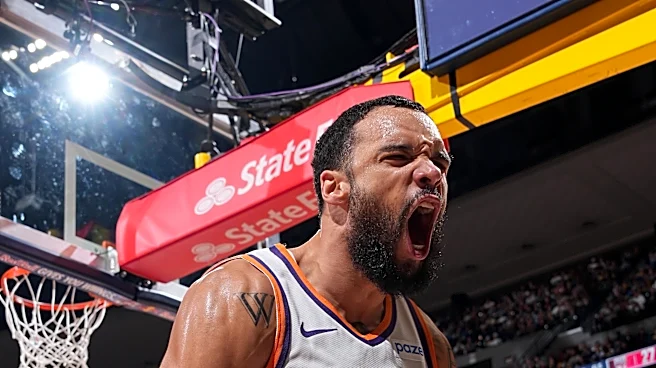
As it pertains to the Phoenix Suns, the same could be said about Dillon Brooks.
We were baptized in the Dillon Brooks experience a season ago, and the overwhelming majority of the returns were positive. He’s a culture setter and an attitude definer, somebody whose presence dictates the level of physicality with which your basketball team operates. Last season, he also showed us that he has considerably more tools in his offensive arsenal than many of us anticipated, averaging a career-high 20.2 points on 17.1 field-goal attempts per game.
But with that tenacity comes an edge, and navigating it without going over can be a delicate exercise. That’s where the other 15% of the Dillon Brooks experience resides. The technical fouls. The flagrant fouls. The moments when the very characteristics that make him such a valuable member of your basketball team become the source of your frustration. And oftentimes, it’s the timing of those infractions that makes them particularly maddening. Late-game situations and high-leverage possessions are instances in which discipline needs to supersede emotion, and Brooks doesn’t always recognize when that transition needs to occur.
You love what he brings to your basketball team 85% of the time. The other 15%? You find yourself wishing Dillon Brooks had the same mute button as your group texts.
That being said, we’ve seen a different version of Dillon Brooks thus far this season. He’s averaging 13.8 points on 12.0 shot attempts per game. Maybe it starts with the haircut, but whatever has changed, it’s manifesting itself in his performance on the basketball court.
With the acquisition of Miles Bridges, Brooks has looked somewhat out of place to begin the season (as has Bridges). Much akin to the duplicative nature of Devin Booker and Jalen Green’s skill sets, the same can be said of Brooks and Bridges. They occupy similar spaces on the floor and are asked to perform similar functions within the starting unit. Be a quality point-of-attack defender, knock down the three ball when called upon, and provide some physicality and assistance on the glass.
The Suns have found themselves in an interesting conundrum as the season has unfolded. There are instances when neither player appears entirely certain of where he should be positioned, whom he should be covering, or how to navigate switches on the defensive end. That uncertainty creates a particularly frustrating defensive dynamic because it compromises the very aggression that makes both players effective.
When they’re aggressive, miscommunication leaves somebody exposed, and the opposition makes them pay for it. And then there are possessions when it appears they’re being overly cautious, almost hesitant to do anything for fear of doing it wrong. That too burns them defensively. For two players whose effectiveness is predicated in large part on their physicality and assertiveness, indecision can be debilitating. It’s difficult to impose your will on a basketball game when you’re still trying to figure out where you’re supposed to be.

This conundrum has contributed to the challenges the starting unit has faced throughout the early stages of the season. They’re not a horrible offensive unit, primarily because Devin Booker’s consistency has served as the rising tide that lifts the boats around him. Defensively, however, this group has yet to establish an identity. And when you juxtapose that against what we’re experiencing from the second unit, a group that clearly understands its individual roles and how those roles complement one another, it becomes glaringly apparent how discombobulated the starting five has been.
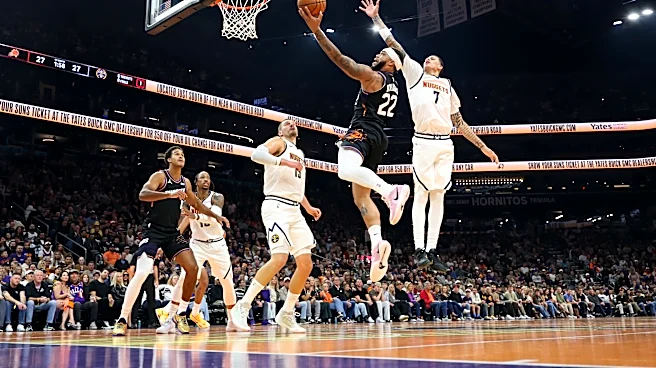
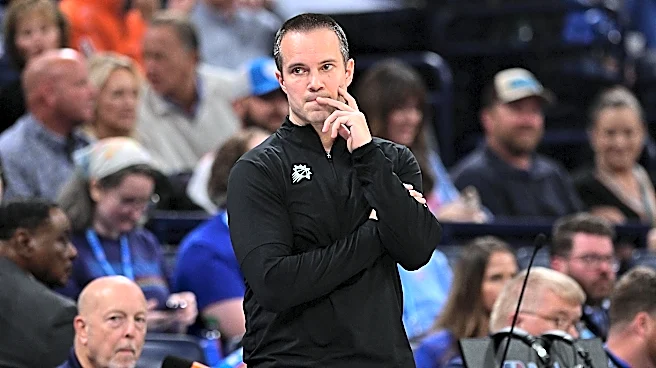
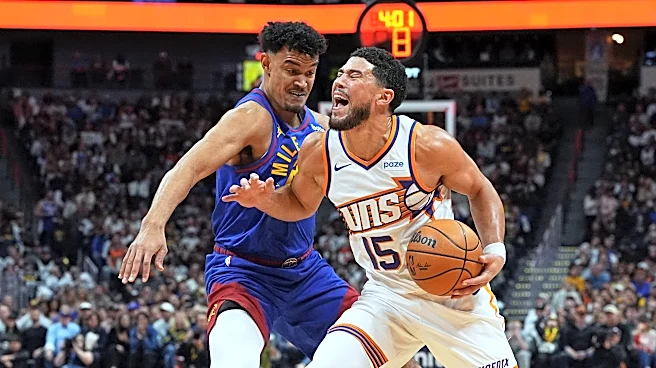
Last night against the Denver Nuggets, we saw head coach Jordan Ott make an adjustment that appeared to unlock Dillon Brooks. That adjustment? He opened the second quarter with Brooks alongside members of the second unit, and almost immediately we saw Dillon being Dillon again.
Through his first three minutes as part of that lineup, Brooks attempted four shots. Granted, he went 1-of-4 from the field, but what stood out to me was the decisiveness with which he was operating. There was a familiarity to his approach, an aggressiveness that we’d grown to appreciate a season ago. He looked empowered to assert himself offensively without having to navigate the overlapping responsibilities that exist within the starting five.
The shots weren’t necessarily falling, but the mentality was there. And from that point forward, Brooks delivered one of his best performances of the young season.
Now, I’m not about to head to my group text and flood its participants with messages advocating for Dillon Brooks to take 17 shots a night again. As Brooks has shown us throughout his career, his inefficiency can be his downfall. He attempted more shots than any member of the Phoenix Suns last night, going 6-of-17 from the field to get his 15 points. Not exactly great.
What this team needs more of is an engaged Dillon Brooks. Somebody who’s emotionally invested in the game, actively disrupting what the opposition is attempting to accomplish, and embracing the alpha mentality that has become synonymous with his brand of basketball.
Brooks is the emotional leader of the starting unit, much like Jordan Goodwin is the emotional leader of the second unit. When Brooks is passive and isn’t asserting himself, it affects his individual performance and, by extension, the performance of those around him. His intensity has a trickle-down effect on his teammates, and when that intensity is absent, you can feel it throughout the lineup.
Again, it’s a fine edge to navigate. But it’s one Brooks has navigated throughout his NBA career. It’s his X factor, the characteristic that makes him special and gives him value beyond his statistical production.
Hell, he even picked up a horseshit technical foul last night after knocking down a three-pointer and barking at the opposing bench. Apparently, only Dillon Brooks can earn a technical foul for doing something we routinely see across the NBA. As frustrating as the whistle was, it was another indication of how engaged he was in the game.
It was his third technical foul of the season through 13 games, meaning he’s averaging one every 4.3 games. That’s a slightly more disciplined pace than a season ago, when he averaged one every 3.3 games en route to accumulating a league-leading 17 technical fouls.
The ideal balance, in my eyes, is a version of Brooks who takes somewhere around 11 shots per game, assumes greater offensive responsibility when sharing the floor with the second unit, and remains the emotional leader of the starting five. Defensively, you want him to take charge, communicate, dictate physicality, and impose his will, rather than operate with uncertainty and defer to those around him.
There’s no perfect formula for finding that balance, particularly for a player whose greatest strength can occasionally become his greatest weakness. The Suns need Brooks to understand when to turn the volume up and when to dial it back. But they also need him to remain the emotional heartbeat of that starting unit. His aggression, physicality, and willingness to get under somebody’s skin are part of what makes him valuable.
Give me an engaged Dillon Brooks, and I’ll live with having to mute the group text from time to time. Now do me a favor, send this article to one of your friends via group text.