



The Tennessee Titans find themselves at a franchise defining crossroads. Holding the #4 overall pick in the 2026 NFL Draft, General Manager Mike Borgonzi and Head Coach Robert Saleh aren’t just looking for a starter. They are looking for a transformation. After a 2025 season that saw flashes of brilliance from #1 pick Cam Ward but ultimately stalled due to a lack of elite supporting playmakers and a consistent “closer” on the edge, the mission this April is clear: find the force multiplier. Whether
it is doubling down on a historical offensive blueprint to support our young quarterback or drafting a blue chip defender to anchor a “New Age” defensive front, the choice made at four will dictate the trajectory of Titans football for the next decade.
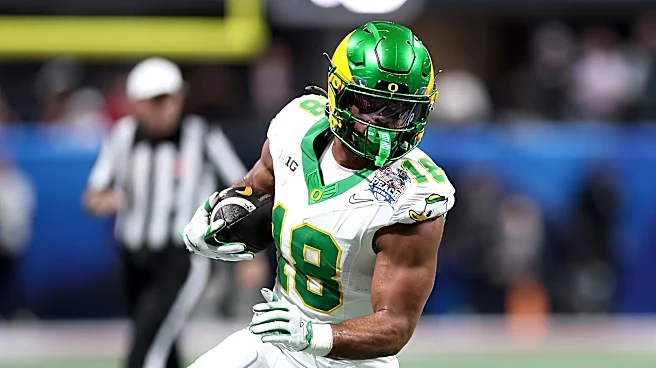
1. Jeremiyah Love | RB | Notre Dame
While modern NFL analytics often caution against taking a running back in the top five, history tells a different story for teams looking to cement a championship window. If the Titans select Jeremiyah Love at #4, they aren’t just drafting a playmaker. They are completing a proven strategic maneuver: the Back to Back Franchise Core.
By pairing Love with last year’s #1 overall pick, Cam Ward, Tennessee would be following a blueprint used by three of the most iconic dynasties in football history, including their own.
The “QB-RB” Success Formula
The logic is simple: a young quarterback’s greatest asset is a dominant run game. By investing high first round capital into both positions in consecutive years, a franchise provides its signal caller with a “security blanket” that forces defenses to play honest.
- The Houston/Tennessee Legacy (1995–1996): This organization has seen this work firsthand. In 1995, they drafted Steve McNair at #3 overall. They didn’t wait to find him help, returning in 1996 to take Eddie George at #14. That back to back investment created the physical identity that led the team to a Super Bowl.
- The Cowboys Dynasty (1989–1990): Dallas laid the foundation for three Super Bowls by taking Troy Aikman at #1 in 1989 and immediately following it with Emmitt Smith at #17 in 1990. They didn’t just get stars. They got a balanced attack that stayed elite for a decade.
- The Colts Standard (1998–1999): The most direct parallel to the Titans’ current position is the 1999 Indianapolis Colts. After taking Peyton Manning at #1 in 1998, they held the #4 overall pick the next year. Rather than going defense, they took Edgerrin James. The result was an immediate jump from 3 wins to 13 wins and the birth of a dynasty.
Love is the perfect candidate to execute this “Year 2” leap. Coming off a 2025 season where he won the Doak Walker Award and racked up over 1,600 yards from scrimmage, he offers the rare combination of home-run speed (4.36 40-yard dash) and elite receiving hands.
For the Titans, Love represents more than just yards; he represents the evolution of Cam Ward’s game. With Love in the backfield, the “everything is on the QB” pressure evaporates. Whether it’s a check-down on 3rd and long or a play-action look that freezes linebackers, Love’s presence makes the game easier for the Titans’ most important investment.
- Ceiling: Saquon Barkley… A generational, three-down force who dictates how the defense must line up.
- Floor: Reggie Bush… A world class athlete who functions better as a “space weapon” than a traditional workhorse. In this scenario, he remains a dynamic receiving threat and home run hitter, but relies more on highlights and versatility over consistency.
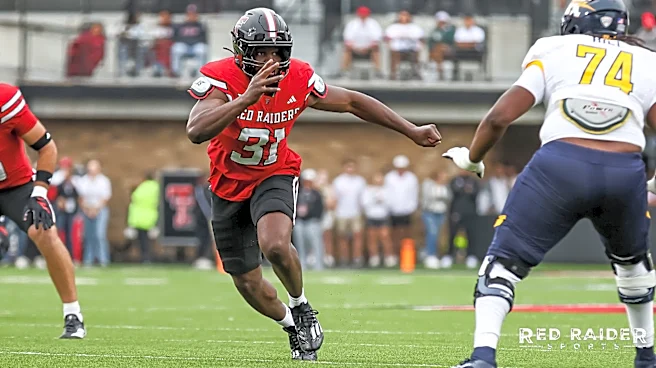
2. David Bailey | EDGE | Texas Tech
A couple of articles ago, I claimed the Titans wouldn’t take David Bailey. However, after seeing how the front office attacked free agency, specifically focusing on power rushers, I have not only changed my mind but believe Bailey is now VERY MUCH in play to be the pick at #4. The Titans have successfully beefed up the interior and added veteran versatility, but they still lack a true, twitchy “closer” on the edge. In Robert Saleh’s defense, you win by waves of pass rushers, and right now, we need speed more than anything. Bailey fits that mold perfectly.
The “Edge Rusher Evolution” Strategy
While the Love pick focuses on historical offensive blueprints, selecting Bailey would be a commitment to the modern NFL’s most successful defensive philosophy: Interior Pressure meets Elite Speed. By placing a 4.50-speed rusher outside of two 320lb+ monsters, the Titans would be mirroring the dominant fronts seen in San Francisco and Philadelphia over the last five years.
- The “Force Multiplier” Effect: Defensive line coaches often say that “sacks come in pairs.” In 2025, Jeffery Simmons was often the highest pressured interior lineman in the league, but those pressures didn’t always turn into sacks because the QB could escape the pocket. Bailey is the “contain” specialist who slams that door shut.
- The Wide-9 Impact: By drafting Bailey, the Titans can utilize the “Wide-9” alignment, lining the defensive end up well outside the tackle’s shoulder. This forces the offensive tackle onto an island, where Bailey’s elite bend and “dip-and-rip” technique become nearly impossible to mirror for four quarters.
Bailey is the perfect candidate to execute this defensive leap. He ran a blistering 4.50 40-yard dash, the fastest of any defensive lineman in this class. After transferring from Stanford to Texas Tech, he exploded for 14.5 sacks and 19.5 tackles for loss in 2025, proving he isn’t just an athlete, he’s a technician.
For the Titans, Bailey represents more than just sacks; he represents the evolution of the entire defensive unit. With Bailey on the edge, the pressure on the secondary to cover for long periods evaporates. Whether it’s a standard pass rush or a simulated pressure that leaves him isolated with a running back, Bailey’s presence makes the game significantly easier for the Titans’ defensive backfield.
Ceiling: Khalil Mack. A relentless sack artist with an elite first step and surprising play strength who can single handedly take over a game in the fourth quarter.
Floor: Jaelan Phillips. A highly athletic, productive starter who may occasionally struggle against heavy power run schemes but will consistently provide 8–10 sacks a year purely through speed and refined pass-rush moves.
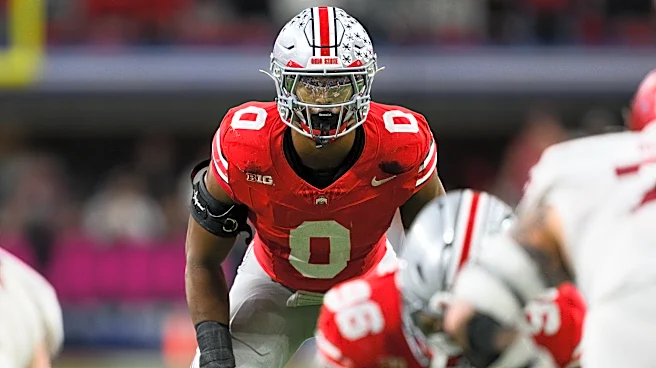
3. Arvell Reese | LB/EDGE | Ohio State
While most prospects in this draft are defined by a single position, Arvell Reese is defined by chaos. If the Titans select Reese at #4, they aren’t just drafting a defender; they are acquiring the ultimate “chess piece.” Reese represents a modern shift toward positionless football, where a player’s value is determined by their ability to ruin an offensive coordinator’s game plan from three different spots on the field.
By bringing Reese into the fold, Tennessee would be mirroring a defensive philosophy that has recently turned teams like the Cowboys and Lions into perennial contenders: the “Weaponized Hybrid” approach.
The “Defensive Swiss Army Knife” Strategy
The logic behind drafting Reese is rooted in the “Micah Parsons Effect.” In a league where offenses use pre-snap motion and “eye candy” to confuse defenders, Reese’s versatility serves as the ultimate counter-punch. He allows a defense to stay in a base personnel package while functionally shifting into a pass-rush sub-package without making a single substitution.
- The Multi-Level Threat: Reese spent his 2025 All-American season at Ohio State doing the impossible: leading the team in “Green Dog” blitz wins while also ranking as one of their most reliable open-field tacklers. He can stack the line of scrimmage as a 3-4 edge on first down, then drop 15 yards into a zone on third down to take away a tight end.
- The Complexity Factor: For a young defense like the Titans, Reese is a “force multiplier” for the coaching staff. His presence allows the defensive coordinator to disguise blitzes more effectively. Offenses won’t know if he’s rushing the passer, spying the quarterback, or dropping into a hook-curl zone until the ball is snapped. The ultimate weapon for Robert Saleh.
Reese is the perfect candidate to bring this “Modern Hybrid” identity to Nashville. At the 2026 Combine, he stunned scouts by weighing in at 241 pounds and then clocking a 4.46-second 40-yard dash. This rare combination of 6’4″ length and elite recovery speed allows him to make plays “a city block wide,” chasing down ball carriers from the backside that other linebackers simply can’t reach.
For the Titans, Reese represents the evolution of defensive flexibility. With Reese on the field, the “predictability” of the Titans’ scheme evaporates. Whether he’s exploding off the edge with a 1.53-second ten-yard split or shutting down a screen pass in the flat, Reese’s athleticism ensures the Titans are never “out-athleted” by the high-octane offenses of the AFC.
Ceiling: Micah Parsons. A generational, game-wrecking hybrid who can win Defensive Player of the Year because he’s an elite pass-rusher and a Pro Bowl-level off-ball linebacker simultaneously.
Floor: Jamie Collins. Even if his pass-rush moves never become elite, his floor is a highly productive, versatile starter who uses his length and “freak” athleticism to rack up tackles, deflections, and opportunistic sacks in any system.
4. Reuben Bain Jr. | EDGE | Miami
If the draft picks for Bailey and Reese represent “speed” and “versatility,” the selection of Reuben Bain Jr. represents pure, unadulterated power. Although the rumors at the moment do not favor Bain to the Titans, I believe it could very well still happen. Bain at number 4 means they aren’t just drafting a defensive end, they are slamming the table with power rushers. Bain is the personification of the “trench warfare” mentality, a player whose game is built on heavy hands, elite leverage, and an “ill-tempered” play style that wears down offensive tackles over four quarters.
By bringing Bain into the fold, Tennessee would be doubling down on the physical identity that has historically made this franchise successful: the “Stout Front” philosophy.
The “Identity & Interior Flexibility” Strategy
The logic behind drafting Bain is rooted in the “Power-End” archetype. In a division featuring physical run games like those in Indianapolis and Jacksonville, Bain’s ability to “set the edge” is a premium trait. He allows a defense to be aggressive because he rarely, if ever, gets pushed off his spot, effectively turning the outside run into a non-factor.
- The Inside-Outside Threat: What makes Bain unique is his “alignment-proof” strength. At Miami, he frequently kicked inside to the 3-technique on passing downs, using his low center of gravity to explode past guards who weren’t quick enough to handle his initial punch. This creates a “Nascar” package where Big Jeff, JFM, and Bain are all on the field at once. A literal nightmare for any interior offensive line. This also opens up the option for Simmons or Myers to play on the outside in certain schemes.
- The “Tone-Setter” Factor: For a Titans defense looking to regain its “hard-nosed” reputation, Bain is the ultimate catalyst. He doesn’t just make plays. He punishes the person across from him. His win rate in “obvious run” situations was among the best in the ACC, making him a three down player who doesn’t need to be subbed out when the game gets physical.
Bain is the perfect candidate to bring this “Heavyweight” identity to Nashville. Though he lacks the “track-star” 40-time of Bailey, his 1.55-second ten-yard split proves he has elite “get-off” for a man of his stature. Standing 6’3″ and weighing nearly 280 pounds, he possesses the “man-strength” required to collapse pockets and move 320lb tackles backward, a rare trait for a collegiate prospect.
For the Titans, Bain represents the evolution of defensive stability. With Bain on the edge, the “softness” in the run game evaporates. Whether he’s using a bull rush to walk a tackle into the quarterback’s lap or stone walling a lead blocker in the hole, Bain’s presence ensures the Titans’ defense is the most physical unit in the AFC South.
Ceiling: Cameron Jordan. A perennial Pro-Bowler and iron man who dominates the point of attack, plays a massive number of snaps, and consistently produces 10+ sacks through superior technique and overwhelming power.
Floor: Brandon Graham. Even if he never becomes a league leader in sack totals, his floor is a high-motor, foundational starter. Like Graham, Bain’s “power-to-speed” profile ensures he will lead the team in pressures and run-stops, providing a veteran-style reliability from his first day in camp.
5. Carnell Tate | WR | Ohio State
While the draft community is buzzing about edge rushers and running backs, there is a distinct philosophy that says if you have a young, high-ceiling quarterback, you don’t just give him help, you give him a soulmate. If the Titans select Carnell Tate at #4, they aren’t just drafting a receiver. They could be drafting the best wideout in Titans history. By pairing Tate with Cam Ward, Tennessee would be following a modern “reception first” blueprint that prioritizes route running savvy and sure hands over raw, track star speed.
The “NFL Ready” Target Strategy
The logic is proven: a young quarterback’s development accelerates when his primary target is “where he’s supposed to be, when he’s supposed to be there.” By investing a top-five pick in the most polished route runner in the class, the Titans provide Ward with a high volume chain mover who can win at all three levels of the field.
- The Ohio State Pipeline: It is no joke. No other program produces NFL ready receivers like Brian Hartline’s room in Columbus. From Garrett Wilson to Chris Olave, the transition is seamless because of the technical foundation. Tate is the next iteration. A player who averaged an insane 3.02 yards per route run in 2025 and, most importantly for a young QB, recorded zero drops on 66 targets.
- The “Zone Beater” IQ: Young quarterbacks often struggle deciphering complex NFL zone coverages. Tate possesses a veteran-level understanding of leverage and spacing. He instinctively knows how to find the soft spots in zone shells, throttling down his routes to provide a massive, stationary target when the pocket breaks down. He isn’t just a receiver; he’s a problem solver.
Tate is the perfect candidate to execute this “Year 2″ offensive leap. Standing 6’2” and weighing 195 pounds, he possesses an elite wing span and some of the best hands we’ve seen in years (10 ¼”). While his 4.53 40-yard dash at the Combine was a bit of a letdown. His play speed is significantly faster, fueled by nuanced tempo changes and an expansive release package that punishes press coverage.
For the Titans, Tate represents more than just catches, he represents the “stabilization” of the passing attack. With Tate on the perimeter, the reliance on Cam Ward to “make magic” on every play decreases. Whether it’s a 15 yard dig on 3rd and 8 or a high point contested catch in the red zone, where he won over 85% of his opportunities in 2025. Tate’s presence makes the game fundamentally easier for the Titans’ franchise quarterback.
Ceiling: Stefon Diggs. From a pure skill set perspective, Tate’s ceiling is the ultimate technical technician. Like Diggs, Tate wins through an obsession with detail. Manipulating a defender’s leverage, snapping off breaks with violent suddenness, and developing a “telepathic” chemistry with his quarterback. At this level, he is an unstoppable high volume target who can move all over the formation, functioning as a primary Z who can still alpha dog any cornerback in the league as a de facto X.
Floor: Calvin Ridley. Even if he never reaches “Superstar” status, his floor is a hyper polished, high end starter. Like Ridley, Tate’s floor is that of a crafty, reliable route runner who uses savvy and elite ball tracking to consistently separate. He provides a “safe” 1,000-yard weapon who understands NFL spacing and leverage from day one, ensuring the Titans always have a vertical threat and a reliable chain mover on the field.
At the End of the Day
Ultimately, the beauty of holding the #4 pick is that there are no “wrong” answers among these five, only different visions for the future. Selecting Jeremiyah Love is a commitment to an offensive identity that hasn’t been seen in Nashville since the days of McNair and George. Selecting Tate locks in a dynamic QB-WR tandem designed to terrorize AFC secondaries for a decade. Conversely, passing on a playmaker to draft David Bailey, Arvell Reese, or Reuben Bain Jr. would signal a move toward becoming the most feared, physical defense in the AFC South. Free agency has given the Titans the flexibility to truly take the best player available, regardless of position. When the clock starts in April, the Titans won’t just be turning in a card; they’ll be deciding whether they want to win by outscoring the opposition or by breaking them.
I want to hear from you! What do you think about the “Back-to-Back” strategy? Is Jeremiyah Love too high at #4, or is he the missing piece to unlock Cam Ward’s potential? Does Carnell Tate move the needle for you, or do you want to draft a wideout in another round? Has the free agent addition of JFM convinced you that David Bailey is the “closer” this defense is missing?
Drop a comment below and let me know which of these four you’d turn the card in for on Draft Night.
If you enjoyed this breakdown, follow me on X (Twitter) @TwoToneTrey for daily Titans conversations and the latest on the Parade Pursuit!