
Sunderland’s 2025/2026 campaign has been defined by tension, transition and a growing sense of unease. As the campaign reaches its midway point, the Lasses find themselves in a position that feels uncomfortably
at odds with the expectations that surrounded them in August.
What was meant to be a season of consolidation and upward momentum has instead become one characterised by inconsistency, fragile confidence and a creeping anxiety about the team’s direction. The story so far isn’t one of catastrophe — but nor is it one of progress. It’s a season suspended between potential and frustration, shaped by fine margins and the emotional undercurrents running through the squad.
The results tell part of the story.
Sunderland’s league form has been patchy, with a mixture of disappointing results, narrow defeats — albeit goal-filled thrillers — hard‑earned draws and the occasional bright performance that hints at what the team could be.
Based on the results so far, Sunderland sit in the lower half of the table — not adrift, but certainly not where supporters expected them to be. The Lasses sit in eighth, however their points total reflects a team struggling to convert performances into outcomes. Their goal difference, hovering around the negative single digits, mirrors the pattern of the season: competitive in most games, but too often undone by lapses in concentration or a lack of cutting edge.
The defeat to Newcastle United stands out as one of the defining moments of the campaign. Derbies carry their own emotional weight, and in the women’s game the rivalry has intensified as both clubs invest more heavily in their squads. Losing to Newcastle was more than a poor result; it was a symbolic blow, a moment that crystallised the concerns surrounding the team.
The performance lacked the intensity and conviction required in such a high‑pressure fixture, and the sense of disappointment among supporters was palpable. It was a match in which Sunderland looked hesitant, reactive and short of the fight and heart that fans expect in a derby. For many, it was the first time this season that the alarm bells truly began to ring.
There is also, the frustrating loss at home to Portsmouth Women. A team who had been struggling to get results and Sunderland would have been favourites to beat on paper — but we know football is never that simple.
Despite Sunderland being 2-1 up in the 90th minute, a lack of composure and concentration saw the Lasses lose the game 3-2, with Portsmouth getting two last minute goals to steal all three points. Fans couldn’t help but have their jaws dropped in disbelief with how quickly the game and result changed.

The FA Cup, however, offered a rare moment of respite.
Sunderland’s victory was a reminder of what the team can achieve when they play with belief and purpose. It was a performance marked by energy, discipline and a willingness to take risks — qualities that have been missing too often in the league.
The cup run has provided a parallel narrative, one that offers hope and a sense of possibility. It has also highlighted the inconsistency that has plagued the season; how can a team capable of such composure and confidence in the cup struggle so visibly in the league? Though it must be noted, that until now, Sunderland have played a team in the division below.
Statistics help illuminate the issue.
Sunderland’s “goals scored” tally is modest, reflecting a team that’s struggled to create and convert chances consistently, whereas the “goals against” column — while not disastrous — shows a pattern of conceding at crucial moments, often late in games or immediately after scoring themselves.
The Lasses’ winning percentage sits below what would be expected of a side with their ambitions, and their average points-per-game total places them firmly in the bottom half of the table. These numbers aren’t catastrophic but they are concerning. They paint a picture of a team that’s competitive but lacks the composure and confidence to turn performances into points.
Confidence — or the lack of it — has been one of the most significant themes of the season.
Too often, Sunderland have looked tentative in possession, hesitant in the final third and vulnerable when put under sustained pressure. These aren’t issues of ability as the squad contains players with technical quality, tactical intelligence and experience. Instead, the problem appears to be psychological.
When Sunderland play with freedom, they look capable of competing with anyone in the league, but when doubt creeps in, the team becomes cautious, reactive and prone to errors. The contrast between Sunderland at their best and Sunderland at their most uncertain has been stark.
This lack of composure has manifested in several ways.
In some matches, Sunderland have struggled to convert promising build‑up play into clear‑cut chances, overthinking situations that should be instinctive. In others, defensive lapses have cost the team points, with individual mistakes undermining otherwise solid performances. The team’s inability to manage games effectively; to control the tempo, withstand pressure and close out results has been a recurring issue. These are the hallmarks of a side battling not just opponents, but their own internal doubts.
However, perhaps the most worrying aspect of the season has been the perception that the team has occasionally lacked the fight and heart that Sunderland supporters expect. This isn’t a question of effort — the players seem to work hard to a degree — but they lack the intensity, aggression and emotional presence we used to see.
In several games, particularly away from home, Sunderland have looked passive and have allowed opponents to dictate the tempo and impose themselves physically.
This lack of bite has been one of the most troubling signs for fans, who pride themselves on a club identity built on resilience, determination and a refusal to be outworked. When a Sunderland team looks second best in terms of desire, supporters notice — and they worry.

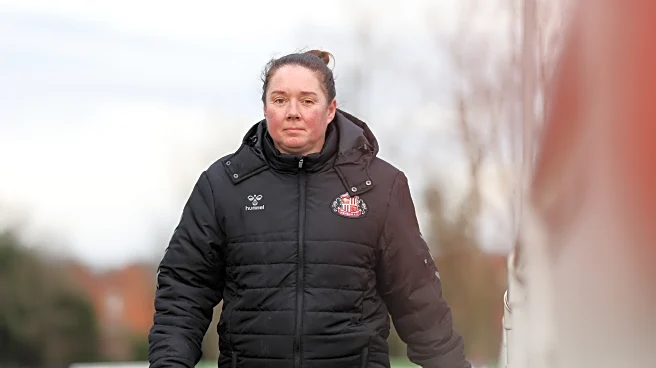
As a result, the scrutiny surrounding manager Mel Reay has intensified.
Reay has been a central figure in Sunderland’s journey, guiding the team through periods of change and helping to stabilise the club during challenging times. Her commitment to the club is unquestionable, and her understanding of the Sunderland identity runs deep. Yet football is a results‑driven environment, and the pressure on her has grown as the season has unfolded.
Supporters have begun to question tactical decisions, team selections and the overall direction of the squad. Some argue that the team has stagnated whereas others believe Reay is being unfairly judged, given the structural and financial disparities that exist within the league.
The truth, as is often the case, lies somewhere in the middle.
Reay has faced legitimate challenges, including injuries, squad‑depth issues and the increasing competitiveness of the league, yet there are also tactical questions that deserve examination.
Sunderland have at times struggled to impose themselves on games, lacking a clear attacking identity and relying too heavily on moments of individual brilliance.
The midfield has often looked disconnected, caught between pressing aggressively and sitting deeper to protect the defence. The result is a team that can appear stretched, uncertain and reactive. Reay’s task in the second half of the season will be to restore clarity, confidence and cohesion — no small feat, but not an impossible one.
Despite the frustrations, there have been positives.
The FA Cup win was a reminder of what this team is capable of when they play with belief and purpose. It was a performance marked by intensity, discipline and a willingness to take risks — qualities that have been missing at times in the league.
The cup run offers not only a chance for silverware but also an opportunity to rebuild momentum and morale. Cup competitions have a way of reshaping narratives, and Sunderland will hope that their success can act as a catalyst for improved league form.

There have also been individual performances worth celebrating.
Several players have shown resilience and determination in spite of the team’s struggles, stepping up in key moments and demonstrating leadership on and off the pitch. Younger players have gained valuable experience, while senior figures have provided stability during difficult periods. The squad’s work ethic has always been strong but it seems the challenge has been to translate effort into consistent results.
Looking ahead, the second half of the season offers both challenges and opportunities, and Sunderland will face tough fixtures — including crucial matches against teams around them in the table.
These games will be pivotal in determining the trajectory of the campaign but there are also reasons for optimism. The squad has shown glimpses of its potential and if those moments can be harnessed more consistently, the team is capable of climbing the table. The FA Cup run also provides a parallel storyline — one that could inject energy and excitement into the season.
Ultimately, the story of Sunderland’s season is still being written.
The first half has been uneven, frustrating and often disheartening, but it’s also been a period of learning, growth and resilience. The team has been tested, but not broken, and the second half of the season will reveal whether Sunderland can turn potential into performance, frustration into focus and doubt into determination.

If they can rediscover their confidence, sharpen their composure and embrace the expectations that surround them rather than fear them, there’s still time to reshape the narrative.
The season so far has been a reminder that progress is rarely smooth, that setbacks are part of the process and that identity is forged in adversity. Sunderland have the tools to turn things around, but the question is whether they can find the conviction to use them. The second half of the season awaits, and with it the chance to transform a campaign of frustration into one of redemption.
Sunderland Women has always been a club defined by grit, pride and ambition. Those qualities remain intact and what they need now is belief — belief in themselves, belief in their manager and belief in the journey they’re on.