


I knew that when I settled in to watch the Suns take on the Spurs on Wednesday evening, I would walk away impressed with somebody. With Phoenix resting its entire starting unit, the offense was going to have to come from somewhere, and I figured somebody would inevitably catch my eye. Of course, I also needed to heed my own warning not to overreact to preseason performances.
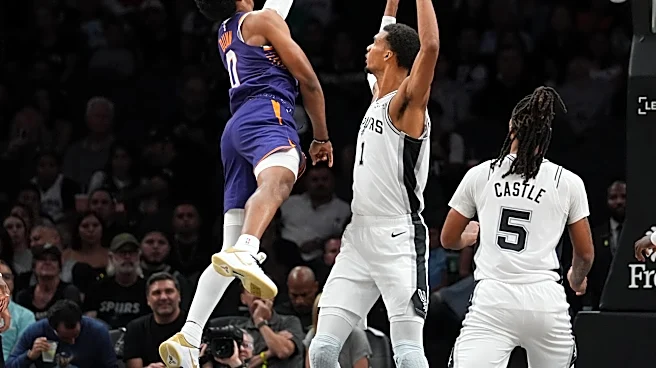
That somebody ended up being Ryan Dunn. Dunn went a perfect 6-of-6 from the field, scoring 15 points while adding two blocked
shots and a steal. There’s no reason to overreact to a performance like that, right? After all, he was operating in a starting role, something we probably won’t see much (if at all) during the regular season. And considering the circumstances, there’s only so much you can take away from those numbers. Right?
Wrong!
As I watched Ryan Dunn’s performance, I was reminded of the player we’ve seen during his two Summer League appearances. In both, he was part of the starting rotation and demonstrated the ability to create his own shot, slash without the basketball, and attack the rim when opportunities arose. His athleticism was noticeable, often jumping off the screen.
After all, that’s who he was at Virginia. Dunn was never known as a three-point shooter. He attempted a grand total of 51 in two years at UVA. He was a defensive menace whose offensive production came primarily around the rim, whether in transition after opposing turnovers or by cutting without the ball to find finishing opportunities for the Cavaliers.
When you look back at his shot profile from Virginia, you’re reminded of exactly who he was as a prospect.

Keep that shot chart in mind.
When Dunn arrived in Phoenix, he operated in much the same capacity during Summer League, although his three-point volume began to increase because, ultimately, that’s what the team needed from him. For a player who had a three-point rate of 18.9% in college, it jumped to 40.1% his first year in Vegas.
Still, his affinity for getting the ball and heading downhill was apparent, and by year two in Summer League, he looked much more polished offensively, averaging 14.7 points per game. Playing above the break, he could go left or right and generate pressure on the opposing interior. Watch the highlight package below and you can see why, following the 2025 Summer League, hopes were high that he’d taken the next step.
Yet last season didn’t feel like progression. It felt like a plateau, which in turn made it feel like regression. He averaged 5.8 points over 70 games. After possessing a 20.8% usage rate in Summer League, his 13.8% usage rate in the regular season didn’t translate. His 46.7% three-point rate translated into 33.1% makes.
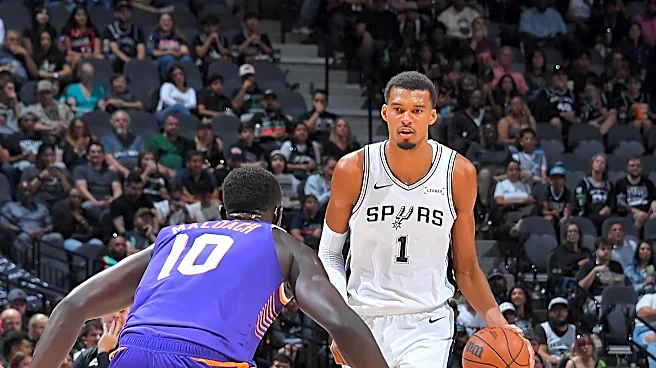
Watching Dunn go 6-of-6 from the field on Wednesday night reminded me of Summer League Dunn. Because while he was perfect from the floor, he didn’t attempt a single three-pointer. Instead, when the ball found its way into his hands, he looked to initiate offense and utilize his athleticism to create opportunities around the rim. And credit to him, because for the second consecutive game, he decided to go right at Victor Wembanyama. Yes indeed, aggressive Dunn was back.
What we’ve witnessed during the preseason isn’t something we’ve consistently seen from Dunn in his first two regular seasons in Phoenix. His three-point rate through 4 preseason games? 22.2%. When you look at his regular season shot chart, 51.6% of his field goal attempts have come from beyond the arc.

Looks quite different from what he did in college, doesn’t it? What that tells me is that, from an offensive standpoint, the Suns have been asking him to become something he simply isn’t.
We’ve been measuring his success based largely on whether he can develop into a role that, through two seasons, he hasn’t demonstrated an ability to consistently fulfill. But that doesn’t mean he doesn’t possess offensive value, something Wednesday night’s performance reminded us of.
If Dunn is going to be part of the rotation this season, which appears increasingly likely considering Rasheer Fleming still has some developing to do, perhaps the Suns should spend less time positioning him in the corner waiting for an open three and more time creating opportunities for him to utilize his athleticism. Allow him to attack the basket, create his own shot when the opportunity presents itself, or operate as a slasher who can capitalize on defensive attention being directed elsewhere. Because that’s where he clearly excels.
Think about the Suns’ second team unit. They could use a slasher or another on-ball penetrator/shot creator. Leave the three’s to Collin and Luke. Let Ryan run some facilitation and leverage his athleticism rather than having him stand in the corner with a bag of Orville Redenbacher.
Sure, he can still take the occasional three-pointer when he’s open, and you certainly hope that part of his game continues developing. But through two seasons, the consistency hasn’t been there. At some point, you have to consider tailoring your offensive approach to the talent a player possesses rather than continually asking him to operate within a role that doesn’t necessarily complement his strengths.
Think about Lamar Jackson and the Baltimore Ravens. After drafting Jackson, the Ravens adjusted their offensive philosophy to maximize his unique abilities rather than forcing him to operate within the system that existed before his arrival.
Now, I’m certainly not suggesting the Suns completely overhaul their offensive approach for the second unit simply because Ryan Dunn hasn’t developed into a reliable three-point shooter. But there’s value in layering opportunities into the offense that allow him to do what he does best. If those opportunities generate more efficient possessions and allow Dunn to contribute offensively, why wouldn’t you explore them?
What we witnessed from Dunn on Wednesday night carries value. It showcased Ryan Dunn’s strengths, reminding us of what he can provide offensively rather than continually evaluating him through the lens of what he hasn’t yet developed. The takeaway isn’t that Ryan Dunn has suddenly figured everything out offensively. It’s that perhaps we’ve been looking at his development through the wrong lens. Phoenix needs him to become a more reliable shooter, but it also needs players who can put pressure on the rim, create advantages, and give the second unit another dimension. Dunn showed Wednesday that he can offer more than corner threes and defensive energy. The next step is finding ways to make those strengths part of his regular-season role.