





Annually, the International Association of Structure Movers holds a convention with an awards banquet. Some awards are based purely on the numbers (e.g. “heaviest structure moved on rubber tires”), but others are based on the opinions of judges (e.g. “most innovative move”).
I love to use these awards as an example of a typical trade association’s annual recognition banquet because these are incredibly niche undertakings. These ain’t the Oscars—or the NBA’s awards for that matter.
Yet, they kind of
are.
The NBA’s regular season awards recognize an array of achievements, but in the end, this is just the league and its media associates patting itself on the back. Call the MVP award the Oscar for Best Actor, or the “Most Innovative Move” and you’ve got the general idea figured out. Of course, an added complication in the NBA is that actual money in terms of max contract values is involved in some NBA awards, but the principle is the same.
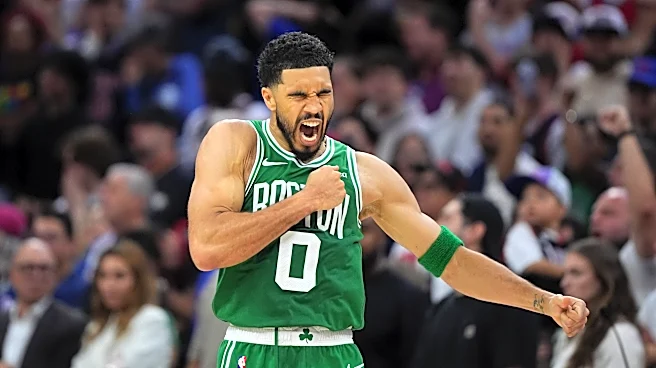
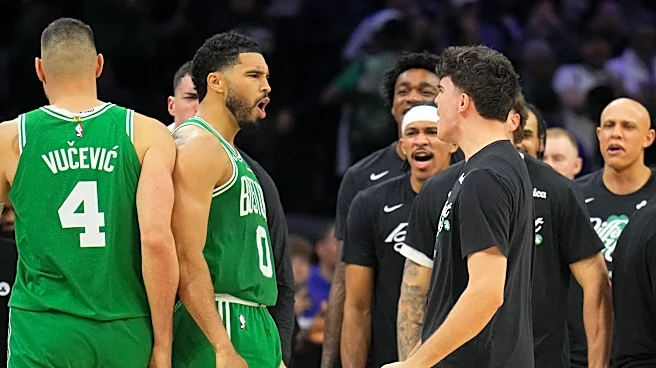
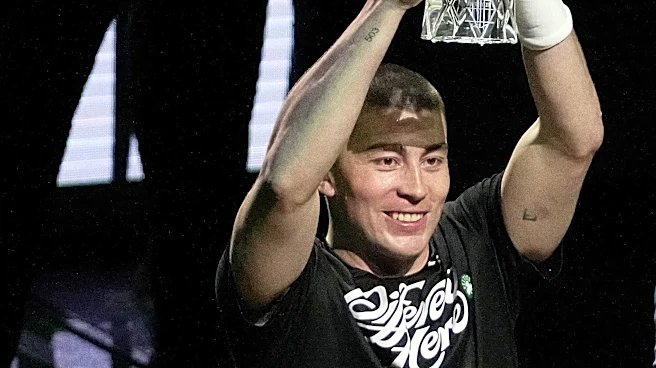
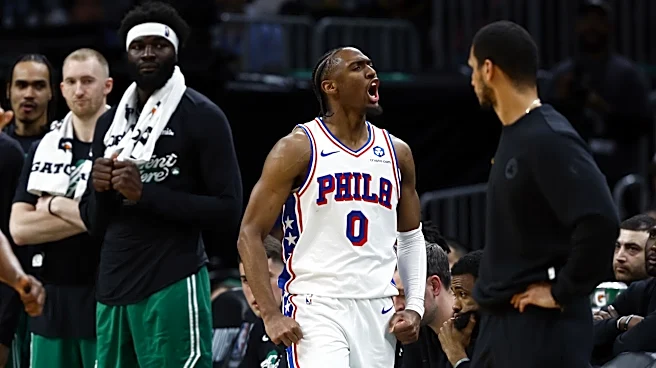
When the NBA announced finalists for various individual performance awards last week, no Celtics players were listed. Jaylen Brown was not a finalist for the MVP and Neemias Queta was not a finalist for Most Improved Player. Jayson Tatum was a finalist for Teammate of the Year, which is surprising given the amount of on-the-court time he missed, and Joe Mazzulla was finalist for an award that he has said he doesn’t really want.
Overall, though, how have the Celtics fared when it comes to these annual awards?
Looking back at the league’s most inclusive award, the All-NBA teams, Boston has nabbed 86 of 930 possible slots since the award was first given in the good old BAA days. This is second to the Lakers, who have filled 101 slots (Kobe, Kareem, and Magic account for 36 of those slots), but well ahead of the Sixers/Nationals, who have 67 All-NBA awards to their credit.
In terms of All-Defense, the Celtics lead the league in selections, with 49 of 570 slots. The Spurs are second with 44.
MVP selections are an interesting story. The Celtics have had 10 MVP awards. This is the most in league history. However, Larry Bird was the last Celtic to win an MVP award, and that was in the ’85-86 season. It’s been 40 years since a Boston player won an MVP award. At one point in time, one out of every four MVP awards had gone to a Celtic. Nowadays, it’s down to one out of eight. The Lakers and Sixers are tied for second place with seven MVP awards apiece.
For the Defensive Player of the Year, Boston has two award winners—Kevin Garnett and Marcus Smart—they are far from the most decorated franchise in league history here. The top awarded teams are, perhaps unsurprisingly, the Detroit Pistons (Ben Wallace was a four-time winner) and the San Antonio Spurs.
Rookie recognition is, as one would suspect, pretty thin on the ground for the Celtics. A team as consistently good as they have been doesn’t tend to give rookies a lot of opportunity to shine. Thus, the C’s have only landed 19 players on the 485 slots available on the All-Rookie team (the Bulls are, somewhat surprisingly, the league leaders, with 25 All-Rookie nominees). The Celtics have had three Rookies of the Year: Tom Heinsohn, Dave Cowens and Larry Bird. The Warriors lead all teams with six winners.
Boston players have won the Sixth Man of the Year award five times, which is tied with the Clippers, surprisingly, for most in league history, and no Celtic has ever been named Most Improved Player.
Overall, the C’s position as the winningest franchise in league history both in terms of games won and in terms of championships is pretty well reflected in player honors. To be sure, there seems to have been some neglect on the All-NBA teams, but from a big picture standpoint, there’s not a whole lot to gripe about here.
This is especially the case when you consider that the league has named seven awards after Celtic figures, the most of any team (Sam Jones, Bob Cousy, Larry Bird, Chuck Cooper, Red Auerbach, John Havlicek, and Bill Russell).
Where things make no sense at all is when it comes to the coach of the year and executive of the year awards.
The Atlanta Hawks have had the league’s Coach of the Year on six different occasions.
The league began giving this award out in 1963 and Harry Gallatin won the first award as coach of the then St. Louis Hawks Since then the Hawks have accumulated a record of 2585-2581. I mean, that’s technically a better than .500 record, but c’mon. How thin can you slice that piece of pie?
The last time a Celtic coach won the award? Bill Fitch—in Larry Bird’s rookie year. The following year, the year the C’s won the title, the award went to Jack McKinney, whose Pacer team went 44-38. The Celtics have won five championships since Fitch’s award in 1980. Mind you, as I’ve said elsewhere, I think it’s good that coaches of other teams receive a little bronze statue of Red Auerbach to remind them of the league’s pecking order. But still, there’s very little about this award that makes sense.
Even more mind boggling is the Executive of the Year award. Here, Jerry Colangelo managed to land the award four times during a period in which his Suns finished first in their division exactly twice. During the period that Colangelo was collecting all that hardware, Red Auerbach won the award in 1980, presumably in recognition of his foresight in drafting Larry Bird the year before, and that’s it. No more awards for Red.
Red got zero recognition for moves like acquiring Parish and McHale in one trade, or Dennis Johnson, or Bill Walton. These were all brilliant deals that paid dividends the year that they were made, all were moves one would expect the league’s best executive to make, but none of them were good enough to secure another Executive of the Year award. On the opposite coast, neither Bill Sharman nor Jerry West got the award for building the Showtime Lakers, but hey, Atlanta’s Stan Kasten won it in ’85-86 and ’86-87, years in which two of the greatest teams in NBA history were fielded, neither of which were the Atlanta Hawks.
But what, ultimately, do these awards say about the quality of play on the court or talent on the bench or in the front office?
Not much.
To be sure, bad players don’t make it onto the All-NBA teams, and winning the MVP is basically a guarantee that you’ll end up in Springfield, but these awards are just a side show. They’re not the main event, and they’re not the final measure of the value of players, coaches and executives.
At best, awards are the detritus of a successful season. They’re side effects, secondary symptoms that indicate you’ve done a good job.
Sure, it’s always nice to get an award, to get recognition for doing your job well, whether it’s at an annual rubber chicken dinner hosted by the International Association of Structure Movers or in an NBA press release, but those awards aren’t where it’s at.
My brother-in-law Trent has been in the structure moving business for over thirty years. Despite participating in what was, at the time, the Heaviest Rubber Tire Structure Move in history, as well as a number of other award-winning projects and transport inventions, he says, “I don’t care whether we get an award. I don’t need that kind of recognition to motivate me.”
Joe Mazzulla couldn’t have said it better himself.