


This is not going to be as fun as the position player article. This, you likely already know.
And this is why:
I’ve shown you that chart before, but it’s worth repeating here. The Cubs, by fWAR, had one of the worst pitching staffs in all of Major League Baseball. The only reason they were in the postseason is the offense, which as you can see outpaced the second-place Dodgers… by a lot. If the 2026 Cubs had posted a league-average fWAR figure for hitters, they’d
probably have finished well under .500.l Conversely, if they’d had league-average pitching, they’d probably have won 100 games and still be playing.
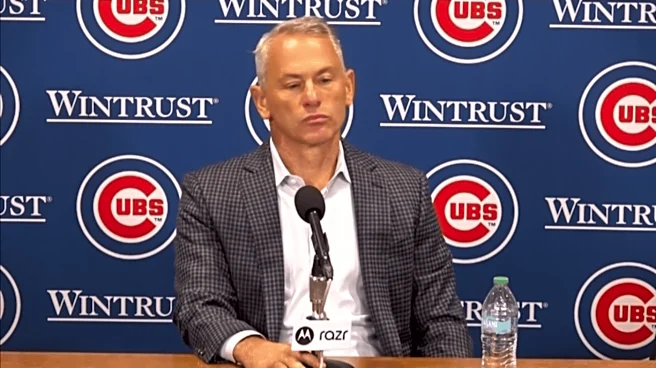
So, here we are. Jed Hoyer has a lot of work to do to improve this pitching staff for next year. He admitted in his year-end presser that he didn’t do very well in 2026. There are two major issues for Hoyer, in my view:
- Dumpster-diving for relievers. It worked in 2025. It spectacularly backfired in 2026.
- Pitching development has not produced the 98+ mile per hour fastballers that every other team seems to have on an assembly line.
Fixing those two things will not be easy. But that is what the Cubs must do if they are to compete with other pitching staffs in modern baseball.
The Cubs used 39 (!) pitchers this year, not counting catcher Carson Kelly, who threw in three blowouts, including one game the Cubs won. He posted a 6.00 ERA. Ten of the 39 actual pitchers had a higher ERA than that, and 12 of them had worse bWAR than Kelly’s 0.0 as a pitcher.
I’m not posting comments on 39 pitchers. Nor do you probably want that. Here are comments on 22 of them.
Shōta Imanaga: B
This grade will likely be controversial. I kind of look at Imanaga as the pitching version of Ian Happ — someone who Cubs fans love to dislike, but his performance is relatively solid.
It’s the home runs, right? That’s the biggest issue with Imanaga. Apart from those, though, he posted a 2.0 bWAR season, which is pretty much in line with his previous seasons. He was healthy all year and made 32 starts and went six innings or more in half of them. He doesn’t walk guys (5.2 percent walk rate).
I would not be against bringing him back at a reasonable price for a couple more years.
Matthew Boyd: C
Boyd made only 22 starts due to two injuries — a biceps issue that kept him out for much of April, then he hurt his knee playing with his kids and missed most of May and June.
Sometimes he was unhittable. Other times he was serving up long balls. (That wasn’t unique to Boyd, either, among this staff.)
He’s been a good Cub for two seasons and really seemed to enjoy his time here. But he’ll be 36 in February. There’s a $15 million mutual option which seems likely to be declined.
Colin Rea: C-
Like a lot of Cubs pitchers, Rea had issues with home runs. Oddly, after he left the rotation following the acquisitions of Clay Holmes and Kevin Gausman, Rea seemed the forgotten man. He appeared in only 11 games from Aug. 8 to the end of the season and threw just 19.1 innings.
He’s been a useful spare part for two seasons, but in a revamp of this staff, I think it’s time to move on.
Edward Cabrera: F
I’m honestly not sure what happened here. Cabrera was perfectly fine for his first seven starts, posting a 3.27 ERA and 1.282 WHIP, numbers completely in line with what he did in 2025 in Miami.
Then he started to get hit, hard, and wound up with an IL stint. He came back for one start in August, got hit hard again and left with a blister issue that kept him out a month. On his return he went to the bullpen and was bad again and was left off the postseason roster.
After those first seven starts he posted an 8.84 ERA and 1.707 WHIP and allowed 11 home runs in 38.2 innings, which is awful even by this pitching staff’s low standards.
Cabrera turns 29 in April and has two years of team control remaining. So do they try to fix him? Or put him in a trade package?
For whatever it’s worth, Owen Caissie didn’t have a good year in Miami, either, batting .220/.288/.412 in 108 games, with some IL stints. He struck out 123 times in 291 at-bats.
Ben Brown: A
Probably the biggest “what if” question about the Cubs this year revolves around Brown, who finally figured things out and had become an outstanding starting pitcher when the neck injury from two years ago reoccurred and forced him to the injured list in mid-June. Despite that, Brown led all Cubs pitchers with 2.2 bWAR, which tells you how bad the rest of the staff was. (It took Imanaga an entire season of 32 starts and 174.1 innings just to get to second on that list at 2.0.)
Brown’s best start of the year was probably his six-inning, four-hit, one-run, seven-strikeout game against the Pirates May 25. (And the Cubs lost that game 2-1!)
Here’s hoping for a full recovery and Brown leading the Cubs rotation in 2027.
Javier Assad: B
Assad became the guy Cubs fans loved to clamor for every time he was sent down to Triple-A Iowa. (That was done five times this year, the maximum for any player in a season.)
Truth be told, the Cubs might have been better off just putting him in the rotation and not trading for Kevin Gausman. Assad made 11 starts and posted a 3.49 ERA and 1.200 WHIP in that role. He allowed too many home runs (10 in 56.2 innings as a starter), but so did the entire Cubs staff.
After April 25, when he got pounded by the Dodgers for six runs in 2.1 innings, Assad posted a 2.63 ERA and 1.062 WHIP in 75.1 innings. Yes, the FIP was a bit high in that span at 4.92, but you can’t argue with the results.
Assad is who he is — about a 2 WAR starter who will consistently post an ERA in the mid-3s and keep the Cubs in games. Just give the guy a rotation spot in 2027. He’s a perfectly cromulent No. 5 MLB starter.
Ryan Rolison: B-
The Cubs saw something in Rolison even after he posted a 7.00 ERA for the Rockies last year, so they claimed him off waivers in January — from the White Sox, who had claimed him from the Braves in December, who had acquired him from Colorado for cash considerations in November.
Rolison was really good until mid-August when he ran out of gas — over his last 17 appearances he posted a 5.87 ERA and 1.565 WHIP, with a high walk rate (11.7 percent).
Overall, though, this was a very good year and he’s still pre-arb for 2027, which this front office will like.
Aaron Civale: B
Civale was poor as a starter for the A’s, so the Cubs acquired him by trade in July for a guy who had a 32.7 percent walk rate at Myrtle Beach (Aiden Moffett, and no I am not kidding about that walk rate, look here).
Civale had been pretty good in five relief appearances for the Cubs last year and he was very good again in 18 relief outings this year — 1.73 ERA, 1.064 WHIP, and only two home runs in 36.2 innings. (Given the propensity of home runs allowed by this staff, that seems important to note.)
He turns 32 next June and won’t be expensive to bring back.
Trent Thornton: C+
Thornton’s season was pretty much comparable to what he had posted in Seattle in 2024. His 2025 season was ruined by an Achilles injury, but he recovered from that and was a useful spare part in the Cubs pen. His season ended with an injury that appeared mysterious, as he had just thrown a good scoreless inning against the Pirates.
A nasty inning Aug. 28 vs. the Reds ruined his ERA for the season.
David Peterson: B
Peterson’s overall numbers with the Cubs were pretty good: 3.70 ERA, 1.369 WHIP. That included a horrific outing against the Cardinals July 3 (10 runs in 3.2 innings). After that he was quite a bit better: 2.66 ERA, 1.310 WHIP, only seven home runs in 71 innings.
Maybe they should have started him against the Padres. He threw well enough in relief in the Wild Card Series. I would not be opposed to bringing him back.
Clay Holmes: D+
Holmes started off well enough as a Cub, with a 1.55 ERA and 1.000 WHIP in five starts in August, with only one home run allowed in 29 innings.
September was not as kind: four starts, 8.24 ERA, 1.729 WHIP, 15 walks in 19.2 innings. These numbers are likely why he wasn’t used in the Wild Card Series.
He’s a free agent and I doubt he’ll be back.
Jacob Webb: C-
This is a tale of three seasons.
13 appearances through the end of April: 5.06 ERA, 2.062 WHIP, three HR in 10.2 innings
44 appearances from May 1 to Aug. 21: 1.55 ERA, 0.971 WHIP, three HR in 46.1 innings, 52 strikeouts
11 appearances from Aug. 24 to the end of the season: 9.90 ERA, 1.700 WHIP, four HR in 10 innings, four blown saves
That’s one really good reliever for three-plus months and two outright release candidates.
I can’t explain that. Can you?
The Cubs have a $2.5 million team option on Webb, so they’ll probably keep him for another year. The year as a whole wasn’t awful, but those four blown saves…
Kevin Gausman: D
Gausman’s nine starts as a Cub weren’t any better than what he did in Toronto over 23 starts there. He had a couple of really good outings, notably seven shutout innings vs. the Diamondbacks Aug. 24, but the bad outweighed the good, and his postseason experience, one of the reasons for the deal, turned out not to mean much.
The Cubs had one of their season ticket holder Chalk Talk sessions with Gausman in early September that I attended, and he seems like a thoughtful, good dude. He’ll turn 36 in January and I wonder if his career is over.
Ryan Zeferjahn: C+
You can see the talent, the 98+ fastball, it’s just thisclose but not quite all the way there.
There was the blown save in Milwaukee, but then there was the easy save he posted in the final home game against the Marlins.
The Cubs might have something here, and he’s pre-arb for 2027 and under team control for three years after that. So they have time to figure things out with him. Hopefully it works.
Daniel Palencia: C-
Anointed the closer in Spring Training by Craig Counsell, Palencia threw well for five outings, then hit the IL with an oblique injury.
Returning on May 4, he pitched all right, but didn’t get many save opportunities because the Cubs were winning blowouts and walk-offs, then they went on that long losing streak. In mid-June he had some elbow flexor inflammation and missed another two months.
His first five outings after returning were just plain bad: 14.54 ERA, 1.846 WHIP, two home runs in 4.1 innings and his velocity topping out at 98-99 instead of the 100+ he had thrown previous to the injuries.
Then things seemed to fall into place. Over his last seven appearances of the regular season, Palencia threw 7.2 innings, allowed one hit, three walks and one unearned run, striking out six and regularly hitting 100 again. He threw one inning in Game 2 of the Wild Card Series in San Diego and got taken deep by Gavin Sheets on a 101 mile per hour fastball that, well, a hitter shouldn’t be able to hit:

That was a good pitch and well located and I don’t see how Sheets hit that thing 394 feet.
It was a lost season for Palencia, but if he and Zeferjahn are 100 percent next year and Zeferjahn can throw strikes, maybe the Cubs finally have that 100 mile per hour late relief tandem that they’ve needed all along.
Phil Maton: F
Maton had a very good year in 2025 split between the Cardinals and Rangers. The signing did not seem unreasonable, even with Maton being 32, though I wouldn’t have given him two years.
The knee injury that ruined his season was evident as early as April 8, the first time he went on the IL after posting a 13.50 ERA and 2.500 WHIP, with four walks and two HBP among 24 batters faced.
He returned April 27 and gave up a pair of runs to the Padres in his first outing back — a game the Cubs lost 9-7. Win that game and the Cubs would have hosted the Padres in the Wild Card Series.
He pitched okay for a time, then went back on the IL in late June after blowing a save opportunity against the Mets June 25 by serving up a home run to former Cub Jared Young, the first batter he faced. (The Cubs won that game 4-3 in 10 innings.)
Returning from that stint July 19, Maton was given about the lowest leverage situation you could ask for: Throwing the eighth inning at home with a 10-0 lead against the Twins. He allowed three singles, a walk and a run. That was it, he hit the IL for a third time and finally had knee surgery in early September.
One wonders if Maton had the procedure when this first cropped up in April, maybe he could have come back and been effective in the second half.
We’ll find out next year because Maton was signed to a two-year deal (with an option for 2028!). Hopefully, things will improve. They really couldn’t get worse.
Hunter Harvey: F
I could have given Harvey an “incomplete” because he pitched in only four games for the Cubs. The “F” grade is really for Hoyer here, because he spent $6 million for those four games, and he did that knowing that Harvey had a long injury history. That was money basically flushed down the drain. He has a mutual option for 2027 that will almost certainly be declined. There’s no reason to bring him back.
Riley Martin: Incomplete
Martin’s a great story, a sixth-round draft pick in 2021 from Quincy University who almost gave up baseball for pharmacy school.
He threw very well in eight games before missing the rest of the season with a flexor strain. He did make one rehab appearance for Triple-A Iowa in September and could be an important part of the 2027 bullpen.
Jordan Wicks: D-
The only reason he gets a “D-” instead of an “F” is the 10th-inning save he posted against the Brewers June 28.
Wicks is only 27 and was a first-round draft pick. He has talent. Maybe the Cubs can turn him into the next Drew Pomeranz or Caleb Thielbar (at least when those guys were good).
Caleb Thielbar: D-
Speaking of Thielbar… this was a “roll the dice” signing at age 39 after his good 2025 season. It could have been predicted to fail, and it did. This is a D- instead of an F because over his last 14 appearances, Thielbar posted a 2.84 ERA and 1.184 WHIP and allowed just one home run in 12.2 innings.
Thielbar turns 40 in January and is almost certainly done. He pitched 10 MLB seasons and had a total of 5.2 bWAR and made about $15 million, which is pretty good for an 18th-round draft pick from South Dakota State.
Ethan Roberts: Incomplete
Roberts pitched quite well in two stints up to the middle of June. Those stints were interrupted by one of the weirdest injuries of the year:
Roberts’ setback was a laceration on the middle finger of his pitching hand — the result of a metal vent coming loose.
Roberts said he was on his ninth rep in a 10-throw workout involving a medicine ball, which is part of his daily routine. Without space to do the drill in the weight room, he moved to a tunnel at Citizens Bank Park. On the ill-fated throw, the medicine ball rebounded off one wall and hit a vent cover on another, dislodging it.
The vent was about to strike Roberts’ leg, so the pitcher reached back out of pure reaction. The cut is on the underside of the pitcher’s fingertip, which impacts his ability to throw. He did not require stitches, but he needs to let the wound heal before he can ramp up his throwing intensity.
Then over his last seven outings he had a 13.50 ERA and 2.625 WHIP and went on the IL with forearm inflammation. He did not pitch in MLB the rest of the year, though he did make 17 appearances for Triple-A Iowa, some on a rehab assignment, others on option after that ended.
As with many others, Roberts has talent and if he can be made right, he could be an important part of next year’s bullpen.
Braxton Garrett: Incomplete
Garrett was acquired from the Marlins at the trade deadline for Jonathon Long and Jace Beck. He was recovering from Tommy John surgery that caused him to miss almost two full seasons from mid-2024 to the middle of this year.
Garrett threw five innings for the Cubs against the Red Sox in the final game of the regular season, allowing one run. He’ll be in the mix for the rotation in 2027.
In alphabetical order: Charlie Barnes, Ty Blach, Tyler Ferguson, Gavin Hollowell, Cade Horton, Antoine Kelly, Luke Little, Corbin Martin, Hoby Milner, Jayden Murray, Drew Pomeranz, Yacksel Rios, Jameson Taillon, Vince Velasquez, Andrew Wantz, Bryse Wilson and Jake Woodford also pitched in at least one game for the Cubs in 2026.