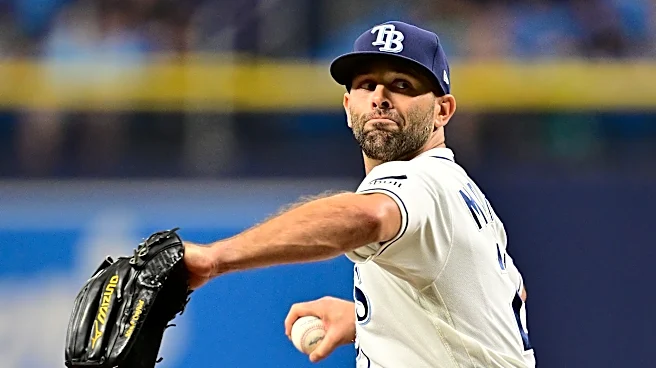


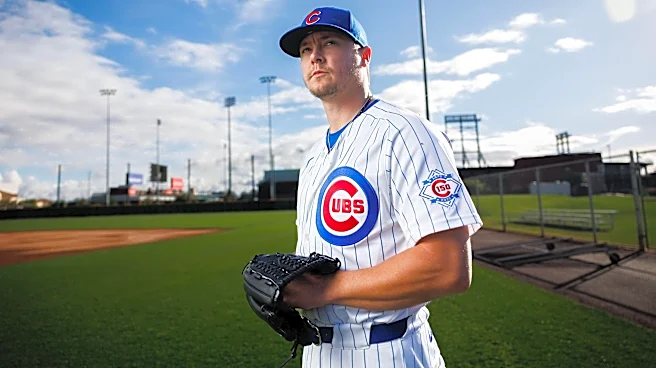
The Cubs’ Opening Day starter this year was Matthew Boyd.
The rotation at that time consisted of Boyd, Cade Horton, Shōta Imanaga, Edward Cabrera and Jameson Taillon.
Those five pitchers combined for 86 starts. Only Boyd and Imanaga finished the season in the Cubs rotation and only Imanaga was not injured at some point during the season, making 32 starts and throwing 174.1 innings.
In those 86 starts, those five pitchers combined for a 4.46 ERA and 1.223 WHIP in 460.1 innings and allowed 91 home runs.
Those numbers are bad, no question about it.
Oh, but wait, it gets worse. The other 74 starts for the Cubs this year were made by Colin Rea (19), David Peterson (15), Javier Assad (11), Kevin Gausman (9), Clay Holmes (9), Ben Brown (8), Ryan Rolison (2), Jordan Wicks (2) and Riley Martin (1). (The starts by Wicks were intended to be actual starts; the three by Rolison and Martin were as openers.)
In those 74 starts, those nine starters combined for a 4.06 ERA and 1.037 WHIP, with 51 home runs in 388.1 innings. That’s slightly better, but it’s still not good. Ben Brown’s eight very good starts are responsible for a lot of that.
And I haven’t even gotten to the relief pitchers yet, and they were almost as bad. Daniel Palencia, anointed closer in Spring Training, was injured and missed most of the year and posted only three saves. Jacob Webb, forced into a role he wasn’t used to, did well at it … until he didn’t and blew multiple saves by allowing walk-off home runs. He had only nine saves. That makes 2026 the first year since 1971 that the Cubs did not have a single pitcher with double digits in saves since the save rule became official in 1969. Phil Regan led the Cubs with six saves that year and the team had just 13, fewest in the major leagues.
All told, the Cubs pitching staff ranked 14th in team ERA, 18th in starter ERA, 23rd in saves (and had 28 blown saves), and second in home runs allowed with 231. Only the A’s, playing in a minor league park, allowed more (247). By comparison, the NL Central champion Brewers allowed 171 homers, 10th-fewest in MLB.
But this article isn’t about pitching.
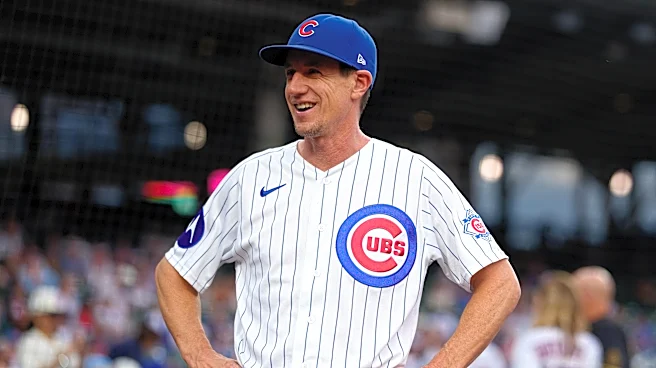
It’s about Cubs manager Craig Counsell, as the headline states.
Counsell somehow managed that pitching staff into 89 wins and a wild card spot.
Yes, a large part of that was due to the Cubs offense, which produced one of the best hitting seasons in franchise history with 850 runs scored, a team-record 674 walks, 220 home runs (third-most in MLB) and scoring in double digits 21 times.
But it’s not all that. The Washington Nationals scored 821 runs, finishing third in MLB. Their pitching staff was a lot worse, allowing 815 runs, compared to the Cubs’ 703. In fact, the Cubs’ record based on runs scored and allowed was 95-67, six games better than they actually finished.
I give a great deal of credit here to Counsell, who was given the following relievers at various points of the season: Corbin Martin, Drew Pomeranz, Bryse Wilson, Vince Velasquez, Jayden Murray, Jake Woodford, Ty Blach, Charlie Barnes, Andrew Wantz, Yacksel Rios, Antoine Kelly and Luke Little.
Yikes. If anything screams out “waiver wire acquisitions,” that list does. We know that Cubs President of Baseball Operations Jed Hoyer took responsibility for that in his season-ending presser:
About the Cubs bullpen, Hoyer said: “I did a poor job on the bullpen this year, full stop.”
Counsell, meanwhile, I believe did a masterful job of mixing and matching while those sorts of people inhabited the Cubs bullpen. Without his leadership, maybe this team winds up near .500 and misses the postseason.
So that’s my position. I think Counsell has done an outstanding job managing the Cubs over the past three seasons and the failures this year aren’t his fault. If Hoyer does his job this offseason, I believe Counsell is the right manager to guide the Cubs for the next two seasons — the years left on his contract — and perhaps beyond.
Tomorrow, I’ll have some thoughts about Hoyer.