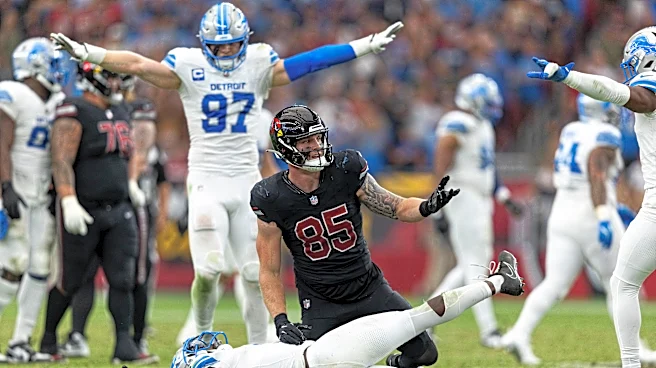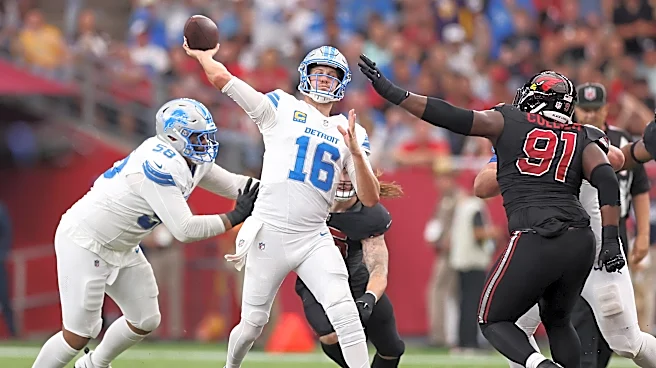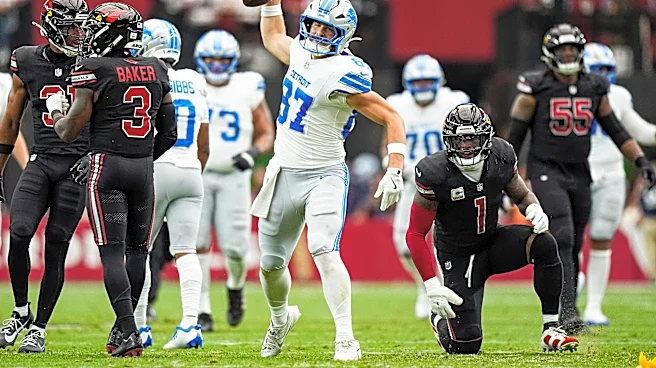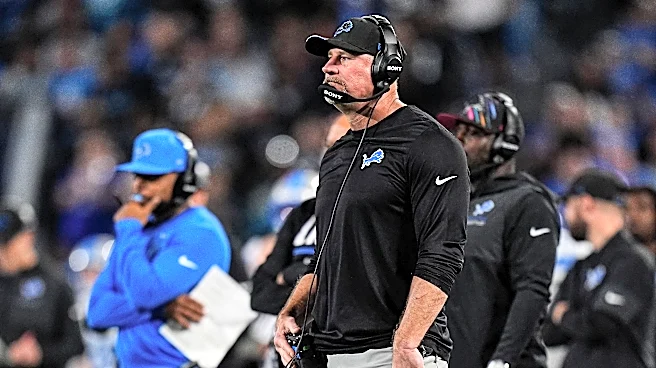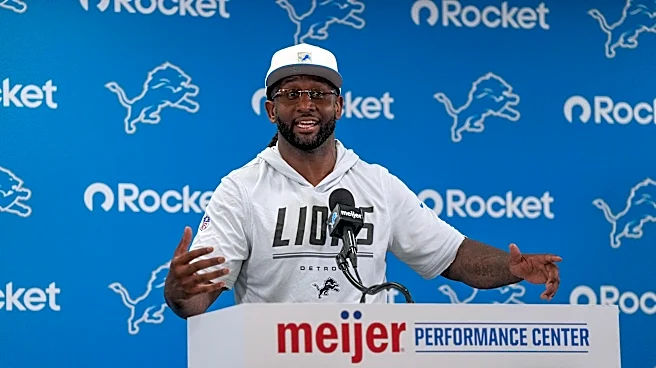


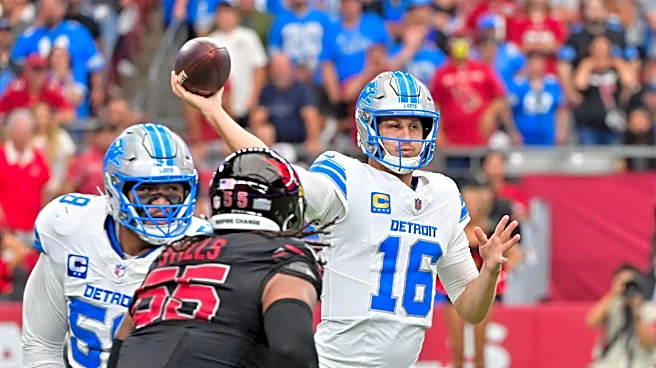
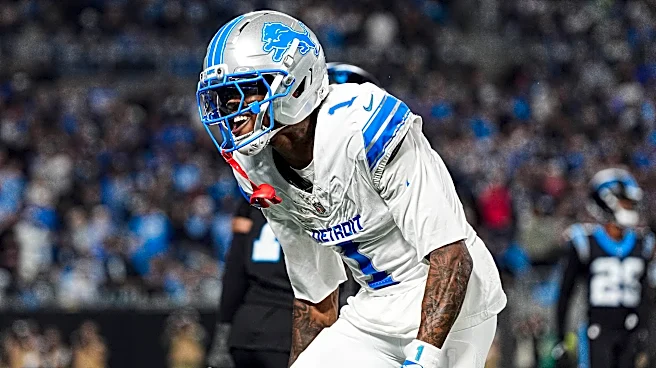
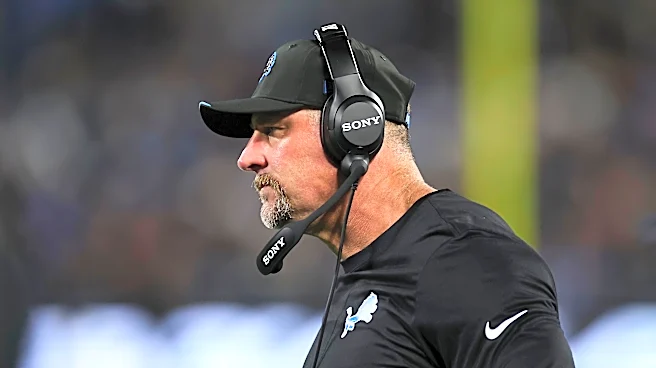
Detroit Lions defensive coordinator Kelvin Sheppard’s press conference on Oct. 8 has been met with overwhelming criticism, with many voices and outlets questioning whether he is coaching for his job when the Lions take on the Arizona Cardinals in Week 5.
There is a tendency in football to look at a struggling unit, identify the person in charge, and assume that person must be the problem. Sometimes, that is exactly right. Coaches can misdiagnose problems, put players in bad positions, stubbornly stick
with ineffective schemes or fail to hold their players accountable. Fans of the Detroit Lions are all too familiar with this story. And maybe old habits are hard to shake.
However, there is a difference between holding a coach accountable and deciding that every failure is evidence of coaching malpractice.
Yes, the Lions defense has struggled, and Sheppard is ultimately responsible for the unit’s performance. That responsibility is not up for debate.
But responsibility and blame are not interchangeable. A coach can be responsible for a team without being the primary reason for its failures.
Sheppard’s public comments throughout the offseason and into the season tell a story. They offer context and evidence for how he approaches self-evaluation, how he solves problems, and how he emphasizes player feedback. This does not mean his defense is above criticism, but it does complicate the loudest narratives that the defense’s struggles are a result of a young coordinator flying too close to the sun who is unwilling to accept accountability with humility.
The statements made at his Oct. 8 press conference deserve to be considered in that context, as a continued conversation that has been taking place for months, rather than viewed in isolation as definitive proof of incompetence.
Ultimate responsibility means owning every result, but it does not mean a leader must pretend every failure was a result of their own action.
Let’s walk through the full evidence of what Sheppard has said about his defense, his journey through problem solving, and tailoring solutions specifically to his players.
Sheppard has shown a willingness to learn from his own failures and adapt
Sheppard’s willingness to evaluate his own work with honesty, holding his own decision-making accountable, predates the current defensive struggles.
In June, while discussing his offseason preparation, Sheppard explained how he studied the league’s best defenses to identify improvements.
“That’s a part of my self scout, when I’m looking at myself and then just in general. You always want to know. Say what you want, you don’t want to know about other people. B.S! You want to know what people at the highest level within your career is doing. So I stepped back and I pulled the (tape of the) top five defenses.”
After a disappointing finish to the 2025 season, Sheppard did not sit back and point the finger at his players. He did not review the film seeking confirmation for his decisions. Instead, he looked for outside ideas he could incorporate into his own defense.
“I’d be lying to you if I said I didn’t kind of pick and prod in some things that felt like what we do within our core principles. We applied it, and I think it’s going to make us better.”
It was not just lip service, either. We have seen this adaptation put into practice this season through the use of more nickel personnel and mixing diverse movement fronts.
This establishes an important element: Sheppard’s self-reflection is evidence that he holds himself accountable for his deficiencies, publicly, and sought answers by learning from other people at the highest level. That is, he is capable of self-starting his own evolution to meet the standard for success.
In the case of Kelvin Sheppard, the evidence shows he is not stubborn in his approaches. He has said as much himself.
Sheppard has acknowledged when his own mindset was no longer good enough
Sheppard provided a particularly useful example of self-awareness on Sept. 24, when he revisited an explanation he had previously used to describe the defense’s struggles.
“I know before, guys, I stood up here and I said, ‘Alright, we played three quarters good, but in the fourth quarter you take that play out.’ Well, we’re no longer doing that this year because taking those plays out is the exact plays that’s been a demise to our defense.”
Sheppard acknowledged that his previous framing was inadequate. Instead of treating explosive plays as exceptions to otherwise good performances, he recognized that those plays were precisely the ones undermining the defense and changed his mindset.
That is honesty. That is accountability.
The next question is what happens after that recognition.
If the same breakdowns continue, it is reasonable to ask whether the coaching staff has found the right solution and has implemented the right solutions properly. But it is also reasonable to ask whether the players are executing the solutions they have been coached.
When a defense repeatedly fails, the film should help determine where the failure is occurring. A missed assignment is not automatically proof of bad coaching. A player losing a matchup is not automatically proof of a bad scheme. And a coach is not absolutely at fault simply because a player failed to execute it.
The point is not to excuse Sheppard. It is to recognize that evaluating the defense requires more than deciding in advance that the coach must be the problem.
Sheppard’s process emphasizes listening to his players
Another critical element in Sheppard’s stated approach is incorporating player input into how he deploys his defense.
While explaining how he and safeties coach Jim O’Neil worked with Christian Izien, Sheppard described asking the player which calls he preferred and, more importantly, why he preferred them.
“You got a new guy up here safety. ‘Izzy, come here. What calls do you like on this sheet? Tell me why. Don’t just tell me, ‘because,’ tell me why you like them.’”
Sheppard explained how that conversation informs his decisions as a playcaller.
“And that’s when you start to gain that level of understanding with the player. And then as the play caller, let’s put him in this position. ‘Here’s why, because you told me. You got me?’ All good. And that’s when we move forward.”
A coach can design a sound call, but players still have to understand their responsibilities, communicate with one another, and execute under pressure with confidence. Sheppard’s consideration of Izien’s input is evidence of developing and implementing schemes to put players in their best position to succeed.
Now, this does not prove Sheppard has consistently put every defender in the perfect position in every situation. But it provides evidence behind the process in which he has put careful consideration of his individual players into his decision-making.
Following the defense’s performance against the Buffalo Bills in Week 2, Sheppard described how the coaching staff approached self-scouting the game.
“What we chose to do is go in as a staff and attack the kind of extra days that we had as kind of what we would do in the bye week and self-scout. Let’s really look at it. Why is this stuff happening? Let’s not do any finger pointing. No, that’s for losers. Let’s find solutions. Let’s find answers and make sure we have answers for these players Monday when they come back in this building. How are we going to fix it?”
Sheppard also described the conversations within the building as involving honesty in both directions.
“There was a lot of honesty said out loud in that meeting, player to player, player to coach, coach to player. And we hashed out some things.”
Does this sound like a stubborn, unwilling-to-accept-accountability type of coach?
If Sheppard has strong communication, has tailored a player’s responsibilities, and worked with him to put him in a position for him to play with confidence, then the player’s execution becomes the pivotal part of the evaluation.
The Oct. 8 press conference was about honesty and the dichotomy of accountability
Now that we have laid out the context leading up to the statements that went viral at the Oct. 8 press conference, we can review them with a holistic perspective.
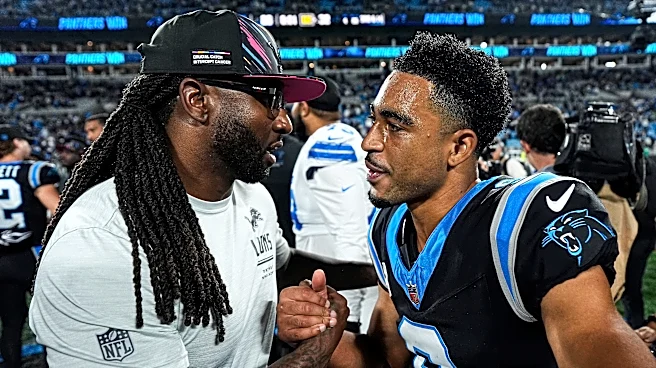
After the performance against the Carolina Panthers, Sheppard first acknowledged that the defense had not done enough to help Detroit win.
“There were a lot of things in there that we absolutely didn’t like. That we turned on the tape as a unit on Monday, hashed out, talked about, and the same thing I told them, it’s lip service. So there has to be real change. It has to be real evidence of change.”
The most contentious part of Sheppard’s Oct. 8 press conference came when he was asked about specific blitz calls.
“Those calls were the right calls. Those calls were the right calls, and I’ll leave it at that.”
He reiterated his position while declining to discuss private conversations.
“Those are private conversations that we have that I’m going to keep in-house. Those calls were the right calls.”
It is understandable why those comments might frustrate fans and draw criticism from national voices. When a defense struggles, supporters want the person responsible to accept the blame. A firm declaration that the calls were correct does not quench the thirst of bloodthirsty critics, but for many was the final nail in the coffin for validating their opinions.
Sheppard’s statement, taken in isolation, is giving arrogance. Magnify that ten-fold if it’s read within the confines of a 280-character limit post or 30-second short-form media.
So is Sheppard being honest when he declares his calls were right? Or is he being arrogant? Look at his track record: 1) he adapts his scheme to overcome his shortcomings, 2) he is willing to change his perspective to precisely diagnose problems, and 3) he works with a player-centric focus to support his decision-making. It is unreasonable to conclude his statement is anything but genuine conviction.
Being responsible for the result does not require a leader to fall on the sword publicly.
I challenge every skeptic and critic to reflect on Sheppard’s press conference with the full context and evidence of his process and approach as defensive coordinator leading up to it.
Some will argue that a leader should always stand in front of the media, accept the criticism, and fall on the sword publicly. I am not suggesting it is without any merit or purpose.
But leadership can also take the form of being brutally honest about the team’s shortcomings while displaying confidence in his decisions in the face of the fire.
“There’s never been a lack of trust because it starts with accountability and before that it starts with honesty. Honesty, trust, accountability is plastered on our walls. That’s never wavered.”
You want your players to execute? Good luck if you don’t have true conviction in your decisions. Good luck if you maintain conviction, but the players and rest of the staff can smell your bullshit from a mile away. They won’t trust you.
Honesty. Trust. Accountability.
Sheppard can own the defense’s results without publicly pretending a dichotomy in accountability doesn’t exist. That is, there are two truths here: absolute ownership leaders possess over the final results versus the individual responsibility team members must own in their specific roles.
Sheppard’s public record is overflowing with support for a coach who has reflected on his own decisions and jointly worked with his players and staff to identify and communicate solutions that put each individual in their best position to succeed.
The evidence directly refutes the narrative that he is unwilling to accept accountability, lacks humility, and does wrong by his players. To suggest Sheppard fails in any of the above would require a blatant disregard for the totality of circumstances.
If Dan Campbell, the ultimate leader-of-men coach, maintains the same criticisms of missed assignments, missed execution, and players needing to be where they are supposed to be when they are supposed to be there, then I can confidently give Sheppard the benefit of the doubt for his convictions.
“Because I do feel like we’re right there at this wall right now and banging on this wall,” declared Sheppard. “And I said there’s going to be a group of men that bust this MFer down. And some guys probably going to be with us and some aren’t. But the guys that are hard, that see the other side of this thing, I think we all are going to be proud of you, the fan base and everybody that represents the Detroit Lions brand.”
The book is far from written on Kelvin Sheppard. You won’t find me betting against him breaking down that wall.