


This could be the last MLB season with a “qualifying offer,” as it’s termed in the labor agreement between owners and players. It’s possible an entirely new system will be created.
Until then, the current labor agreement runs through Dec. 1 and so qualifying offers will be made, and accepted or rejected, under that agreement.
We now know the amount of this year’s QO:
That’s up 5.1 percent from last year’s figure of $22.025 million.
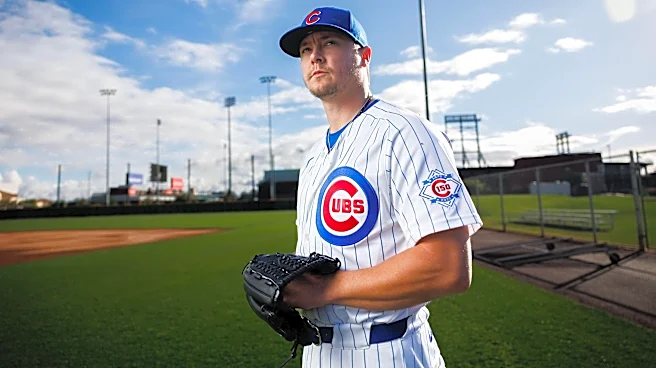
Last year, 13 free agents were given a qualifying offer. Four of them accepted the offer: Trent Grisham, Gleyber Torres, Brandon Woodruff and Shōta Imanaga. The Imanaga acceptance was said to have surprised the Cubs front office, but in the end, Imanaga produced reasonably well for the $22.025 million, making 32 starts, posting a 3.77 ERA and 1.096 WHIP, and 2.0 bWAR. The 35 home runs he allowed were a problem, of course, and whether Imanaga returns to the Cubs remains to be seen. He cannot get another QO, as a player can get only one.
There are three Cubs who might get qualifying offers this year, so let’s look at each of them.
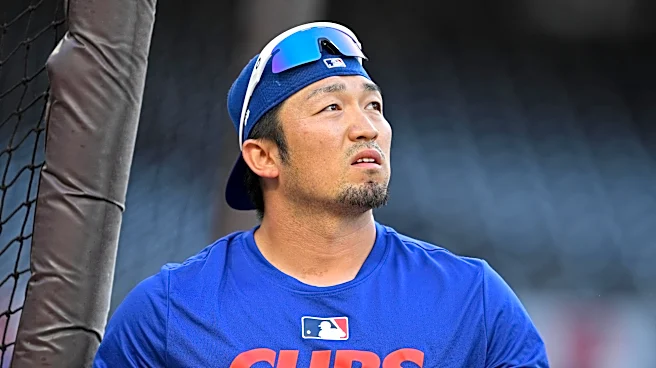
The first is obvious. Seiya Suzuki has been an outstanding player for the Cubs for five seasons and had another productive year in 2026, batting .270/.368/.473 with 26 home runs and a career high 5.1 bWAR. His right field defense was improved both by the numbers and by the eye test.
Suzuki will get a QO and almost certainly reject it to test the open market. There have been reports that the Cubs aren’t likely to re-sign him, which would be a mistake. They should do everything possible to keep him.
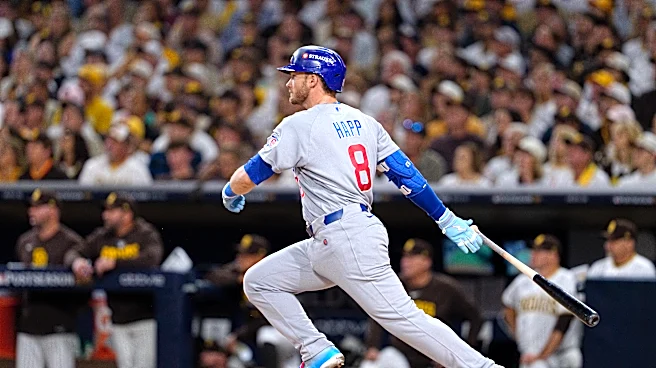
Ian Happ, who’s also been a productive Cub for many years, will get a QO as well. Happ’s 2026 season wasn’t quite as good as his previous years, with a slash line of .218/.326/.412 with 24 home runs and 2.9 bWAR. The .218 figure was a career low. He did continue to play good defense and likely wins another Gold Glove, but the batting line was that low largely because he just stopped hitting left-handers. He batted just .145/.217/.267 in 144 PA against RHP and by season’s end, was being platooned.
The Cubs will still likely give Happ a QO. It’s not that much more than the $20 million he made in 2026. And he just might take it, trying to rebuild his value before hitting free agency again next winter — possibly under a new FA system.
The only other Cub who might rate a QO is Matthew Boyd. Boyd was injured for much of 2026, making only 22 starts, but was reasonably productive for much of the time he was healthy. His year was only worth 1.0 bWAR and he’ll turn 36 in February, so he probably should not be given a QO, in my view. There’s also a mutual option for $15 million for Boyd or a $2 million buyout, and the Cubs will almost certainly pay the buyout.
There aren’t any other Cubs pending free agents who would rate a QO. Some are ineligible because they received one in the past (Imanaga) or were traded during the year (Clay Holmes, David Peterson, among others). As a reminder, teams have until five days after the World Series ends to extend a QO, and players then have about 10 days (the date will be officially set later) to decide whether or not to accept.
Of Suzuki, Happ and Boyd, who would you give a qualifying offer?