
There was a time when Real Madrid were ruthless with their departures. If a player was deemed superfluous to the project, they were sold. Contracts were moved freely. Contracts moved in; contracts moved out.
About seven years ago, Real Madrid shifted their transfer policy. As Matt Wiltse wrote about at the beginning of February, ‘Galacticos’ became ‘Baby Galacticos’. Established players only arrived as free agents, and big money spending was reserved for young, up-and-coming prodigies, scouted by the great
Juni Calafat.
For obvious reasons, that model worked. But there eventually came a tipping point: Too many prodigies — many in similar positions — came in, and not enough players left. The players that did leave were leaders. None of this happened overnight — it was a slow boil, and that’s part of the reason Real Madrid’s board never really were able to deal with it properly. To make matters worse, the long term plan of slowly phasing out Casemiro, Luka Modric and Toni Kroos by bringing in Aurelien Tchouameni, Eduardo Camavinga, and Jude Bellingham worked up until a point — then was exposed when the aforementioned three eventually all left. This happened in part because replacing the greatest midfield trio in Real Madrid history is bound to end in disappointment, and the profiles that were brought in, although talented, where simply different profiles to their predecessors. Before the arrival of the latest crop of midfielders there was also Martin Ødegaard and Mateo Kovacic — but those two got tired of waiting for Modric and Kroos to decline, and asked to leave. Such is the challenge of squad building.
SUBSCRIBE: The Managing Madrid Podcast on YouTube
There is no shortage of players in this Real Madrid squad. On the contrary, the squad is deep and talented. But having a deep squad is not all it takes to win. Profiles matter, as does rhythm. Zinedine Zidane went two-deep in every position in the 2016 – 2017 season and rotated heavily to keep everyone fresh. Now the rotations are tighter, and when you have too many players in certain positions while some players are untouchable, it can create an environment that stifles growth. Such was the case with Endrick this season, who needed to go to Lyon to spread his wings.
Market opportunities are a double-edged sword. Take Franco Mastantuono for example — the latest prodigy signed under this current administration. Mastantuono was not a needed profile. He is more of the same of what the club already has too much of: The winger / number 10 hybrid who can’t really play in midfield but can’t break lines as a pure winger either. But, Mastantuono is highly touted, so, the club had to bring him in under their current philosophy — even though Mastantuono’s footballing profile is redundant and superfluous to the current needs of the squad.
At what cost? What about the prodigies you’ve already signed that need to play? Who are you moving out to accommodate? What happens when Endrick comes back next season? Have you forgotten about Nico Paz? Why is there a rush to renew Brahim Diaz? Mastantuono, by the way, currently has the longest contract on the squad. It runs until 2031 — an interesting spot to be for a club that only parts with players when their contracts run out.
Rewinding to our analysis from a few years ago: There is nothing wrong with stockpiling talent, even if some of them overlap in the same position. You’re supposed to keep the best ones, and cut ties with the others. You take the L of Reinier Jesus because Vinicius Jr was a wild success. That’s a cost you’re willing to swallow. In the NBA, you draft based on the best available player, not based on need. Real Madrid followed a similar approach.
But that only works if you’re clear on the identity you build around the young stars that do succeed. The ruthlessness of the club is not what it used to be. Now, contracts are handed out generously and players who are a bad fit aren’t pushed out. Free agents get paid a lot to compensate being signed for “free”, which makes their contract locked to a degree that makes it impossible to sell them — and the overwhelming majority of players will not accept a salary cut in order to move cities.
Loans have been solutions, but only push the bill farther down the road. Ødegaard and Achraf Hakimi went on loan for years waiting for their time to come. How much time can you buy keeping Endrick at Lyon? You have two options with Nico Paz: Bring him back and further add to your headache, or painstakingly lose him (and losing him hurts even more given how good he looks).
(The Endrick question in many ways is rhetoric. He will come back to Real Madrid in the summer. Real Madrid will need to clear room to make sure he gets the proper playing time. Not everyone will be happy. Questions and concerns won’t go away.)
MEMBERS-ONLY Managing Madrid Podcast content. Sign up!
Once you pass the maximum threshold of too many ‘market opportunities’ in the squad, you end up with the situation of the past two seasons: clunky offense and players with similar tendencies making the same runs. The problem gets compounded when there are untouchables who have to play every game, leaving little room for tactical versatility and ingenuity.
But simplifying to that extreme is also naive. There have been multiple combinations in the past 1.5 years, and none of them have worked. There have been games, by default, where either Vinicius, Mbappe, or Bellingham can’t play due to suspension or injury. The problems persist. It hasn’t looked better regardless of who is on the field. It was understood that if you can’t change the players, you can change the coach. Xabi Alonso was brought in. No one had patience for his ideas.
Even minor phases of good football over the past two seasons were never truly dominant over a significant sample size. The team hasn’t looked ‘unbeatable’ at any point — and the board’s struggle now is that it’s hard to find the path to fixing this after so much self-inflicted damage.

There is a common train of thought that you can’t simply replace Kroos and Modric. Those icons are unicorns — generational, all-timers who stand among the pantheon of midfielders in football history. True. But how many of the teams Real Madrid currently play against have Modric and Kroos? None. And how many of those teams run through Real Madrid’s midfield with ease anyway? Too many.
And that goes back to the initial point: Real Madrid need to understand profiles. They need someone who can dictate from deep. They need someone who can stay composed — someone comfortable receiving the ball facing his own net under pressure. Until that profile exists, it’s going to be hard to build a proper foundation.
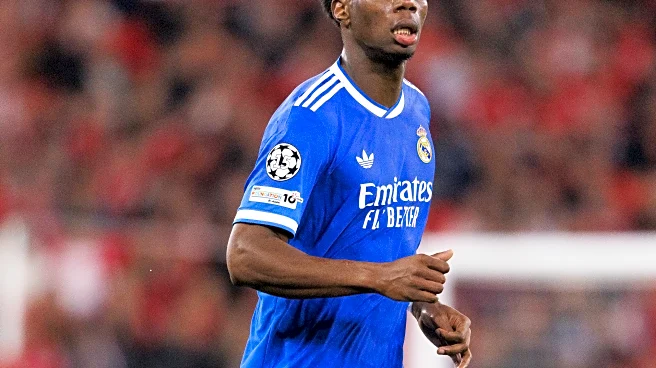
Real Madrid need to face the harsh truth: Tchouameni, Valverde, and Camavinga can’t be that player. They are all supplementary midfielders who provide balance, but they can’t organize the midfield, dictate tempo from deep, and be midfield leaders. Until that player arrives, all three of those midfielders will suffer.
Valverde is a classic case study of this. His performance dipped this season when he played in midfield. Before being pushed to right-back due to injuries to Trent Alexander-Arnold and Dani Carvajal, the Uruguayan couldn’t find his feet playing alongside Tchouameni in midfield. The reality is this: Valverde thrived next to Kroos, in part because everyone can thrive next to Kroos. But without a primary ball progressor next to him, Valverde suffers. You cannot put the onus on his shoulders to be Kroos. Valverde is now back in midfield but on the right-wing where he can thrive as an interchangeable right-wing / right-back hybrid next to Trent.
HEY JUDE! Get your Bellingam t-shirts designed by Finn.
People underestimate how quickly teams can ascend or decline. It was hard to see such a fall after the 2024 Champions League triumph, just as it’s difficult now to see the team return to the dominant, feared forced it once was. This team is a one or two profiles away from returning to the zenith. It’s not rocket science.
Is there optimism?
We have not yet seen the Trent Real Madrid era. He himself, if he stays healthy, is a complete game-changer. It’s naive to think one person fixes all the team’s problems, but it’s also impossible to refute the problems that Trent single-handedly solves. Apart from Kroos and Xabi Alonso, there isn’t another player in the past 10 years who can, without taking an extra touch, ping a pass to anywhere from anywhere. How many off-ball runs have Vinicius and Mbappe made, off the shoulder of the defensive line, without having anyone being capable of hitting that pass to them? Asencio, Militao, and Rüdiger can hit them on occasion. Trent? He hits them prolifically on a second-to-second basis.
Trent also helps everyone breathe when the ball is coming out of the back. He has composure, experience, and a unique ability to play vertically with deadly accuracy. One of the cheat codes when you’re sitting deep and facing a high press is to have someone like Trent hit long balls over the top to some of the speediest wingers on earth. Trent can also interchange with the right central midfielder within the game (on-ball / off-ball switches on the fly). That’s why it will be hyper-interesting to see him paired with Valverde over a long sample size. They would be an exciting right-flank duo. We haven’t seen enough of it yet due to injuries. Against Real Sociedad on Valentine’s Day, the Valverde – Trent dyad was an unbelievable two-way force. Valverde naturally dropped behind Trent and the two were interchangeable. Trent has never had a profile like Valverde to thrive with on the right.
That trend continued against Benfica, and, on the opposite flank, Camavinga and Carreras seem to be forming chemistry as well. Camavinga, like Valverde, has wing-back tendencies now that he’s played there so much, and the two provide good two-way energy as duel winners and ball-carriers.
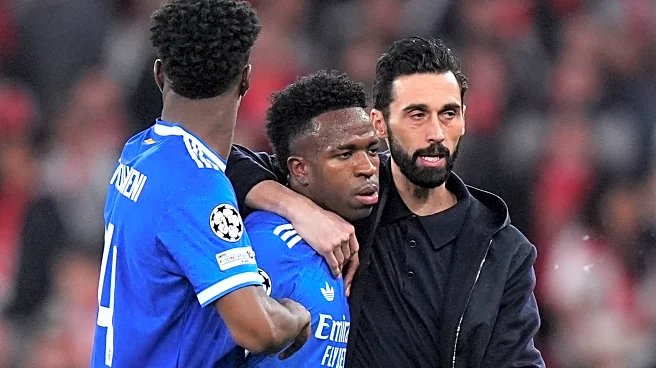
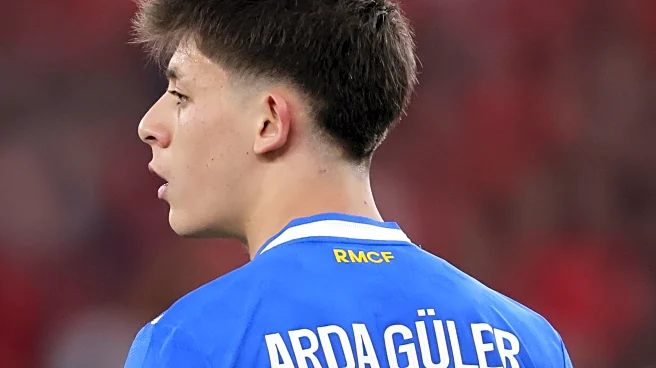
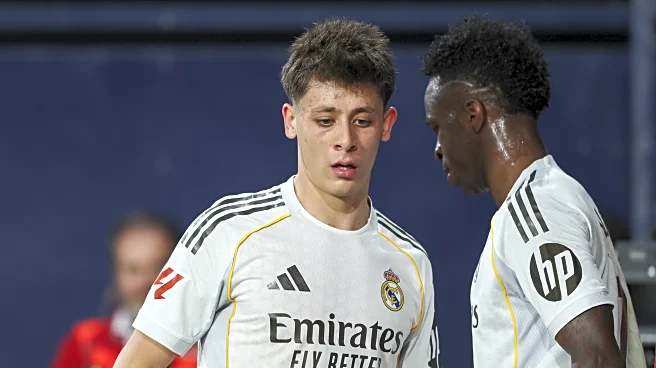
Arbeloa has taken note of how good these wing combinations have been. Continuing these combos gets the best out of all four players, as well as the team. But that’s also where Tchouameni and Güler have to step up their game. If Real Madrid are to succeed this season, they need those two to be at their best in the middle of the park — especially in the absence of Bellingham.
There is also one point that is rarely talked about when discussing Real Madrid’s lack of a deep-lying, press resistant controller: There is a path to playing without one, but it requires a stylistic change, which we’ve now seen in glimpses under Arbeloa. As Carlo Ancelotti once said after Kroos’s departure: “we need to play a different style now,” — but that never proved feasible in practice.
Jurgen Klopp’s Liverpool is the blueprint. If you have box-to-box midfielders, you have to press as a team, keep the line high, and rely on the midfielders to press, counter-press, and defend in transition. You have to avoid putting those midfielders in situations where they’re pinned and asked to escape pressure. This theory hasn’t been successfully implemented in Real Madrid (over a large stretch of games anyway), in part because Kylian Mbappe — as transcendent as he can be — is not a striker that can lead a press. That, coupled with his off-ball runs which don’t always benefit the team’s offense and lead to congestion, are part of the problem with having a player like him lead the line.
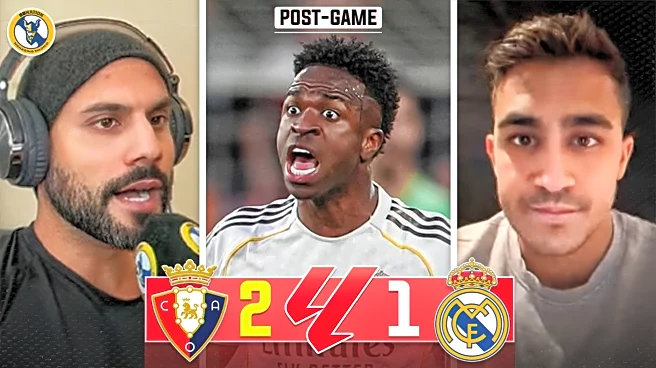
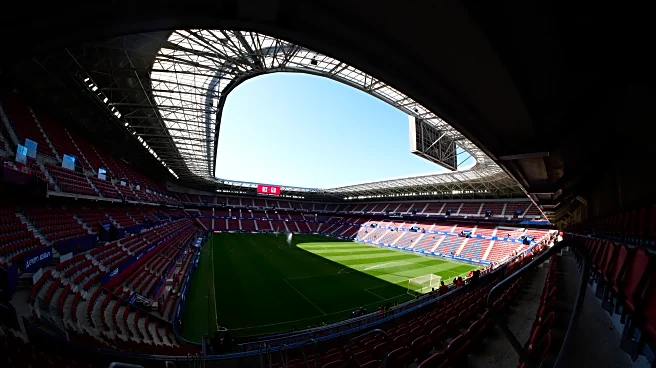
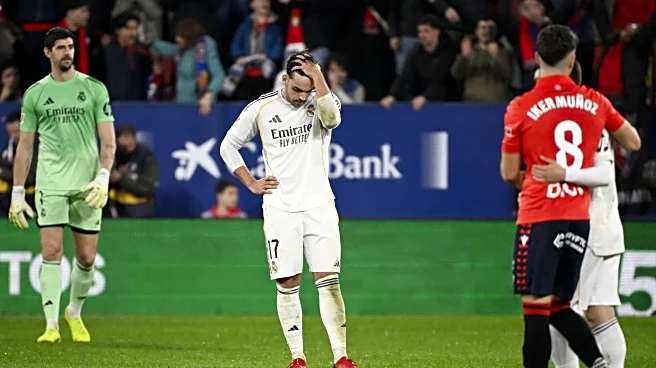
Real Madrid had eight straight wins in La Liga before the Osasuna game when Arbeloa made rotations and made poor decisions in the second half, namely taking out Valverde in favour of Gonzalo — which leads back to the previous point: If Mbappe has to play at all times, it leads little room for tactical variation and defeats the purpose of Gonzalo Garcia, whose profile should help break down low blocks but rarely does because he never gets to play in his proper position with Mbappe on the field. It also leads to catastrophic tactical imbalance because to make room for Gonzalo, Mbappe, and Vinicius, one of the midfielders has to be withdrawn.
Despite all this, Real Madrid still have a puncher’s chance at a major trophy.
That will likely be the league, as even the most optimistic Madridista would agree: this team is not on the level of Europe’s elite until proven otherwise. As Managing Madrid’s Don Amancio wrote about in February, Real Madrid have a -18 goal differential in big games over the past two seasons. That doesn’t bode well when projecting the success of the team by season’s end, even if the there have been a few games this month which have been encouraging.
FOLLOW: Managing Madrid on Instagram for daily Real Madrid clips.
Arbeloa now has the opportunity to do what seemed unthinkable a month ago: turn the season around and win. Barcelona are limping; Trent is back; Militao will return. Gears are turning. The team can build some momentum and improve chemistry on the identity they’re forming. It has gone largely unnoticed in the media given how much distraction there is, but: Arbeloa has introduced, slowly, game-to-game, some really interesting tactical principles that could help solidify the team’s defense and offensive output. Courtois has had less to do. All that shifted in the Osasuna game, which, hopefully Arbeloa can learn from.
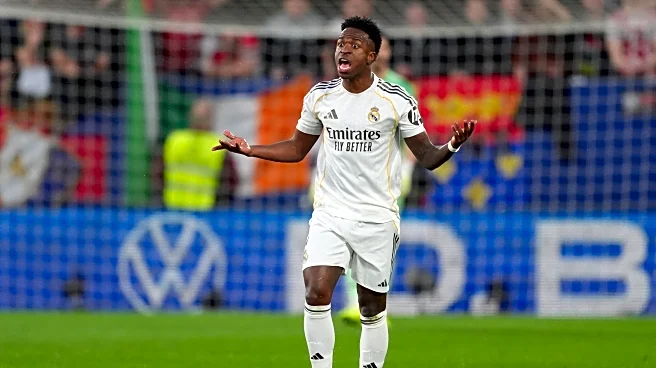
But one of the final pieces of the puzzle has yet to be solved, even after all this time: Vinicius and Mbappe almost never play well together consistently. When one transcends, the other struggles. The last string of games (Benfica, Osasuna) is the most recent example of this: Vinicius elevated to his best while Mbappe’s finishing was the main reason Real Madrid only left Lisbon with one goal; while his movement and lack of pressing was a huge problem at El Sadar.
Those two need to learn how to lead the line together. Until they can, the ceiling remains capped.