



There are a few ways to remember a win like this, and most of them involve selective amnesia. Luckily, No. 7 Gonzaga beat the San Diego Toreros 99-93 on Tuesday night, moved to 14-1 on the season and 2-0 in conference play, and in the process created a game film so unpleasant that everyone involved would benefit from pretending it never existed.
What was supposed to be an easy rout over an overmatched 6-7 Torero squad who have struggled to do much right for 40 minutes at a time instead became an unruly
mess of friction, bad vibes, improbable shot-making, blown calls, and the creeping sense that no matter how quickly the Zags got things under control, this one was never going to feel good.
The final buzzer arrived like a rescue chopper after Gonzaga’s 21-point lead had collapsed to just 5 with under a minute left to play.
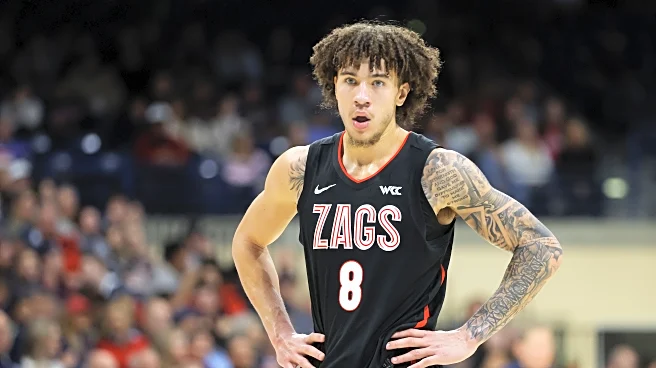
This could live forever as the “holy hell, that was awful” game. Or it can be remembered as the best game Jalen Warley’s played so far this season, and then we just forget the rest. As bad as Gonzaga was for much of this game, Warley was everywhere. He pressured the rim, organized possessions, and dragged the Bulldogs back toward coherence one hard drive and emphatic rebound at a time. Add in Tyon Grant-Foster once again doing real two-way damage, and the mess had just enough spark for the Zags to leave the Jenny Craig Pavilion intact. Rattled, but marginally victorious.
Some wins clarify a lot. This one, frustrating as it was, really only clarified exactly who the Zags can lean on when everything else goes sideways.
Some Pretty Good Things
For the second game in a row, the Zags gave the starting nod to Braeden Smith, with Mario Saint Supery coming in off the bench. Both guards finished at 22 minutes apiece, a reflection of how Coach Few continues to keep his point guard strategy context-dependent and flexible as opposed to hierarchical for the time being.
It was an especially hot night for Saint-Supery. After a super rough outing against Pepperdine earlier in the week, El Principito gave Gonzaga exactly the kind of pace and control it needed. He finished with 14 points and hit 3-of-6 from three, including a pair of pull-up makes that swung momentum back toward Gonzaga at crucial moments. He went 5-of-6 from the line in a game where reliable free-throw shooting was extremely tough to come by. He also notched five assists, and the cleanest part of his stat line may have been the simplest: zero turnovers in a game where the rest of the squad coughed it up 15 times.
His performance against USD was a reassuring reminder that, despite his age, Saint-Supery already played professionally in some of the most hostile venues in the sport.
Similarly, the Zags continued their campaign to rebrand as an actually very good three-point shooting team by going 8-18 from outside. They also crushed the Toreros on the glass 44-27 while controlling the paint 60-36. The problem was that the game’s texture kept refusing to match the numbers. Gonzaga had stretches where the pace looked sharp, and the offense ran clean enough to create separation, but the Zags kept coming up with new ways to cough it up through a mix of defensive leaks, stoppages, and generally poor chemistry which kept San Diego constantly within striking distance.
One Very Good Thing
As Gonzaga cycled through uneven stretches, Jalen Warley maintained a level of control that never wavered. He finished with 22 points, a season high and just his second double-digit scoring outing this season. He went 9-of-14 shooting, added 14 rebounds, seven of them on the offensive glass, handed out five assists, collected three steals, and blocked a shot for good measure.
When possessions broke down, he followed his own misses and manufactured second chances. When the floor tilted toward chaos, he grabbed the ball and pushed for clean looks. Thanks to Warley’s season-high 35 minutes off the bench, Gonzaga survived ugly stretches because they had someone who could organize space, pace, and pressure without needing anything drawn up. Nothing about his night felt forced. Everything arrived at exactly the right moment and exactly when the situation demanded it. I’ve never seen a player facilitate the offense like a point guard while touching the ball so little.
Plenty of dudes can score, plenty defend, plenty pass. But none are as able to diagnose the temperature of a game in real time and apply themselves to the correct pressure points, possession after possession. Warley elevated his teammates, stayed engaged through the mess, and supplied focus when very little else cooperated.
The night went sideways time and time again. But Jalen Warley found ways to carry it anyway.
One Very, Very Bad Thing
This game never found a rhythm, and a lot of it had to do with the officiating. 42 fouls were called. Three technicals were assessed. Possessions routinely ended at the stripe or with players staring at officials rather than resetting into the next action. Any attempt at flow dissolved almost immediately.
Unfortunately, Gonzaga’s most essential player sat at the center of it. Graham Ike absorbed heavy contact on the block, dealt with persistent jawing from opponents and fans, and still drew whistles that stacked against him quickly. After his third foul, he was pulled and sent to the bench, where frustration boiled over into a water bottle slammed hard enough to pop the lid and force a brief stoppage to mop up the mess (and also, of course, two free throws and possession back for the Toreros). It was an uncharacteristic moment for a player who has spent the season showing significant improvement in his composure and poise.
It wasn’t just about Graham, though. This was the kind of night where officiating drifted past uneven and into something even more frustrating. San Diego took its share of questionable calls, but the overall pattern leaned toward reaction rather than judgment. The most glaring sequence came late, when Emanuel Innocenti was hit above the neck by USD’s Ty-Laur Johnson on an intentional foul designed to stop the clock. Officials went to review, then ruled it a common foul, no free throws, no ball back. The decision stood despite the above-the-neck contact meeting every written criterion of a Flagrant 1.
Ike and Warley each finished with four fouls. Tyon Grant-Foster, Steele Venters, and Braden Huff ended with three apiece. On the other side, Vuk Boscovic fouled out in just twenty minutes of action while Ty-Laur Johnson finished with four of his own, plus a technical for taunting. There were multiple moments where tempers flared, including a sequence where Gonzaga’s Steele Venters narrowly avoided a technical after shoving an opponent into the stanchion following a Toreros three.
Calls were followed by counter-calls. Whistles felt corrective rather than adjudicative. Everyone involved, officials included, appeared irritated and eager to assert control. The result was a game stripped of pace, continuity, and any real chance at sustained five-on-five basketball.
For anyone accustomed to Gonzaga games played with speed and structure, it was a brutal watch.
Some Good Things and Some Bad Things
Good: Tyon Grant-Foster looked far more like himself. He finished with 18 points on 7-of-10 shooting in 24 minutes, added five rebounds, and played a cleaner, more deliberate offensive game. The rim attacks were selective rather than relentless, and his lone three came in rhythm and went down. The efficiency tracked with the approach.
Bad: Adam Miller’s last two games have been brutal. Across that stretch, he sits at 1-of-11 from the field for three total points, with one rebound, one assist, zero trips to the line, and 34 minutes played. The issue has gone beyond missed shots into long stretches where he simply disappears from the action. The dude has a long track record of high-level play and will assuredly find his footing again, but this has been a rough window for the Arizona State transfer and onetime starter.
Good: Braden Huff stayed with it and eventually produced. He finished with 14 points and pulled down five offensive rebounds, several of them coming through contact during Gonzaga’s roughest stretches in the paint.
Bad: Turnovers. Gonzaga gave it away 15 times, and San Diego turned those mistakes into 25 points. The sloppiness fed directly into the game’s unwillingness to stabilize.
Very Bad: Free throws. 13-24 from the line is yikes-inducing by any standard. Outside of Jalen Warley and Mario Saint-Supery, the rest of the roster (Emanuel Innocenti, Graham Ike, Braeden Smith, and Grant-Foster) combined to go 4-of-14. In a game that lived at the stripe, that kind of poor shooting night is unacceptable.
Good: Gonzaga won.
Bad: The way they won. Up 16 with under two minutes remaining, Gonzaga watched the lead shrink to five in barely over a minute. Inbounds became an adventure. Defensive possessions collapsed. Ball security evaporated. The group survived the clock rather than responding to the pressure.
One Final thing
The Zags held on against USD, but the response when the game tightened leaned toward endurance rather than control. Late December tends to bring these kinds of nights for Gonzaga, and history suggests the floor usually rises quickly once winter break wraps up.
But the fixes aren’t just about X’s and O’s. Continuing to win games as opposed to just surviving them will demand composure, poise, and a clearer sense of how to operate when things wobble. Against USD, those adjustments lagged or never showed up at all. As pressure mounted, Gonzaga never restored control, allowing what should have been a manageable game to morph into a battle of endurance.
For better or worse, the turnaround comes fast for the Zags. Gonzaga returns to the Kennel on Friday to face Seattle U. Seattle enters at 12-3 following Tuesday’s 14-point win over Washington State, a win they secured despite a 54-28 rebounding deficit (including a 25-2 gap on the offensive glass). That combination poses an anxiety-inducing challenge. The Redhawks have a track record of finding ways to win despite a deficit in individual talent and athleticism, while Gonzaga just spent a night repeatedly flirting with total collapse in a game it should have closed with ease.
Take Jalen Warley and Tyon Grant-Foster out of this one, and that ending looks very different.