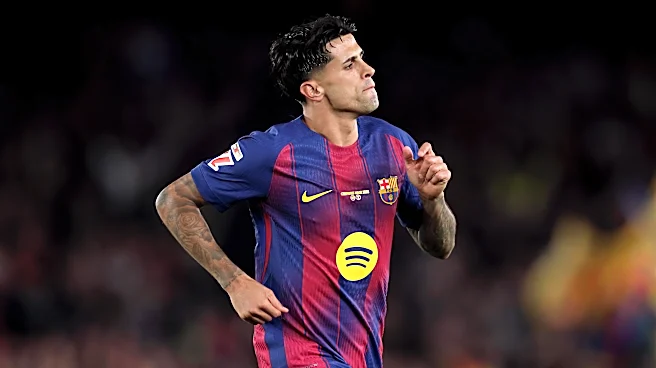





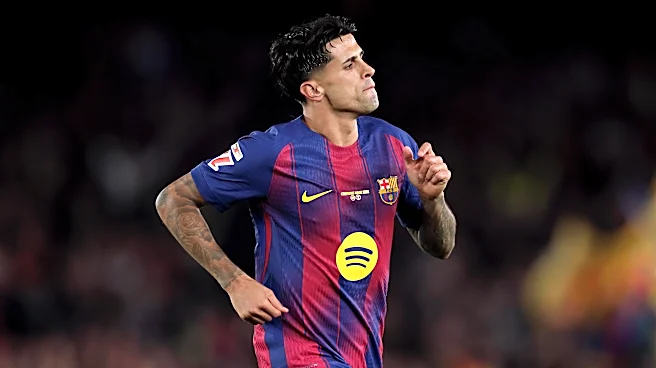
Pedri has made his intentions perfectly clear about where he wants to be. Fresh off a massive season as an undisputed starter, clocking two goals and 12 assists across 43 appearances, the 23-year-old midfielder has shown that his loyalty remains firmly with the blaugrana.
With the World Cup on the horizon, Pedri sat down with Televisión Canaria for an interview where he shot down any ideas of a future move away from Catalonia.
“Playing for Barça is the best there is. It’s what I dreamed of as a child,
and I’m not going to change it now for anything,” he said.
Pedri’s roots with the club stretech back generations. His grandfather founded a Barça supporters’ club (peña), a tradition later carried on by his father, making the local clubhouse the exact spot where a young Pedri used to watch the team play.
“I wish he was still alive, and living everything that his grandson is living,” Pedri says of his grandfather, now deceased.
“My father always tells me that if he had seen me play for Barça, he would’ve lived with me, he would go to every game, and he would be the #1 fan. He would’ve loved it. It seems like a movie that just as my grandfather founded the peña, my father continued it, and now they support me from where I watched games as a youngster. It’s a dream come true.”
Even his famous moniker stems from those early days back in Tegueste. When he first started playing, there was another boy named Pedro in his class, and the coaches needed a way to tell them apart. Because he was the smaller, skinnier one, everyone started calling him ‘Pedri.’ The name stuck, and now it’s world famous.
Football was a constant from his earliest memories, driven by an obsession with the ball that he picked up from his father. After school, the routine was always a mad sprint to eat lunch as quickly as possible just to squeeze in more hours playing with friends on the local concrete pitches. His family provided the ultimate support system, constantly pushing him to believe in his talent while keeping his feet on the ground.
“My family always told me to believe, to train, that I could become a professional footballer. They told me that I had gifts, but they always said that I had to put in work, if not, it was going to fizzle,” Pedri recalled.
Now, that same inner circle travels from the Canary Islands to attend as many matches as they can, acting as his main source of strength.
Growing up on a steady diet of Barcelona matches, he spent his childhood analyzing the movements of Xavi and Andrés Iniesta, noticing how they always scanned the pitch before receiving the ball to stay one step ahead of the opposition. It is a trait he has tried to weave into his own game as he matured.
He acknowledges that his stats are an area where he wants to keep evolving. “I think I need to improve my number of goals and assists, to help the team in that way. I say it every year; I know I have to do it,” he confessed, though he insists that collective victories always come first.
That competitive drive makes defeats hard to swallow. He says he hates losing even when playing video games. And he still remembers the sting of missing out on gold at the Tokyo Olympics, even if time has helped him appreciate the achievement of a silver medal.
Away from the pitch, his daily life revolves around recovery and routine. Even on his designated days off, he can usually be found at the Ciutat Esportiva getting treatment, though he prefers strategy board games and good food with his family when he actually manages to disconnect. For Pedri, the hard work is simply a natural part of the game.
“I enjoy a lot every day because this is what I dreamt of. I’m a guy who lives to go the Ciutat Esportiva, and improve every day.”