




And just like that, the 2025-26 NBA regular season has come to an end.
It’s been one of the weirder years in league history. We started with a tree-planting controversy in pre-season, to the tanking and 65-game rule discourse hitting overdrive, and most recently, the entire Wizards organization almost got cancelled for a misinterpreted April Fools joke.
Thankfully, that’s all in the rearview mirror. Before the playoffs start, though, we need to have a cordial discussion about awards.
Let’s start with
the Big Kahuna.
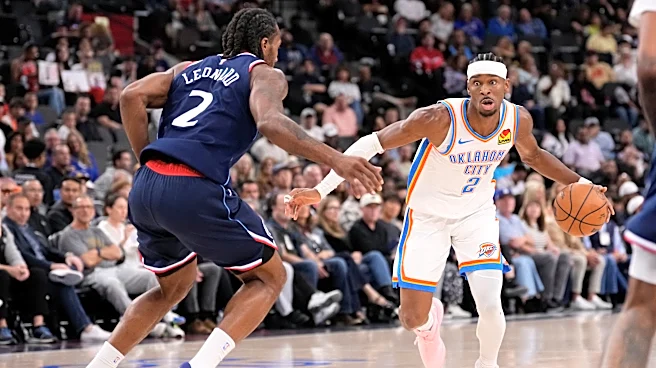
Most Valuable Player: Shai Gilgeous-Alexander
Runner-ups: Victor Wembanyama, Nikola Jokic
The MVP is Shai, and I don’t think it should be that close. His 55.3% FG is the highest out of every 30-point-per-game season in history, and his 66.5% true shooting is also the second-highest, only behind Steph’s outlandish 2016 season at a nice 66.9%. Shai also tied his own record for least turnovers per game in any 30ppg season at just 2.2, which he first set two years ago. Oh, and did I mention that the Thunder are the West’s one-seed for the third straight season?
The best argument against Shai is OKC’s elite supporting cast, as the Thunder still have a +4.8 net rating with him off the floor. However, they are also an absurd +12.3 with Shai on and Chet and JDub both off, and OKC has arguably been the most banged-up team amongst the MVP candidates. The case in favor of Wemby and Jokic is that they both have larger on/off splits than Shai does. However, Jokic’s lack of defensive effort is impossible to overlook, and while the Alien has a case as the most impactful player per minute, it doesn’t make up for the 400-minute difference between him and Shai (as shown by their overall plus-minus, with Shai at 788 and Wemby at 682).
If the award only takes into account the last three months, then Wemby and Luka would have a case. If it only takes into account the first two months, then Jokic would have a case. Unfortunately for those three, MVP encompasses the entire regular season, and none of them consistently played at their best for the whole year. Shai did, which is why he is the clear MVP.
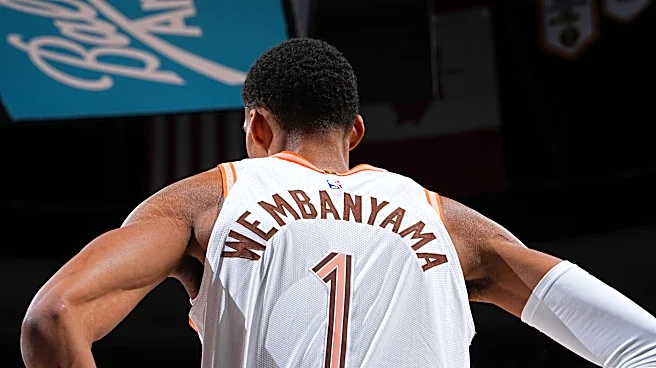
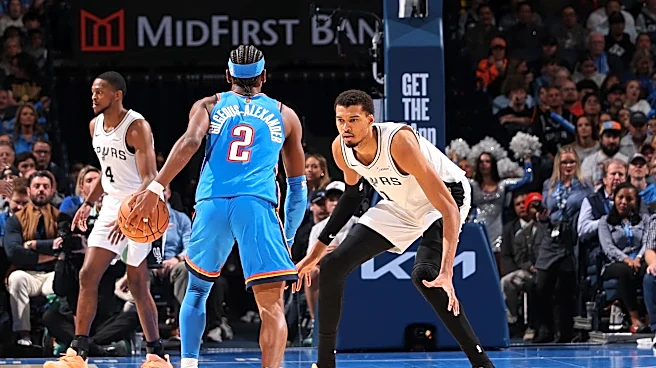
Defensive Player of the Year: Victor Wembanyama
Runner-ups: Chet Holmgren, Rudy Gobert
Uhh… do we even need to discuss this? It’s obviously Trae Young — his defensive prowess forced Ben Simmons into a pro fisherman!
Jokes aside, this year’s DPOY is the most obvious award pick since Steph’s 2016 unanimous MVP season, and Wemby should be the unanimous pick here too. San Antonio’s 105.1 defensive rating in Wemby’s minutes is 2.2 points lower than OKC’s this season, and many already consider the Thunder to be one of the greatest defensive teams ever. Unlike OKC, though, the Spurs only have one other elite defender in Castle, and the numbers bear that out too: San Antonio has a 117.4 DRTG without Wemby, which would rank 21st in the league.
Surprisingly, Wemby isn’t the absolute best in any one rim protection stat, but that’s because opponents only take shots around the basket when they’re somewhat confident he can’t block it, and oftentimes, he still does. The more revealing number is the drop in opponent rim attempts when Wemby is on/off the floor: with him playing, 31.7% of opposing shots are at the basket (49th percentile), which drops to just 26.2% when he plays (94th percentile). Opponents are also making just 60.8% (93rd percentile) of their shots around the rim, even with those being very selective attempts.
Wemby is well on his way to becoming perhaps the greatest defensive player ever, and he’s just getting started.
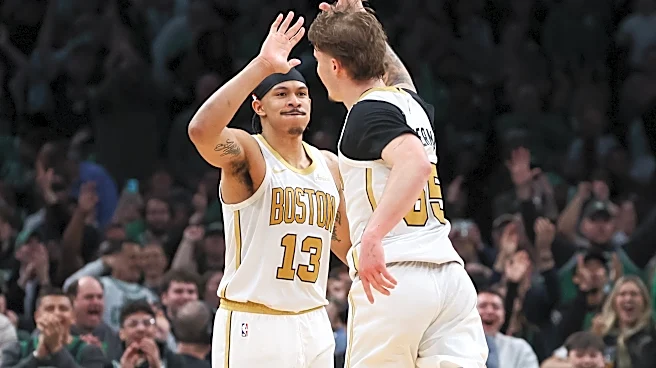
Coach of the Year: Joe Mazzulla
Runner-ups: JB Bickerstaff, Mitch Johnson
I didn’t have much hesitation picking Mazzulla over Bickerstaff, though the latter is very deserving of this award too. Ultimately, the decision came down to the following question: which team exceeded expectations more through the coach putting players in the best position to succeed?
To me, the answer is Mazzulla. Boston lost 3/5 starters and their entire frontcourt rotation in one offseason, and none of their core players are young enough to make the leaps that the Detroit stars have. Mazzulla has gone from running 5-out with Porzingis and Horford to designing a scheme with a rolling big in the middle, while also rotating a bunch of former “who he play for?” guys to fill Tatum’s absence. Bickerstaff has done a great job maximizing Duren’s improved offensive game and role players like Jenkins too, but Mazzulla leading Boston to 56 wins following their roster turnover is simply more impressive.
Most Improved Player: Nickeil Alexander-Walker
Runner-ups: Keyonte George, Neemias Queta
NAW is the epitome of what this award is for: a player well into their career who takes an unexpected leap when everyone thought his role would never change. Yes, he’s been given more responsibility in Atlanta, but the Wolves were also desperate for another lead guard to play alongside Ant, and they moved on from NAW specifically because he never showed the ability to be that guy.
This year, he’s more than doubled his scoring average from last season, going from 9.4 to 20.8 points per game. Remarkably, NAW has increased his efficiency too, and not by a little: his 61% true shooting is way above the positional average, and his previous career average was just 55.7%. Atlanta also has a +4.6 net rating with him playing, which drops to -1.8 when he sits, with most of that change coming from offense. Moreover, NAW has still been a good perimeter defender even with the increased offensive responsibilities, playing at an All-Star level on both ends of the court.
Rookie of the Year: Cooper Flagg
Runner-ups: Kon Knueppel, VJ Edgecombe
One of the tightest award races in recent history, ROY is truly a coin toss. However, if you base this off advanced metrics, it’s not even close. Kon is way ahead due to his three-point volume and efficiency, and he’s also been an underrated playmaker who’s been Charlotte’s connector at times. Leading the league in threes made as a rookie is absolutely bonkers, and Kon’s already one of the most efficient players at his position with a true shooting of 63.3%.
With that said, my pick is Flagg because his season has been just as impressive, and I view him as the better player — not just moving forward, but right now too. Yes, his 54.8% true shooting is way below not just Kon’s, but also the league average, but I think he’s a better player in every facet of the game outside of shooting. Now, the gap between their shooting is much larger than the gap in every other skill that Flagg has an advantage in, but I also believe that Kon went to the absolute best team for his specific skillset while Flagg went to the worst: the Hornets would be just as good with Flagg in Kon’s place, while Kon wouldn’t be in this race if he were on the Mavs.
Again, both players are absolutely deserving of this award and this pick was by far the most difficult one to decide on. I flip-flopped 10 times while writing and could regret this choice in the next hour, but as of this exact moment, I’m going with Flagg.
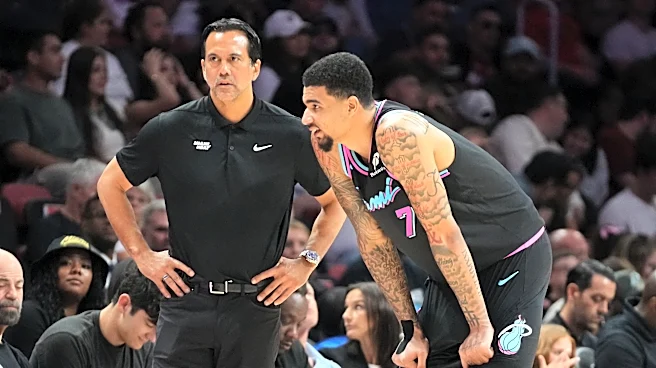
Sixth Man of the Year: Jaime Jaquez Jr.
Runner-ups: Keldon Johnson, Naz Reid
No offense to Jaime Jaquez, but this is one of the worst sixth-man crops in recent memory. All other candidates either did not play enough minutes (off the bench) or had lackluster counting and/or advanced stats. Keldon Johnson, for instance, played all 82 games, but I didn’t even think he was the most impactful bench player on the Spurs. That belongs to Dylan Harper, who I would’ve picked if he played more minutes. Reed Sheppard also lacks the minutes, while Naz Reid isn’t as well-rounded a player as Jaquez is. The latter is the only player who has somewhat eye-popping stats (15/5/5) with positive plus/minus splits while also playing enough minutes.
Congrats Miami! You can hang a new banner beside the #heatculture and #bam83 ones.
All NBA First Team: Shai Gilgeous-Alexander, Nikola Jokic, Victor Wembanyama, Luka Doncic, Kawhi Leonard
Kawhi has been the best player this year outside of the four MVP candidates, which is why he snagged that final First-Team spot over Jaylen Brown. It was a hard decision, though, given the Clippers’ turbulent season (and their tree planting), but Kawhi deserves almost all the credit for LA finishing above .500, along with help from Harden at the start of the year. Meanwhile, I would attribute Boston’s overachieving more to Mazzulla’s genius than Brown’s play since the Celtics are good no matter who’s been on the floor, though I’d also have no problem with the latter finishing on the First-Team given his borderline MVP-level play this year.
All NBA Second Team: Donovan Mitchell, Jalen Brunson, Jamal Murray, Jaylen Brown, Kevin Durant
Jamal Murray deserves a special shoutout. Contrary to popular belief, he never deserved to be an All-Star in previous seasons, and was overrated due to playing above his usual level during the 2020 and 2023 playoff runs. However, he’s finally played at that level for a full regular season, being one half of the most dynamic offensive duo in the league (Denver has a 130.6 ORTG with him and Jokic playing, the highest in league history) while also keeping the Nuggets’ offense afloat without Jokic (116.5, 61st percentile). Murray is also having the most efficient high-volume three-point shooting season in the league by making 43.5% on 7.5 attempts per game, vaulting his true shooting to 62.2% — the first time he’s been above 60%.
All NBA Third Team: Jalen Duren, Jalen Johnson, Tyrese Maxey, Chet Holmgren, Deni Avdija
The Third-Team is composed of first-time All-NBA selections. Maxey leads the league in minutes per game and is fifth in overall points, Chet will likely finish second in DPOY voting, and Johnson is averaging 22/10/8 as the first option on a playoff team. Meanwhile, Duren went on a rampage after I foolishly left him off my All-Star team, averaging 23 and 10 with Cade out. I’m still not sure if he can be the second option on a true title team, but there’s no doubt that he’s blossomed into one of the 30 best players in the league and is still just 22. The last spot was a toss-up between KAT, Deni, and Toronto’s own, Scotland Barnes. KAT has by far the best advanced numbers and also improved his defense during the second half of the season, while Scottie is arguably the most well-rounded player of the three. I ultimately went with Deni, though, since he was essentially a one-man offense in Portland, averaging 24/7/7 and leading the Blazers to an above-average 116.7 ORTG with him on, which drops to 110.8 when he sits — equivalent to the 28th-ranked offense in the league.
This week, please check out Marilyn’s regular season recap! The Spurs have been one of the league’s most pleasant surprises this year and are ready to get their first taste of the playoffs.
Thanks for reading!
All stats courtesy of Cleaning the Glass and NBA Stats.