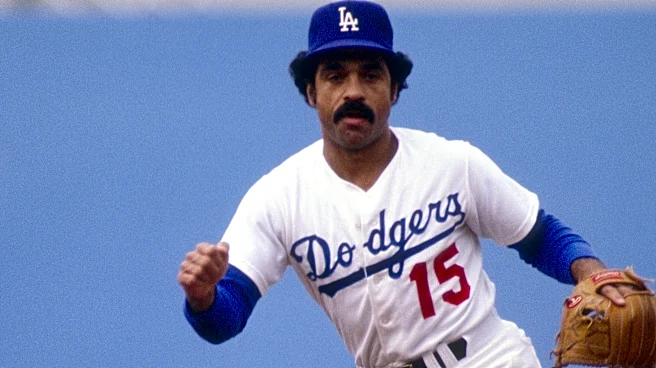




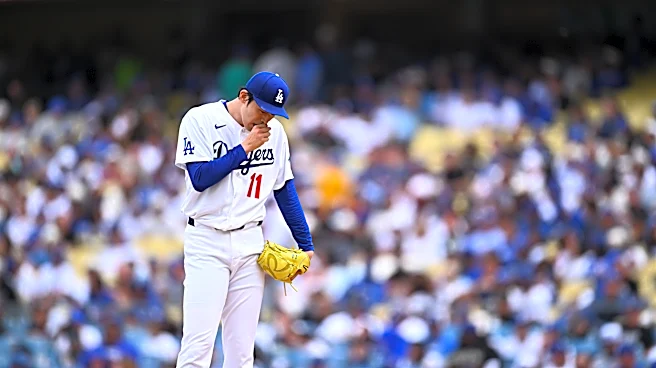
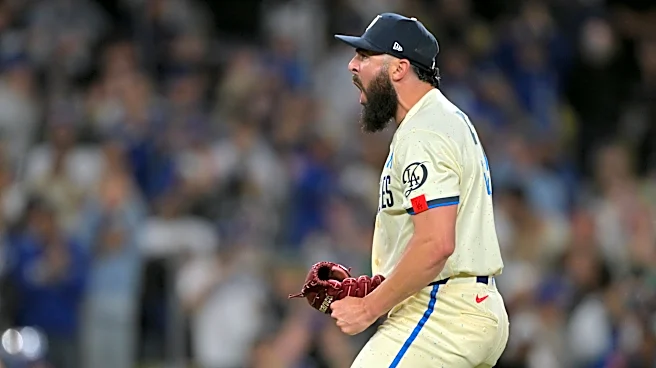

Davey Lopes, the late-blooming star of the Dodgers’ 1970s dynasty, passed away on April 8 at the age of 80. Lopes had no connection to the Royals, but his story is worth a closer examination.
Lopes was born and raised in Providence, Rhode Island, and played high school baseball for the LaSalle Academy. Getting noticed in a short-season, cold-weather state like Rhode Island is next to impossible. Even though he was a terrific athlete, Lopes didn’t receive much attention from colleges or the pros. He
strongly considered joining the military after graduation. His mom wasn’t having any of that. She wanted her son to get an education, even though the impoverished Lopes family had no way to finance one.
Fate is a funny thing. Sometimes you’re in the right place at the right time. Other times, you’re in the wrong place. Lopes got lucky. Michael Sarkesian, who coached a rival basketball team in the same league as LaSalle, had just taken a job as the athletic director at Iowa Wesleyan College. Sarkesian remembered Lopes and offered him a scholarship to Iowa Wesleyan to play basketball and baseball. It was Lopes’ only scholarship offer. He accepted and moved west, sight unseen, to Mt. Pleasant, Iowa.
I’ve been through Mt. Pleasant several times. Like many smaller agricultural-driven towns, there’s nothing particularly notable about it. The California Zephyr makes a stop in Mt. Pleasant. It has a nice-looking downtown of older buildings. I hesitate to use the word historic, as every town and burg now touts a “historic” downtown, which is just chamber speak for old buildings.
Before we tackle more Davey Lopes, a few words about Iowa Wesleyan. The small school is now closed, having shuttered in 2023. The school was down to 600 students at the end.
The history of Iowa Wesleyan is fascinating. Dana Holgerson, the former football coach for West Virginia and Houston, played at Iowa Wesleyan. James Van Allen, one of the giants of space study, got his bachelor’s degree there. His name should ring a bell. The Van Allen Belt is named for him. The school also claims Peggy Whitson as a graduate. Ms. Whitson is one of the most notable NASA astronauts of the last two decades. She came from tiny Beaconsfield, Iowa (population 15). The next time you think your life is stalled, think of Peggy Whitson. She went from a town of 15 people to the International Space Station. Very impressive.
There are several other notable people who came out of Iowa Wesleyan, but the two I want to talk about were coaches: Hal Mumme and Mike Leach. Mumme was the head football coach and Leach was his offensive coordinator from 1989 to 1991 at Wesleyan. When the duo took the job, they looked over their motley crew of mostly small-town Iowa boys and realized that there was no way they could compete with powerhouse programs like Central and Wartburg unless they did something extreme.
In a move of sheer genius, they instituted the first iteration of a spread offense, usually putting four or five wide receivers on the field, and called it the Air Raid. Today, most high schools and colleges, and many professional teams, use some sort of offense born from Mumme and Leach’s desperation. At times it’s been called the Spread, the Run and Shoot, or the No-huddle. They’re all bastard children of the Air Raid. Leach eventually moved on to Texas Tech, who still runs the offense today. Patrick Mahomes used the Air Raid to shred defenses while at Tech.
Using the Air Raid, Mumme and Leach turned around a moribund program and led the Tigers to the 1991 National Quarterfinals, which was also the school’s first-ever playoff appearance. From 1989 to 1991, the Tigers finished first or second in the nation in passing offense. Tech bros like to talk about disruption. The Air Raid was true disruption. It was a piece of brilliant coaching.
Lopes, who had once considered giving up baseball, was now excelling in the sport, ultimately earning NAIA All-American honors at Wesleyan. Sarkesian, as most athletic directors do, was upwardly mobile. He took the AD job at Washburn University. Lopes chose to follow his mentor to Topeka, playing baseball and basketball for the Ichabods. In 1967, Lopes hit .380, which attracted the attention of the San Francisco Giants, who selected him in the 8th round of the June draft.
Lopes, still not convinced that he had pro potential, opted not to sign. He had promised his mother he would get his degree, and he would stick to that promise.
Lopes never got back on the baseball diamond for Washburn. The Dodgers tabbed him in the 2nd round of the 1968 January supplemental draft, and Lopes signed after the Dodgers assured him they would pay for his remaining education.
Lopes was originally an outfielder, not moving to second base until the 1970 minor league season.
Lopes spent five full seasons in the Dodgers’ minor league system, often blocked by a series of hopefuls: guys like Jim Lefebvre, Ted Sizemore, Bobby Valentine, Billy Grabarkewitz, and Lee Lacy. He finally got an 11-game cup of coffee at the tail end of the 1972 season. He was already 27 years old. He finally won the job full time in 1973 and was the spark the Dodgers needed. The Lopes-era Dodgers were a mini-dynasty. From 1974 to 1981, they finished first or second in the West Division each year except 1979, when they finished third.
Lopes played for the Dodgers from 1972 until the end of the 1981 season. During that time, he was a consistent 4-WAR player. The Dodgers won four division titles and played in four World Series during Lopes’ tenure, winning one. He won a Gold Glove in 1978 and played in four All-Star games.
LA traded Lopes to Oakland prior to the 1982 season, and at the age of 37, he had a career resurgence. He concluded his career with three years with the Cubs and two more with the Astros before finally retiring after the 1987 season at the age of 42.
He ended his 16-year career with almost 1,700 hits, 1,023 runs scored, and 557 stolen bases, good for 42 WAR. His career totals from age 27 to 35 are very similar to Whit Merrifield’s.
I bring that up because teams often lose interest in a prospect who hasn’t made it to the big leagues by age 27. They become organizational filler. The Royals have several players who fall into that bucket, most notably Gavin Cross, Peyton Wilson, and Brett Squires. I’m intrigued by Squires, who is 26 and has been solid at every level. He’s currently in his second go-around at Northwest Arkansas but should be in Omaha.
I’m not suggesting that any of these players will end up having a career like Davey Lopes. They probably won’t. The odds are against them and getting worse each year. It’s also possible that one of them might be a late bloomer like Whit Merrifield. Sometimes it just takes a guy a bit longer to either figure it out or to get his break. It happened for Lopes and Merrifield. Here’s hoping the Royals give this trio a chance.