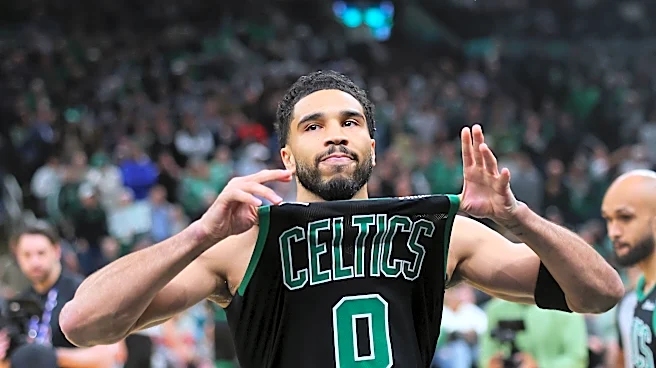





When Jayson Tatum returned to TD Garden 298 days after rupturing his achilles tendon, the unprecedented return generated one of the loudest moments you’ll ever hear from the Garden faithful.
A putback dunk, a corner three, and a crowd just waiting to go berserk. It was a defining moment to an already illustrious career: a testament to his strength, both mental and physical, as the Celtics added the one major piece that could propel them into the contender’s conversation.
That optimism ran through the
rest of the regular season, which saw Tatum steadily regain his form as one of the game’s premier two-way talents. Even as the postseason ended on a sour, collapsing note with Tatum cautiously sidelined with the season down to its final lifeline, it’s hard not to look at the bigger picture of Tatum’s 2025-26 return, and just how miraculous his comeback was.
The Regular Season Return
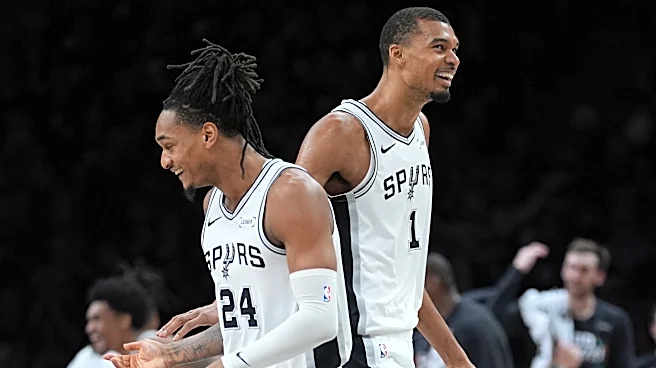
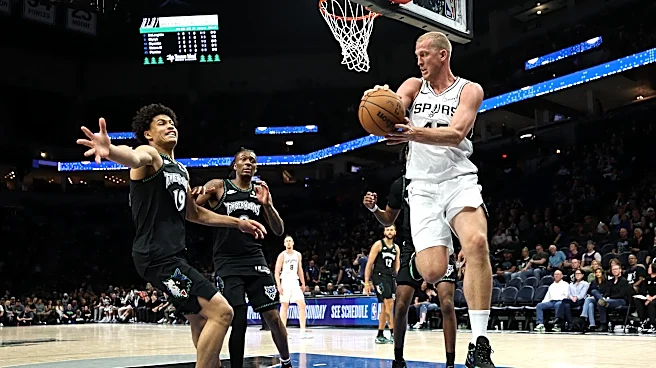
Tatum’s first two games back against Dallas and Cleveland showed an understandable level of rust, but it was his 24-point effort in a loss to the San Antonio Spurs where we saw his takeover tendencies begin to reshape. His point totals went from 15 to 20 to 24 in those first games back, and his 15-point, 12-rebound statline against the Mavericks was one of 10 double-doubles in his 16 regular season games.
It took some time for Tatum to develop confidence in certain respects, particularly firing pull-up threes around the screen and finishing hard at the rim, but certain areas of his game didn’t skip a beat. He was immediately one of the league’s most impactful defensive rebounders, an exceptional playmaker with an ever-expanding grasp of how his gravity opens up the game for others, and he became more and more confident as a scorer as his minutes increased.


As a rim-finisher, his 69% finishing within 3 feet was the first time under 70% since his first All-Star season in 2019-20. He did however shoot a career-best 46% from 10-16 feet during his 16-game sample, topping his previous best of 44% from his rookie year.
Things came together in his last six games, where he averaged 25 points, 11 rebounds and 8 assists on 45/37/78 splits. In Charlotte, he scored a season-best 32 points on 52% shooting, following it up three days later with a 25/18/11 triple-double in a 147-129 beatdown over Miami.
For the regular season, he averaged 22 points, 10 rebounds and 5 assists, shooting 41% from the field and 33% from three.
Postseason Promise, and Postseason Pain
Out of the gate, Jayson’s Game 1 performance was as well-rounded an outing as you’re going to find in his playoff career. He dropped an efficient 25 points, grabbed 11 boards for another double-double, and finished with 7 assists with just a single turnover to his name during a blowout 123-91 win.
Even as Philly’s offense caught fire from three in the second quarter of Game 2, Tatum’s performance was trending in the right direction to keep Boston within striking distance, though he shot just 3-of-9 from the field in the second half while the team as a whole was just 35% as the 76ers ran away with it to tie the series at 1-1.
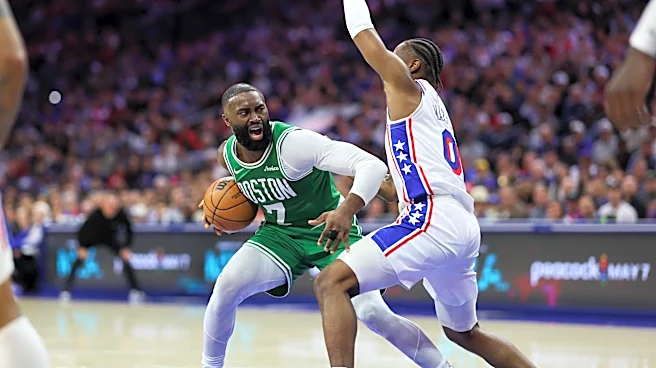
In their next two games, we saw him deliver two elite second halves, first in a clutch win in Game 3, where he drilled two massive threes late and hit four of his five fourth-quarter shots to send Philly off their home floor with a 108-100 defeat. Tatum and Jaylen Brown both scored 25 points in that game and stepped up as they hit the 5-under-5 mark with a scrappy Embiid-less 76ers team. If there’s a game to rewatch with fond memories this postseason, it’s this one.
In Game 4, he bounced back from a 1-of-7 shooting start with 25 second-half points as Boston again blew out the 76ers, knocking down seven of his nine shots and five of his six 3-point tries. He finished the 128-96 win with 30 points and 11 assists, putting Boston just a game away from advancing to what would have been an Eastern Conference Semifinals rematch with the Knicks.
But things quickly fell apart.
Both Games 5 and 6 were double-digit defeats, the first a particularly tough pill to swallow as Boston let a 13-point third quarter lead slip away as the 76ers muddled their offense and relied on the interior dominance of Embiid to come back and win.
Boston relied heavily on the Jays just to maintain that third quarter lead, with the two stars scoring 19 of the team’s 29 points in that period, though neither managed a single bucket during a horrid fourth quarter that saw Boston shoot 14% from the field while a potential series-clincher slipped away.
Game 6 was an even worse experience, trading a blown lead for a near wire-to-wire loss led by a combined 53 points between Tyrese Maxey and Paul George. Tatum had rare positive efficiency in the game, though on just 6-of-13 shooting for 17 points to go with 11 rebounds.
The worrying defeat set Boston up for what would be their first blown 3-1 lead in franchise history, a game in which Tatum was put on the injury report shortly before tip-off.
It wasn’t up to Tatum to sit for Game 7 with what was called left knee stiffness, but his absence was felt, even as the Celtics put themselves in position to win during a stunning 109-100 season-closing loss.
A Look Ahead
A full, healthy offseason awaits Jayson Tatum this summer, a major victory despite a bitter end to a season of overachievement.
With a step back to look at the full picture, Tatum’s return was in itself a major milestone, but how he played in that return further displayed how moldable his playstyle is for a player of his caliber, slotting right into an ecosystem of mostly new rotation players that had the Celtics fighting for homecourt advantage in the playoffs.
That smooth ride didn’t stop when Tatum worked himself back into his usual role as a showrunner, and early in the first round, it truly felt like we were seeing Tatum back at full strength.
But his workload was perhaps too big to place on someone who had a little over a month to acclimate to essentially a new team from the one he last led.
Next year’s roster will see some changes, but however big or small they end up being, one constant is Tatum getting a full offseason to ramp up with that group. What was once considered a career-killing injury now has an example in Jayson that a return to play is possible within the next season, a concept that felt truly foreign in the days following his devastating injury.
Tatum’s story faced the most difficult chapter of his career, but the page has turned, the future feels bright, and the Celtics will have their franchise player ready to go for opening night next October.