



Sunderland had not started the 1922/23 season particularly well, and it was causing Bob Kyle, Sunderland’s manager, more than a little consternation.
One win and two defeats in the first five games was concerning, but within those games there had been no great sign of a performance and a team beginning to gel!
Sunderland had fallen away sharply in the second third of the previous season, which had prompted a serious amount of cash to be spent on incomings.
Arthur ‘Tricky’ Hawes and Warney Cresswell
had been recruited from near neighbours South Shields, who were playing in the Second Division. The pair had cost a total amount of £7,250, a huge layout by any description. Centre-forward Jock Paterson had cost £3,790 and centre-half Michael Gilhooley £5,250 from Leicester City.
The cash spent had prevented any further slide down the table, but Bob Kyle was looking for more than this in 1922/23 and spent more money in the close season on goalkeeper Ned Robson, a local lad from the Hexham area who had made seventy-five appearances for Portsmouth.
Sunderland’s only victory five games into the campaign had been against the team who would eventually win the league in this season, Liverpool, in a hard-fought, turgid game at Roker Park by the only goal of the game.
Kyle really was looking for better performances and results and must have had a degree of trepidation following another hard-fought game at Burnden Park against Bolton Wanderers that ended one-all, but had seen Sunderland a tad lucky to be getting out of there with a point.

Seven days later and it was the return fixture (this season saw an experiment with fixtures, as teams virtually played consecutive double-headers home and away throughout the season). Could Sunderland get some wind in their sails and get their season rocking?
Sunderland’s team showed two changes from the previous week’s draw at Burnden Park.
Forward Percy Whipp and young local lad Jim Oakley, a full-back who would provide more than adequate cover for the excellent Warney Cresswell, went out of the team for the returning ‘Tricky’ Hawes and Cresswell.
Bob Kyle returned Charlie Buchan to his usual inside-right position and Jock Paterson back to centre-forward, with Hawes coming in at inside-left.
For Bolton, goalkeeper Dick ‘Pincher’ Pym was the most expensive goalkeeper in football, costing the Wanderers £5,000 from Exeter City (who used the windfall to buy their St James’ Park ground). Ted Vizard was a lively left-winger, who had scored to give Bolton the lead in the game seven days previously.
There were upwards of 28,000 fans in Roker Park by the time kick-off came around, as Sunderland looked up for this contest right from the off.
What was immediately noticeable to those who had been watching Sunderland this campaign was that the close-passing game that had been favoured so far this season had been ditched for a more expansive, free-flowing style. The shackles appeared to be off, and Sunderland to a man appeared to be revelling in it.
Within twenty-one minutes, Sunderland were two goals to the good, both scored by Charlie Buchan, who was at his irresistible best. He could easily have had a hat-trick in that first period, with Pym making an astounding save from the rampant inside-right.
Hawes then smashed the ball off the upright, before Joe Smith pulled a goal back for Bolton on the half-hour. Not to be denied, ‘Tricky’ Hawes restored the two-goal margin just before the break.
Buchan, Hawes and Paterson had enjoyed the first half in particular, while Poole and Mitton at half-back had also contributed a good forty-five minutes.
The second half saw virtually the same pattern of game as the first, with Sunderland playing some attractive, free-flowing football and Bolton making sporadic raids.
Pym made another top-class save from Buchan before the man with one of the most lethal glancing headers in football climbed just over the hour and, on eighty-two minutes, scored two trademark goals with his head. Buchan could easily have scored a double hat-trick but for the skills of Pym.
Sunderland ran out five goals to one victors. The result, as well as the performance, kick-started the season. Buchan took the plaudits with his four goals, but there was generous applause for a really good team performance at the finish of the game.
Bolton finished mid-table that season, but also went on to reach the FA Cup final, beating West Ham 2-0 in the first final to be played at Wembley Stadium, that became known as “The White Horse Final”.
The result did indeed kick-start Sunderland’s season. The Lads lost only one game in five and a half months as they went on to finish runners-up to Liverpool, who just refused to be caught.
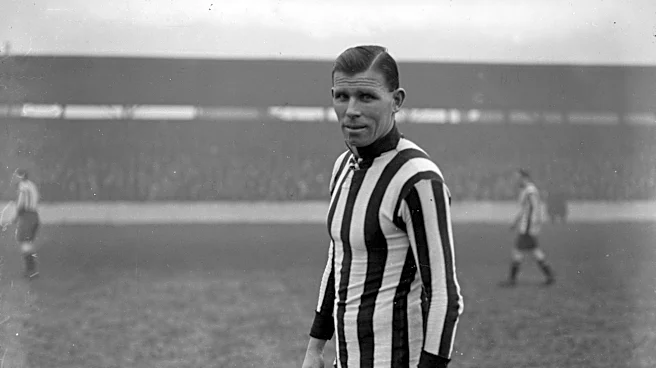
Charlie Buchan ran up thirty-one goals in all competitions that season, as he went on to become Sunderland’s leading all-time scorer with 224 goals in 413 appearances. He was Sunderland’s leading scorer in seven of the eight full seasons he played (a career interrupted by the Great War). He was the league’s top scorer in 1923/24 with twenty-seven goals and brought further acclaim to Sunderland as the first Lads player to captain England in March 1921 v Wales.
Buchan’s double brace was not the first time he had hit multiple goals in a single match. He scored five goals in the 7-0 hammering of Liverpool in 1912/13, as well as four FA Cup goals against Hull City in 1920. His hat-trick count was six, which is a remarkable tally for an inside-forward.
It would be churlish not to acknowledge this unique character’s off-field achievements. Whilst still a full-time player, he wrote for the regional newspapers, opened a sports shop in the town and taught at Cowan Terrace School when he got the chance.
He also served in the Grenadier Guards (later with the Sherwood Foresters) during World War One and was awarded the Military Medal for bravery in the field in 1917.
When he finished playing, he continued as a football writer, co-founding the Football Writers’ Association, the Golf Writers’ Association and commentating for the BBC. In 1951, he published the first of Charlie Buchan’s Football Monthly, which was where I first came across his name.
The publishing company that Buchan founded also expanded into the music business, producing the extremely popular Melody Maker magazine.
Charlie Buchan was a leader and thinker. In March 1956, he made his views known about the growing scourge of racism when he said, “Though I am by nature a mild-tempered man, I got very angry when reading reports I received from South Africa which made it painfully clear that the ‘colour bar’ has crept into soccer. Competitive football under the South African Football Association is closed to coloured people. The happy spirit of a game played throughout the world is being sullied by racial prejudice”.
It would take thirty-five more years before apartheid was swept away in South Africa.
Charlie Buchan passed away in 1960 whilst holidaying in Monte Carlo. An intelligent, articulate man as well as a footballer and a bona fide legend of Sunderland AFC.
Division One
Date – 16.09.1922
Venue – Roker Park
Attendance – 28,000
Sunderland 5 – 1 Bolton Wanderers
Goal scorers – Buchan 16, 21, 63 & 82 mins; Hawes 44 mins.
Smith 30 mins.Sunderland – Robson; Cresswell; England; Mitton; Parker; Poole; Donaldson; Buchan; Paterson; Hawes; Ellis.
Bolton Wanderers – Pym; Johnston; Thirkell; Nuttall; Rowley; Jennings; Butler; Jack; Roberts; Smith; Vizard.