


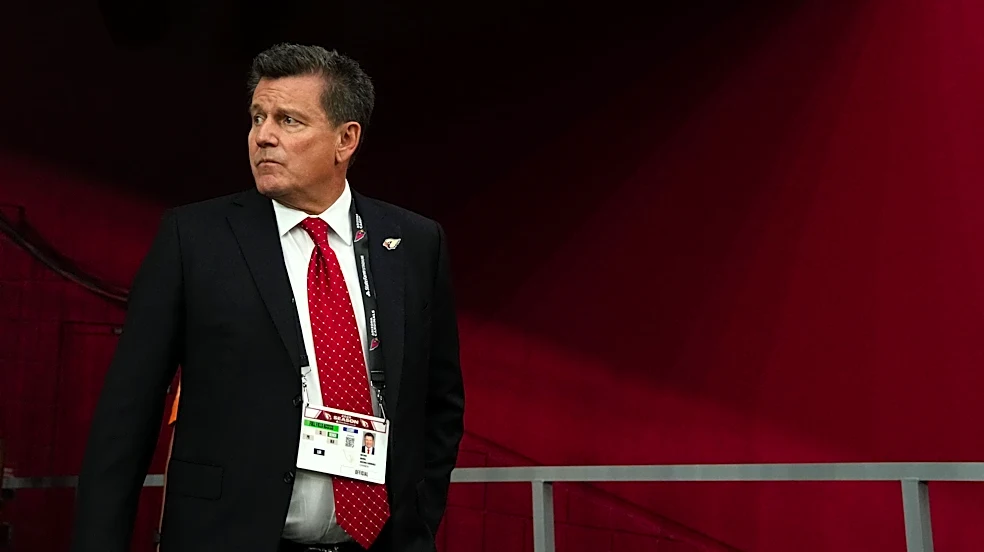

Two former Arizona Cardinals employees have filed a lawsuit against the team plus owner Michael Bidwill.
The lawsuit is fairly broad, but alleges discrimination involving race relations and not being paid properly.
RELATED: GRADING THE MARV HARRISON TRADE
The lawsuit was filed by Don Shumpert, who was an offensive assistant coach with Arizona from 2020 to 2021, and Kendra Hogue, who was the former assistant to the Cardinals’ COO, Jeremy Walls. Walls has been the team’s COO since 2023 and remains in this
position.
Hogue’s allegations are numerous and wide-ranging. The bulk of it involves racial discrimination. In the suit, she states that, as a black woman, she was subject to disparate treatment and that the workplace environment was intolerable. She also alleges constructive termination, defamation, harassment, retaliation, and intentional infliction of emotional distress. This forced her to resign from her position.

Shumpert’s allegations are less vague and pretty much to the point. He states in the suit that he joined the team as a coaching fellow in 2019, then joined the staff. Several years later, he was finally promoted to running backs coach, but also had the responsibilities of his former position. This meant he was working two positions and being paid for one.
When Shumpert, who is black, met with the front office to discuss a pay raise, he met with GM Steve Keim and Cardinals head coach Kliff Kingsbury. According to the suit, he was told they weren’t in a position to discuss the matter. He points out in the suit that several white coaches on the current staff had been given new titles that came with pay increases. Shumpert specifically mentions two white coaches who were given title increases, yet without actually having their responsibilities change.
Shumpert did mention a few other isolated instances, including ones with Bidwill.
A week after he met with Keim and Kingsbury, he was fired. He has alleged that the Cardinals made false statements about the circumstances of his departure.
The Cardinals responded to the lawsuit, stating that none of the allegations are factual.
In the meantime, the lawsuit went before a federal judge. He then ruled that a discrimination lawsuit must be settled via a third party rather than in open court. This meant the decision would be made by a magistrate instead of being handled in a courtroom, thus limiting the financial damages if the team is found liable.
This in itself is considered a victory for the franchise to keep the case out of the courtroom. But it had a solid foundation. Both former employees had signed agreements when they were hired stating: “that any dispute, controversy, or claim related to their employment be resolved through binding arbitration rather than a lawsuit.”
NFL teams are not billion-dollar entities without knowing how to defend themselves before any lawsuit ever comes into play.