
One of the things that makes College Football beautiful is the rivalries. Bitterly enduring rivalries. Unfortunately, they are becoming less and less an annual thing in the vastly changing landscape. Regional and long standing rivalries have really suffered with all the Conference realignment and scheduling dynamics that are at the intersection of money and greed. But alas, that is reality of where we are.
Not all rivalries have been forsaken at the hands of change though. Despite moving between Conferences
and as an Independent three separate times since 2004, Army has maintained their annual matchups with Navy and Air Force. Now, “America’s Game” against Navy will get a lot more attention when talking Army rivalries, and maybe it should. But with West Point joining the Midshipmen in the American Athletic Conference in 2024, ensuring an out-of-Conference slot for one of the Military rivals has been relieved.
The other Military Academy— Air Force, has been a mainstay on the Army calendar in spite of all the changes previously mentioned. And while Army-Navy is an enduring rivalry, the dissonance that exists between Air Force and Army cannot be denied. This is especially true in the years since Jeff Monken became the head coach at West Point (2014). At Air Force, Troy Calhoun has been leading the program since 2007, and holds a career record of 11-7 over the their rivals from West Point New York.
Calhoun vs. Monken
However, hidden in the details would be the breakdown of that record before and after Jeff Monken took over the Black Knights. Calhoun posted a stellar 6-1 record versus Army prior to Monken’s arrival at West Point. Since then, Monken holds a slight edge over Air Force with a 6-5 record versus Calhoun. This Saturday, Calhoun and crew have an opportunity to draw even in the series against Monken, but more importantly, reclaim some all important hardware that has eluded them more often than not since 2014.
The rivalry between these two coaches goes beyond the numbers though. Sure, during the broadcast of the game, you will hear announcers talk about mutual respect and the brotherhood that exits outside of this game. Which I’m sure is true to some extent. But there is a fierce competition between these coaches and the schools they represent.
You don’t have to spend much time searching the internet to find clips of Monken making disparaging remarks about Calhoun, and his handling of Cadet enrollment during Covid. At Air Force, this is that term we’ve heard ad-nausea “turnbacks”. It didn’t sit well with Jeff Monken that Air Force had players withdraw from the Academy during Covid, only to return post-pandemic and play. Let’s be clear, this was not a violation of rules, and done in accordance with the support of the Air Force Academy’s leadership. In fact, Army recently exercised this very path with Connor Finucane and Tyrell Robinson, granting a fifth year of eligibility due to medical hardships. Troy Calhoun himself has made mention that perhaps the turnbacks returning to the program may have harmed the team in later years, in particular the 2024 and 2025 seasons. There should be no residual affects from the “Covid turnbacks” at this point.
I must say though, I’ve always found it ironic that the head coach of a Military School that elected to “suspend” their own Honor Code, allowing athletes to represent the Academy in competition in that very same Covid year, is disparaging another program for their application of rules. One thing that cannot be disparaged is the success on the field, that Jeff Monken has brought to West Point. Prior to Monken’s arrival, Army hadn’t won the Commander-in-Chief’s trophy in 21 years. He’s won the trophy outright with Army four* of the past 10 seasons.
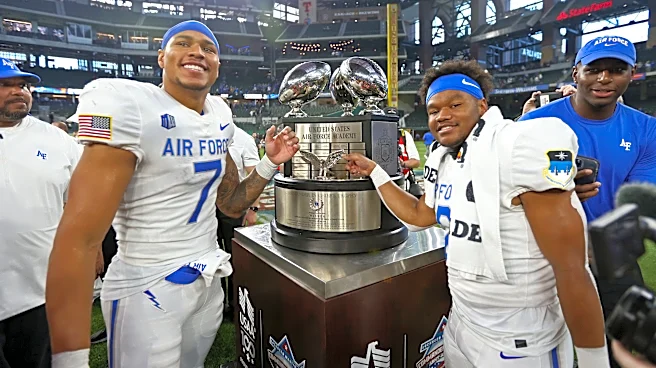
The Commander-in-Chief’s Trophy
In case your wondering, since the Commander-in-Chief’s Trophy inception in 1972, Army won it outright just six times up until 2016. After winning it just six times in 44 years, it puts pretty good context around Monken’s run over the last decade.
Monken and Army still have a lot of ground to make up on Navy and Air Force though as total CiC Trophy wins go. Remember, the Trophy is only awarded to an outright winner of the three programs, it is shared if each team goes 1-1 against the other two schools in a given season.
As it stands, Air Force has won the CiC Round Robin 21 times, with Troy Calhoun leading the team for five of those instances. Navy trails with 18 wins in the series, winning it the past two seasons. They’ve already been eliminated from contention this year, thanks to a loss handed to them by Air Force back in early October. Despite recent success in the series, Army has won just 10* CiC trophies, which again reflects what an impact Monken has had on the program when you consider he arrived in 2014.
While we’re talking about CiC victories, can we give a tip of the hat to Fisher DeBerry? Between 1985 and 2002, the now hall of fame coach won the Commander-in-Chief’s trophy 14 times! He was a combined 34-8 against Army and Navy during his tenure at Air Force. That is what dominance looks like, and that is exactly what you want if you are part of this three team battle for the hardware.
Similarities
It’s actually quite interesting when you look at just how similar these coaches and their school’s have been under their respective leadership, in spite of their differences. Troy Calhoun has a career win percentage of 5.94 with Air Force, while Monken’s at .588.
One of the key utilities at an Academy is the use of the Prep School for post High School graduates who spend a year developing academically and athletically before actually entering West Point or USAFA. According to the best available information I could find, ~60% Jeff Monken’s player enter the program through USMAPS (West Point’s Prep School). While ~35% of the Air Force incoming freshman enter their Prep School, having a larger direct enrollment to the Academy.
Offensively, both coaches deploy a relentless rushing attack that presents a variety of the option that most have come to expect from either of the three Military Academies. But each has certainly modernized it, putting their own touches on an old-reliable approach. This year, no different than any other, both teams are tops nationally in rush attempts, yards and time of possession. The more things change, the more they stay the same.
The challenges both schools and their coaches face are the very same. No redshirts, NIL or influx of talent from the transfer portal. Conversely, the Military Academies are all donors as it relates to the transfer portal. But depending on who you ask, some say that is an advantage due to the type of Cadet-athlete and culture they prefer to espouse at Colorado Springs, West Point and Annapolis.
These programs are the last remaining relics of the sport I grew up loving so much. The way the Military Academies operate, develop and play, represents all that was and always will be the best of college football to me.