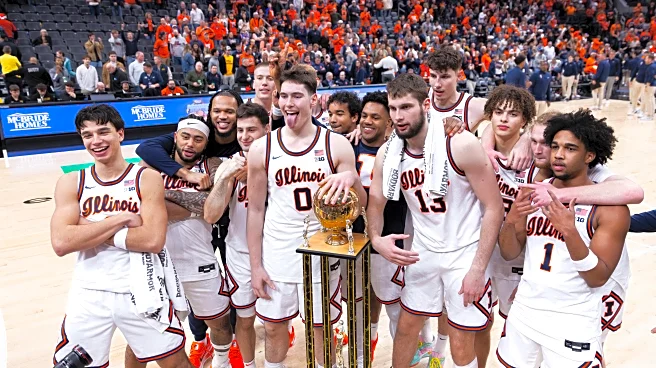



CHAMPAIGN, Ill. — After Illinois thrashed Missouri on Monday night, Illini fans have started to wonder what this group can look like when it commits to head coach Brad Underwood’s “daily vitamins.”
During their nine-day practice week, Illinois stressed what Underwood calls their “daily vitamins,” consisting of defensive communication, attention to the small details and relentless work on the glass, especially the offensive side. The Illini took advantage of the first extended week of practice they
had before the win at Tennessee, and this time they showcased the immediate results at an even higher level. Illinois showed out in St. Louis with a 91-48 victory, holding Missouri to under 50 points and dominating second-chance opportunities 29–5.
“I’ve said it many times, and I don’t want it to sound like an excuse,” Underwood said. “We needed practice. And nine days of getting back to our daily vitamins, our essence of who we are on the defensive end.”
Offensive rebounding: the difference
Although the Illini were racking up points, Underwood made it clear that it wasn’t coming from simply a better shooting percentage, but instead the increased offensive rebounding efforts that propelled Illinois’ efficiency and allowed them to take advantage of second-chance scoring opportunities. Underwood has emphasized the need for more second and third efforts for a while, but the Illini faithful could finally be witnessing a turning point.
“The thing that I think helps us more than anything is offensive rebounding,” Underwood said. “That’s all I harp on.”
Illinois finished with 15 offensive boards, with many leading directly to Keaton Wagler getting an open look from long range or drawing a foul.
“When everyone crashes the glass, teams get worn out,” Wagler said. “They don’t really want to box out every time.”
Underwood has repeatedly criticized Illinois for “laying on backs” instead of creating movement and leverage. But against Missouri, he finally saw improvement.
“We spent nine days on it,” Underwood said. “Not accepting a blockout, making the second and third effort, that leads to fouls being drawn. That leads to unguarded threes. Those are baskets you don’t have to grind and earn.”
With these new habits continuously being stressed in practice, Illinois could see a massive shift in offensive efficiency without having to force shots during slumps and instead finding the open man after crashing the boards.
Defensive communication at the frontline
Illinois delivered one of its most complete defensive performances so far this season, particularly cleaning up the nasty areas that contributed to the Nebraska loss.
“I thought we were handsy. I thought we were in gaps,” Underwood said. “But our most important piece was our communication defensively.”
Freshman guard Keaton Wagler also noted that the Illini were circling back to some of the basics worked on at the start of the season.
“In practice, we just got back to our day one principles,” Wagler said. “Being in gaps, talking, helping, rotating on defense, just knowing when you can help and when you have to stay out.”
What was most impressive about Illinois’ defense was their capability to defend the paint, stall downhill transitions and contest shots without putting themselves in foul trouble.
“I think it’s a start of what can become a very, very good and dialed-in defensive team,” he said.
Proof of what this team can be
Underwood knows there’s still a long way to go, but the victory in St. Louis reassured this team of how high its ceiling can be with proper preparation and discipline.
“We made a huge step forward in our defensive game,” junior guard Andrej Stojakovic said. “If we continue to play with that type of intensity and focus on the game plan, our defense is going to get better.”
Illinois will look to carry that intensity and focus forward as it hosts Southern at State Farm Center on Monday to close out non-conference play before Big Ten play resumes at the Palestra against Penn State on Jan. 3.