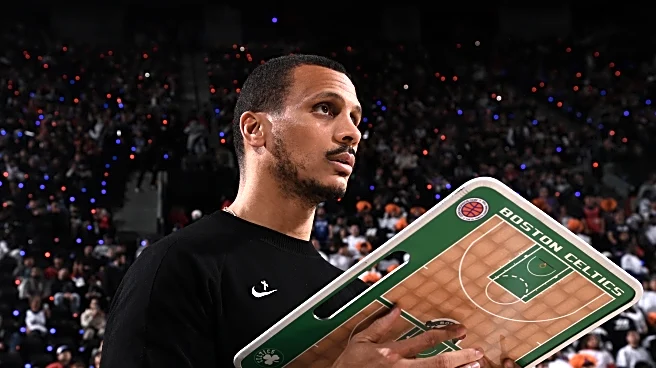

Boston wasn’t supposed to look like this. They weren’t supposed to be this good.
With Jayson Tatum in and out of the lineup and all the summer departures, the Celtics entered the season with more questions
than answers. Shot creation dipped, continuity vanished, and the margin for error shrank.
Yet, night after night, Boston has remained competitive. Even more, they remain among the elite, with the fourth-best net rating since the start of the season. They don’t have the same talent, the same scoring potential, nor the same defensive force… yet, they found a way to continue to dominate the league.
“How?,” you might ask. The explanation isn’t found in shooting variance or luck, but in something far more basic: the Celtics consistently found ways to take more shots than their opponents. Basic math, but it works.
Winning the True Shooting Attempts battle
To better understand how they did it, and how much it changed from last season, I looked at the difference between True Shooting Attempts (TSA) per game and TSA allowed, to identify teams that consistently win the possession battle.

Boston is third this season (+3.44), up from 10th last year (+1.23). The top of this ranking is almost exclusively made up of title contenders (OKC Thunder, New York Knicks, Houston Rockets), which makes Boston’s presence especially interesting given preseason expectations.
Where does this extra TSA come from?
To have more shot attempts than the opponent in a sport in which both teams are forced to take a shot every 24 seconds and can’t keep the ball after they score, the Celtics had to change their approach.
First, they’ve hit to the offensive glass far more than before. Led by Neemias Queta, with 3.5 offensive rebounds per game, the Celtics have taken a significant leap in offensive rebounding, jumping from 18th to 6th in offensive rebound rate per Cleaning the Glass.
Boston turned its loss of spacing and shooting talent into an opportunity: generating more putbacks and extending possessions.

They’ve also increased their pressure on the ball and in the passing lanes, raising opponents’ turnover rate from 13.2% to 14.7%. While they’ve forced more turnovers, they also remain the second-best team at not losing the ball. This discipline makes the Celtics one of the best teams in the “turnover economy.”
The one area still holding Boston back is defensive rebounding. After ranking seventh last season, the Celtics have dropped to 24th this year. That weakness is also the most straightforward to address: a trade for a true interior anchor such as Ivica Zubac, Myles Turner, or Nic Claxton would immediately help Boston finish defensive possessions without altering its offensive balance.

There is, of course, internal reinforcements coming. Jayson Tatum has long been an elite defensive rebounder for a wing, capable of stabilizing the glass in broken plays. With Tatum back, and even a marginal upgrade at center, the Celtics have a clear path to turning an already strong TSA profile into the best possession-battle team in the NBA.
Boston hasn’t survived this season by outshooting opponents or leaning on star power. It has survived by controlling the margins: taking care of the ball, extending possessions, and forcing opponents to do the opposite.
Winning the possession battle doesn’t guarantee a title — but every title contender does it.