




With training camp and all five preseason games in the books, we have learned a lot about the Bucks as they embark on year one of the rebuild-but-don’t-call-it-a-rebuild. But what one person sees isn’t always the same as what the next person does. So, we thought we’d share pages of our notebooks, highlighting our main observations as Milwaukee heads into the regular season. Obviously, there are storylines galore we haven’t touched on—Brayden Burries’ emergence, for one. But that will come when he truly
arrives; in Burries we trust. So, without further ado, let’s get into it!
Trending: How the Bucks have popped (and flopped)
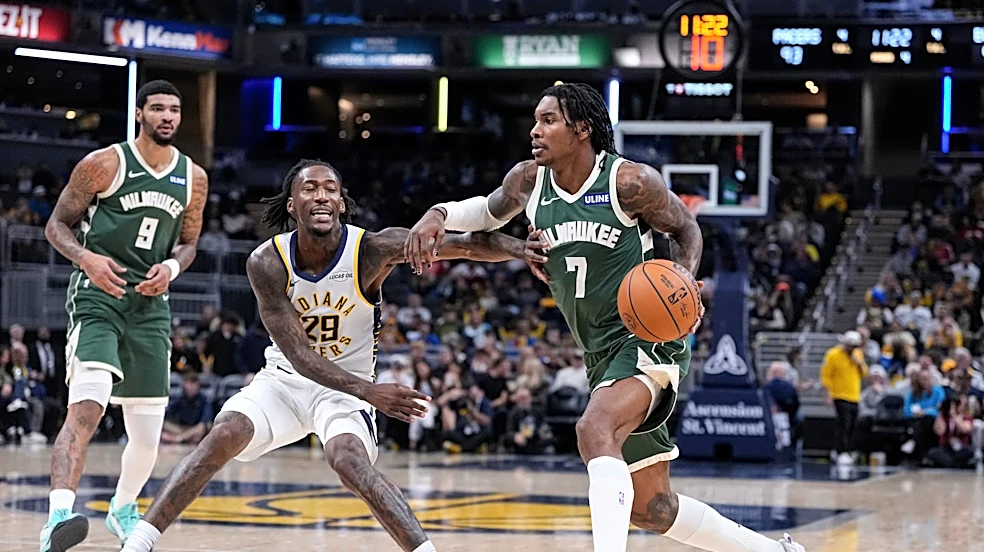
Preseason had me hyped, but the Kyle Kuzma/Jaime Jaquez Jr. frontcourt soon had me wincing—as did Gary Trent Jr.’s shooting. Kel’el Ware starting at the four reinvigorated my enthusiasm, then his “motor” issue reared its head and I found myself questioning everything. But I’m choosing optimism. Thankfully, then, Taylor Jenkins chose Brayden Burries and Ousmane Dieng as his first and second substitutions against the Indiana Pacers, leaving me hopeful for the regular season—that Jenkins has quickly learned these guys need to play and that they’ve already shown the growth to leapfrog more established players. But I digress; I’m here to talk trends.
By the eye test, the Bucks demonstrated the traits many thought (hoped) they’d have under Jenkins’ tutelage. Mainly, they hit the glass. Hard. The numbers back it up too:
This additional emphasis on the possession game—especially via the offensive glass—contributed to the Bucks generating more looks at the basket. With 94.2 field goal attempts per game, Milwaukee ranked third in the league, up from their 27th-placed 85.5 attempts last year. They also finished third in three-point attempts per game, hoisting up an average of 46.4 a night (up from 39.1 last year). Signs of Jenkins’ coaching philosophy didn’t stop there. The Bucks finished 10th in pace (104.5), comparing favourably to last year’s 23rd-place finish (98.3) and an indication that this team is going to lean into its youth and athleticism (as it should). Defensively, Milwaukee proved strong at shot-blocking, averaging 5.4 BPG, good for 10th in the league and better than their 4.0 BPG average and 27th placing last season.
Of course, it’s not all roses. Overall, the Bucks finished 28th in offensive rating and 22nd in defensive rating. And there are plenty of individual areas to work on too: shooting accuracy (30th)—which undoubtedly contributed to all those O-boards—fast break defence (29th), and generating steals (27th), among others. But, as I wrote in our staff thread, we can ignore all that—the sample size is too small.
—Zac
Drinking the Kel-Aid or War(e)y of the behaviours?
Kel’el Ware has become a bit of an elephant in the room, I must say. Many fans wanted Ware to start at power forward, and rightfully so—he was a key piece of the Giannis trade and, whatever else you want to say about him, he is as talented as they come. I think we were all drinking the “Kel-Aid” to some degree. But as the famous quote says, “hard work beats talent when talent fails to work hard.” Can we really say that Ware has been working at even an above-average level this preseason? I mean, forget going as hard as you possibly can—like guys such as Cormac Ryan have been doing—Ware rarely looked interested in getting out of second gear. He won’t be starting because he hasn’t earned it, period.
There’s no sugarcoating it: the 22-year-old has disappointed throughout the preseason—both in performance and, seemingly, in attitude—validating all the concerns Heat fans warned us about (and, frankly, his entire career has). It’s not like there’s a laundry list of concerns at this point, but a few things have certainly stood out. For one, Jenkins has stressed repeatedly that this team will play for each other and that no individual agendas will be tolerated. But Ware’s shot selection all preseason calls into question whether he is truly playing for his teammates or for his own numbers.
Sure, Ware has blocked shots and gobbled up rebounds (when they’re in his area)—and he deserves some level of credit for that, to be sure—but he’s also shown a lacklustre willingness to move his feet on the perimeter, letting drivers zip right by him on their way to the rim. Also, I’m trying to separate what’s immediately within the 22-year-old’s control from skill development stuff, but man, it wouldn’t hurt to move a bit faster on some of these post moves against guys he should be able to score on. That’s an overarching theme I’ve noticed: he’s a lot slower than I expected.
But then you see Ware cram a massive dunk on the fast break in a way I’ve rarely seen a Buck—other than Giannis—do, and you get a window into the player he could become. You see Ware make one of those ill-advised threes with a full shot clock and a defender right in his grill, and you take note of what a refined understanding of “good shot” and “bad shot” could mean for him. You see how Ware can vacuum up rebounds and scrape the sky for blocks, and you wonder what impact he could have on defence. Still just 22, I’m not off the bus yet. Not even close. But the kid should know by now that talent will only get him so far. Damnit, he needs to want this.
—Jack
Kasparas Jakucionis: The crown jewel?
The very same day that the Milwaukee Bucks traded Giannis Antetokounmpo, Jake Fischer of The Stein Line shed some light on the linchpin that may have kept Giannis out of Boston:
As trade talks dragged on, Miami was weighing whether to include Kasparas Jakucionis in a trade package for Giannis. Admittedly, this detail may have been easy to miss with so much to process after the trade, but it is worth looking at why Pat Riley almost let the 20-year-old Lithuanian decide the trade’s fate.
For starters, Jakucionis presents like an ideal modern point guard: 6’5”, 200 pounds, with a 6’8” wingspan. He arrived at Illinos with a lot of national hype, and early returns had him going as high as 5th overall in certain mock drafts. College basketball fans may recall that Jakucionis started the year averaging 16.1 PPG and 5.6 APG on 42% from deep, but as the season went on, he struggled with turnovers and did not have the speed to beat defenders off the dribble. As a result, the 20-year-old fell to the 20th overall pick and became something of an afterthought in the draft.
So, if Jakucionis is the potential “crown jewel,” then where was the hype over his rookie season? In Miami, he was asked to fill a more two-dimensional role as a spot-up shooter and secondary creator, and was effective in both areas: Jakucionis averaged 6.2 PPG while shooting 42% from deep and averaging 2.6 APG to just 0.9 turnovers—all of this on a 13.7% usage rate. This team-first mindset and willingness to work hard earnedpraise from head coach Erik Spoelstra, and if Spo’s concerns about Ware’s motor have given you pause, let this praise for KJ serve as a reliable stamp of approval.
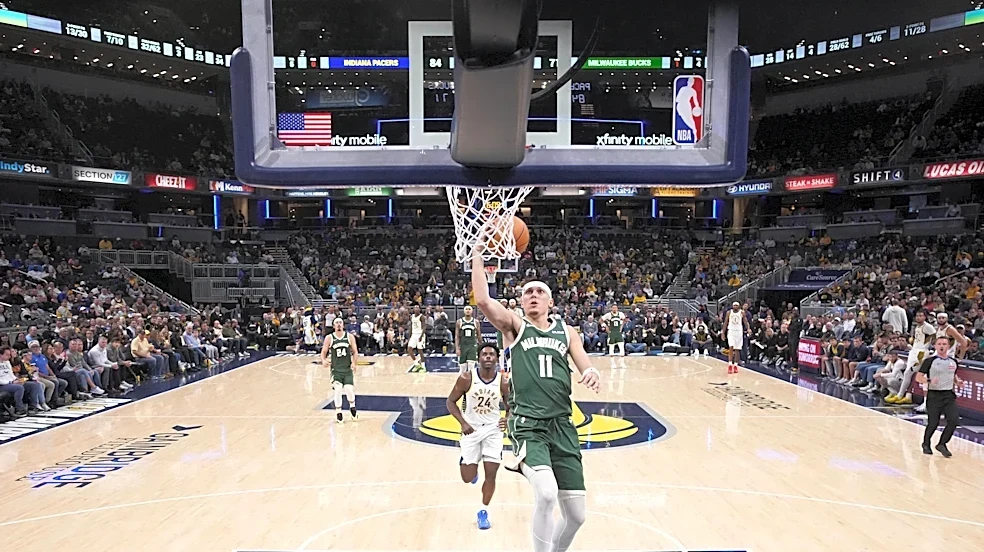
Despite the well-documented logjam in the backcourt, Jakucionis showed incredible promise in the preseason. In the final 13 minutes against Indiana, he wasted no time setting the table and getting the engine running, finishing with six assists. In the previous game against Chicago, he finished with 18 points and six assists (plus one sweet shot) even after getting into foul trouble early. These are early returns, but Jakucionis has already shown flashes of what made him, at one point, a highly-touted prospect. While much remains to be determined this season, KJ’s emergence as a true point guard would be a welcome sight for Bucks fans. If he’s ahead of schedule, it could drastically change how the front office approaches the trade deadline and offseason. While the Bucks face a lot of uncertainty, one thing already seems certain: we’ll see many more electric performances from the Lithuanian Lightning Rod! (Still workshopping the nickname).
—Nate
Editor’s note: Forget the trade deadline and next offseason, Jon Horst clearly thinks he already is ahead of schedule.
Accountability is Taylor-made for Milwaukee
After three seasons with Doc Rivers and his snarky, defensive attitude, it’s extremely refreshing to have a coach like Taylor Jenkins who champions accountability in everything he preaches. That was clear in the first postgame press conference after the Timberwolves lashed the Bucks; Jenkins pulled no punches about his team’s willingness to knuckle down defensively, saying they were far from where they need to be.
“Our defence was really lacking for 48 minutes,” Jenkins said. “We had spurts of it. We had some good possessions, but too often we had no pressure on the ball and no shift help. Definitely not the competitive edge that we ought to have.
“I know it’s the first preseason game, but that’s not going to be an excuse at all. We’ve got to embrace the defensive side of the ball way better going forward.”
You can see why Jon Horst—along with ownership—wanted Jenkins so badly. He oozes accountability and authenticity, and I’ve found myself tuning into his pressers much more than I ever did with past coaches (granted, the bar was low: Doc was annoying, and Bud never gave you anything). In any event, Jenkins is the main variable that gives me hope that this rebuild will turn out OK. It won’t be quick or easy, but I trust Jenkins to steer this ship and get this franchise back to where it belongs—and that is a comforting feeling.
—Jack
What have we missed, Brew Hoop fam? And what notes did you scribble down? Let us know in the comments.