
Following a defeat at Barnsley on 24 March that further exacerbated our perilous situation in the division, Bob Murray stepped back up to the Chairman’s role. His first decision publicly back at the helm of the beleaguered ship was to replace Mick Buxton as manager.
Depending on which version of events you read, vice-chairman Graham Wood had already accepted the provisional resignation of Buxton to enact at the end of the season. A straight and honest character, this was an honourable gesture from
the likeable Buxton. He was not for deserting whilst there was still a chance Sunderland might go down, but he had probably arrived at a point where he realised he had taken this team as far as he could in the current situation.
Bob Murray had spent several months scouring the country for a manager, but the Sunderland job had become a hot seat with a very small window to effect positive change at this time for the incumbent!
Having decided Peter Reid might be his man, Murray invested a bit of time weighing up whether he and Reid could work together.
Reid’s relationship with his previous chairman, Peter Swales, at Man City, had turned very sour at the finish, despite two fifth-placed finishes in successive seasons.
Murray might have been concerned about Reid’s alleged ferocity and stubbornness. Reid had been out of work for eighteen months since getting the sack from his first managerial post at City. The appointment of Peter Reid would represent a gamble by any known metric!

Reid too had a decision to make. The Sunderland job was at this time one of the most insecure in football, and the roll call of managers (some of them very experienced) that had come and gone was a list that seemed to be growing every season.
Reid was offered and accepted the post, and an announcement was made on the 29th of March, five days after the Barnsley defeat.
He had agreed to work till the season was finished and review things after that. He had seven games to save the club from relegation. The club were actually in twentieth position when he was appointed, but it was extremely tight at the bottom, and the remaining fixtures were against fellow strugglers and promotion contenders.
Reid accepted the post in the full knowledge that there was still a very real threat of a points deduction from the Dominic Matteo debacle still hanging over the club. Matteo had been brought in from Liverpool on loan and played in the Barnsley defeat, but not all the relevant paperwork had been received by the Football League and he was deemed to have played illegally.
A fine and a points deduction were the norm for this type of transgression, but Murray’s stock at the FA was high, and he worked very hard to ensure that it was just a fine that was handed down. It was probably a great relief, given our situation at the bottom of the division, that a £2,500 fine was all that was levied on the 31st of March. The unfortunate Matteo, a young defender of huge promise, had his loan spell terminated and headed back to Liverpool. The debacle over Matteo seemed to highlight where the club was at this point in time, lurching from poor results on the pitch and cock-ups behind the scenes.
The task for Reid was made a little easier and clearer with this judgement. He could now concentrate solely on winning football matches.
Having been given the news of his release, Mick Buxton handled himself with great dignity publicly. He wished Peter Reid good fortune and wished the team, his team (reputedly he was a Sunderland fan growing up), success in avoiding relegation and for the future.

I thought Reid’s appointment was a very risky one at the time. I also remember taking some hope from the great Bill Shankly who had described Reid as “the Yard Dog Scrapper”. He was a tough uncompromising character whose passion and fighting spirit belied a football intelligence, with subtle skills in motivation and tactical know-how.
Peter Reid was confident he could save the club from relegation and he made an impassioned plea to the fans for them to play their part.
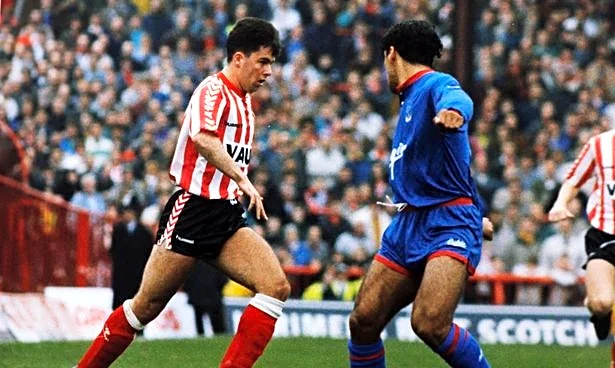
He got off to a great start (the day after the Matteo judgement was made public) with two one-nil victories against promotion chasers Sheffield United and Derby County. A one-one draw at Roker Park against fellow strugglers Luton Town and a one-nil defeat at his former club Bolton Wanderers (who were promoted at the end of this season) put the pressure back on to a degree.
On the 24th of April Swindon Town were the visitors to Roker Park in a classic six-pointer. The winner of this one would probably stay up and the loser would likely go down.
Pele’s laddie Martin Smith scored the only goal of this game and scored in each of our two remaining games that were drawn as relegation was avoided. The fight and passion had returned to the team and over 18,000 fans saw the last game of that season at Roker Park as they fulfilled their part of the bargain and backed the team’s efforts (gates had fallen to as low as just over 12,000 in mid-season).
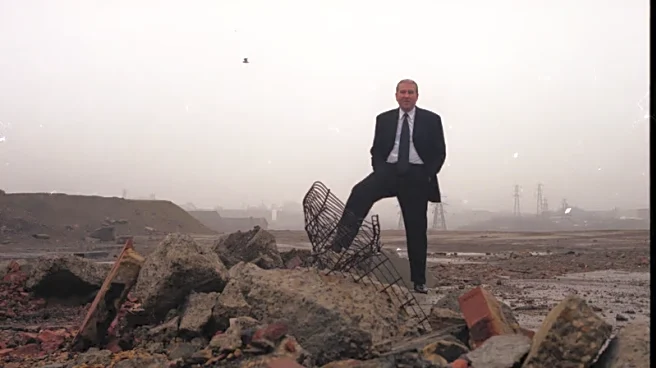
Reid had steered Sunderland away from what would have been a financial as well as emotional disaster if a second relegation to the third tier had been endured. A planned brand new 42,000-seater stadium was in the pipeline in the next couple of years and this would be a white elephant if third tier football was what was on offer.
Murray and Reid agreed he should stay on for the following season, and the ‘Reid era’ commenced.

The season 1995/96 did not start well but finished brilliantly. A nine-game winning run equalled a record set by the Team of All Talents and an eighteen-game undefeated run surpassed a record set in the 1922/23 campaign. Twenty-five clean sheets for the season beat the record set in the 1974/75 campaign as Sunderland won the Endsleigh First Division with eighty-three points, a record for the Lads at this level.
The capture of young Irish goal-keeper Shay Given on loan from Blackburn Rovers was an astute signing by Reid, as was the return of former playing colleague Paul Bracewell from Newcastle and Paul Stewart from Liverpool.
Unfortunate injuries to new signings Tony Coton and Niall Quinn derailed the following season back in the top tier. Still, the arrival of Allan ‘Magic’ Johnston and the mercurial Chris Waddle brought hope that we could survive an immediate relegation. Still, it was not to be as we finished our last season at Roker Park with a three goals to nil victory against Everton and started our first season at the Stadium of Light in the second tier.
The Reid era really kicked on despite our relegation. Season 1997/98 saw major investment in players, with Lee Clark, Kevin Phillips, Nick Summerbee, Chris Makin and Danny Dichio incoming. A real bonus as well, was the return from injury of Niall Quinn who came back refreshed and raring to go.
The Reid era was a tremendous period in the club’s history. Sunderland played some of the best football many fans had seen in decades and arguably ever as he cheered us all up with two consecutive seventh-placed finishes in the top tier. These good times could not be built upon but that is a story for another day.
I will leave you with Sunderland “flying without wings” as Bob Murray and Peter Reid’s gamble paid off in a manner no-one might have predicted back on this day in 1995 as young Dominic Matteo made his way back to Liverpool.