

Today, it hit me. Basketball is nearly back, and with that realization came that familiar tinge of excitement. A couple of hairs stood up on the back of my neck, which was a reminder to trim them.
Covering the Phoenix Suns is a process, and one I have grown to absolutely love. Little did I know when Dave King reached out to me in early 2020 about bringing the Suns JAM Session into the now-defunct Bright Side of the Sun podcast network, while also giving me the opportunity to write for the site, that
he was handing me one of the greatest gifts you can give someone like me: the opportunity for perpetual creativity. Thank you, King.
That has always been in my blood. I started taking graphic design classes in high school in 1999, working with technology that feels prehistoric compared to what sits at our fingertips today. I was learning the basics of something that would eventually become one of my primary creative outlets. Writing, podcasting, and graphic design…all of it scratches that same itch because it’s all interconnected. Create something. Finish it. Look at it for 30 seconds. Immediately start thinking about the next thing.
So there I was yesterday, sitting at my computer and tweaking graphics. I was preparing the projected starting lineup graphic for our game previews, adjusting the 5-year salary graphic, building team previews for our division preview series, and preparing for the Suns JAM Session podcast. Then it hit me. We are 5 weeks away from basketball that actually counts.
The cadence of the season is nearly upon us. The previews, the podcasts, the game days, the recaps. The nights spent staring at a computer screen trying to figure out why the hell the Suns did whatever the hell they did 20 minutes earlier and finding a way to put that into words while trying to avoid allowing emotions to dictate verb usage (if you’ve been around here long enough, you know my emotions do win sometimes). The machine is beginning to rumble again, and soon enough, we will be strapped to the damn thing for 82 games. I cannot wait.
With that in mind, now feels like the right time to explore the 5 most interesting storylines surrounding the Phoenix Suns as we prepare for the upcoming season, because it will be here before you know it. Some of these storylines should get you excited. Some might make you nervous. A couple could have you staring into the basketball abyss, wondering what fresh form of Suns-related chaos awaits us this time. Either way, these are the stories that could define what we are about to experience.
5. The Maluach Opportunity
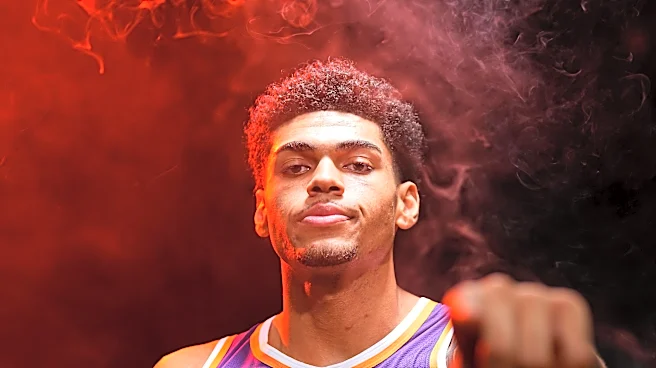
It might be fifth on my list, but it could end up being one of the most exciting aspects of this upcoming season. How does Khaman Maluach respond to the opportunity that’s about to be put in front of him?
Mark Williams recently suffered a torn labrum during a scrimmage and is expected to miss substantial time at center. Last season, Williams played 60 games and averaged 23.6 minutes per game, so the assumption is that a significant portion of those minutes will now fall to second-year big man Khaman Maluach. We’re already debating whether he should start, how many minutes he should receive, and what the best strategy is for Phoenix to remain effective at center while Williams is out.
At the center of all of that is a 20-year-old player who is about to receive his first extended opportunity. Maluach appeared in 46 games last season and averaged 8.9 minutes. Now he’ll be asked to navigate not only the mental challenge of an NBA season and the adjustments opposing teams will make as they identify weaknesses, but also the physical toll that playing center in this league demands. All of that has to be considered when evaluating him. There will be nights when he looks dominant, and there will be nights when he looks exhausted.
We saw how demanding an extended workload can be for a young big last postseason, when Victor Wembanyama appeared to run out of gas late in the NBA Finals. He averaged 29.2 minutes during the regular season before jumping to 39.8 minutes in the Finals.
My point? Especially with young big men, how you manage their workload throughout the season matters. A deep postseason run isn’t necessarily the expectation for this Suns team, but growth is. Maluach is taking the next step developmentally. And that is one of the reasons you’re going to tune in every night this season. We get to watch how a player who could potentially be the Suns’ last lottery prospect for the next half-decade responds when the opportunity is finally his.
A subset of this conversation is how long it will ultimately take Mark Williams to recover from his injury. It’s a disappointing blow for a player who simply hasn’t been able to stay healthy. Williams’ career has been marred by injuries to his foot, back, thumb, ankle, and knee, and now he has another recovery to navigate.
The hope is that he makes a full recovery and has enough time to become an impactful player who can help this team make a postseason push. And if that doesn’t happen? Well, that becomes an interesting conversation next offseason. Williams would have two years and $26.3 million remaining on his contract, which puts the Suns in an interesting position with a player whose talent has never really been the question.
4. A New Geometry from Deep
Last season, the Phoenix Suns attempted the fifth most three pointers in the NBA at 40.8 per game. They shot 36.1% from beyond the arc, 12th in the league, while their 45.3% three point attempt rate ranked seventh. This was a team that leaned heavily into the three-ball, with 39.3% of its total points coming from deep, the fifth-highest mark in the NBA. And in the end, that reliance hurt them. In clutch situations, 47.7% of the Suns’ shots came from beyond the arc, third most in the league. The problem was that they connected on only 31.3% of those attempts. Live by the three, die by the three.

This season, the assumption is that the method of attack will have to look different. Grayson Allen and Royce O’Neale are both gone, two players who accounted for 29.1% of the Suns’ three-point attempts last season while combining to shoot 38.1% from deep.
Phoenix did add one of the league’s best three-point shooters in Luke Kennard, although he has never been a high-volume shooter. That still leaves a legitimate question about how this team will generate enough shooting. Combine the career numbers of the projected starting five, and that group has shot 34.7% from beyond the arc.
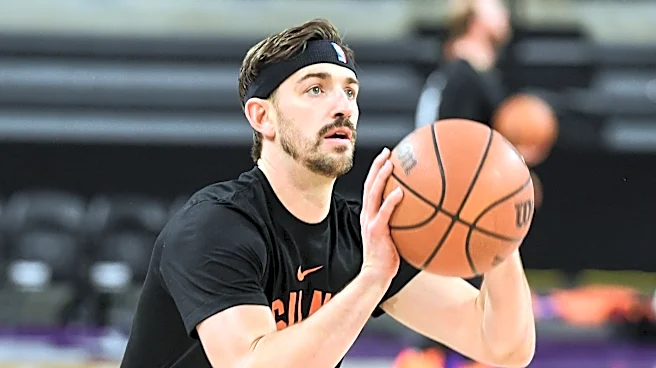
Thankfully, Collin Gillespie, a career 40.5% shooter from deep, and Kennard will be coming off the bench. Still, it will be hard to replicate the output vacated by Allen and O’Neale.
So one of the more interesting things to watch this season will be the geometry of the Suns’ offense. How do they generate quality looks from three, and when those opportunities come, can they knock them down? In Jordan Ott’s first season as head coach, the Suns set franchise marks for their frequency from beyond the arc. This year, the personnel is different. Ott is going to have to adjust.
And that gives us another reason to tune in every night, to see what those adjustments look like and how well the Suns execute them.
3. Year Two Ott
For the first time since the 2022–23 season, the Phoenix Suns will begin the year with a second-year head coach. That alone is something worth appreciating because the position hasn’t exactly been a beacon of stability. Monty Williams coached the team for four seasons, and before that, Phoenix had one season of Igor Kokoskov. The season before that, Earl Watson started 0–3 in his second year as head coach, but the losses were so catastrophic that Jay Triano was handed the reins. So having Jordan Ott back for Year 2 is significant in and of itself.
Now comes the challenge, because his role as a head coach changes. Ott’s job last season was to fortify the identity established by the front office while implementing his analytical approach on the court. This year, he’ll be asked to evolve without abandoning that foundation.
Thankfully for Ott, continuity was a priority for the organization, giving him the opportunity to build on what worked rather than start over. But the job gets tougher. Opponents now have a full season of film on what the Suns like to do. They know Phoenix’s favorite actions, how the team defends certain situations, and how Ott navigates his rotations. Can the Suns impose their will rather than constantly reacting to what opposing teams throw at them? Can Ott adjust?
Plenty of people will point to adjustments as one of the challenges Jordan Ott faced last season. Before the All-Star break, the Suns were 32–23 and averaging 113.6 points per game. After the break, they went 13–14. That scoring average dropped to 110.5.
You can make the observation that teams learned who and what the Suns were, put more pressure on what Phoenix wanted to do, and Ott didn’t adjust appropriately. There’s merit to that. There’s also merit to the fact that Devin Booker, Dillon Brooks, Jalen Green, and Mark Williams all missed time during that stretch. It’s difficult to make adjustments when your top four scoring options aren’t consistently available.

In the same breath, I acknowledge that Ott didn’t always make the adjustments that we, as a fan base, thought he should. When Williams was out for an extended period and the seventh seed was all but locked up, we didn’t see Khaman Maluach with enough regularity to give us much comfort. There was an opportunity to develop him, yet the Suns stuck with their small-ball approach. Ultimately, that hurt them both in the standings and in the paint.
Part of Ott’s growth is learning when to trust the numbers and when to trust the game. He comes from an analytical background, and his first season reflected that approach. That’s part of why we saw so much Oso Ighodaro down the stretch. From an advanced metrics standpoint, Oso elevates the players around him offensively. He also has deficiencies, especially when it comes to rebounding and his inability to stretch the floor.
The numbers can tell you that a particular lineup creates better spacing, generates turnovers, or produces more efficient possessions. You still have to remember that basketball isn’t played inside a spreadsheet. If you’re getting killed on the glass or Oso is getting worked over by Nikola Jokic, you need to make an adjustment. That tension between data and feel naturally develops with experience and will be one of the more interesting aspects of Ott’s growth in Year 2.
The other challenge he faces is managing increased expectations. There’s a significant shift that occurs between a coach’s first and second seasons. In Year 1, there are explanations for mistakes. When losses occur, you can lean into the new coach, new system narrative.
Those explanations lose some of their power in Year 2. Once the system is established, the organization and its fan base expect progress. And that’s the biggest expectation the Suns are going to face this season. Vegas might have Phoenix at 38.5 wins, but that doesn’t mean that’s our expectation. The Suns won 45 games last season and were swept out of the first round. Progress means either winning more games and earning a higher seed or advancing further in the postseason, whether that means winning a round or putting together a competitive first-round series against a higher-seeded team.
That may ultimately be the defining challenge of Year 2. Ott no longer has to teach Phoenix who it wants to be. Now he has to prove that identity can evolve when opponents attack it. Better adjustments, more flexibility, and a stronger feel for when the numbers matter and when the game is screaming something different. The Suns are betting heavily on continuity and development this season. If they expect the roster to take another step forward, Jordan Ott has to take one with it.
2. The Integration of Miles Bridges
If you want to talk about one of the most polarizing aspects of this upcoming season, it would be hard to find anything more polarizing than the addition of Miles Bridges.
The Suns acquired Bridges from the Charlotte Hornets in exchange for Grayson Allen, Royce O’Neale, and a 2033 first-round pick. I can understand the Allen and O’Neale aspects of the transaction. They were two players with tradable contracts who are getting older and may have already played their best basketball. It’s the 2033 first-round pick that I still struggle with.
I know you can make the argument that whoever Phoenix eventually selects with that pick is probably sitting in an eighth-grade classroom right now. But by 2033, this organization could be navigating whatever comes after the Devin Booker era. Having another bullet in the chamber would have been valuable, and I still feel like there should have been a way to acquire Bridges without surrendering that asset. That being said, Bridges is someone who potentially has his best basketball ahead of him, and the organization is clearly extremely high on what he can bring.
Yes, there is the Michigan State connection, and in this case, I actually view that as a positive. Given the Suns’ relationship with Tom Izzo and the Michigan State program, there may not be another organization with more insight into who Bridges is as both a player and a person.
The acquisition remains polarizing for reasons that extend far beyond basketball. Bridges has a documented history involving domestic violence, and that alone gives people plenty of reason to question his character and how they feel about him representing the team. I’m not going to tell you how to be a fan or how to root for the Phoenix Suns. That’s entirely up to you. The fact remains that Miles Bridges is now a member of the Phoenix Suns.
So now we turn to the basketball side of the transaction, and I’m truly interested to see how Bridges affects the Suns’ offensive ecosystem.
Bridges has been asked to wear a variety of hats throughout his seven-season tenure with the Charlotte Hornets. He’s been a primary focal point of the offense, and he’s been asked to take a step back as younger players and prospects were integrated around him. He’s had to adjust his role in a variety of ways, and there should be some appreciation for the flexibility that he brings because of those experiences. He should be able to adapt to what Phoenix asks of him, unlike some players who have come through here in recent years. Yes, I’m looking at you, Bradley Beal.
From an offensive standpoint, using O-LEBRON as a catch-all for how much a player contributes on that end of the floor, BBall Index gave him an A-, putting him in the 91st percentile among his power forward peers. That’s a pretty strong indication that there’s a lot more to his offensive value than simply looking at his scoring numbers.

Miles Bridges is going to put more stress on opposing defenses because of his ability to create opportunities for himself. According to BBall Index, Bridges ranked in the 82nd percentile in self-created opportunities last season. Royce O’Neale ranked in the 12th percentile. That difference matters. Bridges can put pressure on a defense, whether he has the ball or not, because the threat of him creating his own shot changes how you have to defend him. You can’t simply leave him standing alone in the corner on the weak side.
Well, you can. But there’s still the threat of the three-ball. Bridges is a career 33.8% three point shooter, although he did shoot 40% back in 2020–21. And if you leave him open in the right corner, he can make you pay. He’s a career 37.7% three point shooter from that spot.
Defense is where the conversation creates an opportunity for Bridges. His overall defensive impact graded as a C minus last season, placing him in the 44th percentile. It’s an area of his game that appears to be improving as he enters his prime.

One of the more interesting things about Miles Bridges last season was that he spent much of his time in essentially the Dillon Brooks role, guarding the opposing team’s best offensive threat. Bridges ranked in the 88th percentile in matchup difficulty, which measures the quality of the offensive players a defender is asked to guard while factoring in their offensive impact and usage. He graded out as an A minus.
That gives Phoenix another highly switchable perimeter defender who can take on difficult assignments and fortify different aspects of the Suns’ defense. And within the starting five, that should be an absolute upgrade over Royce O’Neale, who was a liability in this area.
That’s where the real opportunity exists. Phoenix doesn’t need Bridges to become an elite defender. It needs him to use his size, strength, and athleticism to become a reliable one within a system that already has Dillon Brooks setting the tone (Brooks is in the 98%tile of isolation perimeter defenders) and Malauch (hopfully…please dear Lord, hopefully) on the back line. Offensively, the impact is much easier to envision. Bridges gives the Suns another player defenses have to react to rather than ignore. If the defense continues trending upward, Phoenix may have acquired something more valuable than another scorer. They may have found a genuinely impactful two-way player.
1. The Jalen Green evaluation
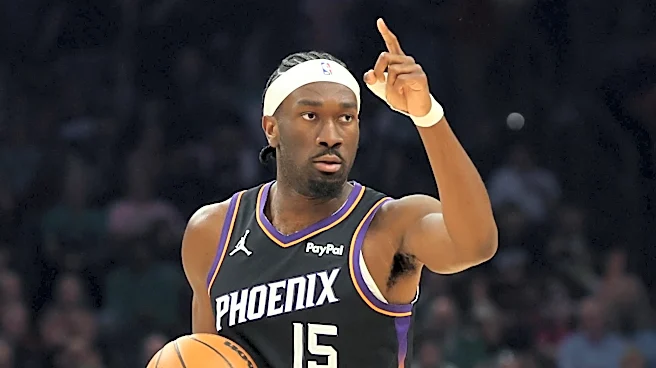
The most interesting thing about this upcoming season, from my perspective, is the Jalen Green situation. He is currently the second-highest-paid player on the team, making $36.2 million this season, with a $36 million player option for next year. I’m going to go out on a limb and be the first to report that he’ll probably pick that option up. That puts a lot of weight on his shoulders to live up to the contract, especially for a team already carrying $24.2 million in dead cap money. You can’t keep paying players north of $36 million if the production isn’t there or if the fit doesn’t make sense within the lineup you’re trying to build.
Green has talent. He has athleticism. He brings a dimension that nobody else on this roster really has, and it’s something we probably haven’t seen in Phoenix since Gerald Green. He can get downhill with incredible quickness and get to the rim almost at will. The problem is what happens once he gets there. He isn’t always consistent finishing around the basket. He is a career 53.9% shooter inside 8 feet. For context, all guards in the NBA combined last season for 57.7% inside 8 feet. Green shot 54.3%.

At times, it almost feels like he’s too athletic for his own good. He can blow by the first defender, but once he gets into the paint and meets the big trees waiting for him, he has to make a decision. And those decisions haven’t always produced positive results. That inconsistency has followed Green throughout his young career, whether it’s finishing around the rim or shooting from beyond the arc. He’s a career 33.9% shooter from three, so opposing defenses know he isn’t someone who is going to consistently punish them from deep.
Last season was supposed to provide Phoenix with a full year to evaluate all of this. Instead, Green missed 50 games with hamstring issues. So now the evaluation is being pushed into this season, with even more pressure attached. There is also concern because the injury affected the very things that make Green special: his speed and explosiveness.
The Suns don’t have much flexibility on the cap sheet, which means they need answers. They need to see what Green can be, how well he fits, and whether it makes sense to commit to him as part of the organization’s long-term direction. He becomes extension eligible on October 1, which adds another layer to the situation, although that shouldn’t force the Suns into making a decision before they have enough information. This should be a season of evaluation.
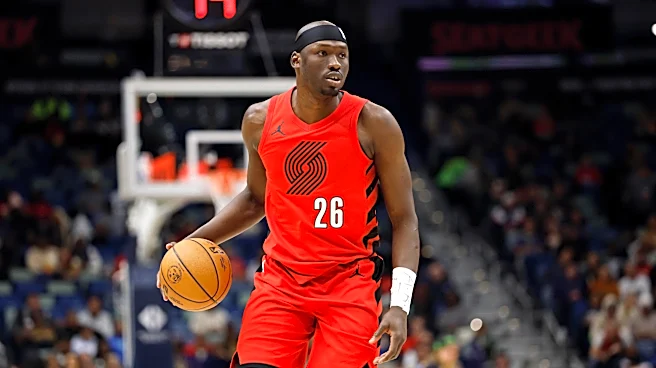
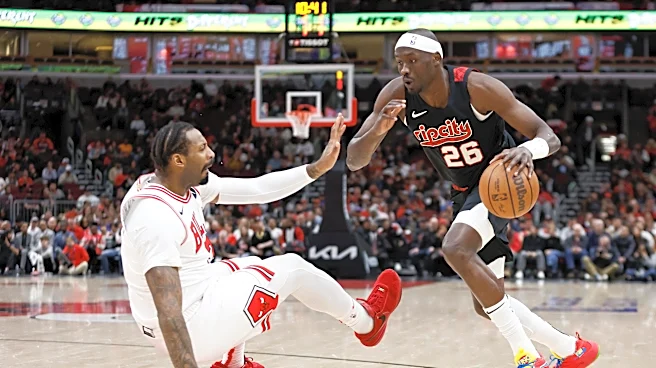
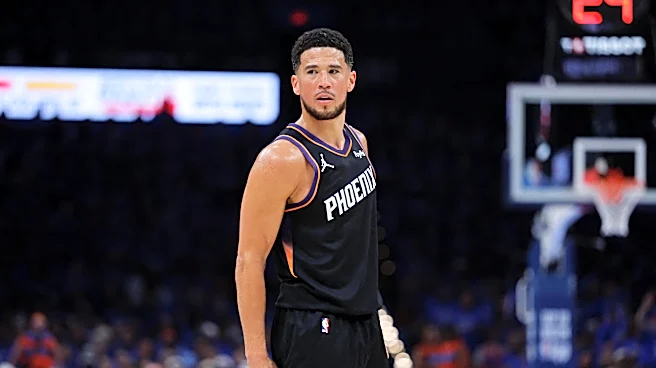
And a major part of that evaluation will be how Green handles more responsibility as a distributor and facilitator. The Suns are likely to ask him to initiate more offense because the goal should be to get Devin Booker off the ball as often as possible. That allows Booker to move through defenses, find his spots, and play more naturally as the shooting guard he is.
That puts even more responsibility on Green. He can’t simply bring the ball up, make one pass, and consider his job done for the possession. He has to read the floor. He has to organize the offense. He has to put teammates in positions to succeed and prove that he can do it efficiently and consistently. Whether he can execute that role has real long-term consequences for Phoenix.
That’s why, for me, evaluating Jalen Green takes precedence over almost everything else this season. It affects what the Suns can be right now and what they can become moving forward.
The Suns have plenty of questions entering this season, but these five sit at the center of what makes the year so interesting. Maluach’s development, the changing offensive geometry, Ott’s growth, Bridges’ integration, and Green’s evaluation all connect to the same larger question: what is this team becoming? We’re about to get some answers. And after a long offseason, I’m more than ready to start finding them.