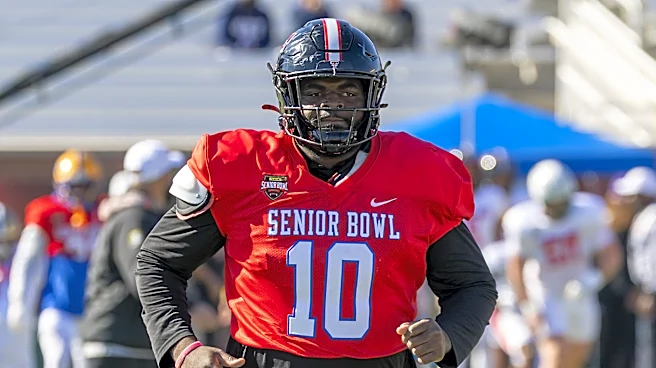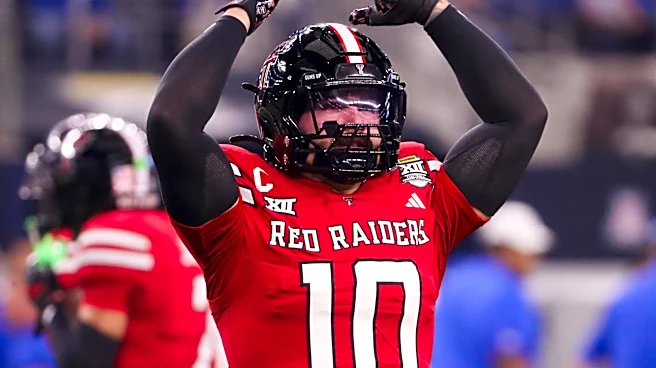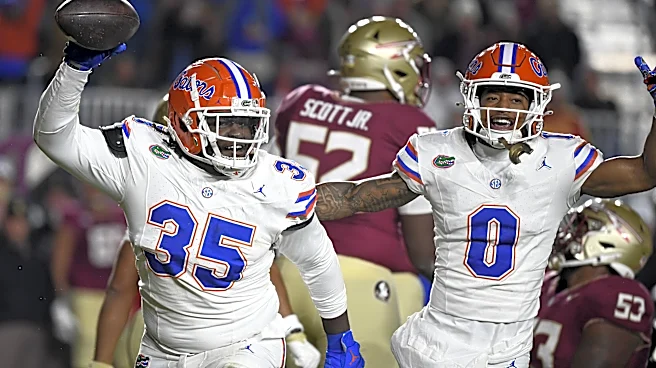



Robinson was recruited to the University of Florida from his hometown of Orlando in the 2024 cycle, rated as a low 4-star (.9110) in the 24/7 composite.
That was to be head coach Billy Napier’s third out of four years in Gainesville. Robinson’s DL coach and primary recruiter was Gerald Chatman, who had previously been hired to Tulane by Oregon’s future DC Chris Hampton. The co-DC added to the Florida staff that year was Ron Roberts, another Tite front progenitor with connections to Oregon’s defensive
staff.
As a true freshman, Robinson sat out against Miami and Texas A&M in weeks 1 and 3, and had some minor participation in the FCS game in week 2, then made his FBS debut in week 4 against Mississippi State. From that point through the bowl (seven SEC games plus UCF, Florida State, and Tulane), Robinson played each week as part of the regular defensive line rotation rotation, getting about 20% of meaningful reps.
In 2025, Robinson transferred to North Carolina along with a mostly portal-constructed roster in new head coach Bill Belichick’s first year. The defensive coordinator was (and remains, he was the only high level staffer Belichick didn’t fire after a disastrous 2025 campaign) his son Steve Belichick, whose squad I watched at some remove the year prior, and the DL coach is Bob Diaco, who has been orbiting Brian Kelly for the better part of two decades.
I think Robinson should be considered a “starter” at UNC in a certain sense, even though strictly speaking he played under 50% of meaningful reps (45.8%) and there were multiple weeks in which a different line group took the first drive while his group took the second.
This is because Belichick continued and made even more stark the even/odd split-surface approach he had been toying with at UW in 2024 – essentially there were two different defenses, each with their own internal rotations, and Robinson was the starter on one of them (or more accurately, he was indispensible and couldn’t be rotated out while that group was selected) … and as it happened, Robinson’s was the more effective group which would actually get off the field.
Robinson entered the portal in mid-January of this year, and committed to Oregon a week later. He has three years of eligibility to play two remaining. I acquired and charted every game of the Florida 2024 and UNC 2025 defensive seasons, including the meaningful snaps Robinson was rotated out on for a cohort analysis.
There’s an elephant in the room with Robinson’s career – he managed to pick two different schools with the talent draw and on-paper coaching acumen that should have been excellent, but constant organizational problems and defunct offenses kept putting the defense in bad spots. The frustration of watching Napier then Belichick tape back to back was nearly as trying to your faithful film reviewer’s composure as Oregon fans in game threads.
This made for a number of data control issues beyond the ones I’ve mentioned, many of which I’ll unpack throughout this article. One issue that needs to be mentioned straightaway is that Florida in 2024 had a very specific 3rd & long racecar package which didn’t employ any interior defensive linemen – that’s not unusual in and of itself, but what was unique was that the Gators never used anything but that package on meaningful 3rd & long situations.
That means we have no data on how Robinson performed on that down & distance as a freshman, and by the same token the control group — Florida’s defense when Robinson was off the field — needed to have its 3rd & long data removed from the sample for an apples-to-apples comparison. (At UNC as a sophomore there was no such issue, and close enough situational splits that ordinary, minor normalization sufficed.)
I thought the film and the cohort analysis were pretty impressive for Robinson as a true freshman and sophomore. There are a few things to work on and organizationally I think he could use some stability, but his early playing time was well deserved – both technically and physically his development is ahead of schedule, and his performance matched or exceeded older players:

As a freshman at Florida, Robinson was listed at 6’3” and 307 lbs. He mostly played as a 3-tech or 4i but about a third of the time lined up inside the guard at 1-tech, 2i, or nose. As a sophomore at UNC, Robinson was listed at 6’4” (I’d split the difference) and 315 lbs. He was used about five percentage points less often at 1-tech or 2i, he stopped playing at nose altogether, and he added about seven percent of reps at 5-tech, but remained two-thirds 3-tech or 4i. So the skew was a bit wider than at Florida but still mostly between the guard and tackle.
By popular demand, once again here is a refresher on defensive line techniques. Letters refer to the gaps between offensive blockers, numbers refer to where defenders line up:

The best comparative quality Robinson brought to the table was a superior backfield penetration rate, which against called downfield passing plays translated to consistently higher havoc generation – rising to 12 percentage points over replacement value by the end of his freshman year and holding steady at 16.5 points above replacement his sophomore year. Here’s a representative sample:
(Reminder – you can use the button in the right corner to control playback speed)
- :00 – Robinson is in jersey #35, as in all the Florida clips, as the 4i on the LT’s inside shoulder in the Gators’ Tite front (he’s bigger than he looks by comparison, the nose weighs 450 lbs). The LG is meant to pull right and pick up the OLB but Robinson’s quick penetration through the LT panics him into turning around; he gets past both and knocks the C on his rear end. With the OLB freed up too the QB is flushed. As usual, the back end has left somebody open and they’re lucky he drops the ball, but UF made their own luck in the throw being a bit off target due to a good pass rush.
- :24 – Now in jersey #6 as with all UNC clips, Robinson is the 1-tech on the C’s left shoulder. He bullrushes the snapper right back into the QB’s lap, speeding up the QB’s timer and making him go with his first read, which is well covered. If the QB had more time to go through his progressions (and the rest of the pass rush is getting nowhere so he might have), the QB would have found the wide open X-receiver or leakout RB for a conversion.
- :43 – Nice work by the ends here to panic the QB; Robinson sees it and instead of continuing to press the middle, loops around behind to close the escape route, and the QB takes a seat.
- :56 – This was a relatively rare four-man rush in which a different DT than Robinson got double-teamed (more on that later). Left one-on-one with the RG he overpowers the guard lunging at him and gets the QB to make a quick throw with hurried mechanics (he can’t step into his plant space and transfer his weight normally) and the ball is off-target enough for a breakup.
Statistical regression showed that while Florida’s defense in 2024 was fairly strong (they ranked 21st in F+ advanced statistics, and the 3rd & long racecar package which was excluded from the cohort analysis had an impressive 72.5% defensive success rate), they weren’t as aggressive as would have been optimal on early downs with blitzes and simulated pressures. That’s a particular shame for our purposes because it means the data on Robinson’s blitz effectiveness in his freshman season are only suggestive, not conclusive.
But at UNC the blitz situation reversed – Belichick called blitzes way too much and without anywhere close to the secondary talent and schematic planning to cover the check he was writing. The statistical skew this translated to was that defending efficiency passing was a crapshoot – stopping quick passing before the blitz could get home was simply a function of whether the back end decided to show up or not on that play, not the quality of the pass rush personnel. However, if the offense’s answer to pressure was an explosive pass attempt, then blitz personnel mattered a great deal, and Robinson’s group outshone the alternates. Some examples:
- :00 – The defense is bringing one more than the offense can block so the the line has to get a two-for-one somewhere – the LT tries to smush the OLB and Robinson together onto the RG so he can get the blitzing backer. Robinson has the athleticism to dip out from the attempt and it just winds up taking out the LG instead, and now the defense has enough that they can afford for the backer to whiff on the sack because Robinson is there to wrap up.
- :18 – This sim, with the Jack bailing to close the hot lane, adds a green dogging backer at the end once the end splits the right side and Robinson works around the LT’s arm bar to flush the QB. Not that it gets any respect from the officials, but Robinson keeping his outside arm free and high deters the QB.
- :34 – Note on this jailhouse blitz that Robinson is the only one with any effective pressure – the edges are too deep and escorted out, the backer is picked up, the other DT is (properly) closing the front door, and the safety is a free rusher but not fast enough. Robinson drives the LG right down main street and makes the QB cut short his follow through, the ball dies in the air and the CB gets away with physical play by having a moment to turn his head.
- :41 – Excellent T-E stunt to the offense’s right. Robinson takes out the RT and drags the RG with him, freeing the edge to smoothly slip behind with no footwork issues (these two worked very well together). Robinson splits the two OL and they combine for the sack. Note the backers as the other pair of blitzers (the DT and DE are properly closing doors) are not effective and the QB could have hit the crossing route as the man-beater if he weren’t panicked.
There’s also a spike on the other end of the pass rush data, when Belichick would bail the OLB or stand-up end into coverage and rush only three linemen – Robinson generated havoc at a +21.8% rate over baseline on rush-3 playcalls. Here’s a representative sample:
- :00 – The offense is unbalanced into the boundary and the defense is misaligned (any kind of FIB was systematically miscovered by Belichick’s defenses in the two years I’ve watched his teams). Bailing the OLBs into coverage doesn’t help since the one isn’t in any throwing lane and the other is just a third guy defending empty grass. Fortunately Robinson bullies the RT into the QB’s space and causes this QB to throw with even goofier mechanics than usual so the ball sails.
- :13 – By midseason Belichick had mostly retreated to the same bailout zone that’s every UW DC’s failover (Ryan Walters did the same thing in 2025); here the QB can’t find the immediate outlet on the mesh-sit because it won’t break until 3 seconds, and Robinson has mauled the center, knocked away the freshman backup DL next to him, and flushed the QB before then.
- :33 – The left side of the line seems surprised that the edge drops into coverage, Robinson takes advantage to press inside the LT, unbalance him and blow past. The QB is flushed and throws it away.
- :40 – The QB was expecting free access to the sideline with the safety running over to cover the flat, and is surprised by the boundary edge bailing out to cover the H-back instead. In the second and a half it takes him to re-adjust to the in-route Robinson has smashed the RT’s inside shoulder, shed the block and gotten in the QB’s face. He fires it off without seeing the underneath coverage and is intercepted.
Lastly, Robinson had a “halo effect” on the per-play pass rush grades of other defensive linemen when he was on the field, resulting in an average bump of five and a half points per teammate when he was on the field. He synergized particularly well with two edges with unlikely stories – Northern Illinois to Florida transfer and converted wide receiver George Gumbs Jr, and Delaware to North Carolina transfer and converted pâtissier Melkart Abou-Jaoude, both of whom I believe will be NFL players soon. Some examples:
- :00 – Robinson immediately penetrates to the inside of the RG and knocks the QB off his spot, but then is escorted out. This was vital to winning the play though – the X-receiver had beaten the corner in press-man off the line so if the QB were clean right away it would have been an instant conversion. Having bought more time, the edge from the other side loops around and harrasses the QB into dirting it.
- :22 – After stemming, the senior starter and freshman Robinson have a pre-snap debate about where to line up for this sim. Robinson would be correct if the LB crowding the line were in the other A-gap, but the senior is correct as he is, and Robinson yields. He pulls the C and LG into a double, the RG is distracted by the senior’s outside move, the backer withdraws, and the nickel insert has a clear path to the QB who throws a breakup ball.
- :47 – Robinson beating the LG to the outside doesn’t get to the QB but it sets up both the T-E stunt with the edge and the path for the other DT to crush the C into the QB’s lap. If the backer had covered the teacup instead of standing around gormlessly (one of three UW transfers Belichick brought with him) he’d have a breakup.
- :53 – Rushing the center from the 3-tech to his right, and flushing the QB to his left, means that Robinson probably never had a shot at getting the sack himself, but it set up the couple of speedy edges for a great play.
Overall, Robinson’s pass rush grades on my tally sheet were ahead of the typical development arc for a true freshman and true sophomore player with the amount of playing time he had, and most of his ineffective reps were unremarkable – either expected and within norms for his age like getting stymied a few times per game, or without any pattern to them and can be dismissed as one-offs and learning experiences. To the extent that I noticed a throughline in technique to work on, it would be understanding inside and outside leverage. Here are some examples of what I mean, where I think Robinson isn’t necessarily doing the wrong thing, but doing it from the wrong angle:
- :00 – This T-T stunt is easily handled by the interior guards; Robinson getting knocked over as the second man going inside is predictable – that’s where everybody’s feet are to get tangled up and the LG is close enough to just shove him from behind. He should be attacking on the outside of the RG instead, where there’s room to operate.
- :18 – On this sim, Robinson knows the OLB is going to bail out and so the RT isn’t going to have anything to do … except hit him. Nice balance and recovery ultimately, but he needs to be prepared for the shot or better yet, take the outside angle on the RT himself.
- :40 – The edges are getting deep here and the QB steps up in the pocket. The shovel pass is novel but he could just as well have run it, the point is Robinson has left the front door open by working to the inside with the rest of the line and then trying to spin out after the horse is out the barn, instead of maintaining outside leverage and being there to stop it.
- :49 – This isn’t working, both Robinson and the edge are trying for the same gap. Robinson should be working inside on the C/LG.
Before we completely switch over to look at rush defense, there are a couple other qualities to note. First, even though Robinson was most often at 3-tech or 4i and another, often heavier defensive lineman was usually closer to the center, Robinson drew two blockers while everyone else had one or fewer on a majority (54.1%) of his reps regardless of the offensive and defensive playcall. While a compliment in a sense, the consistent extra offensive attention limited Robinson’s opportunities for his own dramatic plays, though it did enable others’:
- :00 – Texas winds up having three offensive linemen blocking Robinson here, which frees up the backer crowding the line to slip in and threaten the QB. He doesn’t see the other backer bailing out and nearly throws a pick.
- :15 – Even with the other DT at 1-tech, the C chooses to help the RG with Robinson. The LG gets crushed back 1-on-1 and the QB can’t step into his throw properly.
- :28 – I don’t think these blocking assignments from Syracuse are correct and I’m pretty sure it’s Robinson who scrambled their brains. The only blocker with the right angle to pick up the crashing backer is the center and he gets occupied helping the RG with Robinson, the LG is too far and too late to do it and the RB goes down in the backfield.
- :37 – Here’s another triple team on Robinson, the entire left side including the in-line TE. The LG eventually peels off for the backer but Robinson throws off the TE so the lead blocker has to eat his defender and the offense’s numbers advantage disappears. The back cuts inside Robinson gets the tackle himself.
Second, I’ve noticed a pattern in all of Oregon’s offensive and defensive line transfers in the last several cycles, which is that they don’t take sheer mass alone, the Ducks only take athletic big men who can run. Robinson is no exception:
- :00 – The offense keeps seven in protection against a four-man simulated pressure, Robinson draws the C off so now a TE and WR are trying to block the largest ambulatory human I’ve ever seen so the QB runs for his life. Good pursuit speed from Robinson to keep the QB from setting his feet.
- :30 – The edges get all the credit here, the coverage isn’t great and all the DTs are doing is closing the front and back doors, but once the ball is loose Robinson is in a race with an offensive lineman who’s got a head start, and he wins.
- :58 – This was an all-passing drive at the end of the half so this draw play was tricksy, but the DTs weren’t fooled. Both penetrate on the outside of the guards, the back bounces off the other DT and Robinson goes the long way around the LG for a nice TFL.
- 1:12 – Robinson recognizes the play-action rollout right away and fights off the RT’s attempt at a hold to chase the QB down.
Third, this is a good point to expand upon the front end / back end issues at both Florida and North Carolina. At Florida the issues I observed were managerial and logistical, so constant substitution problems, clock and timeout failures, basics in tackling and leverage, and having gluts of players at certain positions (like defensive line, unhelpfully for our purposes) while being stretched to breaking at others. At North Carolina, there seemed to be a fascination with “toolsy” players on the back end of the defense who could do one thing or had one trait that was great, but otherwise couldn’t, well, play very good football. Here are some examples of what I mean which I’ll narrate, but believe me, there were many, many more:
- :00 – Robinson does his job here, pulling the C away on the double and opening a big rush lane for the stunt on the other side, but the other DT doesn’t knock the LG back hard enough so he has an easy time picking up the edge. The QB has time to find the checkdown, and now it’s left in the hands of the backers and secondary to make a tackle which was always an adventure to watch.
- :38 – Because of Belichick’s farkakte split packages, Robinson’s group was just in for 13 consecutive plays without substitution, then the offense held the ball for 90 seconds (of real time!) and Robinson was right back on the field for this play. I don’t normally see defensive fatigue early in the 2nd quarter but I think this is understandable. The CB playing way off on 1st & 10 and falling down on his home turf in September, less so.
- :57 – Pretty good blitz here from the front, they’re about to break the QB, but he’s got nothing to think about with a wide open TE (incidentally, that’s Bentancur, who was splitting developmental time with Oregon’s Markus Dixon last year).
- 1:22 – This UW transfer cornerback was out for half the season and the broadcast was making a big deal about what his return would mean for the team. Predictably, this was the outcome the first time he was challenged.
Rush defense was where Robinson’s defensive line group was far more effective than the alternate configuration Belichick used at UNC, so much so that I felt Belichick’s entire split-surface approach was a quixotic and dilettantish experiment that should have ended midseason if not in Seattle. The differences at Florida were basically within the margin of error (actually, there are large differences between 1st down for one group and 2nd & long for another which cancel each other out, but these have to do with at what points during drives substitutions were made … I can tease out the cross-tabs for the curious), though it seemed to me that Robinson was coming on strong in the last couple weeks of his freshman season.
Here’s a representative sample of Robinson’s successful rush defense reps:
- :00 – Robinson crosses the RG from the 3-tech spot to fall on the running back on this A-gap run and help prevent the short-yardage conversion.
- :15 – Excellent blow-up of the LG on the frontside pin, even with the LT helping, which knocks the blocker back so far it interrupts the pullers. The play is probably already well in hand without lead blockers but if you look closely on the replay angle, Robinson reaches past the guard and catches the RB’s knee as he’s bouncing out and trips him up too.
- :27 – I think it’s possible the entire left side of Cal’s line doesn’t know their blocking assignments, but what else is new? Robinson takes advantage and brushes the LT aside for a great TFL.
- :33 – This starts as an inside run and Robinson attacks the LT’s inside shoulder as the backer crashes the A-gap, but then the back cuts outside to the C-gap, Robinson sees it, works off the LT to the other side, and wraps him up.
There is a particular and very intriguing spike in the data for Robinson’s effectiveness against outside runs, which is very rare to see for young interior linemen. Some examples:
- :00 – The offense is running wide to the boundary at first but I think this cutback is planned based on the leverage the RG and RT are trying to maintain. At any rate, Robinson wins to the outside of the LG, then when the back cuts the other way, he powers through and around to snag the back’s leg from behind and catch him up for a TFL.
- :13 – The RG gets a good jump off the snap but Robinson never lets him get his hat playside, maintaining outside leverage and control for the entire stretch run, with his arm out to catch the back and making the tackle.
- :28 – This one could have gone big, the C’s pin is winning and the pullers are destroying the boundary edge and backer (I’m not sure the right side have their assignments right but the other backers run themselves out of the play goofily so same difference). But Robinson splits the blockers and slips through to catch the RB’s thigh and bring him down.
- :34 – Great rep, Robinson and Abou-Jaoude simply form an impenetrable wall against the frontside pin that both pullers crash into and bounce off of, and the back has nowhere to go but Robinson’s arms. The backer comes around to help but winds up just standing there because the two linemen have three blockers and the back stopped cold on the own.
There were a number of obvious parallels between Oregon’s Mint defensive philosophy and the rush defense schemes that Robinson played in; I doubt there will be much of a challenge in picking up the Ducks’ playbook. Closing off interior run lanes and deterring, delaying, and deferring the back outside with minimal resources is the name of the game:
- :00 – Here’s the ‘spill & kill’ in action – big linemen, including Robinson, control the interior run lanes while liberating defenders to the pass defense (note the proper alignment against an unbalanced formation), when the back can’t get through he spills out and only then the DB comes down to kill him for a minimal gain.
- :17 – The same philosophy at work even with academically prowessed transfer LBs and DBs – Robinson beats the RT of the snap and gets to the run lane, forcing the back outside. The TE had been blocking Abou-Jaoude with inside leverage so he just lets go and easily makes the tackle, no need for the back end at all!
- :28 – The initial aiming point is the B-gap but Robinson has beaten the RG there to close it off, the back cuts in but the other DT has shoved the LG into that gap so hard he bumps the back. The backer runs away for some reason so the C clears him out, but the DTs finish what they started without any assistance.
- :35 – Here Robinson first throws off the LT who’s trying to pin him, then he takes on the RT pulling around who was trying to get up to the safety. That safety should now have a clean kill on the RB but he whiffs. Abou-Jaoude has wrong-armed the pulling RG, when the back bounces he’d have the TFL so the RG holds him and astonishingly this actually got flagged.
In terms of technique, the most consistent rush defense issue I observed was maintaining discipline and not getting suckered by the running back’s pathing. It wasn’t an overwhelming number of plays, but it was the most common way that I’d see a back get through the side Robinson was responsible for. Some examples:
- :00 – This clip nearly made my article about Makhi Hughes last year. Robinson is positioned to ride the RG to the B-gap if he stays patient, but Hughes gets him to bite on the A-gap then smoothly continues outside for the conversion.
- :13 – It’s 12-pers vs the 3-4 defense here, so the nose isn’t two-gapping and the backers are crashing in short yardage. The back’s pathing gets Robinson to switch to the A-gap on the offense’s left and the LB adjusts to the B-gap, but the latter doesn’t really have the momentum now to fully stop the back. It would have been better for Robinson to stick with the B-gap and let the LB crash directly at the A-gap.
- :24 – Like the above play, Robinson is assigned to the B-gap but follows the back inside to the A-gap, which is where the DB is going. Unlike the above play, there’s no adjustment at all and the RB just runs right through the now unoccupied B-gap for the conversion – the DE is outleveraged and can’t drag him down in time.
- :40 – I don’t really get what Robinson is doing here, he pinches inside, then spins out into the big open B-gap, then disappears from the play as the RB runs into the void. He should have just … stayed put on the RG?
Physically, Robinson took on most double teams pretty well, but there were several where he lost control by turning or being turned perpendicular to the line of scrimmage. Some of these looked like an anchoring issue, others looked like he was trying to split the blockers when the play called for him to eat them both up so the backer behind him stayed clean; either way it’s a development issue to work on to consistently stay square and absorb both blockers at once. Some examples:
- :00 – The best shot to beat this is with the boundary safety, that requires the pulling LT block the backer instead of him, which in turn means Robinson has to keep that backer clean by taking on the RG/RT double team. He doesn’t do it well since he’s turned and powerless to stop the RG climbing up to the backer.
- :13 – Robinson is on the backside of this play, and the reason the backer doesn’t get over to help is because the C is illegally tripping him. That said, this tape gives a very clear angle on the issue with Robinson’s anchor against some double teams – he’s putting all of his weight on his back foot and turning his shoulders like he’s trying to squeeze in between the blockers, and he’s got no power that way, he’s just going to continue to be turned and driven backwards without ever regaining his anchor.
- :27 – Here it really does matter, and there’s a contrast between the two DTs, each taking on doubles and trying to keep the defenders behind them clean. The one taking on the C/LG is more successful, and the safety gets through with just a bump. Robinson taking on the RG/RT is completely turned on contact and driven to his knees, with the RG able to get to the backer, so the RB can find daylight and make it 2nd and inches.
- :44 – Another contrast, the DT taking on the RG/RT turns and lets the RT through to the next level but re-anchors, and at least gets an arm on the back. Robinson taking on the C/LG cocoons and is taken out of the play completely.
Finally, I thought it was peculiar that in two years of tape Robinson never drew a holding flag by any of his opponents against him (he himself was only penalized once that I saw, a silly shoving match after a play). Incorporating ATQ’s analytical work on SEC and ACC officiating rates and the charting data on his teammates into my algorithmic model, Robinson would have been expected to draw 3.4 holding flags in his career. Entering the much more recalcitrant Big Ten, he’ll need to work much harder to sell the holds the opposing offenses are committing to officials. (When I tasked the model with predicting how many holding flags he’d have drawn if all of his games were officiated by Big Ten crews, it outputted ‘NaN’ then crashed to desktop, which felt like commentary from the machine.)
- :00 – Robinson is setting the edge here while the biggest nose in the world sends the QB running for his life. The backer is spying, so Robinson doesn’t need to keep fiddling around with the RT’s inside shoulder – he should instantly get and stay outside with separation from the blocker when the QB starts to move, and force the RT to much more visibly grab him.
- :15 – If you watch the sideline angle in slow motion you can see the blockers have their hands up inside the arm holes of Robinson and Abou-Jaoude’s jerseys, but the way they’re reacting is to grab the blockers’ arms – that just looks like engagement to vision-impaired officials, they’ve got to get their hands up and wave them about theatrically for attention instead.
- :30 – This one is related to the pathing issue, by leaning into the A-gap instead of staying outside, Robinson is letting the guard get away with a restriction when he breaks away at the last second. He needs to stay outside and make the guard clearly tug on his jersey the whole way.
- :44 – Not a great blitz design here, Robinson hangs back to close the door but he’s being held so he can’t do his job when the QB breaks for it. In my experience pleading his case after the hold and failure to throw the flag like this doesn’t work, cognitive dissonance has set in, he’s got to anticipate the hold coming and start protesting in advance to signal the officials to watch for it.